Oklahoma Rules for a Visiting Arkansas Rider
There's nothing quite like packing up your ATV or UTV and heading out for a riding adventure, especially when you're crossing state lines into the beautiful, diverse terrain of Oklahoma. But if you're an Arkansas rider, you might find yourself scratching your head, wondering if the rules you know at home apply here. It's a completely valid concern – nobody wants to get a ticket or, worse, cause an accident because they weren't familiar with local regulations. This guide will walk you through everything an Arkansas rider needs to know about Oklahoma's ATV and UTV laws, particularly when it comes to riding on roads and accessing public lands, ensuring your visit is smooth, safe, and stress-free.
Understanding Oklahoma's Basic Rules for Visiting Riders
When you're coming from Arkansas, one of the first questions on your mind is often about registration. Do you need to get an Oklahoma tag? What about your existing paperwork? Let's clear up these common anxieties right away.
Do You Need to Register Your Arkansas Machine in Oklahoma?
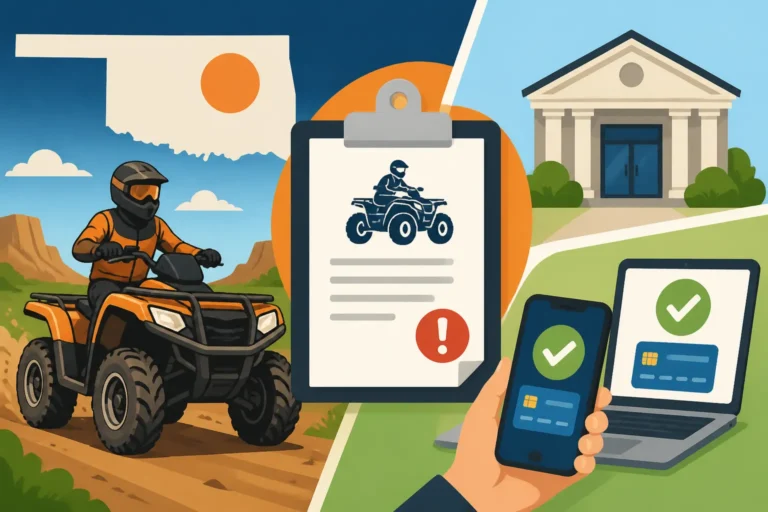
For the vast majority of recreational off-road riding in Oklahoma, if your ATV or UTV is properly registered and titled in Arkansas, you generally won't need to get a separate Oklahoma registration. Oklahoma's rules are designed to accommodate visitors who are simply here to enjoy the trails and parks. This means if you're planning a trip to places like Little Sahara State Park or Robbers Cave, your current Arkansas registration should be sufficient for off-road use within these designated areas. You’re not expected to pay Oklahoma’s one-time registration fee just for a weekend visit.
However, there's a really important nuance here, especially since we're talking about road riding. If your goal is to use your machine on public roads in Oklahoma where street-legal status is required, your Arkansas registration and street-legal status (if you have it in Arkansas) won't automatically grant you the same privileges here. Oklahoma has a very specific set of requirements for what constitutes a [Oklahoma Street-Legal UTV Class Explained], and your machine would need to meet those criteria, regardless of its Arkansas status, to ride legally on the permitted roads. It’s not about re-registering your Arkansas machine; it's about whether your machine as equipped qualifies for Oklahoma's street-legal class. More on that in a bit.
What Paperwork Should You Carry From Arkansas?
Even though you likely won't need to re-register in Oklahoma, you absolutely need to have your Arkansas paperwork readily available. Think of it like driving your car across state lines – you still need your driver's license, vehicle registration, and proof of insurance. For your ATV or UTV, this means:
- Proof of Ownership: Your Arkansas title or registration card. This demonstrates that you are the legal owner of the machine.
- Proof of Insurance: While Oklahoma doesn't mandate insurance for off-road machines used exclusively off-road, it is incredibly wise to have it. Many riding parks or private lands might require it, and if you're involved in an accident, even off-road, you'll be glad for the coverage. If you plan to register your UTV as street-legal in Oklahoma, insurance will be a requirement for that specific class.
- Your Driver's License: If you're going to be operating your machine, especially if it's a UTV you intend to potentially make street-legal, you'll need a valid driver's license from Arkansas. Oklahoma requires drivers of street-legal UTVs to be at least sixteen years old and hold a valid driver's license, though they don't require a motorcycle endorsement for UTVs.
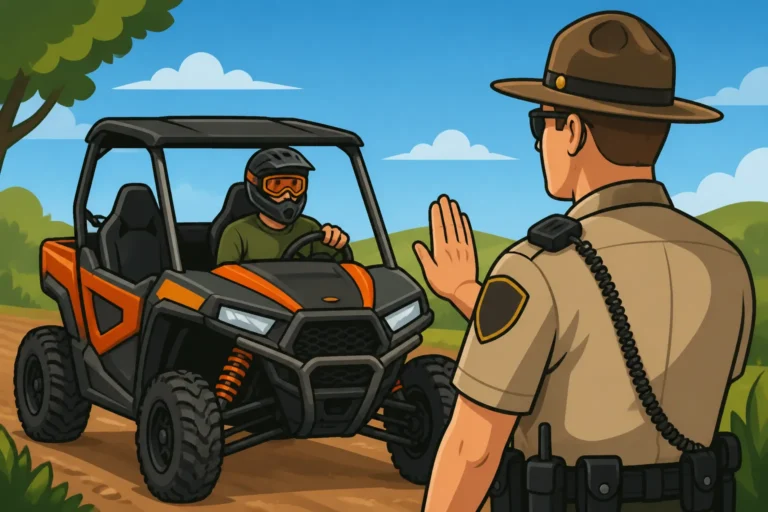
Having these documents neatly organized and accessible, perhaps in a waterproof bag you keep on your machine or in your tow vehicle, can save you a lot of hassle if you encounter a park ranger or law enforcement officer. It shows you're a responsible rider, respecting the rules of the road and trail.
Navigating Oklahoma's Road Riding Laws for Off-Road Vehicles
This is where things can get a bit more complicated, especially if you're used to different rules in Arkansas. Oklahoma has very specific guidelines about where ATVs and UTVs can be operated, particularly on public roads.
Recreational Riding on Oklahoma's Roads
Generally speaking, recreational ATVs and UTVs are not allowed on Oklahoma's public streets, roads, or highways. This is a crucial difference from some other states that might be more permissive. However, there are exceptions and specific scenarios to be aware of:
- Farm Use (Instrument of Husbandry): If your machine is primarily used for agricultural purposes, such as tending to fields or livestock, it may qualify as an "instrument of husbandry." This designation allows for limited use on public roads for agricultural work, but it's very specific and not for recreational riding. This exception usually means moving from one field to another, not cruising down Main Street.
- Crossing Rules: You can generally cross a public road or highway if the posted speed limit is 35 mph or less, and the crossing is made at a ninety-degree angle to the road, only during daylight hours, and without impeding traffic. This is meant for connecting trails or property, not extended road travel. The rules around [Oklahoma Highway Crossings in Daylight] are pretty strict, so always be visible and yield to oncoming traffic.
- Local Ordinances: This is a big one for visitors. [Oklahoma County Commissioners and ATV Roads] have the authority to open certain county roads to ATV/UTV use, and [Oklahoma Municipal Ordinances That Open Streets] can do the same within city limits. What this means for you is that you absolutely cannot assume a road is open just because it looks like it might be. You must check with the local county or city before riding on any public road. These open road designations are often very specific to certain areas or roads, so a quick call to the county sheriff's office or city hall can prevent a costly ticket. If you're staying at a private park or a specific trail system, ask them about local road access as they often have the most current information.
Ignoring these rules can lead to fines, so it's always better to err on the side of caution. Remember, you're a guest in the state, and understanding these rules is part of being a respectful visitor.
Street-Legal UTVs for Visiting Riders
Now, let's talk about the specific class of street-legal UTVs in Oklahoma. This is a game-changer for many riders, but it comes with its own set of distinct requirements. If your Arkansas UTV is "street-legal" back home, that doesn't automatically mean it meets Oklahoma's criteria. Oklahoma created its own unique "interim off-road vehicle" (IORV) class, which essentially allows UTVs to be made street-legal under specific conditions.
To be considered street-legal in Oklahoma, your UTV must be equipped with several key features. You can't just slap a license plate on it and go. These include:
- Headlights and Tail Lights: Must be operational and meet lighting standards.
- Brake Lights: Fully functional when the brakes are applied.
- Turn Signals: Front and rear, clearly visible, essential for road use.
- Mirrors: At least one rear-view mirror, and often two (side mirrors) are preferred for safety, especially if you're using products from brands like SuperATV to enhance your visibility.
- Horn: A working horn to signal other drivers.
- Windshield: A compliant windshield is typically required.
- DOT-Approved Tires: Your tires must be rated for highway use.
- License Plate: Once all equipment is met, you'll apply for a special "IORV" plate and decal.
You can find more detailed information on all these specifics in [Oklahoma Equipment Required for Street UTVs]. Even if your Arkansas-plated UTV has some of these, it's critical to verify all of them against Oklahoma's statute. If your machine doesn't meet all these, it won't be considered street-legal here.
Where You CANNOT Ride: Even with an Oklahoma street-legal plate, your UTV still has limitations. Street-legal UTVs are generally prohibited on interstates and U.S. highways. So, while you might be able to use certain county roads or city streets, don't plan on taking your [Oklahoma Street UTVs Stay Off Interstates] or [Oklahoma Street UTVs Stay Off US Highways]. This is a common point of confusion, so always keep it in mind.
Driver Requirements: If your UTV does meet Oklahoma's street-legal requirements, the operator must be at least 16 years old and possess a valid driver's license. Unlike some states or motorcycle classes, Oklahoma does not require a special "M" endorsement for street-legal UTVs.
Age, Helmet, and Passenger Rules for Arkansas Visitors
Safety is paramount, and Oklahoma has clear rules about who can ride, who needs a helmet, and how many passengers you can carry. These rules apply to everyone, visitors and residents alike.
Oklahoma's Helmet Law and Age Restrictions
For any rider, whether from Arkansas or Oklahoma, if you are under 18 years of age, you are required to wear a helmet while operating or riding as a passenger on an ATV or UTV. This applies on public lands, designated riding areas, and any roads where riding is permitted. This is a non-negotiable safety rule designed to protect young riders, as detailed in [Oklahoma Helmet Law for Riders Under 18]. Make sure all minors in your group have properly fitting, DOT-approved helmets before hitting the trails.
While Oklahoma doesn't have a specific statewide minimum age for off-road ATV operation, most public and private riding parks will have their own age and supervision requirements. For example, some parks may require riders under a certain age to be supervised by an adult or restrict them to specific youth-friendly trails. For street-legal UTVs, as mentioned, the operator must be at least 16 with a valid driver's license. Always check with the specific park or area you plan to visit for their age policies.
Passenger Rules for ATVs and UTVs
This is another area where confusion often arises.
- ATVs (Quads): The general rule for ATVs is that they are designed for one operator, period. Unless the ATV was specifically manufactured by the original equipment manufacturer (OEM) to carry a passenger (often called a "2-up" model), you cannot carry an extra person. This is a critical safety rule because ATVs are designed to be ridden by shifting the rider's weight, and a passenger severely compromises control and stability. [Oklahoma Passenger Rules on a Quad] are clear on this: if your quad isn't designed for it, don't do it.
- UTVs (Side-by-Sides): UTVs, by their very design, are built to carry multiple passengers, and often cargo. You can carry as many passengers as there are designated seating positions with factory-installed seatbelts. Always ensure every passenger is properly belted in. Overloading a UTV is not only illegal but extremely dangerous.
Adhering to these passenger rules is crucial for everyone's safety, preventing rollovers and other accidents.
Where to Ride and Public Land Permits for Visitors
Oklahoma boasts some fantastic riding opportunities, from the famous sand dunes to challenging forest trails. Knowing where you can ride and what permits you need as an Arkansas visitor is key.
Public Riding Areas and Permit Requirements
Oklahoma has a variety of riding destinations, each with its own charm and regulations:
- Little Sahara State Park: Located near Waynoka, this is Oklahoma's premier sand dune riding area. It's open year-round and requires a day-use fee or an annual pass. While your Arkansas registration is fine for entry, you'll still need to pay the park's specific entrance fees. They also have requirements like a 10-foot whip flag for visibility in the dunes.
- Robbers Cave OHV Area: Near Wilburton, this park offers a different experience with wooded trails and rocky terrain. Similar to Little Sahara, your Arkansas registration is fine, but you'll pay park entrance fees. Check [Robbers Cave OHV Area in Oklahoma] for specific hours and rules.
- Wildlife Management Areas (WMAs) – Honobia Creek & Three Rivers: These vast areas in southeast Oklahoma, particularly Honobia Creek WMA and Three Rivers WMA, offer extensive riding on designated roads and trails. However, access to these areas for riding is tied to specific seasons (often deer hunting season, roughly October to January 15) and requires an [Oklahoma Land Access Permits Explained]. As a non-resident, you'll need a [Oklahoma's Nonresident Land Access Permit], which costs more than a resident permit. You'll also likely need an Oklahoma hunting license even if you're not hunting, just to ride during those seasons. Always check the specific WMA regulations before heading out, as rules can change.
- Private Parks: Oklahoma is home to several private riding parks, such as [Cross Bar Ranch in Oklahoma] near Davis. These parks set their own rules regarding fees, age restrictions, helmets, and even alcohol policies. They typically require you to sign a liability waiver before riding. Private parks are often a great option for visitors because they offer well-maintained trails and clear rules.
Always do your homework before you tow your machine. A quick check of the park's website or a phone call can save you a long drive and disappointment.
What to Carry and General Trail Etiquette
Beyond your paperwork, there are a few other things an Arkansas rider should consider carrying for a safe and enjoyable trip in Oklahoma:
- Safety Gear: In addition to helmets for minors, consider wearing appropriate riding gear like gloves, long pants, a long-sleeved shirt, and sturdy boots. Eye protection is also a must.
- Emergency Supplies: A basic first-aid kit, some water, snacks, a fully charged cell phone (though service can be spotty in remote areas), and a small tool kit for minor repairs are always good ideas.
- Recovery Gear: If you're tackling challenging terrain, a winch can be a lifesaver. Brands like SuperATV offer a wide range of durable winches and recovery gear that can get you out of a sticky situation.
- Respect the Land: Always practice "Tread Lightly" principles. Stay on marked trails, pack out everything you pack in, and respect private property. [Oklahoma Rules for Riding a County Road] or any public land emphasize respecting boundaries and other users.
- Be Aware of Local Conditions: Oklahoma weather can be unpredictable. Check forecasts for rain, heat, or fire bans before you go. Red clay trails, common in much of Oklahoma, become incredibly slick and challenging after a rain.
By understanding and respecting Oklahoma's ATV and UTV rules, Arkansas riders can have an amazing time exploring all the Sooner State has to offer. Safe riding!
Key Oklahoma Rules for Visiting Arkansas Riders
Here's a quick reference table to help an Arkansas rider compare common rules in Oklahoma:
| Rule Category | Oklahoma Standard for Visiting Recreational Riders | Considerations for Arkansas Riders |
|---|---|---|
| Machine Registration | Arkansas-registered machines generally do not need Oklahoma registration for off-road recreational use in parks/trails. | Carry your Arkansas title/registration. If you want to ride on roads, your machine must meet Oklahoma's specific street-legal UTV requirements, regardless of Arkansas registration. |
| Road Riding (General) | Generally prohibited on public streets, roads, and highways. Exceptions for agricultural use, direct crossings (under 35 mph, daylight, 90-degree angle), and roads specifically opened by local ordinance. | Do not assume roads are open. Always check with local county commissioners or city authorities. Your Arkansas street-legal status does not automatically transfer. |
| Street-Legal UTVs | Oklahoma has a specific "interim off-road vehicle" (IORV) class with strict equipment requirements (turn signals, mirrors, horn, DOT tires, etc.) and plate. Restricted from interstates and US highways. | Your UTV must meet all Oklahoma IORV requirements. Be prepared for potential equipment differences. SuperATV and similar brands offer parts for conversions, but ensure they meet OK specs. |
| Driver's License | Required for operating a street-legal UTV (age 16+). Not strictly mandated for off-road use, but good practice. | Carry your valid Arkansas driver's license. |
| Helmet Law | Required for all riders and passengers under 18 years of age. | Ensure all minors in your group have DOT-approved helmets. This is strictly enforced. |
| Passenger Rules | ATVs: Only if designed by manufacturer for more than one person. UTVs: As many passengers as there are designated seating positions with seatbelts. | Do not overload your machine. Follow manufacturer guidelines for passenger capacity. |
| Public Land Permits | State Parks (Little Sahara, Robbers Cave) require park entrance fees. WMAs (Honobia Creek, Three Rivers) require an [Oklahoma's Nonresident Land Access Permit] for non-residents and often a hunting license during riding seasons. | Budget for park fees and specific WMA permits. Non-resident WMA permits are more expensive. Always check current WMA rules for seasonal access and specific permit requirements. |
Disclaimer
This article is for general informational purposes only and does not constitute professional advice. Laws, prices and regulations vary by location and change over time. Consult a qualified professional for guidance on your specific situation.