Can You Bring a Dog to a Riding Park?
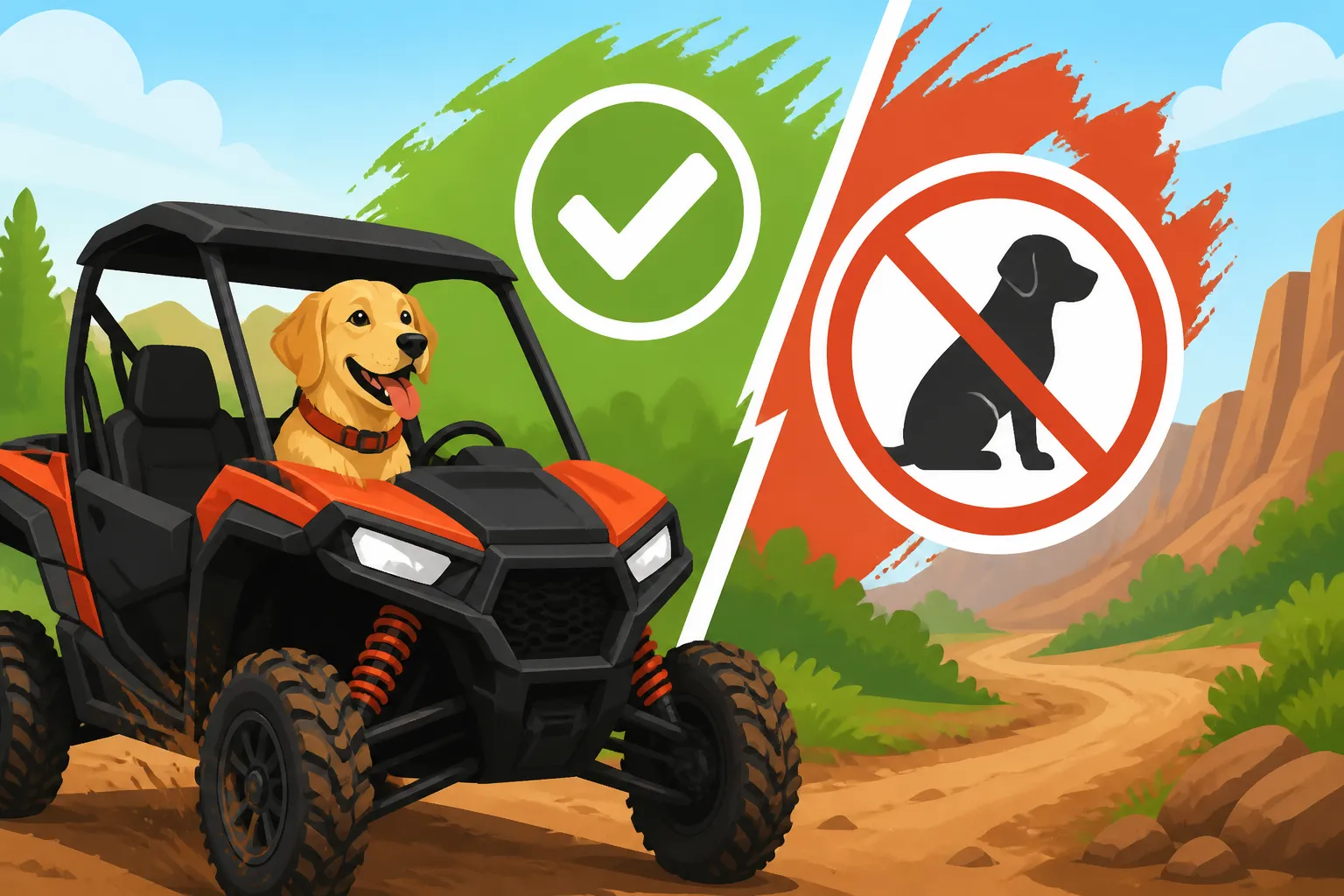
A dog may be welcome at an Oklahoma riding park without being allowed on every trail, in every campsite, or aboard every machine. Policies differ between public areas and privately operated parks, and a dog that handles quiet walks may struggle with engines, dust, crowds, and heat. Confirm the park’s rules before you tow, then plan how your dog will stay safe.
Confirm the park’s dog policy before you leave
There is no single dog policy that applies to every Oklahoma ATV or UTV riding area. A private park sets rules for its own property, while a public riding area may have separate land-management rules. Even at one location, the rules for a campground can differ from those for riding trails or day-use areas.
Start by contacting the park directly. Look for current rules on its official website, then call if anything is unclear. A social media post or an old review may describe a past policy rather than the one that applies to your visit. For a useful list of questions, see Questions to Ask the Park Office Before You Go.
Ask about the specific activities you have planned, not just whether dogs are “allowed.” The answer may depend on whether your dog will stay at camp, walk around the property, or travel with you in a UTV. A park may permit dogs on a leash in some areas but restrict them from trails, buildings, event spaces, or certain campsites. It may also prohibit dogs during organized events or busy weekends.
| Question to ask | Why it matters |
|---|---|
| Are dogs allowed on the property? | A general answer may not cover every part of the park. |
| Can dogs go on the trails or only stay at camp? | Trail access can be different from campground access. |
| Are there leash, tether, or containment rules? | The park may have specific requirements for controlling pets. |
| Can a dog ride in a UTV? | Permission to bring a dog does not necessarily allow it to ride along. |
| Are there restrictions by campsite or event? | A group ride, competition, or crowded weekend may change what is practical or permitted. |
| Are proof of vaccinations or other records required? | Ask what documentation, if any, you should bring. |
| What happens if a dog barks, chases wildlife, or disturbs other guests? | Knowing the rules helps you prevent a problem rather than react to one. |
A quick call can also clarify whether the rules cover dogs only or other pets, and whether the park expects owners to clean up immediately. Check the park’s own requirements rather than assuming that a leash or vaccination standard is universal. The details are covered more specifically in Oklahoma Private Park Pet Rules.
If you plan to camp, check both the riding area’s policy and the campground’s policy. Some parks operate their own campsites; others are near campgrounds run by a different operator. The campground may have its own leash, noise, cleanup, or unattended-pet rules. Oklahoma Campgrounds Next to a Riding Area can help you think through that separate part of the trip.
A permit is not a substitute for permission to bring a dog. Land-access permits and riding fees address access for riders and machines; they do not automatically grant a pet access to every property or trail. If you are riding on public land, ask the managing agency about its current pet and trail rules. For parks with their own admission or land-use requirements, confirm the pet policy with the park as well.
Decide whether your dog should ride along
A park saying yes to dogs does not automatically mean a dog should ride on an ATV or UTV. Engines, vibration, sudden movement, heat, dust, unfamiliar people, and other animals can make an off-road ride stressful or unsafe for a pet. A dog that is calm at home may react differently in a noisy staging area or on a rough trail.
Do not place a dog on an ATV seat, rack, or other exposed part of the machine. The animal can fall, be thrown off balance, get caught on equipment, or interfere with the rider. Even a short trip from a campsite to a trailhead can expose a dog to risks that are easy to underestimate. If the park allows pets but does not specifically address carrying them in a vehicle, ask before assuming it is permitted.
A UTV can offer more protection than an open ATV, but it still needs careful planning. A dog should not be loose where it can distract the driver, obstruct controls, or move into a hazardous area. If the park explicitly allows dogs to ride in UTVs, ask what type of restraint or containment it expects and whether the vehicle’s seating arrangement is suitable. Do not assume that a cage, roof, or passenger seat alone makes a ride safe.
Consider whether your dog can tolerate the conditions, not just whether it can physically fit in the vehicle. A trail can be loud and bumpy, and the dog may have no easy way to leave if it becomes frightened. Stopping in a safe place, keeping the dog contained, and avoiding sudden contact with other machines are important. If any of those steps would be difficult on the route, leave the dog at home or arrange a safe place for it to stay.
Heat deserves special attention in Oklahoma. Dogs can overheat while people are focused on riding, and shade at a campsite may not be available along a trail. A vehicle can become dangerously hot when parked, even if the dog is inside it. Never leave a dog unattended in a parked vehicle as a way to continue riding.
Bring fresh water and a bowl, and plan regular breaks in a shaded, secure area. Do not rely on a creek, pond, or puddle as a safe water source. The dog may also need a shorter outing than the riders, especially in warm weather or on a dusty route. How Much Water to Carry in August Heat focuses on rider planning, but the same basic reminder applies: do not wait until someone is visibly struggling to take a break.
Pay attention to stress signals. Heavy panting, repeated attempts to escape, tucked posture, trembling, unusual agitation, or reluctance to move are reasons to stop and reassess. A dog that will not settle in a busy staging area may not be suited to a full day at an off-road park. The practical choice may be to bring the dog only if it can stay comfortably at camp with a responsible person, rather than expecting it to accompany every ride.
Keep your dog controlled around machines and other visitors
A dog that is permitted on the property still needs to be managed around moving vehicles, riders, and other guests. Many people are focused on loading, unloading, and watching trail traffic. A dog that slips its leash or wanders into a staging lane can create a sudden hazard for itself and others.
Use the control method the park requires, and keep your dog close whenever machines are operating nearby. Do not let it roam between campsites or approach riders without permission. Some visitors may be nervous around dogs; others may have pets of their own. Keep enough distance to avoid a greeting turning into a conflict.
Follow the park’s cleanup instructions and carry waste bags. Prompt cleanup is both a courtesy and a practical way to keep campsites and shared areas usable. Do not assume that a dog can be left tied outside a tent, trailer, or vehicle while the rest of the group rides. A tether can become tangled, and an unattended dog may bark, chew equipment, escape, or be approached by another animal.
If the dog stays at camp, arrange for a person to supervise it. Check whether the park permits a dog to be left in a secured camper or another enclosed space, and make sure the space remains comfortable and ventilated. A plan that depends on leaving the dog alone for hours is not a good fit if the dog is distressed, exposed to heat, or likely to escape.
Be mindful of noise and other campers. Frequent barking can disturb people who came to rest between rides, and some campgrounds set quiet-hour expectations. Keep your dog from wandering into neighboring sites, and do not let it chase wildlife or livestock. Quiet Hours at a Campground Beside the Trails offers more context on campsite noise, while Oklahoma Trail Etiquette Locals Expect is useful for thinking about shared riding spaces.
A park may ask owners to remove a dog that is aggressive, uncontrolled, persistently disruptive, or in an area where pets are not allowed. Check any waiver or posted rules before arrival. Signing a waiver does not replace the duty to follow the park’s pet policy. If the group is bringing several dogs, ask whether the park has limits or extra requirements; do not assume the rules for one well-controlled pet apply to a larger group.
Make a practical go-or-no-go plan
Before the trip, compare your dog’s needs with the actual schedule. A quick ride near a supervised campsite is different from an all-day trail outing with no convenient place to stop. If nobody can stay with the dog, and the park does not permit safe transport on your machine, bringing it may not be workable even if pets are generally allowed.
Use this checklist before loading:
- Confirm the rules with the park, including trail, campsite, leash, and vehicle access.
- Ask whether the rules change during events, busy weekends, or overnight stays.
- Decide where the dog will be during each ride and identify who will supervise it.
- Bring a leash, waste bags, fresh water, a bowl, and any necessary pet records.
- Check the weather and make a plan for shade, breaks, and a safe retreat from noise.
- Leave the dog at home if it is anxious around engines, cannot be kept secure, or would be left alone in an unsafe or uncomfortable setting.
If you are uncertain about whether the dog can come, make a direct call rather than relying on a broad search result. A park employee can explain how its policy applies to your setup, but describe your plan accurately: say whether the dog would be in a UTV, at a campsite, or on foot near the trails. You can also review Oklahoma Permit Questions Parks Hear for other access questions that are worth resolving before a ride.
The best outcome is not simply getting the dog through the gate. It is making sure the dog can stay safe without disrupting riders, staff, or other campers. If the rules are unclear, or your plan depends on the dog being loose, riding exposed, or staying alone in heat, choose another arrangement. A day of riding is easier to enjoy when the pet plan is settled before the trailer leaves home.
Disclaimer
This article is for general informational purposes only and does not constitute professional advice. Laws, prices and regulations vary by location and change over time. Consult a qualified professional for guidance on your specific situation.