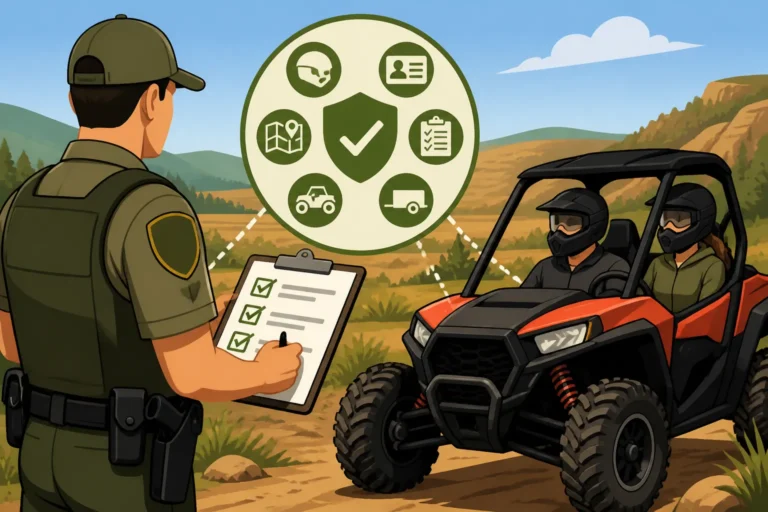
Oklahoma Sound Limits on Public Land
Oklahoma ATV and UTV riders can run into noise complaints even when a machine seems quiet at home. The tricky part is that a sound rule may depend on who manages the land, what equipment the machine has and how it is being used. Here’s how to check the rules before you unload, and how to reduce noise without assuming a sound meter settles the legal question.
Which sound rules apply on Oklahoma public land
There is no safe reason to assume that one sound limit applies everywhere an ATV or UTV can be ridden in Oklahoma. Rules can come from different layers: state law, the agency or land manager responsible for a property, and the riding area’s own posted requirements. Those rules may address vehicle noise directly, or they may deal with equipment, hours, rider conduct or nuisance complaints.
“Public land” can describe places with very different arrangements. A state-managed riding area, a wildlife management area, national forest land and privately owned timberland open to permitted public access do not necessarily share the same operating rules. A permit to enter a property also does not guarantee that every machine or modification is allowed.
Before a ride, identify the specific property and who manages it. Then check that manager’s current rules for sound limits, exhaust requirements, operating hours and any inspection or equipment checks. A rule posted at the entrance or in the official property information may be more specific than a general description of where ATVs are allowed. For more on access distinctions, see Oklahoma Land Access Permits Explained and Oklahoma Timber Land Access Rules.
| What to check | Why it matters | Where to confirm |
|---|---|---|
| A stated decibel limit or sound-test method | A number may apply only to a particular property or test procedure | The land manager’s current rules or posted notices |
| Exhaust and muffler requirements | A machine can be too loud because of damaged, missing or altered parts | Property rules and equipment requirements |
| Riding hours and quiet periods | Noise can be restricted by time or location, even if the machine meets equipment rules | The area’s visitor information and signs |
| Access and permit conditions | Access permission may come with additional conduct rules | The permit terms and managing agency |
| Local restrictions near homes or roads | A complaint may involve a nearby ordinance or separate land-use rule | The relevant local authority |
A quiet or “stock-sounding” machine is not automatically compliant, and a loud machine is not necessarily judged only by how it sounds to a rider. If a property publishes a specific limit, ask what measurement method applies. Distance from the machine, engine speed, microphone position, terrain and background noise can all affect a reading. A reading taken casually beside a parked machine may not match a manager’s formal test.
Keep related requirements separate in your mind. A spark arrestor is intended to reduce the risk of escaping sparks; it is not a muffler and does not prove that a machine meets a sound limit. A machine can need both the correct spark-arresting equipment and a functioning exhaust system. For a separate equipment check, see Spark Arrestor Checks at a Riding Area Gate.
How to confirm the rule before you ride
Start with the exact riding area, not a general search for “Oklahoma ATV noise law.” A broad search may turn up a rule for another property, another type of vehicle or a different kind of road. If you are riding on land with seasonal access or permit conditions, those details matter too. Oklahoma Rules for an Out-of-State Machine can help with a different part of the compliance picture, but it does not replace checking the rules of the place you plan to visit.
Use this sequence to get a reliable answer:
- Name the property and manager. Confirm the exact riding area, trail system or land parcel. Nearby land can be managed under a different set of rules.
- Read the current official rules. Look for noise, exhaust, muffler, vehicle inspection, quiet hours and operating-hour requirements. Check for updates or temporary restrictions before leaving.
- Read the signs when you arrive. Posted notices may clarify a rule or alert riders to a seasonal or site-specific restriction. If a sign and an older online summary seem to conflict, ask the manager before riding.
- Ask a focused question if the wording is unclear. For example: “Does this area have a sound limit for ATVs or UTVs, and what test method do you use?” Ask whether modified exhaust systems are allowed and whether checks occur at the entrance.
- Keep the answer with your ride information. Save the official page or written response on your phone, especially if coverage may be limited. Do not treat an informal comment from another rider as confirmation.
When comparing rules, look for the details that affect how a limit is applied. A property may specify a maximum sound level, but a number by itself can be incomplete. The test procedure, engine condition, test location and measurement equipment can determine whether a reading is meaningful. If the rule does not explain those details, ask the manager rather than trying to infer an official test from a phone app.
A basic sound meter or sound-level app can help you notice that an exhaust is louder than expected, but it cannot establish that your machine will pass an official check. Even a handheld meter bought through Amazon should be treated as a rough troubleshooting tool unless the land manager confirms that the device and testing method are accepted. Phone microphones and inexpensive meters may not be calibrated for compliance testing.
Also check whether the machine will cross or travel along a road to reach the riding area. A property’s trail rules may not answer the separate question of what is permitted on a nearby public road. The requirements for Oklahoma Rules for Riding a Section Line are a separate issue from a trail-area sound policy.
Practical ways to keep an ATV or UTV quieter
The most reliable first step is to maintain the exhaust system as designed. A missing muffler component, a leak, a loose joint or a damaged silencer can make a machine noticeably louder. Check for visible damage and rattles, and follow the manufacturer’s maintenance guidance. If a component needs replacement, choose a part intended for that machine and confirm it is permitted at the places where you ride.
Be cautious with exhaust modifications. A system sold as an upgrade is not automatically acceptable on public land, and a louder exhaust does not make a machine more capable in a way that matters for compliance. Before replacing parts, check the riding area’s rules and ask the manager about the exact configuration. If the rules call for equipment to remain within a specified sound level, a seller’s description is not a substitute for that requirement.
Rider behavior also affects the noise people hear. Avoid repeated high-revving while stopped, unnecessary throttle bursts and rapid acceleration near trailheads, campsites or property boundaries. Ride smoothly, use the permitted route and follow posted hours. These habits may not make an out-of-compliance machine compliant, but they can reduce avoidable disturbance and help prevent a complaint.
A sensible pre-ride check can catch issues before they become a problem:
- Start the machine and listen for an exhaust leak, a new rattle or a sudden change in tone.
- Check that exhaust components and mounts are secure.
- Confirm that no required part has been removed or replaced with a configuration the area prohibits.
- Ask a riding partner to listen from a safe distance while you use normal operating conditions; do not rev a machine aggressively just to compare volume.
- Recheck the property’s rules if the machine has recently been modified or repaired.
Do not use a phone reading as a pass or fail test. Measurements can change with the angle of the microphone, the distance from the exhaust, wind, nearby machines and surrounding surfaces. If the manager offers an official test procedure, follow that procedure rather than attempting to recreate it from memory. If your machine is near a published limit or has an altered exhaust, ask before making a long trip.
Noise concerns can also be part of a larger set of site expectations. Trail etiquette, quiet hours and campground rules may matter even when a property has no clearly stated decibel number. Oklahoma Trail Etiquette Locals Expect covers the broader practices that help riders share an area responsibly.
What to do if a sound complaint or check comes up
If an employee, ranger or other land representative raises a concern, stay calm and ask what rule applies. A useful conversation is specific: ask whether the issue is a published sound limit, an exhaust-equipment requirement, an operating-hours rule or a complaint about the way the machine is being used. Those are different concerns, and the right next step depends on which one is involved.
If the manager identifies a written rule, ask where to read it and whether there is a stated testing procedure. If a sound check occurs, ask how the equipment is positioned and what operating conditions are required. Avoid arguing from an informal reading taken on a phone; it may not be comparable to the manager’s procedure. If the machine is directed off the trail or the property, follow the instruction and resolve the issue before returning.
A complaint does not necessarily mean a rider has violated a statewide sound standard. It may involve a site-specific rule, a local restriction, a quiet period or conduct that is disturbing other users. Conversely, not hearing a complaint does not prove that the machine meets every applicable requirement. The practical approach is to confirm the rule before riding and correct a clearly damaged or altered exhaust rather than waiting for a dispute at the entrance.
If you ride in several areas, keep a short checklist for each one. Record the property’s official contact, its sound and equipment rules, any quiet hours, and whether the manager uses a formal inspection. Do not assume an answer for one property carries over to another. Access permits and trail permissions can also have limits unrelated to noise, so review them before setting out; Questions to Ask the Park Office Before You Go offers a useful checklist for clarifying site policies.
The main takeaway is simple: check the requirements for the exact public land you plan to use, maintain the machine’s exhaust, and treat informal sound readings as a warning tool rather than proof of compliance. If the rule is unclear, contact the land manager before hauling the machine. That small check can prevent a wasted trip and help keep riding areas open and pleasant for others.
Disclaimer
This article is for general informational purposes only and does not constitute professional advice. Laws, prices and regulations vary by location and change over time. Consult a qualified professional for guidance on your specific situation.