Oklahoma Rules for a Ten-Year-Old Rider
A ten-year-old can ride an ATV in Oklahoma only if the machine, location and supervision are appropriate—and the right safety rules still apply. The tricky part is that helmet requirements, land-access permits and riding-area rules are separate. Here’s how to check each one before you load up, including what changes for resident and visiting children.
The rules that matter for a ten-year-old
Oklahoma’s rules do not reduce to a single age cutoff. A child’s age is relevant to helmet requirements and some permit exemptions, but it does not automatically make every machine or riding area suitable—or permitted.
For a ten-year-old, start with these points:
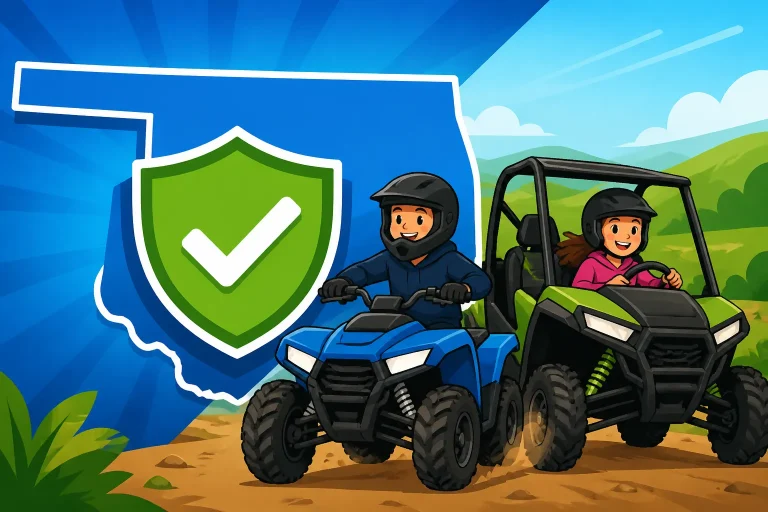
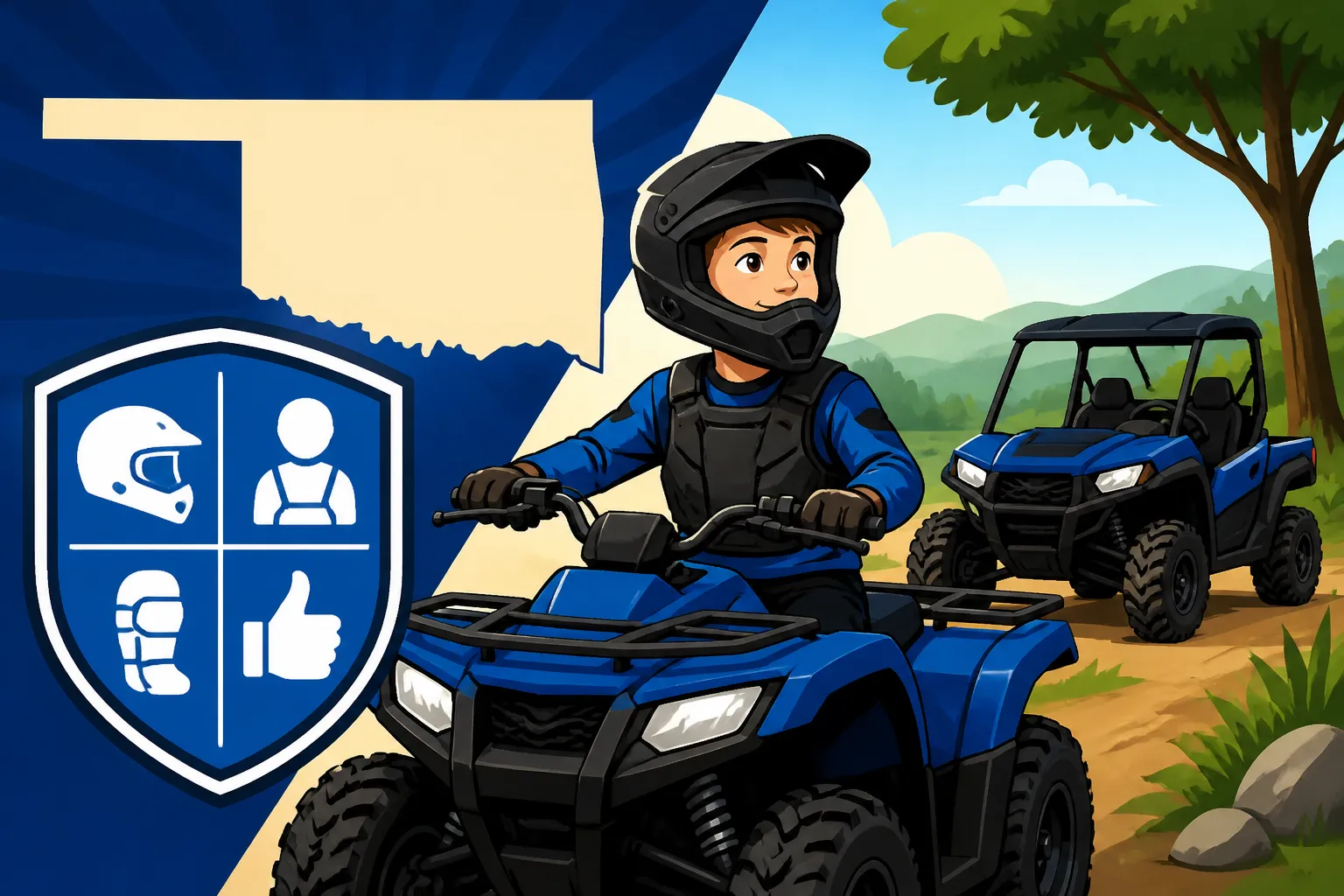
- Helmet: Oklahoma’s youth helmet rule applies to riders under eighteen. A ten-year-old should wear a properly fitted helmet that meets the applicable standard, even if a particular private riding area has its own additional requirements.
- Machine and supervision: Choose a machine the child can control, and check the riding location’s age, supervision and equipment rules before going.
- Land access: Some public-land access permits have age-based exemptions for Oklahoma residents. Those exemptions do not necessarily cover nonresidents or every riding destination.
- Roads: A registration decal or land-access permit is not permission to ride on a public road. Road use has separate restrictions and exceptions.
The practical starting point is to identify where the child will ride: private property, a private off-road park, a state riding area or another type of public land. Each can have different requirements. If you need a broader overview of youth riding, see Oklahoma Rules for Young Riders. For the age-related helmet details, see Oklahoma ATV Helmet Law Age.
There may also be a difference between what state law allows and what a particular park allows. A park can set its own minimum age, require an adult to accompany a minor, or impose rules beyond the statewide baseline. Check the specific area before leaving home rather than assuming that a child admitted at one riding site will be admitted at another.
| Question | What to check for a ten-year-old |
|---|---|
| Is a helmet needed? | Yes. Riders under eighteen are covered by Oklahoma’s youth helmet rule. |
| Is there a permit exemption? | It may depend on residency and the land being used. |
| Can the child ride any machine? | No. Match the machine to the rider and follow the site’s age and supervision rules. |
| Does a permit allow road riding? | No. Road use is a separate question. |
| Does one park’s rule apply everywhere? | No. Private parks and public riding areas may have different conditions. |
Helmets, machine fit and adult supervision
A ten-year-old should wear a helmet every time they ride, not just when a park employee asks for one. The helmet needs to fit securely and be appropriate for off-road riding. A loose helmet can shift or come off in a crash; one that is too small can be uncomfortable enough that a child tries to remove it.
Check the helmet’s safety label and fit instructions before relying on a product description. If you shop online, including on Amazon, confirm the model, size and certification information rather than choosing by appearance alone. A helmet should sit level, stay in place when the child moves their head, and have a fastened chin strap. Replace it after a significant impact or when the manufacturer’s guidance says it should be replaced.
A helmet is only part of the safety setup. Eye protection, gloves, sturdy footwear and clothing that covers the skin help protect against debris, branches and hot machine parts. At a managed riding area, check the posted rules for any required equipment. For riding on public land, review the area’s own requirements as well as the statewide youth rule.
Choose a machine the child can control
A child’s age alone does not tell you whether a machine is a good fit. Consider the child’s size, strength, coordination, experience and ability to understand controls. The child should be able to reach and operate the controls as intended, sit in a stable position and stop the machine reliably. If the child cannot comfortably manage the throttle and brakes, the machine is not a suitable choice, even for a short ride.
Do not assume that an adult-sized ATV becomes appropriate because an adult is nearby. Power, weight, speed and braking characteristics matter. Follow the manufacturer’s age and operating guidance for the specific machine, and use a lower-powered youth model when that is the safer match. Keep the child away from situations where a quick stop, turn or change in terrain could exceed their ability.
Supervise actively
An adult’s presence should mean more than staying somewhere on the property. Keep the child in sight and close enough to intervene. Explain where riding is allowed, what to do if the machine stalls, and how to respond if another rider approaches. Set clear boundaries around roads, water, steep slopes and other hazards. On a group ride, make sure the child knows which adult to follow and what to do if the group separates.
There is no substitute for checking the rules at the actual destination. A public area may have designated routes, speed limits, seasonal closures or restrictions on who can ride. A private park may require a parent or guardian to sign a waiver or accompany a minor. A landowner can also restrict access to private property. If you are new to youth riding, Oklahoma Has No Mandatory Safety Course explains the difference between a legal requirement and optional preparation; a course can still help a young rider learn safe habits.
Permits and where a child may ride
Permit rules depend on the land and the rider’s residency. An exemption from a land-access permit is not the same as free admission to every riding area, and it does not override a park’s own rules. Before a trip, identify the property manager and ask what the child needs to ride there.
Oklahoma residents under eighteen are exempt from certain land-access permit requirements described for public land access. That age exemption is not a blanket pass to every area. A specific property may have separate access conditions, and a private park may charge admission or require its own forms regardless of state permit exemptions.
For a child who lives outside Oklahoma, do not assume the resident youth exemption applies. Nonresident riders may need a permit even when they are under eighteen, depending on the land and the type of access. Check the requirements for the particular destination before traveling. The details in Do Oklahoma Kids Need a Permit? and Oklahoma Permit Exemptions by Age can help you sort out the age and residency questions.
A useful way to think about the paperwork is to separate it into three categories:
- Land-access permit: May be required to access certain public or timber-company lands. Eligibility and exemptions can depend on residency, age and the property.
- Park admission or private-site rules: A privately operated riding area can have its own fees, waivers, age limits, equipment requirements and supervision rules.
- Machine registration or road authorization: Registration does not replace a land-access permit or site admission. Nor does it, by itself, make public-road use legal.
Before a trip, contact the area or review its current official information. Ask whether the ten-year-old needs a permit, whether a parent must ride with the child, what helmet standard is accepted, whether the child can use the chosen machine and whether the intended trails allow that type of vehicle. For an overview of places to consider, see Oklahoma ATV Trails: Where to Ride, then confirm each location’s current conditions directly.
Don’t confuse an age exemption with permission to ride
Even when a child is exempt from a particular permit, that only settles the permit question covered by the exemption. It does not authorize riding on closed land, bypass a private property owner’s permission, waive a park’s minimum-age policy or remove equipment rules. A permit also does not guarantee that a trail is open on the day you arrive.
The same caution applies to a visiting family. A child may be treated differently based on residency, and an out-of-state registration decal does not automatically satisfy every Oklahoma land-access requirement. If your family is visiting, check the rules for nonresident riders rather than relying on what applies at home.
Roads, passengers and a pre-ride check
For a ten-year-old, keep the riding plan focused on a permitted off-road area or private property where you have permission. Oklahoma’s road-use rules for ATVs and UTVs are separate from the rules for riding on trails. A machine’s registration status, a land-access permit or a park wristband does not give a child permission to ride along a road.
Some road use may be allowed under specific circumstances, but the details depend on the route, the machine and the applicable rule. Do not let a child ride along a road or cross one based on a general assumption that “ATVs are allowed here.” Check the current road rules and any local restrictions before including a crossing or road segment in the route. If the intended trip involves a street or highway, review Oklahoma Rules for Crossing a Highway and Oklahoma Rules for Riding a County Road rather than treating it as ordinary trail riding.
Passenger rules matter, too. A child should not ride as a passenger on a machine unless it was designed and equipped to carry a passenger, and the site’s rules allow it. A one-person quad is not a two-person vehicle simply because the child can sit behind the operator. Check Oklahoma Rules for a Child Passenger for the passenger distinction, and follow the machine manufacturer’s instructions.
A quick pre-ride check helps catch problems before they become emergencies:
- Confirm access. Verify that the land or riding area is open to the type of machine you plan to bring and that you have permission or the required access credentials.
- Check the child’s eligibility. Ask about minimum age, adult supervision, waivers and any youth-specific rules. Confirm whether residency affects a permit requirement.
- Inspect the machine. Check the brakes, throttle, tires, controls and protective equipment. Make sure the machine is suitable for the child and the terrain.
- Fit the gear. Secure the helmet and check eye protection, gloves, footwear and clothing. Follow any additional requirements posted by the area.
- Set boundaries. Identify the approved route, explain where the child may stop, and make a plan for what to do if the group gets separated.
- Recheck conditions. Weather, closures, surface conditions and park policies can change. Confirm the destination’s current instructions before setting out.
If a clerk, park employee or land manager gives you a requirement that is unclear, ask which rule or property policy it concerns. That can help distinguish a state permit, an admission condition and a machine-registration issue. For more on the permit question, see Oklahoma Land Access Permit Cost; for general questions to raise before a visit, Questions to Ask the Park Office Before You Go can help you prepare.
The safest practical approach is straightforward: use a properly fitted helmet, select a machine the child can control, keep an adult close, and verify the access rules for the exact place you intend to ride. Treat exemptions narrowly, and do not assume that permission to ride off-road extends to a nearby road.
Disclaimer
This article is for general informational purposes only and does not constitute professional advice. Laws, prices and regulations vary by location and change over time. Consult a qualified professional for guidance on your specific situation.