Oklahoma Private Park Alcohol Rules
Oklahoma private off-road parks do not all follow one alcohol policy, so a rule that worked at one riding area may not apply at the next. Before packing drinks, find out what the operator allows, where consumption is permitted, and what happens if a rider appears impaired. A little planning helps protect your ride, your group, and your access to the park.
Why alcohol rules vary between Oklahoma private parks
A private riding park can set conditions for entering and using its property. That means alcohol rules may be part of the park’s admission terms, waiver, posted signs, campground rules, or instructions from staff. One operator may prohibit alcohol throughout the property; another may allow it in designated camping areas but not on trails or in staging areas. Some may have stricter rules during events or busy weekends.
There is no safe assumption that “private park” means alcohol is allowed, or that rules at one park carry over to another. Even if a park permits alcohol in a particular area, permission to drink does not mean permission to ride after drinking. The park can also set its own response to rule violations, such as refusing entry, ending a visit, or requiring someone to leave.
Before your trip, check the rules for the exact location and dates you plan to visit. A social media post or an old review may be out of date, and a rule for the campground may not apply to the riding area. If the policy is unclear, contact the park directly and ask for the current version in writing. You can also confirm practical details with Questions to Ask the Park Office Before You Go.
Separate the park’s property rules from state law
A park’s alcohol policy and Oklahoma law are separate questions. The operator can impose property rules that are stricter than what state law might otherwise allow. Conversely, a park’s permission to possess or consume alcohol does not waive laws that apply to impaired operation of a vehicle.
Do not treat an alcohol wristband, campground permit, or admission receipt as permission to operate a quad or side-by-side after drinking. Impaired riding can create serious safety risks and legal consequences. For more on the legal side, see Oklahoma DUI Law and Off-Road Machines.
Rules for public riding areas can differ, too. Little Sahara, for example, has a specific alcohol restriction for its dune area; that does not establish the policy for every private park in Oklahoma. Check the current park rules rather than relying on another location’s policy. For the separate public-area fee and access information, see Oklahoma Little Sahara Day Fees.
What “alcohol allowed” may actually mean
A short statement such as “alcohol permitted” may leave important details unanswered. It might mean only that adults can have drinks at their campsite. It may not cover trails, parking areas, group rides, event grounds, or passengers riding in a machine. The park might also restrict glass containers, open containers, public intoxication, or when alcohol can be consumed.
Ask for the boundaries, not just a yes-or-no answer. Find out whether the permission applies to the whole property or a specific area, whether the rules change during organized events, and whether staff can ask a guest to stop drinking or leave. If you are traveling with a group, share the actual policy before the drive so no one is relying on an assumption.
What to confirm before you bring alcohol
A quick call or message before departure can prevent a disagreement at the entrance. Ask about the park’s policy for the riding area and for overnight camping separately. If you are staying with friends or joining a group, make sure everyone understands the same rules.
| Question to ask | Why it matters |
|---|---|
| Is alcohol allowed anywhere on the property? | A park may ban it entirely or limit it to particular locations. |
| Are the rules different in campsites, common areas, and riding zones? | Permission in camp does not necessarily extend to the trails or staging areas. |
| Are there container restrictions? | Glass or open containers may be prohibited even when other drinks are allowed. |
| Does the policy change during events or group rides? | Event rules can be more restrictive than ordinary visit rules. |
| How does the park handle someone who appears impaired? | The operator may have authority to stop a ride or require a guest to leave. |
| Can a passenger drink while a machine is moving? | The park may set vehicle-specific rules beyond its general alcohol policy. |
| Where can I read the current terms? | Written policies and posted rules are easier to share with your group. |
Also ask whether the policy applies to every person in your party, including guests who are not riding. A person can be subject to campground or property rules even if they never get on a machine. If the park requires a waiver, read it rather than treating the signature as routine. The terms may explain conduct expectations, removal procedures, or the visitor’s responsibility for following posted rules. See Oklahoma Private Park Waivers for more on what to look for before signing.
Wristbands and other access controls
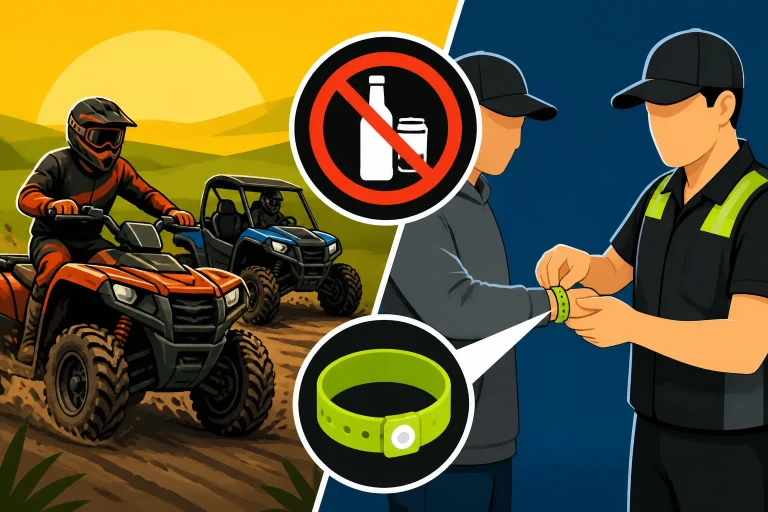
Some parks use wristbands, stamps, or another visible system to distinguish guests or manage access. A wristband can be a way to show that someone has checked in or is permitted in a certain area. It should not be interpreted as a universal alcohol pass, proof that drinking is allowed everywhere, or permission to operate a machine after drinking. Ask staff what the wristband represents at that park. The process described in How Wristbands Control Alcohol at a Riding Park is one possible way an operator may manage access, not a rule that every Oklahoma park uses.
If staff explain the policy at check-in, listen carefully and pass the information to your group. A guest who arrives later may miss the briefing. Do not remove, lend, or transfer a wristband if the park has made it personal or tied it to an admission record.
Riding safely when alcohol is part of the visit
Alcohol and off-road riding are a poor combination. A quad or side-by-side can tip, lose traction, strike an obstacle, or encounter another rider with little warning. Alcohol can affect judgment, balance, reaction time, and the ability to make sound decisions. Familiar trails and low speeds do not eliminate those risks.
The simplest plan is to keep anyone who has been drinking off the controls. That includes a driver who has “only had one,” someone who feels fine, or a guest who plans to ride only a short distance back to camp. Arrange a sober driver before anyone starts drinking. If there is no sober operator available, leave the machine parked until there is one.
This is a safety plan, not a substitute for the park’s rules or state law. A park can still stop a rider who appears impaired, and the consequences of operating a machine while impaired can extend beyond losing access to the property. Read Oklahoma DUI Law and Off-Road Machines if you need to understand the legal questions separately from the park’s house rules.
Plan for drivers, passengers, and children
Decide in advance who will operate each machine, who will stay sober, and how people will get from the riding area to camp. Make that plan before the first drink, not after the group is tired or ready to leave. Avoid relying on a passenger to take over later unless that person has not been drinking and is legally and practically able to drive.
Families should make the alcohol policy clear to adults and older teens. Keep drinks and containers out of a child’s reach, and do not let children take a machine for an unsupervised trip while adults are occupied. If the park has separate rules for young riders or protective equipment, follow those as well. Alcohol rules do not replace riding rules; see Oklahoma Private Park Helmet Rules for another example of property-specific safety requirements.
If a driver becomes impaired, do not let them “just move” the machine or take it a short distance. Ask a sober adult to help, call park staff if needed, and leave the machine parked. A difficult conversation at camp is far better than a crash, an injury, or a confrontation at the gate.
Campsites, cleanup, and consequences for breaking a rule
Alcohol rules often overlap with campground conduct. A park may permit drinks at a campsite but prohibit them in shared facilities, on trails, or in public gathering areas. It may also limit noise, require guests to secure belongings, or set quiet hours. Check the campground policy separately from the riding policy, and do not assume that a campsite is outside the park’s rules. [Oklahoma Private Park Camping Rules] and [Oklahoma Private Park Quiet Hours] cover related questions that are worth checking before an overnight stay.
Be considerate even where the rules permit alcohol. Keep containers contained, clean up broken glass or spills safely, and avoid leaving cans or bottles where a child, dog, or rider could encounter them. Never toss containers into the woods or along a trail. If the park prohibits glass or open containers, follow that requirement throughout the specified area.
The park’s response to a violation depends on its policy and the circumstances. Staff might give a warning, stop a ride, require a guest to leave, or take another action allowed by the park’s terms. Do not assume a refund will be available if the operator ends your visit because someone broke a posted rule. Read the admission conditions, and ask how staff handle violations if that information is not clear.
If you disagree with a rule or believe it was applied incorrectly, stay calm and speak with staff away from the riding area. Do not argue while operating a machine, ignore an instruction, or try to resolve the issue by riding off. A disagreement about a park policy is not worth creating a safety problem for your group or other visitors.
The most useful approach is straightforward: confirm the current policy with the park, distinguish campsite permission from trail access, and keep anyone who has been drinking away from the controls. Then share the plan with everyone in your group before the visit. That leaves less room for confusion at check-in and makes it easier to enjoy the ride responsibly.
Disclaimer
This article is for general informational purposes only and does not constitute professional advice. Laws, prices and regulations vary by location and change over time. Consult a qualified professional for guidance on your specific situation.