Oklahoma Landowner Permission Rules
Oklahoma ATV and UTV riders can’t assume that an open gate, familiar trail, or neighbor’s invitation gives them permission to cross private land. The key is getting consent from someone authorized to grant it, then staying within its limits. This guide explains what permission should cover, how permits differ from landowner consent, and what to check before riding.
Permission Is About Who Controls the Land
A parcel may look like a natural route between two roads, or a trail may show tire tracks from previous rides. Neither fact proves that you may ride there. In Oklahoma, treat land as private unless you have confirmed that access is allowed. Going onto land without consent can lead to a trespass dispute, even if you intended only to cross it briefly.
The person who can give permission is usually the owner, but ownership is not the only practical consideration. A farm tenant, ranch manager, hunting-lease holder, or property manager may have authority to approve some uses. That authority may be limited. Someone allowed to manage livestock, for example, may not have the right to invite riders onto the property. Ask what the person is authorized to permit rather than relying on a casual assumption.
A request should identify the precise property and intended activity. “Can I ride out there?” leaves room for confusion. It might mean one machine crossing a field today, while the person granting permission imagines a short ride on a designated track. Be specific about the vehicle, route, date, number of riders, and whether you’ll be accompanied by guests.
It is also worth remembering that permission is not permanent by default. The person in control may set an end date, limit access to certain routes, or withdraw consent. A new owner, tenant, or land manager may have a different policy. Reconfirm before a later ride if circumstances have changed or the original agreement was informal.
Open gates and familiar tracks are not permission
A gate left open may be open for livestock, farm equipment, or another authorized user. A well-used track may serve a landowner, utility crew, or agricultural operation. A “no trespassing” sign is a clear warning, but the absence of a sign does not establish that the land is open to recreational riding.
Fences, gates, posted signs, and requests from an owner or representative should be taken seriously. Don’t cross a barrier to see where a trail goes, and don’t treat a missing fence section as an invitation. If you cannot tell who controls the land, stop and find out before entering.
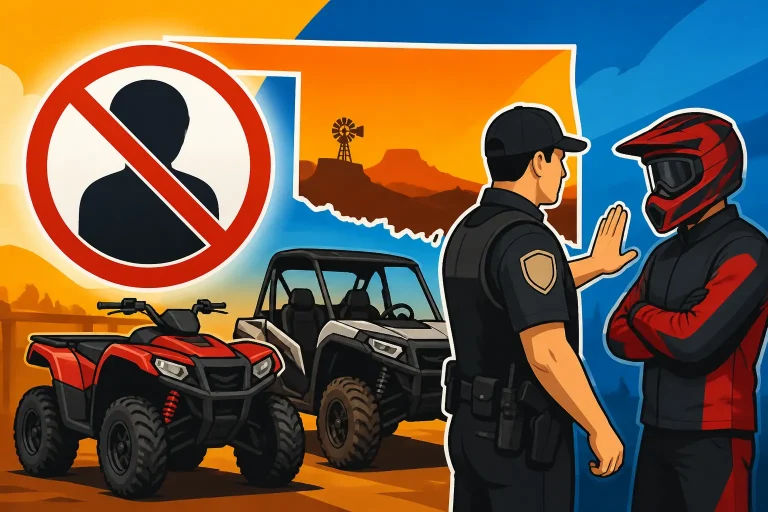
If a landowner or authorized representative asks you to leave, leave promptly and calmly. Continuing to ride, arguing on the property, or returning after permission has been withdrawn can turn a misunderstanding into a more serious conflict.
For more detail on signs and boundaries, see What Posted Land Means Before You Ride and Oklahoma Trespass Law for Riders.
Permission should come from someone with authority
If you are asking a neighbor, employee, tenant, hunting guide, or caretaker, confirm that person can authorize recreational vehicle access. A person may be able to invite you onto a portion of a property but not onto neighboring acreage or a road controlled by another party.
When the person giving permission is not the owner, ask who else needs to approve the ride. This is especially important for land used by a farm or ranch operation, land under a hunting lease, and property with oil, utility, or other commercial activity. A landowner’s consent may not grant access to a separately controlled easement or work site.
If the person cannot confirm their authority, don’t put them on the spot or proceed on a guess. Ask for the owner or manager’s contact information, or choose a place where access rules are clear.
What a Landowner’s Permission Should Cover
For a one-time ride with a friend, a clear conversation may be enough to establish the arrangement between the people involved. For repeated use, multiple riders, a large property, or a paid activity, get the details in writing. A written record helps both sides remember what was agreed and makes it easier to avoid accidental overreach.
There is no need to make a simple permission note complicated. It should be clear about who is allowed, where they may go, and when access ends. If the landowner has conditions, write those down too. A text or email can preserve the terms, but keep a copy available when riding; mobile reception may be poor in rural areas.
A useful permission note can cover:
- The owner or authorized manager and the riders who are allowed onto the property.
- The property address, parcel description, map, or another clear way to identify the permitted area.
- The approved dates and hours, and whether future visits require fresh approval.
- The types and number of machines, including whether passengers or guests are allowed.
- Approved trails or roads, restricted areas, and any areas that must not be crossed.
- Rules for speed, noise, lights, parking, unloading, and riding after dark.
- Whether camping, hunting, fishing, target shooting, or other activities are excluded.
- Gate, fence, livestock, crop, and equipment instructions.
- Whether a fee, deposit, or other condition applies.
- How the owner can contact the group and how permission may be withdrawn.
- What to do if there is an injury, fire, property damage, or other emergency.
A simple map can prevent more trouble than a long description. Mark the permitted route and clearly exclude neighboring parcels, buildings, livestock areas, crops, ponds, or work zones. If the landowner wants riders to use only one trail, don’t interpret that as permission to explore all connecting tracks.
Permission for one rider does not automatically cover a whole group. Before bringing a friend, family member, or guest, ask whether that person is included. The owner may want to know how many machines are coming, who is responsible for minors, or whether every rider needs to check in.
Agree on practical limits before unloading
Access rules should account for what the property is used for. A route that is safe in one season may cross a planted field, grazing area, or active work site later. Ask whether agricultural activity, hunting, construction, or other operations could affect the planned ride.
Clarify what to do about gates. Some should be left as found; others must be closed to keep livestock in. Don’t assume that a gate’s position tells you what the owner wants. Ask, follow the instruction, and make sure every rider in the group understands it.
Also discuss the basics that often lead to complaints: excessive noise near a home, riding late, leaving trash, damaging vegetation, or driving over a wet field. A machine can leave deep ruts even when the rider is moving slowly. If a route is too muddy or a crossing looks unsafe, turn around rather than creating damage.
For agricultural property, permission to ride is not the same as permission to use every part of a farm. See Oklahoma Rules for Riding Farm Ground for related riding considerations.
Permission does not remove other rules
A landowner can allow access to their property, but that consent does not make every activity lawful. It does not turn a private road into a public road, authorize riding on a highway, or excuse conduct that violates another applicable rule. It also does not necessarily give access to a neighboring parcel, public area, or separately controlled road.
The same distinction matters for permits. A permit may be required for a particular public or managed riding area, but it does not replace the need for permission to cross private land on the way there. Conversely, permission from a private owner does not replace a permit required at a destination.
Keep these separate questions in mind:
| Question | What it establishes | What it does not establish |
|---|---|---|
| Did the owner or an authorized person allow this ride? | Consent to enter the specified private property within the agreed terms | Permission to enter adjoining land or ignore other applicable rules |
| Does this riding area require a permit? | Whether you have met the area’s permit requirement | Consent from a private landowner along the route |
| Is a road open to this kind of machine? | Whether the road’s access and vehicle rules allow the trip | Permission to cross private land beside the road |
| Is the activity allowed at this time? | Whether current schedules, closures, or property conditions permit the ride | A continuing right to return later |
Permits and Landowner Consent Are Different
Oklahoma riders may encounter several types of access arrangements: private landowner permission, permits for particular managed lands, and access rules for public roads or recreation areas. They solve different problems. Before a ride, identify who controls each part of the route and what permission or permit applies there.
A land access permit is not a general license to ride anywhere in Oklahoma. It applies only within the scope of the relevant program and land. It does not grant entry to every privately owned field, ranch, or timber tract. Read the terms for the actual place you plan to visit, and confirm any current restrictions with the land manager.
The reverse is also true: a landowner’s invitation does not necessarily satisfy a permit requirement for a managed area. A private owner can agree to let you cross their property, but that agreement doesn’t automatically authorize you to ride on adjoining public or program land.
For a broader explanation of how the arrangements differ, see Oklahoma Land Access Permits Explained. Riders planning to visit managed timber property should also check Oklahoma Timber Land Access Rules. Land ownership, access agreements, seasonal limits, and permitted activities can vary, so do not assume that one property’s arrangement applies to another.
Timber, hunting, and commercial land need extra care
Some land is privately owned but made available for specific kinds of public access through a permit or other managed arrangement. That does not mean riders have unrestricted access. A permit can come with limits on season, location, vehicle use, or required activities. Confirm what applies to the particular area rather than relying on a friend’s description or an old trip plan.
Hunting access is another common source of confusion. A hunting permission or license does not automatically authorize recreational ATV or UTV riding across every parcel. Ask the landowner or manager whether motorized travel is allowed, where it may occur, and whether hunting activity changes the access conditions.
Be especially cautious around oil and utility roads. A road may cross private land, serve a business, or be subject to access restrictions. The fact that a road is visible on a map or has tire tracks does not establish that recreational riding is permitted. Ask the person controlling the road and stay clear of active work areas. See Oklahoma Rules for Riding an Oil Lease Road for related considerations.
Public roads and private roads are not interchangeable
A landowner may permit you to ride on a private road within their property, but that does not mean you may continue onto a public road. Rules for ATVs and UTVs on roads depend on the type of road and applicable state or local requirements. Permission from an adjacent landowner does not override those rules.
Likewise, a route that appears to be a public road may involve a private driveway, gate, or segment of land where access is restricted. Confirm the route before you ride. When the trip involves a county road, check the rules that apply to that road and the local area; Oklahoma Rules for Riding a County Road can help separate road access questions from private-property consent.
If a riding plan depends on crossing several parcels, obtain permission from each person with authority over the relevant land. One “yes” does not cover the entire route unless the person granting it actually controls all of that land.
How to Ask, Document, and Ride Within the Agreement
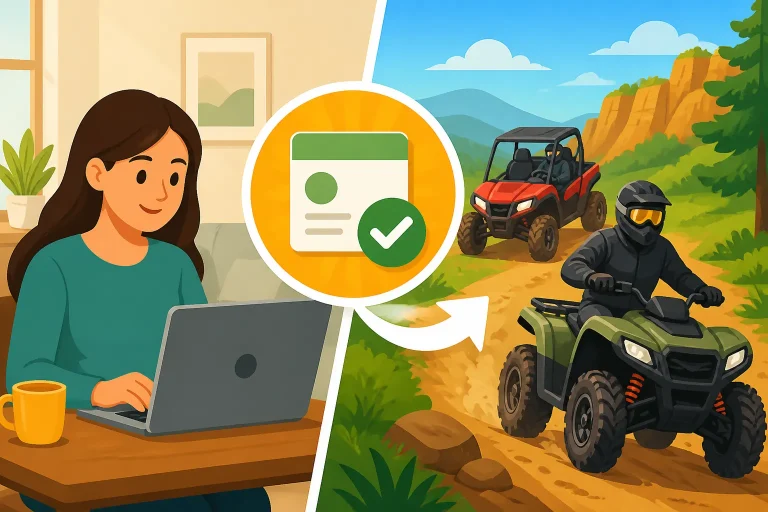
A good permission request is direct and easy to answer. Contact the owner or manager before arriving with a trailer. Explain who you are, what machine you plan to bring, how many people will ride, where you hope to go, and when you expect to be there. Ask what areas are off limits and whether any conditions apply.
Avoid asking for broad access when you only need a short crossing. A narrow request is easier to assess and less likely to create a misunderstanding. For example, ask whether you may use a specified track between two points on a particular day, rather than asking to ride “the property.” If you hope to return, ask whether each visit requires another message.
A practical process looks like this:
- Identify the property and the person in control. Use a reliable map or local property information, then confirm the contact is authorized to grant access.
- Describe the ride. State the machine type, rider count, intended route, date, and purpose.
- Ask about restrictions. Confirm gates, livestock, crops, work activity, noise, hours, parking, passengers, and any off-limits areas.
- Record the agreement. Keep a text, email, or written note that makes the permitted area and dates clear. Save a map if the route is not obvious.
- Share the conditions with the group. Every rider should know the boundaries and what to do at gates, crossings, and emergencies.
- Check again before leaving. Confirm access if weather, land use, ownership, or the original schedule has changed.
- Stay within the permission. Turn around if the route ends, conditions are unclear, or someone asks you to leave.
If you are arranging a group ride, name the people or define the group clearly. Don’t assume that permission for you includes a convoy, a commercial outing, a club event, or people you invite later. A landowner might agree to a family visit but not a large event, and may require separate arrangements for fees, insurance, parking, or liability paperwork.
A written permission note is useful evidence of the agreed terms, but it is not a universal legal shield. It does not guarantee that every disagreement will be resolved in your favor, eliminate responsibility for damage, or override laws and land-use restrictions. If access involves a business, organized event, payment, or significant risk, get specific advice about the arrangement rather than relying on a casual text.
Respect boundaries and protect the relationship
Once permission is granted, make it easy for the owner to say yes again. Stay on the approved route, keep the group together, and don’t invite extra riders without asking. Avoid disturbing livestock, crops, wildlife, equipment, or people working nearby. Leave the property as directed and report any damage or incident promptly.
A rider who finds a gate open should follow the owner’s specific instructions, not a general rule that every gate should be left open or closed. Don’t climb a fence or force a gate. If an obstacle blocks the agreed route, contact the owner or turn back rather than creating a new route without approval.
Pay attention to changes. A trail may be closed for planting, wet conditions, hunting, repairs, or a new work activity. If you see a sign, barricade, fresh equipment, or a person directing traffic, stop and clarify. A prior invitation should not be treated as permission to ride through a changed situation.
If access is denied, accept the answer and find another place to ride. Pressuring the owner, entering anyway, or arguing that other riders have used the land before is likely to damage trust and can create legal problems. For access arranged through a permit or managed property, check the applicable manager’s rules rather than trying to substitute informal permission.
Keep useful records without making the ride complicated
Save the owner’s contact information, the permission message, and a map or written description of the route. If permission is for a single date, note that clearly. Keep the information accessible even if cell service is unreliable. A saved message or offline map is more useful on the trail than a screenshot left on someone else’s phone.
For recurring access, ask how often the owner wants you to confirm. Don’t interpret silence as renewed permission if the agreement has expired or conditions have changed. If the land changes hands or a new manager takes over, start the conversation again.
It can also help to record the date and any special instructions in a shared message to the group. That reduces the chance that one rider takes a shortcut, brings an unapproved guest, or leaves a gate in the wrong position because the terms were not passed along.
Common Situations That Cause Confusion
Many access problems come from treating different kinds of permission as if they were interchangeable. A short conversation can prevent a costly mistake.
“My friend has ridden there before.” That does not establish that you have permission. Ask who granted access, whether it is still valid, and whether it covers your machine and group.
“The owner said I could ride, so I can bring my friends.” Not necessarily. Confirm the number and identity of riders allowed, especially for a group or organized ride.
“The gate was open.” An open gate does not prove recreational access. It may be open for farm work or another user. Get consent before entering.
“I have a permit for nearby land.” A permit is limited to the area and conditions it covers. It does not automatically grant access across private parcels on the way there.
“I can see a trail on a map.” A mapped line does not tell you who controls the land or whether riding is permitted. Confirm the route with the appropriate owner or manager.
“The road looks public.” Appearance alone may not settle whether it is public, privately controlled, or open to your machine. Verify the route and the rules before riding.
“I have permission to hunt, so my ATV can go anywhere on the property.” Hunting access and motorized riding access may be separate. Ask specifically about the machine, route, timing, and any conditions.
“The owner’s permission means I can cross the neighbor’s field too.” Permission normally applies only to the land and route authorized by the person who gave it. Get separate consent for adjoining property unless the owner clearly controls both areas and says the route is included.
If you have a question about whether an agreement covers your exact route, ask the owner or manager before you ride. For broader questions about permissions and permits, Oklahoma Permit Questions Riders Ask is a useful related topic.
Frequently Asked Questions
Does a landowner have to give permission in writing?
Not every informal visit requires a formal document, but written permission is a practical way to preserve the boundaries, dates, and conditions. It is especially useful for repeat rides, groups, or unclear routes. A written note does not replace compliance with other laws or permit requirements.
Does permission from a landowner let me ride on a public road?
No. Permission to use private property does not determine whether an ATV or UTV may be operated on a public road. Check the rules for the specific road and location before using it.
Can I bring another rider if I have permission?
Only if the agreement covers that rider or the landowner confirms guests are allowed. Ask before inviting others, and make sure everyone follows the same route and conditions.
Does an Oklahoma land access permit let me cross private land?
No. A permit applies to the land and activities covered by its terms. It does not replace permission from a private owner for land outside that arrangement.
Disclaimer
This article is for general informational purposes only and does not constitute professional advice. Laws, prices and regulations vary by location and change over time. Consult a qualified professional for guidance on your specific situation.