Oklahoma Rules for Towing a Trailer
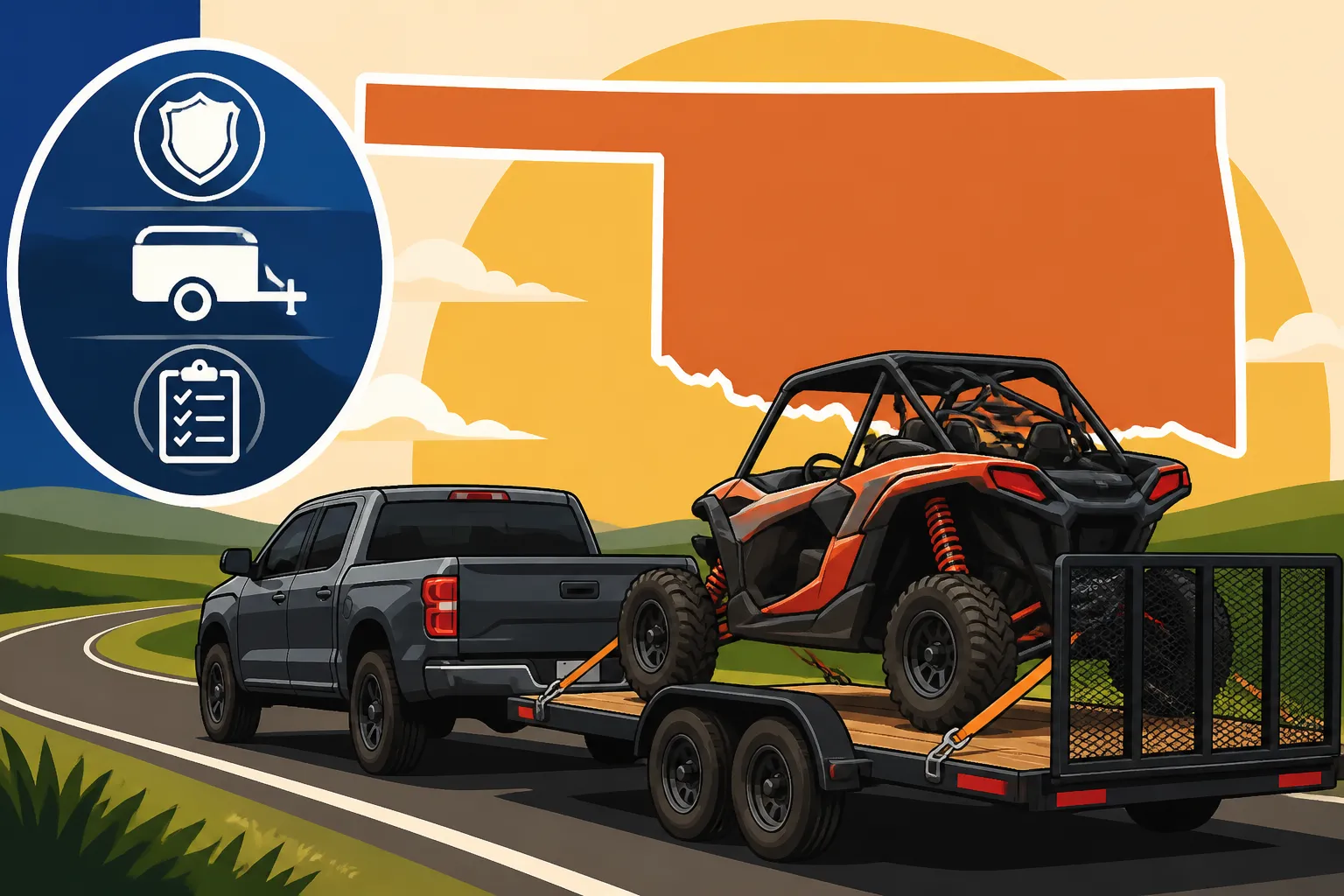
There's nothing quite like the freedom of an ATV or UTV, whether you're navigating rough terrain, cruising a dirt path on your property, or getting work done around the ranch. But for many riders, that utility extends to hauling gear, tools, or even hunting spoils. The confusion often starts when you consider hooking up a trailer: what are the actual rules for towing a trailer with your ATV or UTV in Oklahoma? This guide aims to clear up that often-muddy water, explaining the legalities, safety considerations, and practical tips for responsibly towing a trailer across the Sooner State.
Understanding the Basics of ATV/UTV Trailer Towing in Oklahoma
The idea of hitching a small trailer to your quad or side-by-side might seem straightforward, but in Oklahoma, like with many off-road activities, there are layers of considerations. It's not just about if your machine can pull it, but if it should, and under what circumstances it's legal.
Why Towing Rules Exist
At first glance, you might think, "It's just a small trailer, what's the big deal?" But the rules and recommendations for towing exist for very good reasons: safety and control. ATVs and UTVs are designed for maneuverability and often operate on uneven terrain. Adding a trailer dramatically changes the center of gravity, increases stopping distances, and can destabilize your machine, especially if the load isn't balanced or the trailer is too heavy.
Think about it: your ATV, nimble as it is, has a much shorter wheelbase and lighter frame than a pickup truck. The dynamics of towing are completely different. A sudden turn, an unexpected bump, or an emergency stop can quickly turn a loaded trailer into a dangerous pendulum, pushing your machine around and potentially causing a rollover. These rules are in place to prevent accidents, protect riders, and minimize damage to property, often reflecting a blend of common sense and specific state statutes that apply differently depending on where you're riding.
Types of Trailers You Might Tow
When we talk about towing with an ATV or UTV, we're usually not talking about giant boat trailers or travel campers. The types of trailers commonly towed by these machines are typically smaller and designed for specific tasks:
- Utility Trailers: These are the workhorses. Often single-axle, open-bed trailers perfect for hauling tools, bags of feed for livestock, fence posts, or even a small generator for a remote campsite. They're built to be rugged and handle various materials.
- Small Cargo Trailers: These might be enclosed or have high sides, used for protecting camping gear, hunting supplies, or personal items from the elements. Think of them as a portable trunk for your off-road adventures.
- Hunting Trailers: Specialized trailers for retrieving game, like a deer or hog, from the field. These are often designed with easy loading ramps and sturdy construction for off-road conditions.
- Dump Carts: These are particularly useful for yard work or light landscaping, allowing you to easily transport and then dump soil, gravel, mulch, or brush.
It's crucial to distinguish between trailers designed strictly for off-road use and those that might also be street-legal (requiring plates, lights, etc.). While this guide focuses on the towing aspect with your ATV/UTV, remember that [Does a Trailer Need Its Own Tag?] can be a separate consideration depending on the trailer's size, weight, and intended use on public roads.
Common Scenarios for Towing
Towing capabilities greatly expand the versatility of your ATV or UTV, making them invaluable tools in many situations:
- Farm and Ranch Work: For those living the rural life, an ATV or UTV with a trailer is often an indispensable asset. Moving hay bales, hauling buckets of feed to livestock, transporting tools for fence repair, or even pulling a small sprayer across fields are daily occurrences. It transforms your recreational vehicle into a legitimate farm implement. Understanding [Oklahoma Rules for Riding Farm Ground] is key here, especially if your farm work requires crossing public roads.
- Hunting Expeditions: After a successful hunt, a trailer can be a lifesaver. Instead of struggling to drag game out of dense woods, you can use your machine to retrieve a deer, boar, or other game, along with your stands, blinds, and other gear. Many wildlife management areas (WMAs) allow ATV/UTV use for game retrieval, making these machines and their towing capacity essential for hunters. Look into specific WMA rules regarding [Oklahoma Hunting Access by Machine].
- Camping and Outdoor Adventures: When you're heading out for a weekend of camping, fishing, or exploring, a trailer provides that extra storage space for tents, coolers, fishing tackle, firewood, or even a small generator. It keeps your quad or side-by-side free of clutter and allows you to bring along those comforts that make an outdoor trip truly enjoyable.
- Property Maintenance: From hauling bags of mulch for landscaping to collecting branches after a storm, or moving tools around a large property, a trailer with your ATV/UTV can save you immense time and effort. It's far more efficient than multiple trips with a wheelbarrow.
Legalities and Equipment for ATV/UTV Trailers in Oklahoma
Towing a trailer in Oklahoma, especially if there's any chance of hitting a public road, isn't just about hooking it up and going. There are specific legal requirements and equipment considerations you need to be aware of to ensure safety and stay on the right side of the law.
Weight Limits and Capacity
This is perhaps the most critical factor. Every ATV and UTV has a specified towing capacity, usually listed in the owner's manual. This figure is determined by the manufacturer based on engine power, frame strength, braking capability, and suspension design. Exceeding this limit is not only dangerous but can also void your warranty and lead to premature wear and tear on your machine.
- Gross Trailer Weight (GTW): This is the total weight of the trailer plus its cargo. Your ATV/UTV's towing capacity refers to this number.
- Tongue Weight: This is the downward force exerted by the trailer's tongue onto the hitch of the towing vehicle. It's usually 10-15% of the GTW. Too little tongue weight can cause sway, while too much can lift the front wheels of your ATV/UTV, reducing steering control and braking effectiveness. Always load your trailer to achieve proper tongue weight.
- Overloading is a No-Go: Even if you feel your machine "can handle it," pushing past its rated capacity is an invitation to disaster. You risk damaging the transmission, burning out the clutch (if applicable), overheating the engine, or, most dangerously, losing control due to insufficient braking or stability. If you frequently tow heavy loads off-road, considering aftermarket suspension upgrades or heavy-duty hitches from brands like SuperATV can significantly improve stability and durability, but always stay within your machine's overall towing capacity.
Hitch Requirements and Safety Chains
A secure connection between your ATV/UTV and the trailer is paramount. Most ATVs and UTVs come equipped with a standard receiver hitch, allowing for various attachments.
- Hitch Types:
- Ball Hitches: Common for many utility and cargo trailers, these require a hitch ball of the correct size to match the trailer's coupler. Ensure the ball is rated for the weight you're towing.
- Pin Hitches: Often used for smaller, off-road dump carts or agricultural implements, these use a simple pin to connect the trailer's tongue to a clevis-style hitch on the ATV/UTV.
- Secure Connection: Always ensure the hitch pin or coupler is fully engaged and secured. For ball hitches, the coupler must be latched and locked onto the ball.
- Safety Chains: These are not optional if you're towing on public roads, and they are highly recommended even off-road. Safety chains provide a backup connection in case the primary hitch fails. They should be crossed under the trailer tongue to create a cradle, preventing the tongue from hitting the ground if it disconnects, and should be strong enough to hold the trailer's weight.
Lighting and Reflectivity for Trailers
If your trailer is going to be on any public road, or if it obscures the ATV/UTV's own lights, you'll generally need lights and reflectors on the trailer. Even on private land, good visibility can prevent accidents.
- Required Lighting: For any trailer on a public road, you'll typically need:
- Tail Lights: Red lights at the rear, visible from a certain distance.
- Brake Lights: Red lights that illuminate when the ATV/UTV's brakes are applied.
- Turn Signals: Amber or red lights that flash to indicate turns.
- Side Marker Lights/Reflectors: On the sides of the trailer to make it visible from the side.
- License Plate Light: If the trailer is registered and has a plate, it needs a white light to illuminate it.
- Visibility: Even if not strictly required by law for your specific situation, adding reflective tape to the sides and rear of your trailer significantly increases its visibility, especially when riding at dusk, dawn, or in low-light conditions. Always consider your [Oklahoma Lighting Rules on a Machine] and how the trailer might impact their effectiveness.
Brakes for Heavier Trailers
While most small ATV/UTV trailers don't have their own braking systems, as the weight of the trailer and its load increases, brakes become a critical safety feature.
- When Trailer Brakes are Needed: Generally, if your trailer (and its cargo) exceeds a certain percentage of your ATV/UTV's weight, or if its gross weight is over a certain threshold (which varies by state, but is often around 1,500-3,000 lbs for vehicles), trailer brakes are legally required. Even below that threshold, if you're towing a significant load, adding trailer brakes dramatically improves safety and control.
- Types of Trailer Brakes:
- Surge Brakes: These are mechanical and engage when the towing vehicle slows down, causing the trailer to "surge" forward against the hitch, activating the trailer's brakes.
- Electric Brakes: These require a brake controller in the towing vehicle that sends an electrical signal to the trailer's brakes. While more common on trucks and cars, some larger UTVs might be equipped to handle them.
- ATV/UTV Limitations: Remember, your ATV/UTV's braking system is primarily designed to stop itself, not a combined weight that could be double or triple its own. Relying solely on your machine's brakes for a heavy trailer can lead to dangerously long stopping distances and overheating of your brakes.
Towing on Public Roads vs. Private Land in Oklahoma
Where you're towing your trailer makes a huge difference in the rules you'll need to follow. Oklahoma has distinct regulations for off-road use versus public road travel.
Towing on Private Property or Designated Trails
This is where the rules are generally most flexible. When you're on your own land, private property with permission, or within a designated off-road park like [Little Sahara's 1,600 Acres in Oklahoma] or Cross Bar Ranch, the primary concerns are manufacturer recommendations and common sense.
- Manufacturer Guidelines are Key: Always adhere to the towing capacity and other recommendations in your ATV/UTV's owner's manual. These are designed to keep you and your machine safe.
- Park-Specific Rules: Off-road parks often have their own internal rules regarding towing, speed limits, and even types of trailers allowed. Always check with park management before you go. For instance, at Little Sahara, while towing may be permitted in certain areas, the emphasis is usually on dune flags and whips for visibility, rather than trailer lights.
- Liability: Even on private land, you are responsible for safe operation. If an accident occurs due to negligent towing, you could still be held liable for injuries or damages.
Towing on Oklahoma's County Roads and City Streets
This is where things get tricky, as Oklahoma generally restricts ATV/UTV use on paved public roads. The nuances of towing a trailer on these surfaces depend heavily on whether your machine qualifies for an exception.
- General Prohibition: Most ATVs and UTVs are not street-legal in Oklahoma. This means you cannot generally ride them, with or without a trailer, on state highways, city streets, or county roads. [Oklahoma Rules for Riding a County Road] outlines these limitations.
- Street-Legal UTVs: Oklahoma does have a classification for street-legal UTVs. If your UTV meets all the [Oklahoma Street Legal UTV Requirements] (headlights, tail lights, turn signals, horn, mirrors, etc.) and is properly registered with an annual road plate, then it can operate on certain public roads. In this scenario, any trailer it tows would also need to comply with all applicable road regulations, including proper lighting, reflectivity, and potentially its own registration. The street-legal status of the UTV extends to its ability to tow a compliant trailer.
- Highway Crossings and Section Lines: Oklahoma does allow ATVs and UTVs to cross highways posted at 35 mph or less, provided it's done during daylight hours and at a ninety-degree angle. [Oklahoma Highway Crossings in Daylight] details these rules. Towing a trailer during such a crossing would still be permissible, but you'd need extra caution due to the extended length and reduced maneuverability. Similarly, riding on unpaved section lines is often less restricted, but specific ordinances can vary.
The "Instrument of Husbandry" Exemption and Towing
This exemption is a lifesaver for many rural Oklahomans and is particularly relevant when it comes to towing. An "instrument of husbandry" refers to farm machinery, and in Oklahoma, this category includes ATVs and UTVs when used for agricultural purposes. [Oklahoma's Instrument of Husbandry Exception] allows these machines to use public roads, usually for short distances and during daylight hours, to move between fields or access farming operations.
- Agricultural Use is Key: If your ATV or UTV is genuinely being used for farm or ranch work, and you're towing a trailer carrying feed, tools, equipment, or harvested produce, it would likely fall under this exemption. This allows you to legally cross or travel short distances on county roads. [Oklahoma Farm Use on County Roads] is a critical reference here.
- Limitations Still Apply: Even with this exemption, you're not free to cruise down the highway. The use is strictly for agricultural purposes, generally limited to daylight hours, and typically for the shortest practicable distance. It's not a loophole for recreational road riding.
- Trailer's Role: A trailer loaded with agricultural supplies only further cements the machine's status as an "instrument of husbandry" during its use. For those using their machines extensively for farm work, especially those needing to tow, many upgrade parts from SuperATV, like heavy-duty axles or larger tires, can handle the demands of rough farm terrain while towing.
Practical Towing Tips and Safety Considerations
Beyond the legalities, mastering the art of safe towing requires attention to detail and modified driving habits. Ignoring these practical tips can turn a simple task into a dangerous situation.
Pre-Ride Checks and Maintenance
Before you even put your ATV or UTV in gear with a trailer attached, a thorough inspection is crucial. A few minutes of checks can prevent hours of headaches or, worse, an accident.
- Hitch and Coupler: Ensure the hitch is securely attached to your ATV/UTV, the ball (if applicable) is tightly fastened, and the trailer coupler is fully engaged and latched onto the ball. Wiggle it to confirm there's no play.
- Safety Chains: Verify they are crossed under the tongue and securely attached to the ATV/UTV frame.
- Lighting and Wiring: Test all trailer lights – tail lights, brake lights, and turn signals. Make sure the wiring harness is clear of moving parts and not dragging on the ground. This is especially vital if you plan to be on any public road where [Oklahoma Equipment Required for Street UTVs] and their trailers are under scrutiny.
- Tires: Check the tire pressure on both your ATV/UTV and the trailer. Improperly inflated tires can affect stability, handling, and fuel efficiency. Also, inspect for any damage, bulges, or excessive wear.
- Load Security: Make sure your cargo is evenly distributed over the trailer's axle(s) to maintain proper tongue weight. Secure everything tightly with straps, nets, or tie-downs to prevent shifting during transit. A shifting load can instantly throw off the trailer's balance and cause it to sway uncontrollably.
Driving Techniques While Towing
Towing significantly alters how your ATV or UTV handles. You can't drive it like you would without a trailer.
- Slower Speeds: Reduce your speed, especially on rough terrain, declines, or when making turns. Higher speeds amplify any instability from the trailer.
- Wider Turns: The trailer will cut corners, so make wider turns than you normally would to avoid hitting obstacles or driving off the trail.
- Increased Braking Distance: Your stopping distance will increase dramatically. Begin braking much earlier and more gradually. Avoid sudden, hard braking, which can cause the trailer to jackknife or push your ATV/UTV forward.
- Smooth Accelerations and Decelerations: Abrupt movements can cause sway. Accelerate and decelerate smoothly and gradually.
- Downhill Braking: When descending hills, use a lower gear to allow your engine braking to assist, rather than relying solely on your service brakes. This helps maintain control and prevents brake fade.
- Constant Awareness: Be extra vigilant for obstacles, bumps, and other trail users. Always be aware of your trailer's position and how it's tracking behind you.
- What a State Trooper Can Ask to See: If you're using public roads, remember that law enforcement can and will check for compliance. [What a State Trooper Can Ask to See] includes ensuring your vehicle and any towed trailer meet necessary equipment and registration standards.
What to Do in an Emergency
Even with the best preparation, emergencies can happen. Knowing how to react can prevent a minor incident from becoming a major one.
- Trailer Sway: If your trailer starts to sway, ease off the accelerator and apply the trailer brakes (if equipped and if you have a separate controller) gently. Do not steer wildly or hit the ATV/UTV brakes hard. Allow the sway to settle naturally.
- Disconnected Trailer: If your hitch fails and the safety chains catch the trailer, stop immediately and pull over to a safe location. Assess the damage and repair the connection before proceeding.
- Brake Failure: If your ATV/UTV brakes fail while towing, use engine braking by downshifting. Look for a safe runoff area or soft ground to guide the machine and trailer to a stop.
Securing Your Load
An improperly secured load is not only a safety hazard but can also lead to lost or damaged cargo.
- Use Proper Straps: Invest in good quality, appropriately rated ratchet straps or cam buckle straps. Bungee cords are generally not sufficient for heavy or critical loads.
- Tie-Down Points: Utilize multiple tie-down points on the trailer and secure your cargo at various angles to prevent movement in any direction.
- Cover and Contain: For loose items like brush, leaves, or smaller tools, use a cargo net or tarp to keep them contained and prevent them from blowing out or bouncing off the trailer.
- Center of Gravity: Keep the heaviest items low and centered over the trailer's axle(s) to maintain stability.
Towing a trailer with your ATV or UTV can vastly expand its utility, making it an even more valuable tool for work, hunting, or recreation. By understanding Oklahoma's specific rules, equipping your trailer properly, and practicing safe towing techniques, you can ensure your adventures are both productive and safe.
| Aspect | Private Land/Designated Trail | Public Road (General ATV/UTV) | Public Road (Street-Legal UTV) | Public Road (Instrument of Husbandry) |
|---|---|---|---|---|
| Trailer Registration | Not typically required | Trailer may need registration if over certain weight/size, varies. | Required for trailer if over certain weight/size, varies. | Not typically required for short farm moves |
| Lighting Requirements | Recommended for visibility, especially in low light | Required if trailer obscures ATV/UTV lights or for certain dimensions | Required: Tail, brake, turn signals, markers, plate light | Recommended; May be required if obscuring ATV/UTV lights |
| Weight Limits | Adhere strictly to ATV/UTV owner's manual towing capacity | Adhere strictly to ATV/UTV owner's manual towing capacity | Adhere strictly to UTV owner's manual towing capacity | Adhere strictly to ATV/UTV owner's manual towing capacity |
| Speed Limits | Vary by park rules; common sense dictates lower speeds | ATV/UTV operation generally prohibited; if allowed, very low speeds | Posted speed limits apply, but lower speeds recommended for towing | Restricted to lowest practical speed for agricultural purpose |
| Driver's License | Not required for ATV/UTV operation (age restrictions apply) | Not applicable, general prohibition | Valid driver's license required | Driver's license may be required if operating on public roads |
Disclaimer
This article is for general informational purposes only and does not constitute professional advice. Laws, prices and regulations vary by location and change over time. Consult a qualified professional for guidance on your specific situation.