Helmets Are Required for Every Rider Under Eighteen
Oklahoma requires a helmet for anyone under eighteen who drives or rides as a passenger on an ATV or UTV, on private land, trails or county roads.
Legal here, illegal one county over.
What each state allows, the mirrors, horn and signals a conversion requires, and the county and city overrides that quietly change the answer.

Oklahoma requires a helmet for anyone under eighteen who drives or rides as a passenger on an ATV or UTV, on private land, trails or county roads.
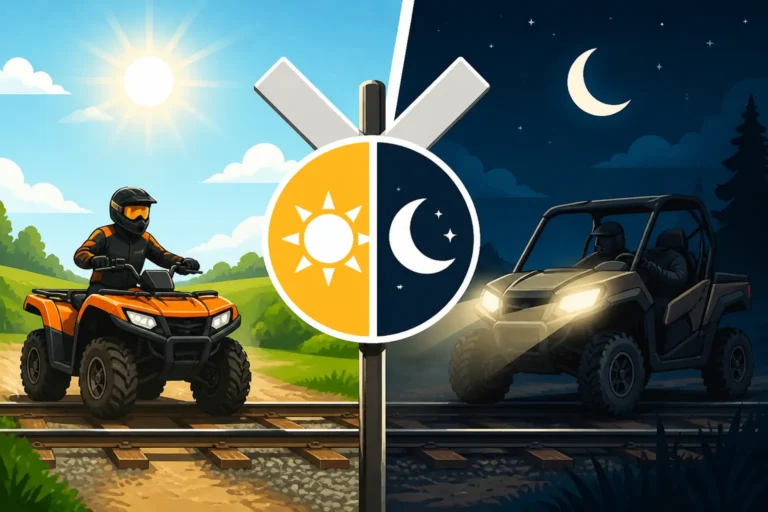
Oklahoma ATV and UTV regulations restrict railway crossings to daylight hours to ensure safety and improve low visibility.
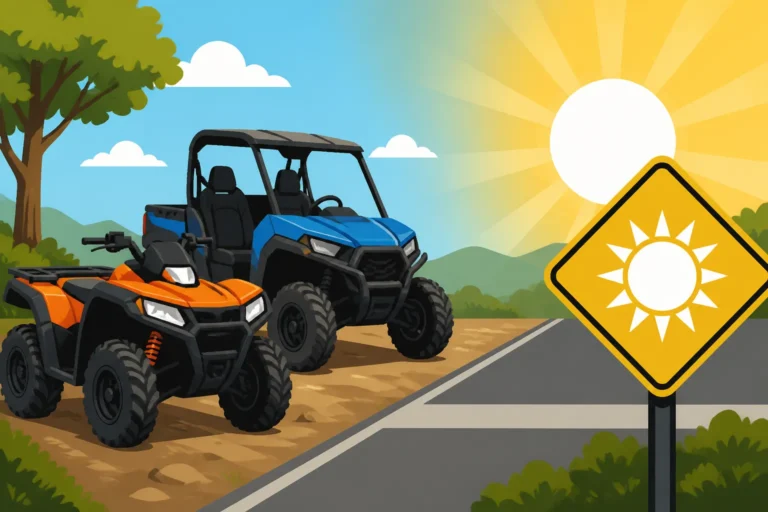
Oklahoma ATV road crossing laws require daylight only to prevent visibility accidents and protect motorists and riders.
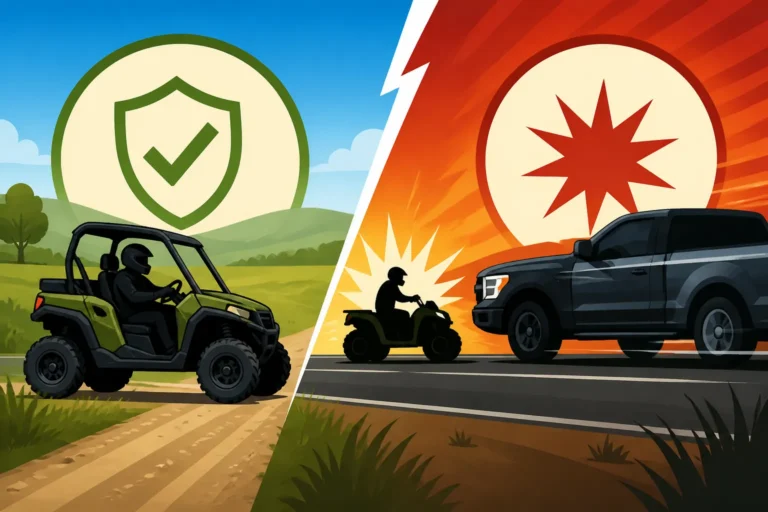
Oklahoma off-road vehicle statutes explain how the thirty-five miles per hour speed limit determines lawful highway crossings.
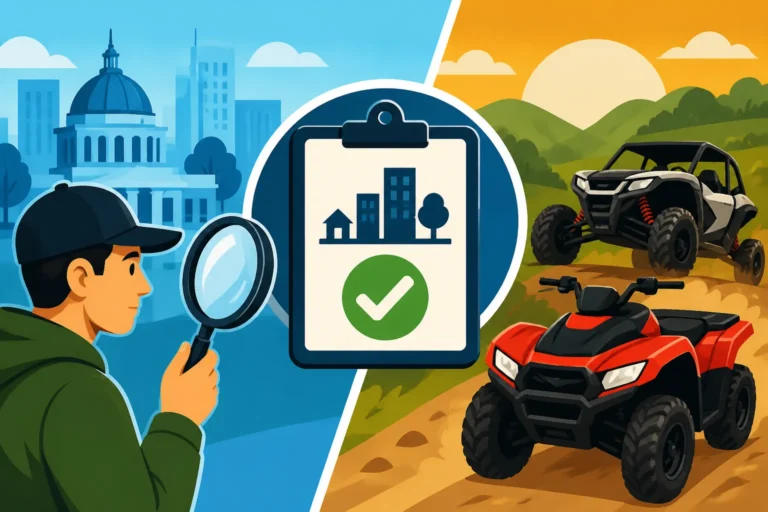
Local ATV and UTV ordinances across Oklahoma towns explain street riding rules and legal equipment requirements for off-road enthusiasts.
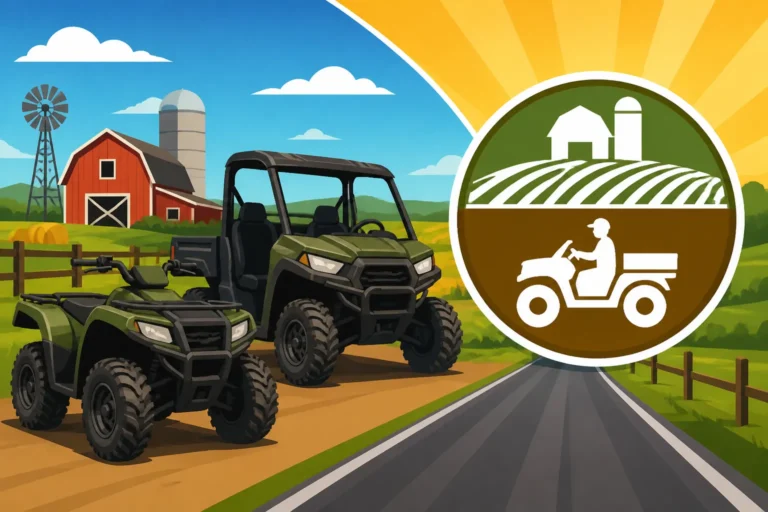
Oklahoma agricultural exceptions allow farmers to operate ATVs and UTVs on county roads for legitimate farming operations.
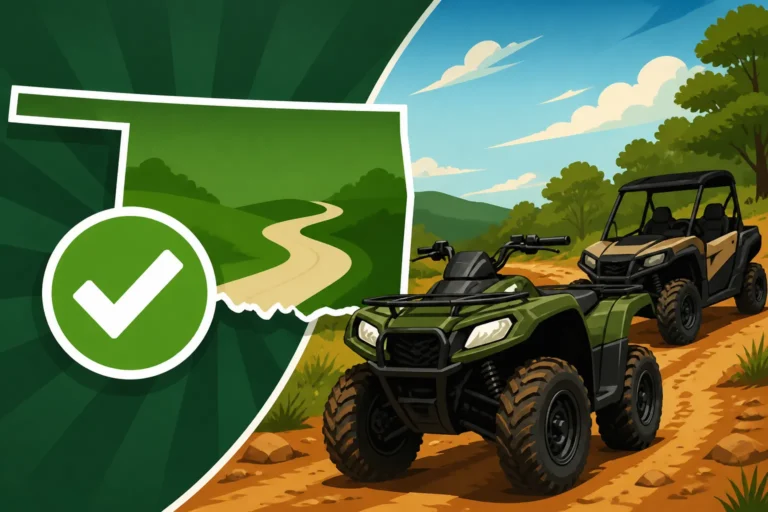
Oklahoma county commissioners can pass resolutions opening specific roads to off-road vehicles like ATVs and UTVs.
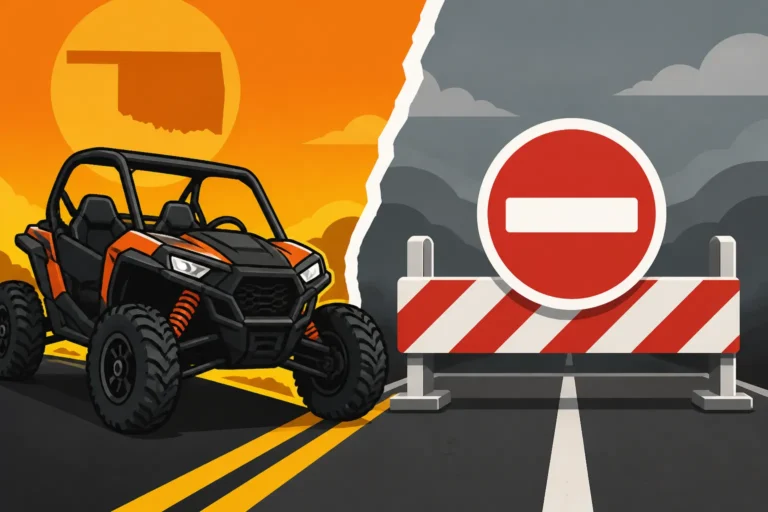
Oklahoma street legal UTV laws explain why federal highways remain closed despite county and state road permissions.
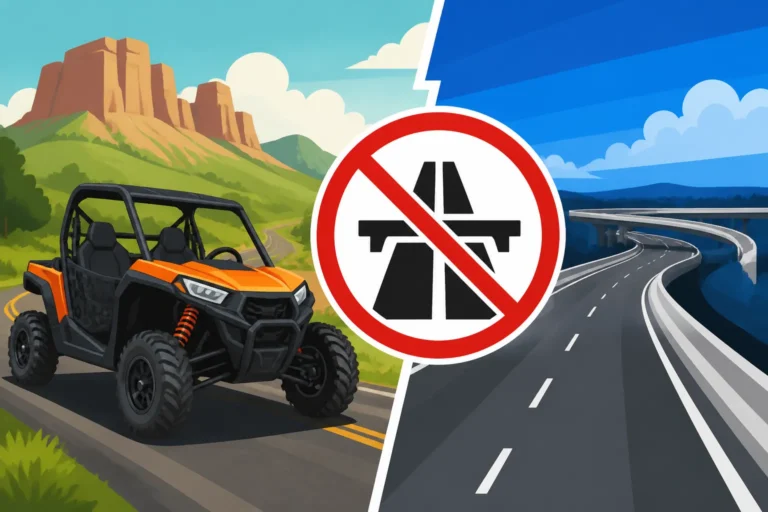
Oklahoma street legal UTV laws and 2021 legislation explain where registered side by sides can drive and required equipment.
Oklahoma ATV and UTV registration does not require insurance, but policies protect owners from accident costs and theft.