Paddle Tires on Oklahoma Dunes
Loose Oklahoma sand can make a quad feel sluggish, bury its rear tires, and leave the engine working harder than it should. Paddle tires can improve flotation and forward drive on dunes, but the wrong setup may steer poorly or wear quickly on firmer ground. This guide explains how to choose and use paddle tires for Oklahoma dunes, especially at Little Sahara State Park near Waynoka.
How paddle tires work on Oklahoma dunes
What the paddle shape does in loose sand
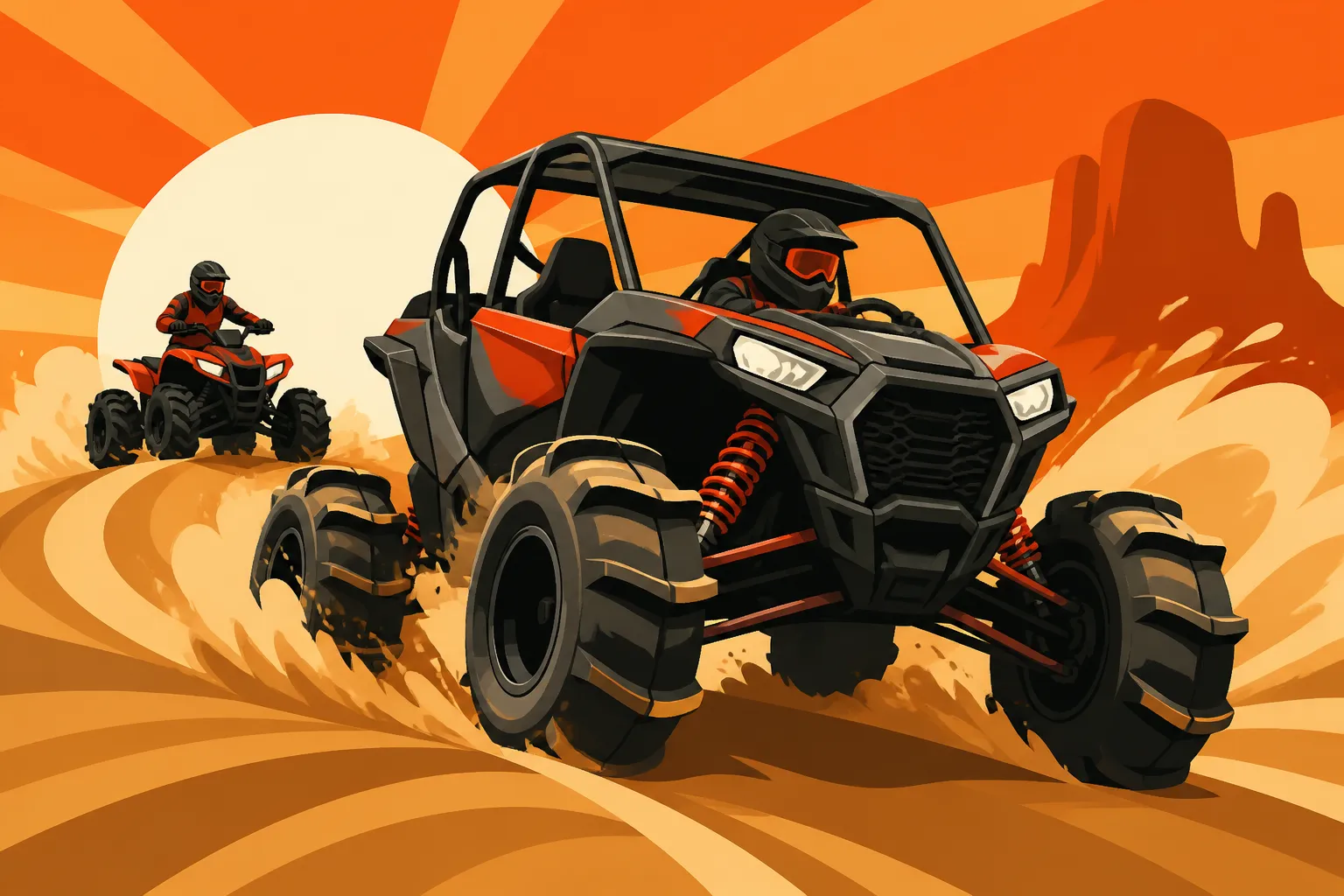
A paddle tire has raised bars across its tread. As the tire turns, those bars push against loose sand and help move the machine forward. On a dune, that extra bite can make it easier to climb, accelerate, and keep moving through soft patches where a conventional tread may dig in or spin.
That doesn’t mean a paddle tire makes a machine unstoppable. Sand still shifts beneath the tires, and a steep climb, an abrupt turn, or a heavy throttle hand can bog a quad down. The rider’s speed, line choice, machine weight, tire fit, and throttle control all matter. Paddles are one part of a setup, not a substitute for paying attention to the terrain.
The difference is especially noticeable when you switch from hard ground to deep, loose sand. A knobby tire is designed to work across varied surfaces, so its tread blocks may dig into soft sand without providing the same broad, steady push as paddles. But that knobby tread can be more useful on mixed terrain, where you might cross firm tracks or rough ground between sandy sections.
For a broader introduction to riding sand, see Oklahoma Dune Riding Explained. If you’re still deciding what tire style fits your usual riding, What Tires Work on Loose Sand and Clay covers the trade-offs across different Oklahoma surfaces.
Why a dune tire setup is not automatically better everywhere
Paddle tires are specialized. They can be a good choice for a day focused on soft dunes, but they may feel less predictable on hard-packed ground, gravel, or other firm surfaces. The paddles are intended to engage with loose material. On terrain where they cannot do that, the machine may feel different than it does on its usual tires, and the tread can wear faster than it would in sand.
Think about how you’ll actually spend the ride. If your group plans to stay mostly in the dunes, a sand-focused setup may make sense. If you expect to travel over a mixture of sand, firm access roads, and other surfaces, an all-around tire may be more practical. The answer can also depend on whether you ride a sport quad, utility quad, or side-by-side.
Oklahoma’s Little Sahara State Park is a well-known destination for dune riding, near Waynoka in the northwest part of the state. Before a trip, check the park’s current riding information and rules rather than assuming every track or area is suitable for every vehicle. Start with Little Sahara State Park in Oklahoma for park-focused planning.
Choosing paddle tires for your machine
Match the tires to the vehicle and its usual riding
Start with the tire size and specifications recommended for your ATV or UTV. A tire that looks close to the right size may still have a different width, height, load rating, or construction than the machine is designed to use. Those differences can affect clearance, handling, gearing feel, and how the tire behaves under the machine’s weight.
Check the owner’s manual and speak with a knowledgeable tire or off-road shop before ordering. Bring the make, model, year, and current tire information. If the machine has aftermarket wheels, suspension changes, or other modifications, mention those too. The fit that works on a lightly modified sport quad may not work on a heavier side-by-side with different wheel dimensions and load needs.
Also think about how often you’ll use the machine on sand. A dedicated dune setup can be convenient for frequent sand trips, while changing tires for an occasional outing may not be worth the expense or storage hassle. Some riders keep a separate set of wheels for their sand tires, which can make changing setups more manageable. Whether that makes sense depends on the machine, storage space, and how much mixed-surface riding you do.
| Riding situation | What to consider | Possible trade-off |
|---|---|---|
| Mostly soft dunes | Sand-oriented tires may provide useful forward drive | Less suited to firm or mixed surfaces |
| Sand plus hard-packed access areas | An all-around tire may be more versatile | May not float or drive as effectively in deep sand |
| Frequent dune trips | A separate wheel-and-tire setup may simplify switching | Requires storage and additional setup cost |
| Occasional sand ride | Check whether your existing tires are adequate first | You may have to manage more wheelspin in soft sections |
Consider the front tires as well as the rear
The rear tires provide much of the forward drive, but the front tires influence steering and how the machine tracks through sand. A setup that adds rear traction without considering the front can leave a rider surprised by the handling. The machine may turn differently, respond differently to steering input, or feel less settled than expected.
Don’t assume that all four tires should have identical tread designs. ATV and UTV setups vary, and some sand-oriented combinations use different tread patterns at the front and rear. The right arrangement depends on the vehicle and its intended use, so check the tire maker’s fitment guidance and your machine’s requirements rather than copying a setup from a different model.
A useful question for a tire professional is: “How will this exact front-and-rear combination handle on sand and on the firmer areas I’ll cross to reach it?” That conversation can help uncover practical issues that a product photo won’t show, such as steering feel or clearance. If you ride with a group, compare setups only when the machines are genuinely similar; a configuration that works well on one quad may not translate to a heavier UTV.
Setting up and riding with paddle tires
Check pressure, clearance, and condition before riding
There isn’t one tire-pressure number that works for every machine and tire combination. The vehicle maker’s guidance, tire specifications, load, and riding conditions all matter. Start with the manufacturer’s recommendations and ask a qualified tire shop about any adjustment for sand. Avoid copying a pressure you heard from another rider without confirming that it fits your setup.
Before leaving, inspect each tire for cuts, worn areas, loose hardware, or damage around the bead. Check that the tires clear the fenders and suspension through the range of movement, especially if you’ve changed wheel size or installed other modifications. Confirm that lug nuts are properly secured according to the vehicle manufacturer’s guidance. A quick inspection in the driveway is much easier than discovering a fit problem in a sandy parking area.
Once you reach the dunes, make small changes cautiously. If you’re unfamiliar with the machine on paddles, take time to feel how it accelerates, turns, and slows on manageable terrain before following a faster group. Sand can make familiar movements feel different, and a tire change can alter the way your machine responds. A calm first few minutes can prevent a frustrating or risky start to the day.
For more on pressure choices in local sand, see Airing Down on Oklahoma Sand. Consider that guidance alongside your machine and tire manufacturers’ instructions.
Adapt throttle, turns, and spacing to the sand
Paddle tires need the right kind of input. Sudden, excessive throttle can make the rear tires spin and dig rather than carry the machine forward. Smooth, controlled acceleration is often more useful than repeatedly blipping the throttle. If you begin to lose momentum, avoid making a sharp, frantic turn that could dig the tires deeper or put the machine at an awkward angle.
Give other riders room. Sand can hide changes in slope and make it harder to stop or steer precisely, so following closely leaves little time to react if someone slows, changes lines, or gets stuck. Keep a clear view of the route ahead and avoid crowding a rider who is climbing or descending. If you’re riding with children or less experienced drivers, agree on simple regrouping points and make sure nobody feels pressured to keep up.
A navigation app such as onX Offroad can help with trip planning and keeping track of where you intended to ride, but it shouldn’t replace park signs, posted restrictions, or staff guidance. Download the information you need before entering areas with unreliable service, and confirm that your planned route is permitted. You can also use onX Offroad to prepare a route with your group before unloading, then adjust the plan if conditions or park guidance call for it.
The machine’s flag and lighting requirements are separate from tire choice, but they matter to a safe dune day. Review Oklahoma’s 10-Foot Whip Rule and Oklahoma’s Orange Flag Requirement before heading out. For general preparation, Oklahoma Trail Conditions Before You Tow can also help you think through what to check before the trip.
Deciding whether paddle tires are right for your trip
Use your planned route to make the choice
Before buying tires, picture a typical riding day rather than focusing only on the steepest dune you hope to climb. Will you spend most of the time in loose sand, or will you cross firmer ground and mixed terrain? Are you riding a sport quad that needs a different setup from a utility machine? Does your group plan to take a slow, exploratory ride, or spend most of the day in open dune areas?
Those details can change the sensible choice. A rider who visits sand regularly may appreciate a dedicated set of paddles and wheels. Someone planning one dune outing may prefer to keep the current tires, learn how the machine behaves, and decide afterward whether the benefits justify a separate setup. There is no prize for buying specialized gear before you know what your riding actually demands.
When comparing options, ask the seller or shop to confirm fitment for the exact vehicle and intended use. Ask how the tire may behave on firm surfaces and whether the recommended setup includes different front and rear patterns. Get clarity on the appropriate pressure guidance and any clearance concerns. Those practical questions are more valuable than choosing a tire based only on appearance or another rider’s preference.
Plan the whole dune day, not just the tire swap
Paddle tires can improve traction in soft sand, but a successful outing also depends on preparation. Check the park’s rules, plan your route, bring water and basic recovery supplies, and make sure everyone in the group knows how to reconnect if riders become separated. Heat, dust, fatigue, and changing sand conditions can make a long day harder than expected.
If you’re using a mapping tool such as onX Offroad, plan ahead and keep park boundaries and posted guidance in mind. Treat the app as a planning aid, not permission to ride anywhere a map shows a track. When you arrive, follow signs and any directions from park staff, and adjust your plans if the route you expected is not available.
Finally, give yourself time to learn the tire setup. A machine that feels different on paddles may need a more measured approach, especially when turning, climbing, or moving among other riders. Build confidence gradually, leave room for others, and choose tires based on the surfaces you’ll actually ride. That’s a more dependable way to enjoy Oklahoma dunes than expecting any single tire to solve every sand problem.
Disclaimer
This article is for general informational purposes only and does not constitute professional advice. Laws, prices and regulations vary by location and change over time. Consult a qualified professional for guidance on your specific situation.