Oklahoma Trails With Sand
Oklahoma’s sand riding options are more limited than the state’s red-clay and wooded trail choices, so it can be frustrating to plan a dune weekend and wonder whether a location actually allows ATVs or side-by-sides. This guide explains where to ride, what the terrain is like, how to prepare your machine, and what to check before you tow.
Where to find sand riding in Oklahoma
Little Sahara State Park near Waynoka
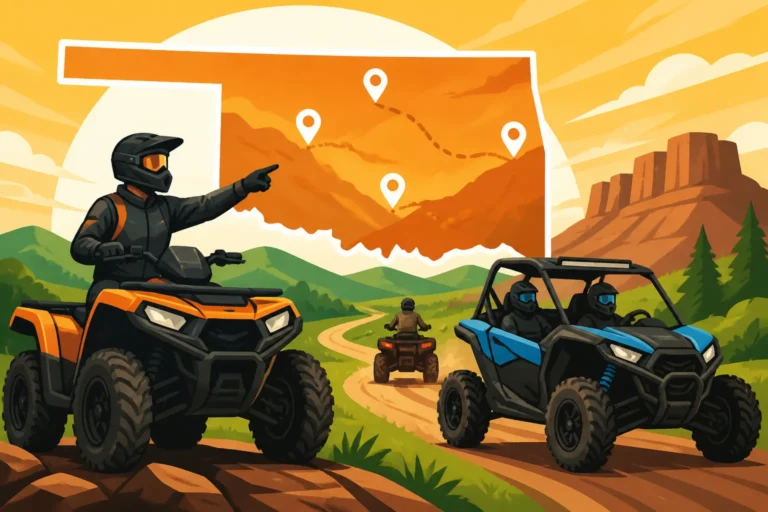
For a dedicated sand-dune ride, Little Sahara State Park near Waynoka is the best-known destination in Oklahoma. Its riding area covers about 1,600 acres, with dunes that rise roughly 25 to 75 feet. The landscape is very different from a wooded trail: sand shifts under your tires, sightlines change as you move, and a route that looked easy from the parking area can feel demanding once you reach taller dunes.
The open terrain is part of the appeal, but it also means you need to pay close attention to other riders. Machines can appear quickly over a ridge, and the top of a dune can conceal people or vehicles on the other side. Approach crests at a controlled speed, avoid stopping where you block an approaching rider’s view, and give other machines room to climb or turn around.
If you are comparing destinations, [Little Sahara State Park in Oklahoma] gives you a closer look at the park, while [Oklahoma ATV Trails: Where to Ride] covers the wider mix of riding areas across the state. For a more focused overview of the dune experience, see [Oklahoma Dune Riding Explained].
Sand is not the same as a sandy-looking trail
A sandy road, dry creek bed, or river-bottom track is not automatically an authorized riding area. Land access matters just as much as the surface: public land may restrict motorized riding to designated routes, and private land requires permission. Don’t assume that a map line or a visible tire track means you can legally ride there.
If you want actual dune riding, plan around a facility that expressly allows off-highway vehicles and check its current access rules before leaving home. The distinction matters especially when riding near rural communities, ranches, or waterways, where a tempting stretch of sand may cross private property or protected land.
Little Sahara is the clearest fit for riders specifically seeking sand. Other Oklahoma areas may offer hills, dirt, rocks, or seasonal access rather than open dunes. [Oklahoma Trails With Sand] is a useful companion when you are narrowing down destinations, and [Oklahoma Trails That Allow Side-by-Sides] can help if your group is bringing a UTV and an ATV together.
| Riding option | What to expect | Best planning question |
|---|---|---|
| Little Sahara near Waynoka | Open dunes and soft sand | What are the park’s current rules, fees, and access conditions? |
| A designated trail area | Terrain may be clay, dirt, rock, or mixed surface | Are ATVs and UTVs both allowed on the routes you plan to use? |
| A rural sandy road or river-bottom track | Access and surface can vary sharply | Do you have clear permission to ride there? |
What sand riding feels like
Soft sand changes how your machine handles
Sand creates more rolling resistance than firm dirt. Your tires can sink and push rather than glide, so a machine may feel slower or less responsive even when the engine is working hard. If you are used to clay trails around eastern Oklahoma, the difference can be surprising: there may be fewer roots and rocks, but that doesn’t make a dune ride effortless.
Momentum helps, but “keep moving” does not mean charging blindly. Build speed gradually on open, familiar ground, choose a line you can see, and avoid sudden turns that can dig a tire into the sand. If your machine starts bogging down, aggressive throttle and sharp steering can make the problem worse. Ease off, straighten the wheels where possible, and reassess the route rather than burying the machine deeper.
Tire setup also affects how a machine behaves. Some riders use paddle tires for sand, while others ride with all-terrain tires. Either way, follow the machine and tire manufacturers’ guidance, and make any pressure changes conservatively. Too little pressure can increase the risk of a tire coming off its bead or being damaged; too much can make traction harder to manage.
Dune visibility calls for patience
Dunes can hide oncoming riders, especially near crests and in busy areas. Don’t cross the top at full throttle or assume the slope beyond it is clear. Approach with enough control to stop or turn if the route is occupied. Keep extra space around families, new riders, and machines that are climbing slowly.
A group ride needs a little more structure on open sand than it might on a narrow wooded trail. Agree on a meeting point before spreading out, use a buddy system, and stop in visible, level areas rather than on a crest. If someone gets stuck, make sure the recovery area is clear before another machine approaches.
A map can help you plan the drive, locate access points, and keep track of where your group is staging. Some riders use onX Offroad as a planning aid, but a digital map should not be treated as proof that a route is open or that a boundary is correct on the ground. Download what you need before heading into an area with weak service, then follow park signs and posted closures. [Oklahoma Trail Conditions Before You Tow] is worth reviewing before a long drive, especially when rain or changing conditions could affect your plans.
Prepare your ATV or UTV for Oklahoma sand
Check the machine before the drive
A sandy ride can put sustained demand on the engine, belt, clutch, tires, and cooling system. Before loading up, check fluid levels, tire condition, wheel nuts, brakes, and the air filter. Sand and fine dust can collect quickly, so begin with a clean filter and bring the right supplies for inspection and maintenance. If you notice a warning light, unusual belt smell, or overheating at home, address it before the trip rather than hoping it disappears on the dunes.
A UTV’s added weight and width can make it feel different from a quad in soft sand. Give yourself room to turn, avoid abrupt steering, and don’t assume a familiar ATV line is suitable for a side-by-side. Passengers should use seat belts and stay seated. Never carry more people than the machine was designed to hold.
Recovery gear is useful only when you know how to use it safely. A tow strap, gloves, basic tools, water, and a charged phone can be helpful, but keep recovery work away from moving wheels and under tensioned straps. For a group, agree in advance on how you’ll signal a stop and who will assist if a machine gets stuck.
Pack for heat, dust, and a long day
Western Oklahoma can feel exposed on a bright, windy day, and a ride can be tiring even when the temperature seems manageable. Bring more water than you expect to need, take breaks, and pay attention to signs of heat stress such as dizziness, headache, nausea, or unusual fatigue. Sun protection, eye protection, and a dust covering can make the ride more comfortable.
Secure loose gear before setting off. A water bottle, phone, or tool that falls out can become a hazard for another rider. Keep essentials reachable, but avoid loading the machine in a way that blocks visibility or changes how it handles. If you are camping, separate riding gear from food and clean clothes so sand doesn’t end up in everything you unpack.
Use onX Offroad or another mapping tool to help organize a route to the park, but save the park’s contact and access information separately. Cell reception can be unreliable in rural areas, and a phone battery can drain faster when it is being used for navigation. A paper note with your meeting point and driving directions is a simple backup.
Rules and planning before you go
Review park requirements before unloading
Before riding, check the park’s current requirements for entry, machine access, safety equipment, and operating hours. Rules can differ by riding area, and requirements may change, so don’t rely only on an old forum post or a friend’s memory. Little Sahara has specific equipment expectations, including a tall whip and a bright orange flag; review [Oklahoma's 10-Foot Whip Rule] and [Oklahoma's Orange Flag Requirement] as part of your preparation.
Lighting matters if you will be riding when visibility is low. Check what the park requires for front and rear lights and make sure they work before you arrive. For details, see [Oklahoma Night Lighting on Dunes]. Helmets are a sensible choice for every rider; additional age-related requirements may apply, so check the rules for children and teens before the trip.
Also confirm the park’s rules about alcohol, passengers, and where you may ride. Don’t assume that a pass, permit, or registration for one purpose grants access everywhere. A riding area’s own admission and operating rules are separate from land-access rules that may apply elsewhere in Oklahoma.
Make the trip easier with a simple checklist
A little planning can prevent the familiar headache of driving several hours only to discover that a machine, piece of equipment, or payment method is not ready. Before leaving, verify access details directly with the riding area and make sure your whole group understands the plan.
- Confirm that the riding area is open and that the machines in your group are permitted.
- Review entry, equipment, lighting, passenger, and safety rules.
- Check tires, brakes, fluids, air filters, and any required safety gear.
- Pack water, eye protection, sun protection, basic tools, and recovery equipment.
- Download your route or map information and choose a clear meeting point.
- Leave room in the schedule for breaks, machine checks, and changing conditions.
onX Offroad can be useful for organizing trip information and reviewing map context before departure, but always confirm access with the land manager or park. A saved route is not a substitute for signs, local restrictions, or permission to cross property. For a broader look at the area’s dunes and riding experience, [Little Sahara's 1,600 Acres in Oklahoma] offers a related overview.
Oklahoma sand riding is rewarding when you arrive prepared, but the terrain asks for more attention than a casual cruise on a firm road. Little Sahara near Waynoka is the natural starting point for riders seeking dunes. Check access and equipment rules, ride within your comfort level, and give other riders room around every crest.
Disclaimer
This article is for general informational purposes only and does not constitute professional advice. Laws, prices and regulations vary by location and change over time. Consult a qualified professional for guidance on your specific situation.