Oklahoma Riding Areas Reachable Without a Truck
Not owning a truck doesn’t have to end your Oklahoma ATV or UTV plans, but it does change the trip math: you need a legal way to get the machine to the riding area, not just a route to the park entrance. This guide compares practical options, explains what to check before you leave, and helps you avoid arriving with a ride plan that depends on a trailer, rental, or road access that isn’t available.
What “reachable without a truck” really means
Separate getting to the area from getting your machine there
A car can get you to many Oklahoma towns and park entrances. That doesn’t mean your ATV or UTV can legally travel the remaining roads from your lodging or campsite to the trails. Off-road machines generally need to be transported to the riding area unless local rules specifically allow road use. A short distance on a map is not permission to ride there.
For a no-truck trip, think about two separate journeys:
- You and your riding group get to the area. A passenger car, rental car, or other travel plan may work for this part.
- Your machine gets to the trailhead. This requires a trailer and a suitable tow vehicle, a rental arranged with the riding area or a nearby provider, or another transport option you have confirmed in advance.
That distinction matters around places such as Waynoka, Davis, Wilburton, and the more remote southeast Oklahoma riding areas. A motel or campground close to an OHV area may be convenient for people, but it doesn’t necessarily provide a legal connection for riding your machine to the trails.
If your plan depends on riding from a nearby town, check the route and local rules first. [Oklahoma Rules for Riding a City Street] and [Oklahoma Rules for Riding a County Road] explain why the ordinary road between your lodging and a trail area may not be open to an ATV or UTV.
Choose the transport plan before choosing the destination
If you have a car but no truck, first check whether it is rated to tow the loaded trailer you would need. The combined weight of the trailer, machine, fuel, gear, and passengers can matter more than the trailer’s empty weight. Also check the car’s towing guidance, hitch setup, braking requirements, and how the route’s hills or long highway stretches affect the trip.
A small trailer may be an option for some cars, but it is not automatically a good fit for every vehicle or machine. A side-by-side can be too wide or heavy for a compact-car towing setup, while a small quad may be easier to transport if the vehicle and trailer are appropriately matched. If you are unsure, ask a qualified trailer or vehicle professional to assess the specific setup rather than guessing from the machine’s advertised weight.
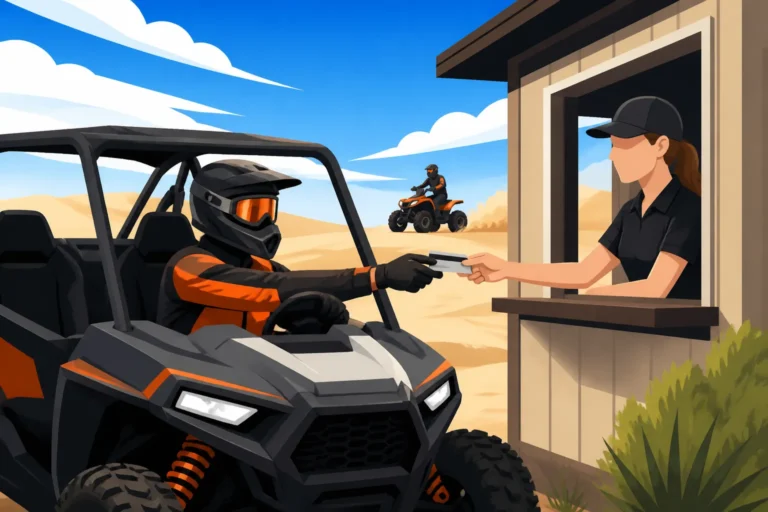
If you have no trailer and no suitable tow vehicle, call the riding area before booking travel. Ask whether machine rentals are available, whether reservations are needed, where pickup happens, and whether the rental includes the safety gear or permits you need. Don’t assume a rental counter is located at the park gate or that a nearby town has a shuttle. [Oklahoma Riding Areas That Rent Machines] is a useful starting point for comparing that option.
Match the destination to the least complicated logistics
A practical trip is often the one with the fewest handoffs. If you have a tow-capable vehicle and a small trailer, a riding area with straightforward access and nearby places to stay may be manageable. If you have no way to transport a machine, a destination is only practical if you confirm a rental or another legitimate transport arrangement.
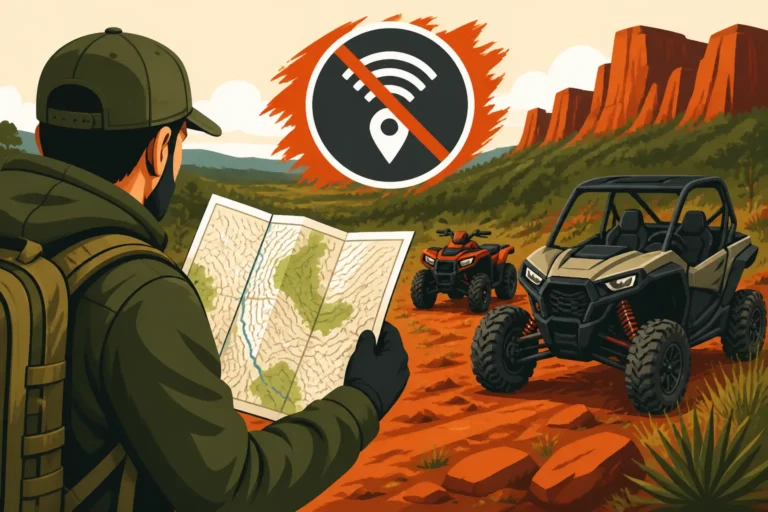
Use a route-planning tool to check the drive, but treat the route to the entrance separately from the route a machine may ride. onX Offroad can help you inspect mapped roads and trail information, but a line shown on a map is not, by itself, confirmation that a road is open to the public or legal for your machine. Verify access with the land manager or riding area before you go.
Oklahoma riding areas to consider without a truck
| Riding area | General location | Why it may fit a no-truck plan | What to confirm |
|---|---|---|---|
| Little Sahara State Park | Near Waynoka in northwest Oklahoma | A clearly established destination for dune riding; travel can be planned around the park and nearby services | Machine rental availability, current access details, required equipment, fees, and campsite arrangements |
| Cross Bar Ranch | Near Davis in south-central Oklahoma | A destination-style riding area that may suit a planned weekend trip | Whether rentals are available, what vehicle access is required, park rules, and lodging or camping logistics |
| Robbers Cave OHV Area | Near Wilburton in southeast Oklahoma | Can be part of a broader visit to the Robbers Cave area | Riding hours, access, machine transport, and whether your travel dates fit the riding schedule |
| Honobia Creek and Three Rivers areas | Southeast Oklahoma | Large timberland riding opportunities for riders who plan carefully | Permits, seasonal access, designated routes, land rules, and how far the riding area is from services |
Little Sahara near Waynoka
Little Sahara State Park is a recognizable choice for riders planning a dedicated dune trip. The area is near Waynoka, so you can organize the people part of the trip around a town and the park rather than treating the ride as a remote trailhead stop. That can make it easier to plan meals, lodging, and the drive from home.
The machine-transport question still comes first. If you own a machine, confirm that your vehicle and trailer can carry it safely. If you’re hoping to rent, contact the relevant provider before you book a room or drive across the state. Ask where the machine is picked up, whether you need to reserve ahead, what the rental rules allow, and what you need to bring. Rental arrangements can be different from one provider to another, so don’t build the weekend around an assumption.
Dunes also call for specific preparation. Check the park’s current requirements for flags, lighting, helmets, and other safety rules before loading up. [Oklahoma Dune Riding Explained] and [Oklahoma's 10-Foot Whip Rule] can help you understand the kind of preparation a dune ride may involve. A car-based trip is only convenient if the machine, gear, and transport arrangements are settled before arrival.
Cross Bar Ranch near Davis
Cross Bar Ranch is another destination to investigate if you are planning a ride near Davis. Before choosing it for a truck-free trip, ask the park directly about machine rentals and transport. A riding area can be easy for a car to reach while still requiring you to arrive with your own machine and trailer.
If you have a small quad and a car rated for a properly matched trailer, make a full checklist before deciding the setup is workable. Include the machine’s dimensions, trailer capacity, tie-down points, spare tire, gear, and the car’s towing limits. For a UTV, check width and weight especially carefully; a trailer that works for a quad may not be appropriate for a side-by-side.
If you don’t have a tow setup, treat a confirmed rental as the deciding factor, not a nice extra. Ask whether helmets or other safety items are included, whether the rental is restricted to certain areas, and what happens if weather or trail conditions change. The ride may be a good fit once those details line up, but don’t assume proximity to Davis means you can get a machine at the gate.
Robbers Cave and southeast Oklahoma areas
Robbers Cave OHV Area near Wilburton may appeal to riders who want to combine a trail visit with a broader southeast Oklahoma outing. Its riding schedule and access arrangements matter, so check the operating details for your intended dates. If you’re arriving without a truck, also confirm how your machine will get from your vehicle to the riding area; lodging nearby does not automatically solve that step.
Honobia Creek and Three Rivers offer a different kind of planning challenge. These are timberland riding areas, where access rules, permits, designated roads, and seasonal conditions can be more important than simply finding the entrance. A passenger car may get you to the general region, but that doesn’t make the riding area a convenient no-truck option if you still need to transport your machine over a substantial distance.
For these areas, check the land-access rules before traveling and make sure your chosen route and dates fit them. [Oklahoma Permits for Honobia Creek] and [Oklahoma Permits for Three Rivers] explain why permit details belong in your plan. A map app can help with orientation, but confirm access with the managing organization. onX Offroad can be useful for reviewing mapped routes before departure; use it alongside, not instead of, current land-manager information.
Pick the right no-truck setup
If you have a car and a trailer
A car-and-trailer plan can work when the vehicle is rated for the load and the trailer fits the machine. Start with the manufacturer’s towing guidance for your car, then compare it with the fully loaded trailer weight. Check the hitch, tires, lighting connection, and tie-down arrangement. If you’re towing a UTV, measure the trailer deck and confirm the machine’s width and length rather than relying on a photo or a rough estimate.
Plan the drive with breaks and a realistic arrival time. A trailer adds length and can make tight turns, fuel stops, and crowded campground lanes harder to manage. Before setting out, check whether your lodging or campsite has a place to park both the car and trailer. [Oklahoma Trailheads With Trailer Parking] is relevant when comparing areas, but parking arrangements can vary by location and should be confirmed directly.
If you’re new to towing, practice loading, securing, turning, and backing up somewhere quiet before the trip. A last-minute attempt to reverse a loaded trailer into a crowded campground is a miserable way to start a riding weekend. Secure loose equipment, keep the machine balanced on the trailer, and recheck tie-downs after the first part of the drive.
If you have no trailer or tow vehicle
Without a trailer or suitable tow vehicle, your most realistic option is usually a confirmed machine rental, not riding your own ATV from a nearby town. Contact the riding area or rental provider directly and ask specific questions:
- Are ATVs or UTVs available for the dates you want?
- Is advance booking required?
- Where do you pick up and return the machine?
- What identification, age, or safety requirements apply?
- Are fuel, helmets, flags, or other required items included?
- Which trails or areas may the rental use?
- What happens if weather affects access?
Get the answers before paying for travel or lodging. If rentals are unavailable or don’t meet your needs, consider joining a friend who can transport the machine, arranging a lawful delivery with a provider, or choosing a different trip. Don’t count on a taxi, rideshare, or informal shuttle to move an ATV or UTV; those services may not be equipped or permitted to do it.
If you’re borrowing a machine or joining friends
Sharing transport can be the simplest arrangement, but agree on the details early. Confirm who owns the trailer, who is driving, which machine is going, how much space is available, and whether the machine’s paperwork and equipment are ready. If you’re borrowing, make sure the owner is comfortable with the trip and that everyone understands who is responsible for damage, fuel, and loading.
A group trip can also solve the no-truck problem if one person has an appropriate tow setup. It helps to meet at one location, load together, and make sure each machine is secured by someone who knows how to tie it down. Avoid assuming that every trailer can carry another machine just because it appears to have room.
Bring the necessary proof of ownership and registration for your machine, and check what the riding area expects riders to show. [Oklahoma Proof of Ownership on the Trail] is useful background. If you plan to ride somewhere unfamiliar, onX Offroad can help your group review mapped roads and trail areas in advance, but confirm closures, permitted routes, and local rules before entering.
A practical checklist before you leave
Confirm access, timing, and services
Check the riding area’s official information for opening days, riding hours, closures, fees, permits, and machine-specific restrictions. Ask whether the area is open to the type of machine you plan to bring. A route suitable for motorcycles may not accommodate a side-by-side, and an area that is open during one season may have different access rules at another time.
Check the distance between the entrance, your campsite or lodging, fuel, and food. In a remote area, a low fuel tank or missing tie-down can become a much bigger problem than it would near a city. Ask whether fuel is available at the riding area or nearby, and don’t assume a rural store will have the exact supplies you need. [Oklahoma Riding Areas With Fuel Nearby] can help frame that part of the search.
Finally, check your return plan. Confirm where the trailer will be parked, when you need to leave, and whether your machine can be loaded safely after a full day of riding. If the return route includes a long highway drive, leave enough time to secure the load and inspect the lights and tie-downs before departure.
Make the final choice based on the weakest link
A destination is only as practical as its hardest unresolved detail. If you can drive to the area but have no way to transport your ATV, the trip is not ready. If you can get the machine there but don’t know whether the trails allow it, the plan still needs work. If a rental sounds promising but nobody has confirmed availability, treat it as unconfirmed.
Use this quick decision test:
- Car plus appropriate trailer: Compare Little Sahara, Cross Bar Ranch, and other destinations based on access, parking, and the machine you can safely tow.
- No trailer, but rental confirmed: Choose the area where pickup, riding permissions, and return arrangements are clear.
- No trailer and no confirmed rental: Join a group with suitable transport, arrange an approved delivery, or postpone the ride.
- Remote timberland destination: Verify permits, seasonal access, designated routes, and distance to services before choosing it.
The easiest no-truck ride is rarely the one with the shortest drive. It’s the one where transport, trail access, parking, rental arrangements, and rules all fit together before you set off.
Disclaimer
This article is for general informational purposes only and does not constitute professional advice. Laws, prices and regulations vary by location and change over time. Consult a qualified professional for guidance on your specific situation.