Oklahoma Trails Within an Hour of Oklahoma City
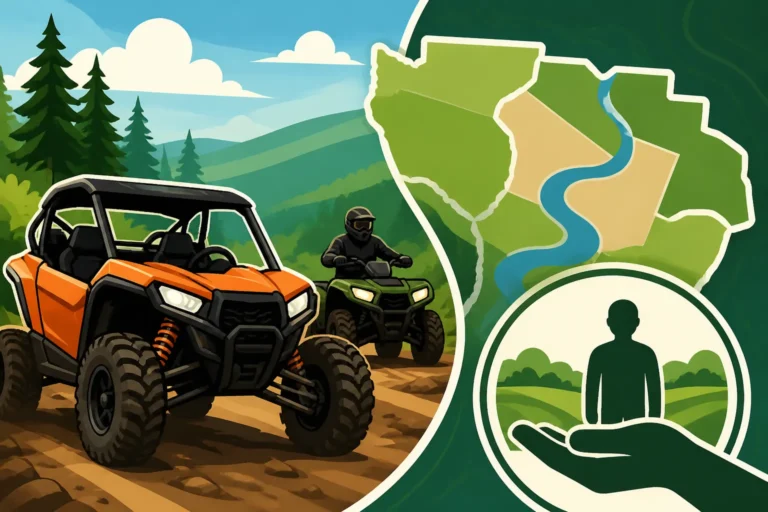
If you’re in Oklahoma City, it’s tempting to assume a lake trail or wide dirt road nearby will welcome an ATV. That assumption can lead to a wasted drive—or an unpleasant conversation with a landowner. This guide explains what to look for within an hour, how to check access, and which established riding areas may be worth a longer trip.
What to expect within an hour of Oklahoma City
Oklahoma City has plenty of places to get outdoors, but that does not mean there is a public motorized trail system just outside town. A mountain-bike path, lake road, county road, or unpaved track is not automatically open to ATVs or UTVs. The safest starting point is to identify a site that expressly allows motorized off-highway vehicles, then confirm its current access rules before loading up.
Public outdoor areas are not automatically ATV trails
Arcadia Lake, Lake Thunderbird, and Lake Stanley Draper are familiar names for outdoor recreation around the metro. They may be relevant if you’re looking for hiking, boating, fishing, or bicycle trails, but don’t treat a nearby recreation area as an ATV park unless its official rules specifically allow motorized riding in a designated area. A trail that appears wide enough for a quad may be reserved for bicycles, hikers, maintenance vehicles, or other authorized users.
This distinction matters even when a route looks like an ordinary dirt road. A road can cross private land, belong to a public agency with motorized restrictions, or end at a gate that is there for a reason. Before heading out, check the managing agency’s rules for the specific trail or parcel—not just a map label or a social media post.
A map app can help you understand where you are, but it cannot grant permission. Riders sometimes use onX Offroad to review route lines and land boundaries while planning. Treat any mapped route as a clue to investigate, not proof that the route is open to your machine. For more background on finding legal riding options across the state, see [Oklahoma ATV Trails: Where to Ride].
Private land may be close, but permission comes first
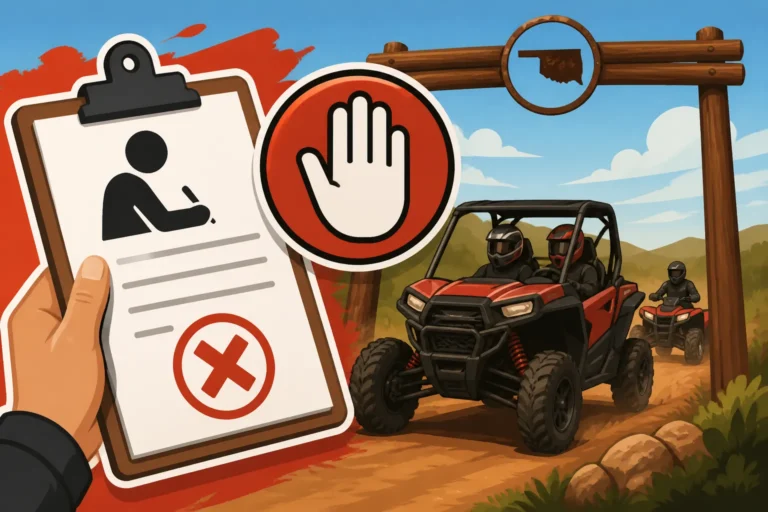
Within the metro’s one-hour orbit, a nearby ranch, hunting lease, or large private property may look like the most promising place to ride. That only works if the landowner or authorized manager has explicitly allowed your visit. Don’t assume a gate left open, a visible tire track, or a friend’s old invitation means you can ride there today.
If you’re asking for permission, be specific. Explain which machine you’ll bring, how many people are coming, where you hope to ride, and when you plan to leave. Ask whether there are restricted areas, livestock, hunting activity, fire concerns, or road surfaces you need to avoid. A text or written message can help prevent misunderstandings, but follow any conditions the owner sets. The basics are covered in [Oklahoma Landowner Permission Rules].
It’s also worth remembering that “private land” does not always mean “one person can say yes.” A property may be leased, jointly owned, managed for hunting, or subject to access agreements. Confirm that the person giving permission has authority over the area you plan to use. When there’s any doubt, choose an established riding venue instead.
County roads are not a substitute for an off-road park
Some riders consider using a gravel or dirt county road as a quick local ride. But riding on a road is a different question from riding on a trail, and rules can depend on the road, local ordinances, machine type, and the purpose of the trip. Don’t assume a section road or roadside ditch is an open ATV route just because it is unpaved.
Before taking a machine onto a public road, check the applicable state and local rules, including whether that road has been opened to ATV use. A route that is legal for a particular purpose or in one county may not be legal elsewhere. [Oklahoma Rules for Riding a County Road] offers more context on that distinction.
For a short ride near home, it can be frustrating to discover that the closest-looking options don’t actually allow motorized riding. Still, confirming access before you unload is far easier than dealing with a trespass complaint, a closed gate, or a long drive back to the highway.
Riding areas that may be worth a longer drive
If your priority is a designated place to ride rather than the shortest possible drive, widen your search beyond the one-hour circle. Established parks and public riding areas can offer clearer rules and a better chance of finding routes suited to your machine. The tradeoff is travel time: plan the trip around the venue’s location, operating details, and permitted vehicle types.
| Destination or area | What to know from Oklahoma City | Best planning question |
|---|---|---|
| Cross Bar Ranch near Davis | A common destination to investigate for a dedicated off-road outing, but generally beyond a one-hour drive from the metro | Are the trails open, and does the area allow your machine? |
| Little Sahara State Park near Waynoka | A dune-riding destination that typically requires a longer drive and specific preparation | What are the current access, safety, and vehicle requirements? |
| Metro lakes and recreation areas | Nearby outdoor destinations are not automatically motorized riding areas | Does the managing agency expressly allow ATVs in the exact area? |
| Private property near the metro | Potentially close, but access depends on direct permission | Who controls the land, and what limits apply to the ride? |
Drive times change with your starting point, traffic, roadwork, towing speed, and weather. Use the table as a way to narrow your research, not as a guarantee that a route or site is open.
Cross Bar Ranch and the drive south
Cross Bar Ranch in the Davis area is one established destination riders may consider when they’re willing to drive beyond the immediate Oklahoma City area. Because it is not a quick metro hop, check the park’s own information before you hook up the trailer. Confirm access, permitted machine types, trail conditions, and any rules that could affect your group. You can also read [Cross Bar Ranch in Oklahoma] as part of your planning.
A little preparation makes the drive more worthwhile. Check your trailer lights and tie-downs, fuel up before you reach more rural stretches, and bring the gear your machine needs for the terrain. If rain has moved through, ask about conditions rather than assuming every route will be suitable. Clay, mud, and standing water can make a ride very different from what a dry-weather map suggests.
If you’re taking a side-by-side, don’t assume every trail that admits ATVs will accommodate a wider or longer machine. Ask about vehicle restrictions and trail width directly. The state’s trail options vary, so [Oklahoma Trails That Allow Side-by-Sides] can help you focus your search on the right type of ride.
Little Sahara and a dune-riding day
Little Sahara State Park near Waynoka is another option for riders willing to make a longer outing of it. Dunes are a different experience from wooded or rocky trails: sand can affect handling, visibility, cooling, and how much energy a ride takes. Check park requirements before you leave, and make sure your machine and safety equipment are appropriate for the terrain. More destination details are in [Little Sahara State Park in Oklahoma].
A dune trip also takes more planning than simply arriving with a machine. Confirm entry and safety rules, check what equipment is required, and pack water, eye protection, and gear suited to loose sand and changing conditions. If you’re towing from Oklahoma City, build in time for loading, unloading, and any required checks at the park.
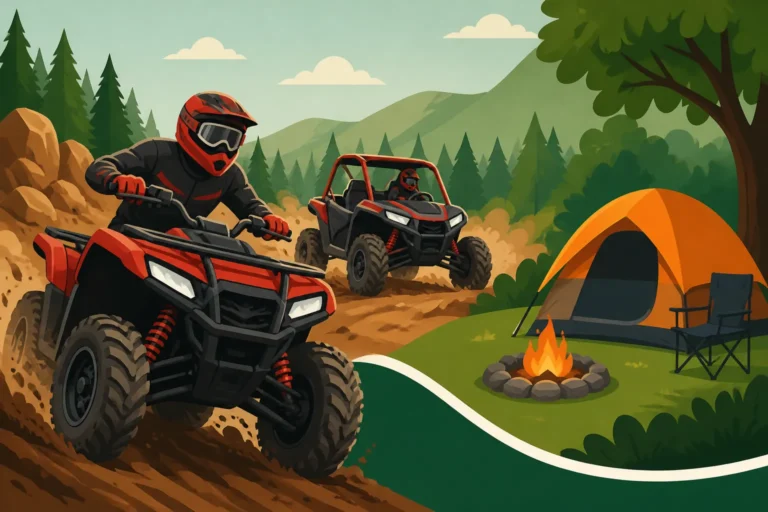
If camping would make the longer drive easier, verify whether the riding area has suitable camping options and whether you need to make arrangements ahead of time. [Oklahoma Trails With Camping] can help you compare riding trips that combine trail time and an overnight stay.
Use maps as a planning tool, not an access guarantee
A trail map can help you estimate distance, understand terrain, and organize a route to an authorized riding area. It cannot reliably answer every practical question: whether a trail is open today, whether a route is restricted to a particular vehicle, or whether a property boundary has changed. Start with the venue or land manager’s rules, then use maps to support your planning.
onX Offroad may be useful for reviewing route information and checking land boundaries while you plan. Even so, a line displayed in an app is not permission to cross private property. Confirm access with the landowner or managing agency when a route approaches a boundary or passes through a place with unclear status. For more map-planning help, see [Oklahoma ATV Trail Map Downloads].
Conditions deserve their own check, especially after heavy rain or during a busy weekend. A route that was manageable last month may now be muddy, closed, or unsuitable for your machine. Look into [Oklahoma Trail Conditions Before You Tow] before committing to a long drive, and call the venue if the available information doesn’t answer your specific question.
How to plan a legal, low-stress ride from Oklahoma City
The best ride is not necessarily the closest one. It’s the one where you know you’re allowed to ride, your machine suits the terrain, and your group has a sensible plan for getting there and back. A short checklist can save a lot of time, especially when your first choice is outside the metro.
Verify access and machine rules before leaving
Start with the official park, land manager, or property owner. Confirm that motorized riding is allowed in the specific area you intend to visit, and ask whether your ATV or UTV is permitted. If you’re traveling with different machines, describe them clearly; a rule for a dirt bike may not apply to a quad, and a narrow trail may not fit a side-by-side.
Next, ask about closures, operating conditions, and any limits that could change your plans. Confirm the site’s current hours and entry process directly, since those details can change. If you’re planning a group outing, have one person collect the answers and share them with everyone before departure.
If the answer is unclear, don’t fill in the gaps with a guess. An agency or venue may distinguish among motorized vehicles, bicycles, and highway-legal vehicles in ways that aren’t obvious from a map. A few minutes on the phone can prevent a long, disappointing detour.
Plan the drive and prepare the machine
Choose your destination first, then map the towing route and look for fuel and food stops along the way. Give yourself more time than the navigation estimate suggests if you’re hauling a trailer. Check the trailer tires, lights, coupler, and tie-downs before you leave, and make sure the machine is secured for the full trip.
Pack for the kind of riding you expect, not just the weather at your house. A hot, exposed dune ride calls for different preparation than a shaded trail with rough ground. Carry drinking water, basic tools, a first-aid kit, and a charged phone. If reception may be limited, download or save useful maps before you leave town and share your destination and expected return time with someone who isn’t on the ride.
onX Offroad can be part of your navigation preparation, but don’t rely on a phone alone. Bring a backup plan for directions and check in with your riding group before splitting up. A simple meeting point and an agreed response if someone gets separated can make a big difference on an unfamiliar trail.
Set expectations for a one-hour search
If your requirement is a ride no more than an hour from central Oklahoma City, begin by looking for a named motorized venue or a property where you have direct permission. Don’t count a public lake, bike path, county road, or unmarked track as an ATV destination without confirming its rules. If you can’t find a clearly authorized site in that radius, widening the search is safer than improvising access.
For a first trip to a more established riding area, keep the day manageable. Choose a destination that matches your machine and experience, confirm the rules, and avoid packing the schedule so tightly that a delayed start ruins the outing. Riders who want to explore more of the state can use [Oklahoma Trails Within Two Hours of Tulsa] for comparison and [Oklahoma Trail Etiquette Locals Expect] to prepare for sharing routes responsibly.
The practical takeaway is simple: around Oklahoma City, check access before you count on a nearby place as a trail. A little extra research may mean driving farther, but it also helps ensure that your ride starts at an open, appropriate destination instead of at a locked gate.
Disclaimer
This article is for general informational purposes only and does not constitute professional advice. Laws, prices and regulations vary by location and change over time. Consult a qualified professional for guidance on your specific situation.