Cross Bar Ranch in Oklahoma
A trip to Cross Bar Ranch can go sideways before the first trail if you arrive with the wrong machine, miss a waiver requirement, or assume every route suits your group. This guide explains how to plan a safer, smoother ride near Davis, Oklahoma, from choosing trails and preparing your ATV or UTV to handling camp rules, weather, navigation, and family logistics.
What to Expect at Cross Bar Ranch
Location and riding atmosphere
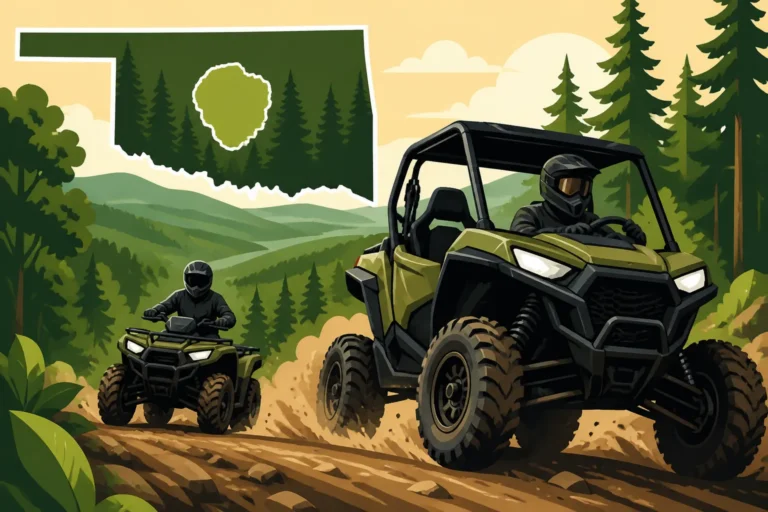
Cross Bar Ranch is a private off-road riding area near Davis in south-central Oklahoma, within reach of the Arbuckle region and towns such as Sulphur and Ardmore. It’s a destination riders plan around: you tow in, unload, sort out waivers and park requirements, then spend the day exploring rather than simply passing through on a public trail network.
The setting is a change from Oklahoma’s open prairie roads. Expect wooded ground, elevation changes, and stretches where rocks, ruts, or uneven surfaces shape how quickly you can travel. The terrain may feel very different from one route to another, and recent rain can change traction quickly. A track that seems straightforward on a dry afternoon may become more demanding after a storm.
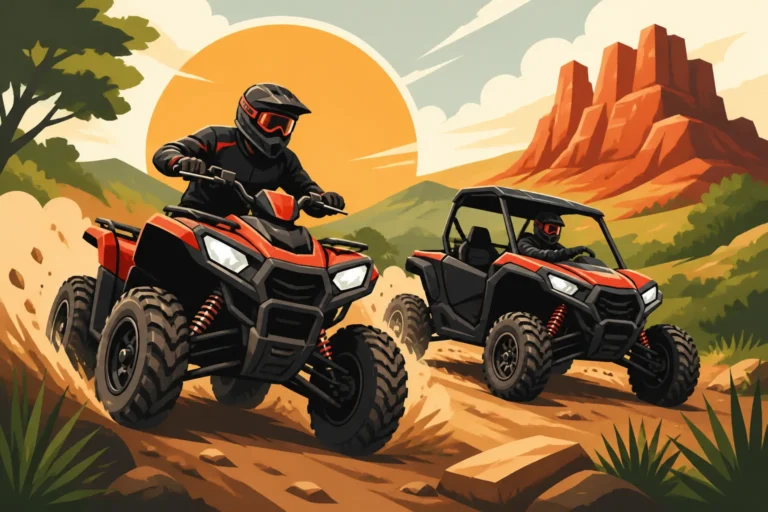
Cross Bar Ranch accommodates off-road machines, including ATVs, UTVs, dirt bikes, and larger four-wheel-drive vehicles. That mix can make the area appealing to a group with different kinds of equipment, but it also means you should think about visibility, passing, and trail width. A narrow route that works for a quad might not be comfortable for a wide side-by-side.
Before towing from Oklahoma City, Tulsa, or farther away, check the ranch’s current rules, access details, and conditions. A quick check prevents a frustrating arrival when your group has driven several hours and is ready to unload. For a broader look at ride planning around the state, see [Oklahoma ATV Trails: Where to Ride].
Who is likely to enjoy it
Cross Bar Ranch can suit riders who want more than a flat, predictable loop. If you enjoy choosing a route based on the ground in front of you, adjusting your pace, and tackling changing terrain, the variety can be part of the appeal. A confident rider might enjoy the challenge of a rocky incline, while another person in the group may prefer a less demanding route and a relaxed pace.
It can also work for a mixed-experience group, provided everyone agrees on how the day will run. The most experienced rider should not assume that a beginner will be comfortable following every route. Before setting off, discuss what kinds of obstacles each person wants to try, which ones they want to avoid, and how the group will stay together if trails split.
Families and first-time visitors benefit most from treating the ride as a day with multiple choices, not a contest to cover the most ground. Build in time for breaks, water, and checking in with each other. If you’re bringing a child or a youth machine, review [Bringing a Kid's Quad to Cross Bar Ranch] before loading up, and confirm the ranch’s current age, supervision, and equipment rules directly.
Match Your Machine and Experience to the Terrain
Choosing an ATV, UTV, or dirt bike
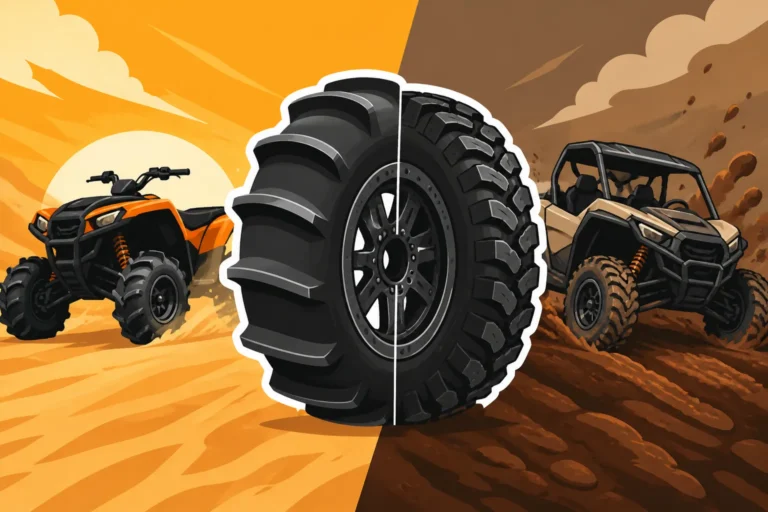
The best machine for the day depends on your riding style and the routes you want to explore. A quad is compact and can feel nimble on tighter ground, but it requires the rider to manage balance and body position. A UTV offers a seated, side-by-side layout that some people prefer, especially on longer outings, but its width can limit where it fits comfortably.
Dirt bikes give experienced riders a different way to handle narrow or winding paths, but a motorcycle’s balance, controls, and exposure make it a poor substitute for a quad for someone who has never ridden one. Larger four-wheel-drive vehicles may be suited to routes built for them, but they should not be treated as interchangeable with ATVs or UTVs. Confirm which routes are appropriate for your machine rather than judging suitability from a map line alone.
If your group is taking several vehicle types, agree on a pace and route standard before leaving camp. The slowest or least experienced rider should set the group’s practical pace. A fast rider who disappears around a bend can leave a beginner uncertain about which branch to take, while a UTV trying to follow a narrow motorcycle route can create unnecessary difficulty.
| Machine | What it can be well suited to | What to consider before riding |
|---|---|---|
| ATV or quad | Riders who want a compact machine and hands-on control | Balance, body position, passenger rules, and the rider’s experience |
| UTV or side-by-side | Riders who prefer a seated vehicle with more room | Vehicle width, turning room, passenger restraint, and route suitability |
| Dirt bike | Experienced motorcycle riders seeking a narrower machine | Skill with motorcycle controls, protective gear, and group spacing |
| Four-wheel-drive vehicle | Routes specifically suited to larger off-road vehicles | Clearance, vehicle dimensions, recovery equipment, and route restrictions |
Reading difficulty instead of chasing distance
A mileage goal is a poor way to judge whether you’re having a good day. A short section with rocks, steep ground, or a tricky turn can take longer and ask more of a rider than a much longer, smoother route. Plan for the type of terrain and the abilities of your group, not just the number of miles you hope to cover.
Before trying an obstacle, stop somewhere safe and look at the route. Consider the approach angle, the surface, the space to turn around, and what happens if the machine loses traction. If you cannot see the full line, don’t assume it will be easy once you commit. There is no shame in turning around, choosing another route, or walking a section to understand it better.
New riders should build confidence gradually. Start with manageable ground, practice smooth throttle and braking, and take time to learn how the machine responds. If someone is tense, rushing, or repeatedly making mistakes, pause rather than encouraging them to push through. A calmer rider often makes better decisions than one who feels pressured to keep up.
For a wider overview of what elevation and uneven ground can mean on a ride, explore [Oklahoma Trails With Hills]. Cross Bar Ranch routes can vary, so use that context as a planning aid rather than a guarantee about any particular trail’s condition.
Making sure your UTV fits
A side-by-side can be comfortable and capable, but its width matters. Trees, rocks, bends, and narrow trail entrances can make a route unsuitable even when the ground itself appears manageable. Measure the vehicle’s actual width, including any accessories that extend beyond the body, and compare it with the ranch’s route guidance where available.
Also check the machine before towing. Look for damaged tires, loose steering components, weak brakes, leaking fluids, worn belts, and lights that do not work. A problem that seems minor in the driveway can become a major inconvenience once you’re on uneven ground and away from your trailer.
If you plan to take a UTV through unfamiliar terrain, keep the most experienced driver at the wheel and avoid crowding other machines. Use seat belts and doors or nets where fitted, keep arms and legs inside the vehicle, and make sure every passenger understands how to remain seated. For more about route suitability in the state, read [Oklahoma Trails That Allow Side-by-Sides].
Plan the Visit Before You Tow
Check access, rules, and conditions
Private riding areas set their own operating rules, and those rules can be different from the requirements for state land, a public trail, or a county road. Confirm Cross Bar Ranch’s current access process, permitted vehicles, safety requirements, check-in expectations, and operating conditions before leaving home. Do not assume that a state permit, an out-of-state registration decal, or a previous visit automatically answers every question about access.
Ask what areas are open and whether recent rain, maintenance, or an event has changed the routes available. Conditions can shift quickly in Oklahoma. After heavy rain, clay and soil may turn slick, while water can collect in low spots and hide ruts. A route that was comfortable on your last visit may feel more demanding on a wet day.
It’s also worth asking how the ranch handles evening riding, camping, and quiet hours. Cross Bar Ranch is known for extended riding access, but visitors should confirm current operating details and any limits that apply to their plans. The helpful question is not simply, “Is it open?” Ask what riding is permitted at the time you expect to be there, what lighting is required, and where machines may be ridden after dark.
For a practical list of questions to ask before a trip, use [Questions to Ask the Park Office Before You Go]. You can also read [Cross Bar Ranch Stays Open All Night] when planning a late ride, then verify the specific rules that apply to your visit.
Waivers, check-in, and group coordination
Expect to complete the ranch’s required paperwork before riding. Cross Bar Ranch requires visitors to sign a liability waiver, and adults bringing minors should check how the waiver and supervision process works for their group. Read the form carefully rather than treating it as a quick signature: it sets out important conditions of participation and risk.
If several households are arriving separately, decide who will handle check-in and how you’ll share the location, rules, and meeting point. One person can collect vehicle details and confirm that every rider has completed the required steps. That small bit of coordination is especially useful when a group arrives with multiple trailers, youth machines, and different arrival times.
Make sure everyone knows the basics before unloading: where the group will meet, how to communicate if separated, who has the first-aid kit, and what to do if a machine breaks down. A phone signal may not be dependable everywhere, so don’t make the plan depend on being able to call one another from every trail.
For a closer look at the waiver requirement, see [Cross Bar Ranch Makes Everyone Sign a Waiver]. Think of completing the paperwork as part of the safety routine, alongside helmets, machine checks, and a clear plan for the day.
Day ride or overnight stay
A day visit may be the simplest choice if you live within driving distance and want a focused ride without setting up camp. It still takes organization: load machines securely, pack water and food, allow time for check-in, and leave a buffer for unloading and checking equipment before riding.
Staying overnight can reduce the pressure to finish every ride before heading home, especially if your group is traveling from farther away. It also creates more responsibilities. Confirm what camping options are available, where vehicles and trailers may be parked, and how the ranch handles quiet hours, fires, generators, and waste. Bring only what is permitted, and make sure your camp setup does not block roads or access points.
Set up camp before people get tired, if possible. Keep tools, fuel, food, and riding gear organized so that a morning departure is not a scramble. Store fuel safely and away from sleeping areas, and avoid leaving food or equipment where it could create a hazard or nuisance for other visitors.
Cross Bar Ranch offers an overnight setting for riders who want to make a longer visit of it, but camp arrangements and site rules can change. Verify details directly and build a backup plan in case weather or an unexpected closure affects your schedule. For more general planning, browse [Oklahoma Trails With Camping].
Prepare for a Safer Day on the Trails
Inspect the machine before unloading
A short inspection can catch problems before they become trail-side repairs. Check tire pressure and tread, brake function, steering, throttle return, fluid levels, battery connections, and visible damage. On a UTV, inspect seat belts, doors or nets, lights, and any safety equipment specific to the vehicle. On a quad, look closely at controls and footrests, especially if the machine has been transported over a long distance.
Bring tools and basic spares that match your machine and your group’s ability to use them. A tire repair kit, portable air source, basic hand tools, and a way to secure loose parts can be useful. If you carry a winch or recovery straps, make sure the equipment is in working order and that someone knows how to use it safely. Recovery gear is not a substitute for choosing an appropriate route.
Keep the machine’s load balanced and secure. Heavy cargo attached high or loosely can affect handling, particularly over uneven terrain. Avoid carrying more than the vehicle is designed to handle, and follow the manufacturer’s guidance for passengers and cargo. Before leaving camp, do a final check that helmets, eye protection, and other protective gear fit and are fastened correctly.
A common mistake is focusing on the engine while overlooking simple issues like a loose battery terminal or a damaged tire sidewall. Those small defects are easy to miss at home and hard to ignore once you are far from the trailer.
Carry essentials and manage Oklahoma weather
Carry more water than you think you’ll need, particularly during warm weather or when your route may take longer than expected. Pack food, sun protection, a basic first-aid kit, and any medication your group may need. A paper map or offline navigation option is useful if reception drops, and a small flashlight can help with repairs or an unexpected delay.
Oklahoma weather can shift from hot and dry to stormy, and the ground can respond quickly. Check the forecast before driving and again before starting a ride. If storms are nearby, ask whether the ranch expects closures or hazardous conditions. Avoid low areas where water may accumulate, and don’t cross moving water if you cannot judge its depth and current.
Dust is another practical concern. Eye protection, a face covering suited to riding, and enough drinking water can make a long day more comfortable. Keep extra clean clothing in the tow vehicle, especially for children or anyone sensitive to dust and mud. A basic cleaning plan for hands and faces is useful before meals and before the drive home.
If you use a navigation app such as onX Offroad, download maps or prepare offline access before arriving in an area where service could be unreliable. Treat digital mapping as a planning aid, not permission to ride outside authorized areas or past a closure. Keep a backup navigation method, and make sure the group knows how to return to camp if a phone loses power.
Set a pace everyone can maintain
Agree on group spacing and a regrouping routine before starting. A simple approach is to wait at major junctions and at intervals where riders can stop safely without blocking the trail. The lead rider should know who is at the back, and the group should decide what happens if someone needs to stop.
Do not ride so close that dust, mud, or a sudden stop catches the person behind you off guard. Leave room to react, especially when visibility is limited. If a faster rider wants to move ahead, set a meeting point rather than allowing the group to stretch out without a plan.
When someone gets tired, the group should adjust. Fatigue affects judgment and reaction time, and it can make a manageable trail feel intimidating. Take breaks before people are exhausted, drink water regularly, and avoid turning a family outing into an endurance test.
Follow the ranch’s posted speed limits and traffic rules. Cross Bar Ranch has posted limits for its main road and camping areas, including a slower limit through camp. Check signs on arrival and obey any updated instructions; riding speeds that feel reasonable on an open stretch may be unsafe around pedestrians, parked trailers, and children.
Ride Considerately and Respect Ranch Rules
Share trails with other riders
A private off-road area can bring together quads, UTVs, bikes, and larger vehicles. Keep a predictable line, avoid stopping in blind corners, and use a safe place to pull aside if another group needs to pass. When approaching a hill or narrow section, give the rider ahead enough room to clear it before you enter.
Dust can make visibility poor, especially when several machines are traveling close together. Increase following distance instead of trying to see through the cloud. If you reach a group from behind, wait for a safe opportunity to pass and avoid pressuring the riders in front of you. They may be new, carrying children, or working through a difficult section.
Be courteous at intersections and stay alert for people walking between camp and parked vehicles. A machine that is easy to hear in an open area can be difficult to notice around trees, bends, or other engine noise. Slow down where sightlines are short and be ready for another rider to appear from a connecting route.
Good trail etiquette makes the experience better for everyone and reduces the likelihood of conflicts. [Oklahoma Trail Etiquette Locals Expect] offers broader guidance that applies well to a shared riding environment.
Keep camp safe and organized
Camp is not a place to continue riding at trail speed. Follow posted limits, watch for children and pedestrians, and park machines where they will not block access. Keep tools and equipment out of walking paths, and make sure trailers are positioned safely.
Use care when fueling or maintaining a machine. Keep fuel containers secured, away from heat sources, and stored as the ranch directs. Clean up spills promptly and do not leave oily rags, trash, or parts behind. If a repair involves lifting a machine, secure it properly and keep bystanders at a safe distance.
Respect quiet hours and the fact that neighboring visitors may be resting, even if your group is ready for another round. Before using a generator, building a fire, or playing amplified sound, check the applicable camp rules. Never assume a practice is allowed just because you have seen it at another park.
Cross Bar Ranch has a slower posted speed limit in camp than on the main road. Read the signs and brief the whole group, including anyone who arrives later. For details on the camp limit, see [10 mph Through Camp], and review [20 mph on a Main Road] for the posted main-road limit.
Know where private-property boundaries apply
The ranch’s riding area is not a general invitation to explore every nearby road, field, or piece of land. Stay within authorized boundaries, follow signs, and do not open gates or enter closed routes. If a route is blocked, marked off, or unclear, stop and ask rather than trying to find a way around the restriction.
This matters particularly for visitors who are used to riding on public trails or family land. Access rules differ from place to place, and a trail that appears to continue beyond a boundary may cross property that is not part of the riding area. Digital maps can help with orientation, but they do not establish permission.
Use onX Offroad or another mapping tool to plan and understand your general location, while giving priority to the ranch’s own maps, signs, and staff instructions. Mark a clear meeting point and keep the group inside designated riding areas. If the map and a posted sign seem to conflict, stop and ask the ranch before proceeding.
Navigation, Trail Conditions, and Common Problems
Prepare for changing trail conditions
Recent rain is one of the biggest reasons to adjust expectations. Wet clay can become slick, ruts can deepen, and shallow-looking depressions may conceal soft ground. After a storm, a route may require more careful throttle control and longer stopping distance than it did during a dry visit.
If conditions deteriorate, turn back early. Trying to push through mud can bury a machine, damage the trail, or put riders in a recovery situation they are not equipped to handle. If the machine begins to lose traction, avoid abrupt steering or heavy throttle that may make the problem worse. Stop in a safe place and consider the best route back before committing further.
Check local conditions before you tow, especially when your travel plan depends on a particular trail or overnight stay. Ask whether the ranch has closed areas or changed routes after weather. For more general advice, see [Oklahoma Trail Closures After Rain] and [Oklahoma Trail Conditions Before You Tow].
Use digital maps with a backup plan
An off-road mapping app can help you review routes, identify your general location, and organize a trip. onX Offroad may be useful for pre-trip planning and offline navigation, but no app should replace the ranch’s current trail information. A map can lag behind a closure, show a route that is not appropriate for your machine, or fail to capture a washed-out section.
Prepare before you leave reliable service. Save maps for the area, charge your phone, and consider a power bank stored securely. Keep the phone mounted where the driver can glance at it without being distracted, and have a passenger handle navigation when possible. On a quad, do not try to operate a phone while moving.
Have a simple paper backup or a written set of landmarks and return directions. Make sure each group member knows the planned route and the regrouping point. If you become separated, stop somewhere safe rather than continuing to guess at turns. Staying put at a known junction can make it easier for the rest of the group to find you.
Handle a breakdown or recovery calmly
Before riding, identify who has basic tools, first aid, and recovery equipment. Agree on how to signal a problem and where the group should stop. If a machine breaks down, move people out of the trail and make the area visible to approaching riders without creating another hazard.
A recovery should be deliberate. Keep bystanders clear of winch lines and straps, attach equipment only to suitable recovery points, and avoid standing near a loaded line. If the group lacks the equipment or experience to recover a stuck machine safely, seek help instead of improvising with unsuitable gear.
Know when to call the ride. A small mechanical issue, a worsening storm, a tired child, or a rider losing confidence can all be good reasons to head back. The best outcome is a group that returns safely, even if it leaves some trails unexplored.
Build a Practical Trip Plan
A simple schedule for the day
A realistic schedule includes more than riding time. Allow for loading, the drive, check-in, waiver completion, unloading, machine inspections, breaks, and the return trip. If your group arrives late or encounters a long check-in process, you may not want to rush into a difficult route just to make up time.
Start with an easy first ride to check how everyone is feeling and how the machines handle the conditions. Use the first loop to confirm that the group understands the route markings and knows where to regroup. Afterward, choose a more challenging route only if people are comfortable and the terrain is suitable.
Plan a return time that gives you room to load in daylight, if that is part of your safety preference. If you expect to ride into the evening, confirm lighting requirements and operating rules first. A headlight that works in the driveway may not provide enough visibility on a dark, uneven route, so test lights before the trip.
What to pack
Pack for both the ride and the time around it. A useful checklist includes:
- Helmet and protective gear suited to the rider and machine
- Eye protection, gloves, and sturdy footwear
- Water, food, sunscreen, and weather-appropriate layers
- First-aid supplies and necessary medication
- Basic tools, tire repair supplies, and a portable air source
- Charged phone, offline maps, power bank, and backup directions
- Flashlight, spare batteries, and a way to signal the group
- Secure storage for keys, paperwork, and personal items
- Trash bags and cleaning supplies for the drive home
- Camping gear only if overnight stays are permitted and arranged
The exact list should reflect your machine, the forecast, and the group. A solo adult riding for a few hours has different needs from a family bringing several vehicles and camping overnight. Avoid packing so much that loose cargo can shift, catch on branches, or affect vehicle handling.
Questions to settle before departure
Confirm the operating schedule, access process, and routes available for your machine. Ask whether rain has affected conditions, what safety equipment is required, and what rules apply to youth riders and passengers. If camping, verify the site arrangements and any restrictions on fires, generators, or late-night activity.
Make sure the group knows the plan and has the right address or directions for arrival. Decide where trailers will be parked, how you’ll communicate if someone arrives late, and what you will do if phone reception is unavailable. For a multi-vehicle group, set a lead rider and a sweep rider so no one is left behind.
Finally, agree on a conservative fallback. If weather, fatigue, or trail conditions do not cooperate, choose an easier route, shorten the ride, or call it a day. Cross Bar Ranch can offer a full outing without requiring you to ride every available route. A relaxed, well-prepared trip is more enjoyable than one built around squeezing in every possible mile.
Disclaimer
This article is for general informational purposes only and does not constitute professional advice. Laws, prices and regulations vary by location and change over time. Consult a qualified professional for guidance on your specific situation.