Why Railway Crossings Are Allowed in Daylight Only
It's a beautiful day out on the trails or heading to your favorite fishing spot, but suddenly you encounter a set of railway tracks crossing a county road. For many Oklahoma ATV and UTV riders, knowing the specific rules for navigating these crossings can be a real head-scratcher. You might wonder why some crossings are allowed but others aren't, or why the time of day matters so much. This guide is all about clearing up that confusion, specifically addressing why railway crossings are restricted to daylight hours for off-road vehicles in Oklahoma and what you need to know to stay safe and legal.
The Core Reason: Visibility and Safety at Railway Crossings
When it comes to railway crossings, Oklahoma's regulations for ATVs and UTVs are primarily built around one critical factor: safety, especially regarding visibility. Unlike a typical automobile that has a larger profile and more robust lighting systems by default, off-road vehicles present unique challenges that lead to stricter rules in certain situations. The daylight-only rule isn't just an arbitrary restriction; it's a direct response to very real and dangerous hazards.
The Dangers of Low Visibility at Night
Picture this: It's just past sunset, and you're making your way back from a day of riding. The light is fading fast, and you approach a railway crossing. Even with your machine's headlights on, ATVs and UTVs are inherently less visible compared to a truck or car. Their smaller size, lower profile, and often less intense factory lighting mean that both you and an oncoming train conductor have a significantly harder time seeing each other in the dark. A train's headlights might be bright, but they don't illuminate the entire track area or immediately highlight a smaller vehicle stopped or crossing.
Beyond seeing the train, there's the challenge of seeing the crossing itself. Railway crossings, especially in rural Oklahoma, aren't always well-lit or equipped with flashing lights and crossing arms. You might encounter an unexpected dip in the road leading up to the tracks, or the tracks themselves could be overgrown with weeds, making them harder to discern. In the dark, these subtle but critical details become almost invisible, increasing the risk of misjudging your approach, getting a tire caught, or worse, not seeing a train until it’s too late. The law recognizes these inherent risks and aims to mitigate them by restricting crossings to times when natural light provides the best possible visibility for everyone involved.
How Oklahoma Law Prioritizes Rider and Public Safety
Oklahoma's statutes regarding the operation of ATVs and UTVs on public roads and at railway crossings are designed to protect riders, other motorists, and train operators. The legislative reasoning behind the daylight-only rule for railway crossings for off-road vehicles stems from a deep concern for preventing tragic accidents. These aren't just minor traffic infractions; a collision with a train can be catastrophic. The state aims to eliminate as many variables as possible that could contribute to such an event.
While many might focus on [Oklahoma Crossing Rules at 35 mph] for highways, railway crossings have their own distinct and often more stringent guidelines. The rationale is simple: trains cannot swerve or stop quickly. Their path is fixed, and their stopping distance is measured in miles, not feet. Therefore, the responsibility falls heavily on the vehicle operator to ensure a safe crossing. By mandating daylight hours for these crossings, the state significantly reduces the risk of a rider misjudging speed or distance in low light, or failing to see an approaching train until it's too late. This rule is a proactive measure, acknowledging the inherent dangers and limitations of both the vehicles and the environment.
Navigating Oklahoma's Specific Rules for Off-Road Machines on Roads
Understanding when and where you can ride your ATV or UTV on public roads is crucial, especially when it comes to railway crossings. Oklahoma has specific definitions and rules that differentiate between various types of roads and machines, all impacting how you can legally and safely cross tracks. It's not a one-size-fits-all situation, and getting it wrong can lead to serious consequences or even tragedy.
What Constitutes a "Road" for ATVs and UTVs
Oklahoma distinguishes carefully between different types of terrain and roads where off-road vehicles can operate. Private land, of course, is generally fair game with the landowner's permission. However, when you start venturing onto public ways, the rules change dramatically. County roads are often the most common interface between off-road vehicles and public infrastructure, and it's where many riders will encounter railway crossings. While [Oklahoma County Commissioners and ATV Roads] have the authority to open certain county roads for ATV/UTV use, this doesn't automatically grant unrestricted access or negate specific safety rules like the daylight-only railway crossing mandate.
It's also important to understand the difference between an off-road-only machine and one that's been made [Oklahoma's Street-Legal UTV Class Explained]. A fully street-legal UTV, which has gone through a rigorous process of adding specific equipment like turn signals, mirrors, and often a horn, might have different privileges for general road use. However, even these street-legal machines are still subject to the fundamental safety rules that apply to railway crossings for all off-road vehicles, prioritizing safety above all else. For most standard ATVs and UTVs, crossing a road to access another trail or piece of private property is the most common legal interaction with public roadways, and these quick crossings are exactly what the railway rule aims to make safer.
Equipment and Preparedness for Road Crossings
Even for those brief, legal crossings of a road that includes railway tracks, your machine's equipment and your personal preparedness are paramount. While the daylight rule ensures natural light, having your machine properly outfitted still plays a vital role in overall safety. Factory-installed headlights and taillights are, of course, essential, and should always be in good working order. These lights make your presence known to any other vehicle traffic or pedestrians, even in broad daylight, offering an extra layer of visibility.
Many riders choose to upgrade their lighting or add accessories for enhanced safety and visibility. Companies like SuperATV offer a range of aftermarket lights, whip flags, and mirrors that can significantly improve how well you see and are seen. While these additions are fantastic for trail riding and increasing overall awareness, it's critical to remember that even the brightest light bar or most reflective flag from SuperATV doesn't override the state's daylight-only restriction for railway crossings. The law specifically addresses the inherent challenges of these crossings in low-light conditions, regardless of a machine's modifications. Always ensure your essential safety gear, from helmets to functioning lights, is in top shape before you even think about approaching a railway crossing.
Penalties, Enforcement, and Best Practices for Riders
Knowing the rules is one thing; adhering to them and understanding the potential consequences of not doing so is another. When it comes to railway crossings, the stakes are incredibly high, far beyond just a simple traffic ticket. Oklahoma's enforcement bodies take these rules seriously because the outcomes of non-compliance can be devastating.
Consequences of Violating Railway Crossing Rules
Let's be blunt: the most severe consequence of violating the railway crossing rules at night or without due care isn't a fine; it's a life-altering or life-ending accident. A collision with a train is almost always fatal for the ATV/UTV operator and passenger, and can cause serious injuries or trauma to train crew and emergency responders. This isn't scaremongering; it's a harsh reality.
Beyond the immediate physical danger, there are legal repercussions. If caught violating the daylight-only rule or other railway crossing statutes, you could face significant fines. While [Oklahoma Fine Cap for ATV Violations] might seem low for general infractions, incidents involving railway crossings can carry more severe penalties due to the extreme danger involved. Furthermore, you could face legal liability for any damage to railway property or, in the worst-case scenario, criminal charges if negligence leads to a broader incident. Law enforcement, including local police, county sheriffs, and even park rangers if you're near a public riding area, are empowered to enforce these rules.
Best Practices for Safe Railway Crossing
So, how do you make sure you're crossing railway tracks as safely as possible, within the law? It comes down to a few fundamental best practices that should be ingrained in every rider's mind:
- Always Stop, Look, and Listen: This old adage is absolutely critical. Even if you don't see or hear a train, come to a complete stop before the tracks. Roll down any windows on your UTV, turn off your engine if necessary to hear better, and look both ways down the track. Never assume a track is abandoned or inactive. Many rural tracks are still used, even if infrequently.
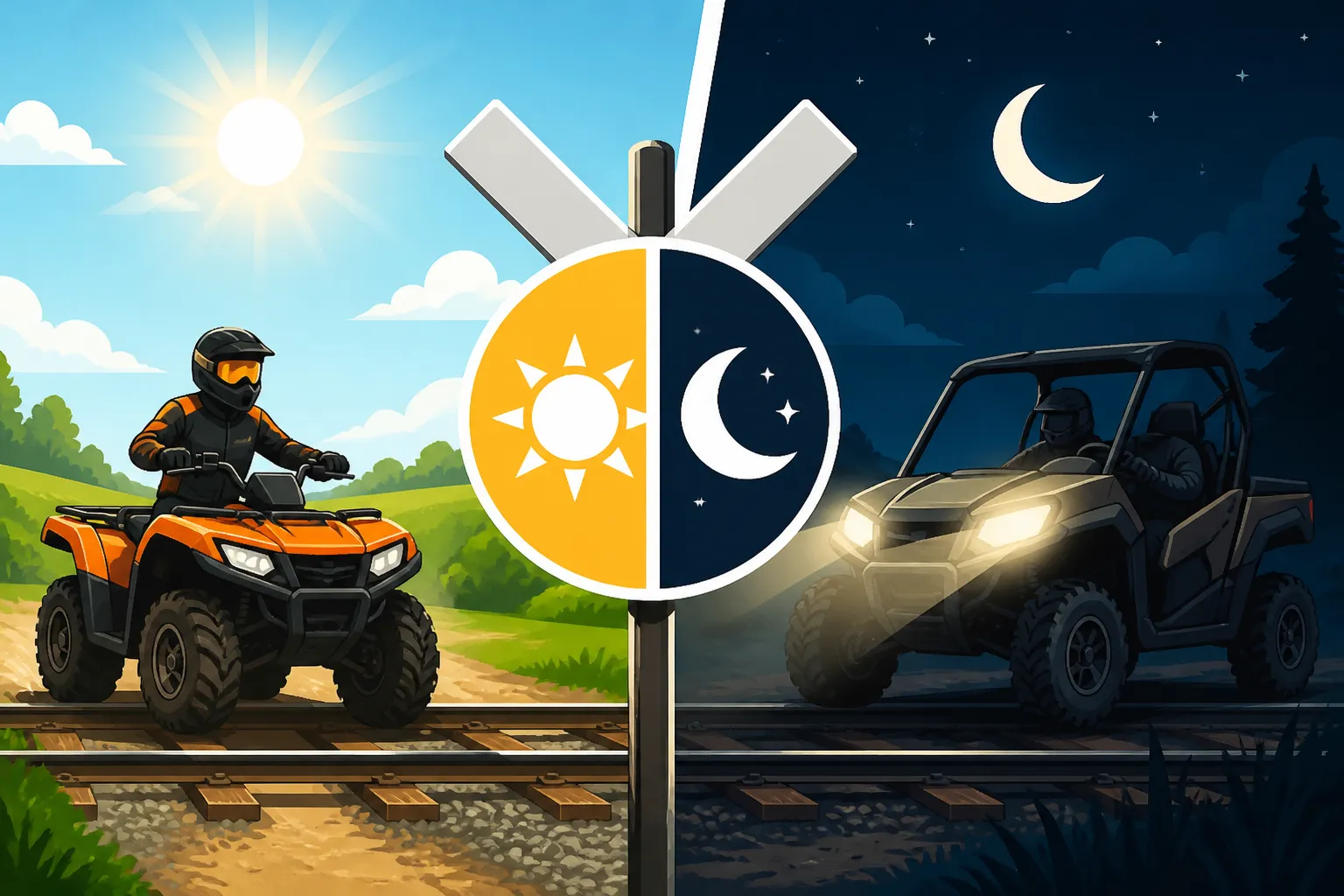
- Cross Only During Daylight: This is the explicit rule for off-road vehicles in Oklahoma, and it's non-negotiable for a reason. Plan your routes to ensure any railway crossings occur well before dusk and after dawn.
- Inspect the Crossing: Before you commit to crossing, visually inspect the tracks and the area immediately around them. Look for broken rails, deep ruts parallel to the tracks, soft ground, or anything that could cause your tires to get stuck or lose traction. If you're unsure of the terrain or if it looks particularly rough, consider dismounting and walking across first to assess it on foot.
- Straight On: When you do cross, do so as perpendicularly as possible to the tracks. This minimizes the chance of a tire getting caught in the flange gap between the rail and the pavement. Maintain a steady, appropriate speed – not too fast to lose control, but not so slow that you risk getting stuck.
- Communicate in Groups: If you're riding with others, establish a clear communication plan for railway crossings. One rider should act as a spotter, ensuring the path is clear before the rest of the group proceeds. Wait for the rider ahead to clear the tracks before you start your crossing.
- Enhance Visibility (But Don't Rely on It at Night): While the daylight rule is absolute for railway crossings, making your machine more visible in general is always a good idea. Consider adding reflective tape, bright flags, or additional lighting from reputable brands like SuperATV. These enhancements are excellent for general trail safety and being seen by other vehicles on shared county roads, but they do not permit nighttime railway crossings.
By following these guidelines, you not only comply with Oklahoma law but also drastically reduce the risk of a dangerous encounter with a train. It's about respecting the power of the railway and prioritizing your own safety and the safety of those around you.
Comparison: Railway Crossings vs. Other Road Crossings
To further clarify the distinctions, here's a quick look at how railway crossings often differ from other types of road crossings for ATVs and UTVs in Oklahoma.
| Feature | Railway Crossing (ATV/UTV) | Highway/County Road Crossing (ATV/UTV) |
|---|---|---|
| Time of Day | Daylight hours ONLY | Often allowed during daylight; some specific [Oklahoma Daylight Crossing Rules] for highways. |
| Primary Hazard | Immovable, fast-moving trains | Other vehicles, typically slower, can swerve. |
| Required Action | Stop, look, listen, cross perpendicularly. | Yield to traffic, ensure clear path. |
| Legislation Focus | Preventing train collisions, high risk. | General traffic safety, accident prevention. |
| Visibility Consideration | Critical due to train speed/mass. | Important, but less absolute restriction. |
This table highlights why railway crossings have such a specific and non-negotiable rule about daylight hours. The sheer force and immovability of a train demand the highest level of caution and visibility.
Stay safe out there, fellow riders! Understanding and respecting these rules will ensure your adventures in Oklahoma remain thrilling and, most importantly, safe.
Disclaimer
This article is for general informational purposes only and does not constitute professional advice. Laws, prices and regulations vary by location and change over time. Consult a qualified professional for guidance on your specific situation.