Five Hundred Plates in Two Weeks
It can feel incredibly frustrating to own a UTV in Oklahoma and constantly wonder where you're actually allowed to ride it. For years, many riders felt confined to private land, designated OHV parks, or a very limited set of county roads, leaving a massive gap between the capabilities of their machines and the legal places they could take them. This guide aims to clear up the confusion surrounding street-legal UTVs in Oklahoma, explaining the specific laws that opened up new possibilities for riders, what your machine needs to hit the pavement, and how to navigate the system to get your side-by-side officially road-ready.
The Rise of Street-Legal UTVs in Oklahoma: A Game Changer for Riders
For a long time, the idea of driving your UTV down a city street or even a paved county road felt like a fantasy for most Oklahoma riders, or at best, a risky proposition with unclear legal standing. However, all that changed with significant legislation that truly opened the doors for side-by-sides to legally share the asphalt. This wasn't just a minor tweak; it created an entirely new class of vehicle in the eyes of the law, leading to a rapid and enthusiastic adoption by the riding community. Suddenly, the vision of taking your utility vehicle from the farm to the local hardware store, or simply cruising down a rural road to a neighbor's house, became a real, legal possibility. The speed at which riders embraced this change, evident in the quick issuance of new plates, highlighted just how much this change was desired.
Understanding the 2021 Legislation
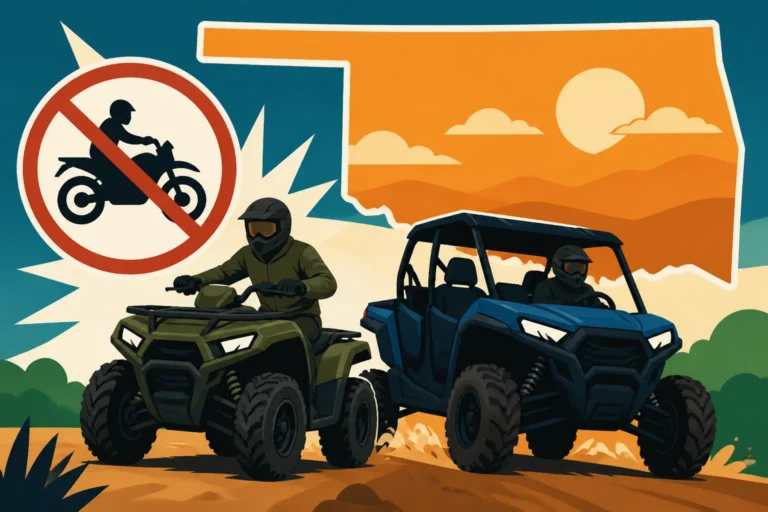
The turning point came with the passage of a new law in 2021, which fundamentally reclassified UTVs (but not ATVs or dirt bikes, mind you) to allow for street-legal operation under specific conditions. Before this, UTVs were generally lumped into the same category as other off-road vehicles, meaning their road use was highly restricted, often limited to specific crossings or agricultural purposes. The new legislation carved out a distinct pathway for UTVs, recognizing their versatility and the growing demand from owners to use them for more than just off-road recreation or farm work. This wasn't about making all UTVs street-legal by default; it established a clear set of requirements and a registration process specifically for those owners who wished to convert their machines for on-road use. It was a clear signal from the state that UTVs had earned a more integrated role in the transportation landscape, provided they met necessary safety and equipment standards.
Why the Rapid Adoption?
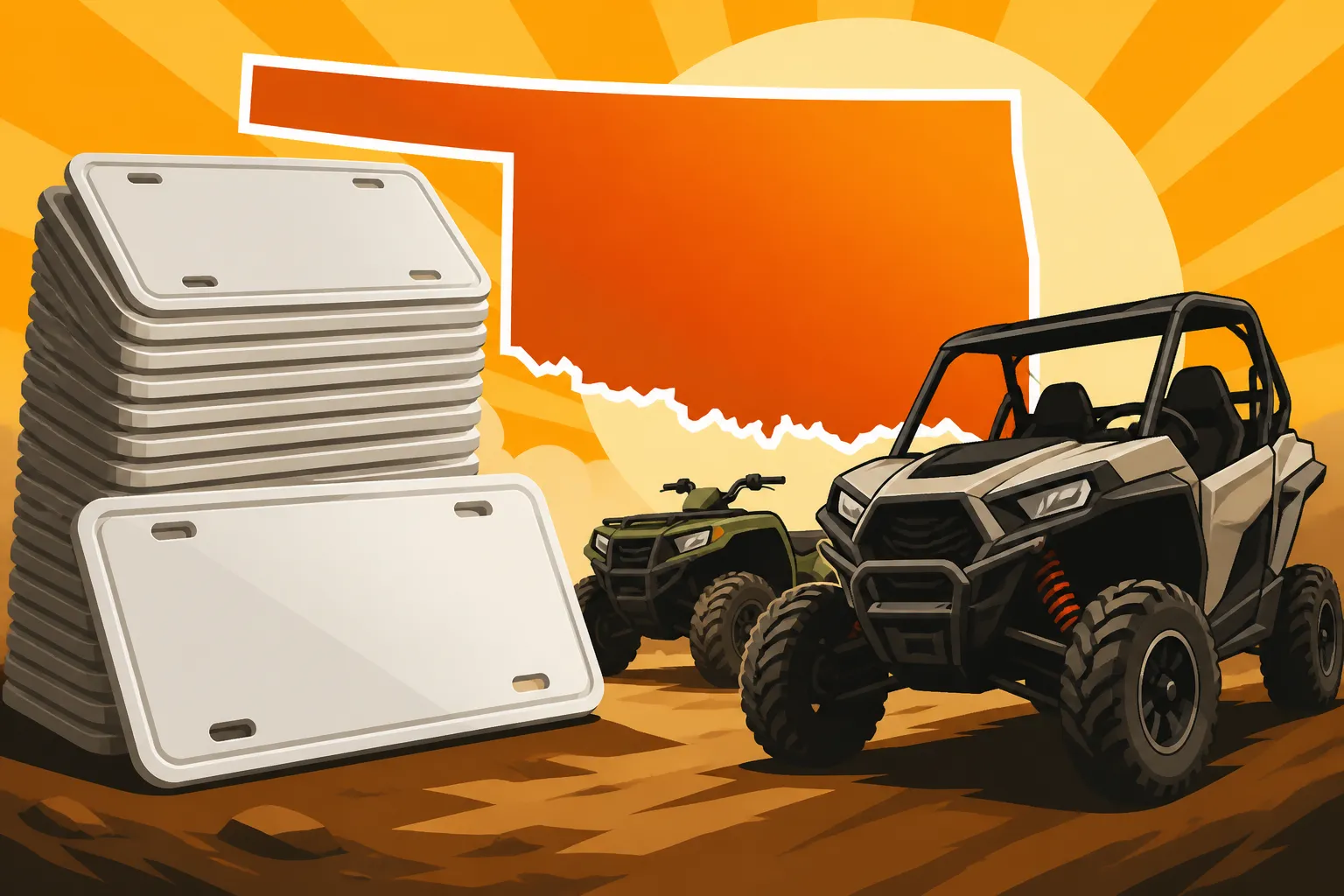
The enthusiasm for these new street-legal UTV plates was almost immediate. Within a very short period after the law took effect, tag agencies saw a significant influx of applications, with hundreds of plates being issued in just a couple of weeks. This rapid adoption wasn't just about novelty; it was a testament to the pent-up demand from riders across the state. For years, owners had invested in powerful, versatile machines that were often overkill for just trails or farm fields. They wanted the convenience of driving their UTVs to a local gas station, a friend's house, or simply using them as a practical mode of transport for short distances without fear of a ticket. The ability to legally drive a UTV on public roads meant more utility, more freedom, and less hassle with trailers and tow vehicles for every short trip. It transformed these machines from purely recreational or work-specific vehicles into legitimate, albeit limited, forms of street transportation. The convenience factor alone was a massive draw, allowing riders to seamlessly integrate their UTVs into their daily lives in ways that were previously impossible.
Equipping Your UTV for Oklahoma Road Legality
So, you're ready to take your side-by-side from the dirt to the pavement? That's awesome! But before you head down to the tag agency, you need to make sure your UTV meets a very specific set of equipment requirements. The state isn't just handing out [Oklahoma Road Plates for a Street-Legal UTV] without ensuring that these machines are reasonably safe for shared roadways. Think of it like getting a regular car ready for the road – there are lights, mirrors, and safety features that are non-negotiable. Many of these additions are common sense, designed to make your UTV visible and controllable in a mixed traffic environment.
Mandatory Safety Features and Gear
Oklahoma has a pretty clear checklist of what your UTV needs to have to be considered street-legal. It's not just about slapping on a license plate; it's about making your machine visible, audible, and controllable in traffic. First and foremost, you'll need working headlamps, tail lamps, and brake lights. These aren't just for looking cool at the dunes; they're essential for visibility to other drivers, especially at dawn, dusk, or in less-than-ideal weather. Then there's the critical requirement for [Oklahoma Turn Signals and Mirrors]. You need at least one rearview mirror, typically mounted on the driver's side, and functional turn signals on both the front and rear of your machine. These are vital for communicating your intentions to other drivers, just like in any car. A working [Oklahoma Horns on a Street UTV] is also a must-have for those moments when you need to alert other motorists or pedestrians.
Beyond these basics, your UTV will need a windshield to protect the occupants from debris, and it must be equipped with an exhaust system that has a spark arrester. This helps prevent wildfires, especially crucial during Oklahoma's dry seasons. Seatbelts are also a non-negotiable item, and they must be installed for every occupant the UTV was designed to carry. If you're looking for aftermarket parts to help meet these requirements, many riders find quality and compliant components from brands like SuperATV, which offers a range of UTV accessories from street-legal kits to mirrors and windshields designed for durability and compliance. It's always a good idea to ensure any aftermarket additions meet federal motor vehicle safety standards where applicable, or at the very least, are robust enough to handle road use.
What You Need Beyond the Basics
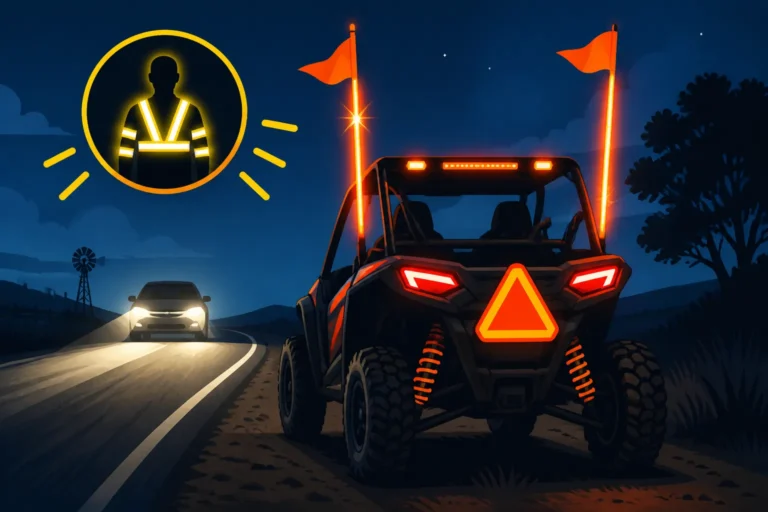
While the state has its list of must-haves, there are also some practical considerations that go beyond the bare minimum for street legality. For instance, while not explicitly required by the law for UTVs, many riders choose to add reflective tape or additional lighting, especially if they anticipate riding in low-light conditions or on rural roads where visibility might be compromised. This is about enhancing your safety, not just meeting a legal requirement. Properly functioning tires that are rated for road use can also be a smart investment, as aggressive off-road treads can wear quickly and handle differently on pavement.
Another crucial item is proper documentation. This includes proof of ownership (title), proof of insurance, and your driver's license. While you'll get a special [Oklahoma Yearly Decals for Street UTVs] and an annual plate, you also need to ensure your machine's original title is clear and can be transferred to reflect its new street-legal status. It’s also wise to carry a copy of the specific Oklahoma statute that defines street-legal UTVs, especially when riding in areas where local law enforcement might not be fully up-to-date on the latest regulations. This isn't legally required, but it can save you a lot of hassle if you're pulled over and need to clarify your machine's legal status. Having all your paperwork in order before you ever hit the road is a key step in hassle-free riding.
Navigating Oklahoma's Road System with a Street-Legal UTV
So, your UTV is decked out with all the right gear and has that shiny new street-legal plate. Fantastic! But this doesn't mean every road is now your personal playground. Oklahoma's law for street-legal UTVs comes with specific rules about where and how you can ride. It’s important to understand these limitations to avoid tickets and ensure you’re riding safely and responsibly. The goal is to integrate UTVs into the existing road network without creating hazards or conflicts with traditional vehicles.
Speed Limits and Road Types
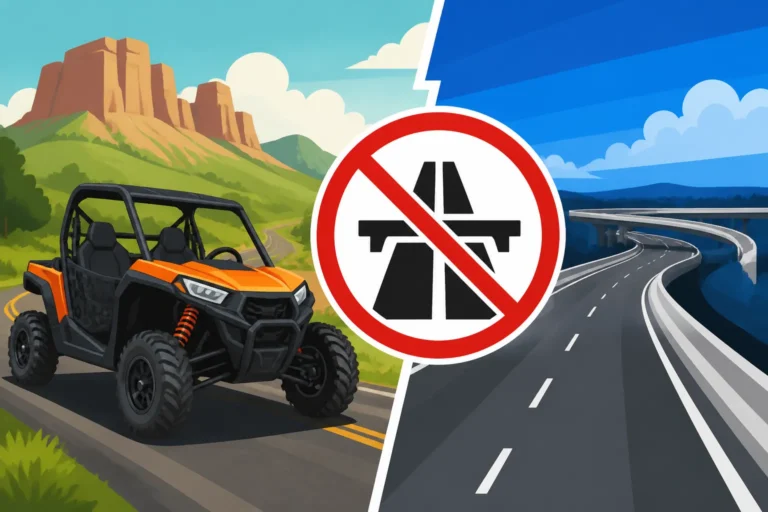
One of the most important rules to remember is that [Oklahoma Street UTVs Stay Off Interstates] and US highways. These are generally high-speed, multi-lane roads not designed for the typical performance of a UTV. The statute specifically limits street-legal UTVs to county roads and city streets, where traffic speeds are usually lower. Even on these permissible roads, UTVs must adhere to the posted speed limits. While many UTVs can go quite fast, the spirit of the law is about utility and local travel, not high-speed commuting. You'll often find that the maximum speed a street-legal UTV can reach is 45 miles per hour, though local ordinances or the posted speed limit might be even lower.
It's also worth noting that the ability to ride on specific county roads or city streets can sometimes be influenced by local governing bodies. [Oklahoma County Commissioners and ATV Roads] have the authority to open or close certain county roads to off-road vehicles, including street-legal UTVs. This means that while the state allows street-legal UTVs on county roads generally, a specific county could impose further restrictions. Always check with local authorities or look for posted signs in areas you plan to ride. Being informed about local rules is just as important as knowing the state law.
Interstate and US Highway Restrictions
Let’s reiterate: your street-legal UTV is not permitted on interstates or US highways. This is a hard and fast rule in Oklahoma. These roads are designed for vehicles capable of sustaining higher speeds and operating in dense, fast-moving traffic, which is typically outside the design parameters of a UTV. Ignoring this rule is a quick way to get a citation and potentially put yourself and others in danger.
However, the law does make provisions for crossing certain highways. You can typically cross a highway posted at 35 miles per hour or less, provided you do so at approximately a 90-degree angle, and only during daylight hours. This is for quick transit, like moving from one section of farmland to another, not for continuous travel along the highway itself. Always exercise extreme caution when performing any crossing, ensuring clear visibility in both directions. Understanding these specific restrictions on high-speed roadways is key to safe and legal operation.
Local Ordinances and Farm Use
Beyond state law, local city councils and town boards can also pass ordinances that further regulate street-legal UTV use within their municipal limits. While some cities might embrace UTVs on their streets, others might have more restrictive rules, or even ban them entirely. It’s always a good idea to check with the city clerk’s office for any local ordinances before planning to ride your street-legal UTV in a specific town. You don't want to roll into town thinking you're legal, only to find out you're violating a local rule.
For those in agricultural areas, the concept of [Oklahoma Farm Use on County Roads] still applies, often under the "instrument of husbandry" exemption. This allows off-road vehicles, including UTVs, to be operated on public roads for agricultural purposes without needing a street-legal plate, provided they are moving between fields or to other parts of the farm. However, this is a distinct exemption from the street-legal UTV class. If you're simply using your UTV for general transportation, even in a rural setting, the street-legal plate is what provides that broader authorization, separate from farm work.
Licensing, Registration, and Insurance for Street-Legal UTVs
So, you've got your UTV properly equipped and you understand the road rules. Now it's time to make it official! Getting your street-legal UTV registered and insured in Oklahoma involves a few distinct steps that are different from the standard off-road ATV or UTV registration. This process ensures your machine is properly documented and that you, as the operator, meet the necessary qualifications to drive it on public roads. It's about accountability and safety for everyone sharing the road.
The Annual Plate and Associated Costs
Unlike the typical ATV or UTV registration that you pay for once and never renew, the street-legal UTV plate is an [Street UTV Decals Renew Every Single Year]. This means you'll have an annual fee associated with keeping your UTV road-legal. The registration process itself usually happens at a local tag agency. You'll need to bring your title, proof of insurance, and possibly an inspection to ensure your UTV meets all the [Oklahoma Equipment Required for Street UTVs]. The cost for the plate and yearly renewal is separate from the one-time $11 registration fee for off-road use. It's also important to remember that you'll pay the standard 4.5% excise tax when you first title your UTV, just like any other vehicle purchase. The fees are designed to cover the administrative costs of maintaining the annual registration system and reflect the privilege of operating on public roads.
| Feature | Regular ATV/UTV (Off-Road) | Street-Legal UTV (On-Road) |
|---|---|---|
| Primary Use | Trails, Private Land, Farm Work | Public Roads, Trails, Farm Work |
| Registration Fee | One-time $11 (no annual renewal) | Annual Renewal (specific fee applies) |
| Plate/Decal | Front decal only ([Oklahoma Decals on the Front of a Machine]) | Annual plate + decal ([Oklahoma Annual Plates for Street UTVs]) |
| Road Access | Limited (crossings, farm use, county roads by ordinance) | Permitted on county roads/city streets (with restrictions) |
| Interstate/US Hwy | Not permitted | Not permitted |
| Equipment Needed | Basic safety (lights often optional off-road) | Headlights, tail lights, brake lights, turn signals, horn, mirrors, windshield, seatbelts |
| Driver's License | Not strictly required for off-road use | Required (standard Class D) |
| Insurance | Optional (but recommended) | Mandatory ([Oklahoma Insurance at Street Registration]) |
Driver Requirements and Insurance Basics
To drive a street-legal UTV in Oklahoma, you absolutely must possess a valid driver's license. [Street UTV Drivers Must Be at Least Sixteen] years old to legally operate one on public roads. The good news for many riders is that you do not need a special motorcycle endorsement (often called an "M" endorsement) on your license, even though UTVs might feel somewhat similar to motorcycles in their open-air nature. A standard Class D driver's license is sufficient. This simplifies things considerably for many who might otherwise be deterred by needing an additional license class.
Perhaps even more critical than your driver's license is the requirement for insurance. [Insurance at the Time of Registration] is mandatory for street-legal UTVs, just like it is for cars and trucks. You'll need to carry at least the minimum liability coverage required by the state. This protects you financially in case you cause an accident that results in injury or property damage to others. When you go to register your street-legal UTV, the tag agency will verify that you have this active insurance policy. It's not just a good idea; it's the law, ensuring that anyone operating these machines on public roads is prepared for unforeseen circumstances. Always keep proof of your insurance with you when you're riding.
Disclaimer
This article is for general informational purposes only and does not constitute professional advice. Laws, prices and regulations vary by location and change over time. Consult a qualified professional for guidance on your specific situation.