Oklahoma Rules for Crossing a Highway
Navigating the rules for riding your ATV or UTV in Oklahoma can sometimes feel like trying to solve a puzzle while riding a bucking bronco. One of the trickiest pieces of that puzzle often involves public roads, especially when you need to simply cross a highway. It's a common frustration for riders who just want to get from one section of their land to another, or access a different trail, only to be met with confusing or outright prohibitive regulations. This guide is here to clear the air, breaking down Oklahoma's specific rules for legally and safely crossing a highway on your off-road machine.
Understanding Oklahoma's Baseline Rules for ATVs and UTVs on Public Roads
Let's start with the fundamental principle in Oklahoma: your ATV or UTV is, first and foremost, an off-road vehicle. This design intent heavily influences how and where you can legally operate it. While the allure of taking the quickest route often means glancing at a paved road, the law generally says "no" to regular street use for these machines.
The General Prohibition and Its Purpose
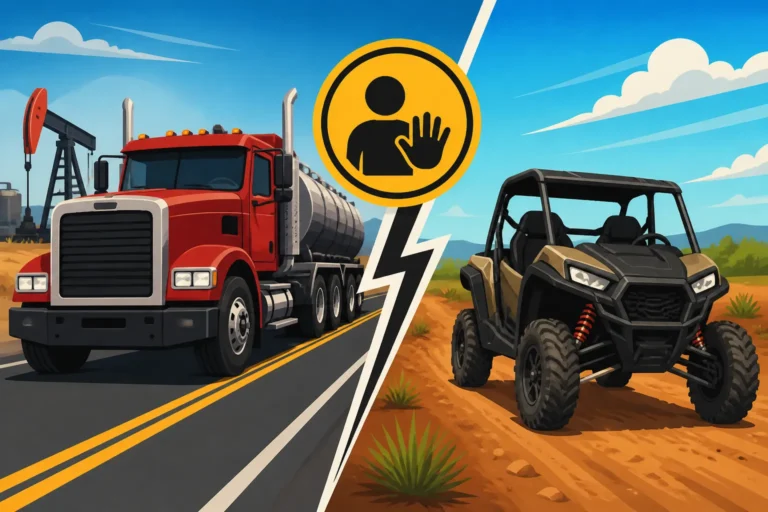
The primary reason ATVs and UTVs are restricted from public roads, particularly highways, boils down to safety and vehicle design. Think about it: these machines are built for rugged terrain, not for interacting with 60 mph traffic. They lack many of the safety features standard in road-legal vehicles, like full enclosures, airbags, and often, the comprehensive lighting and signaling systems needed to communicate effectively with other drivers. Moreover, their lower top speeds can create dangerous speed differentials with highway traffic, increasing the risk of accidents.
It's a genuine inconvenience, isn't it? You might own property that's split by a county road, or your favorite hunting grounds could be just across a short stretch of pavement. The instinct to take the direct path is strong, but state lawmakers prioritize the safety of all road users. This general prohibition aims to prevent the kinds of collisions that can result from the inherent differences between off-road vehicles and cars or trucks traveling at highway speeds. It’s not about making things difficult for you; it’s about acknowledging the very real dangers that arise when these different types of vehicles mix on high-speed roadways.
Key Exceptions: The "Instrument of Husbandry" and County/City Ordinances
Now, like many rules, there are exceptions, and it’s important to understand them, especially for those who rely on their machines for work. One significant exemption is for vehicles classified as an "instrument of husbandry." This typically applies to ATVs or UTVs being used strictly for agricultural purposes—moving between fields, checking livestock, or transporting equipment on private land or permitted [Oklahoma Farm Use on County Roads]. If your machine is genuinely serving an agricultural function, you might have more leeway on certain public roads. However, this exception generally doesn't extend to recreational use or higher-speed state or federal highways.
Beyond agricultural use, local governments hold some power. County commissioners and municipal governing bodies in Oklahoma have the authority to pass ordinances that open specific county roads or city streets to ATV and UTV traffic. This means that while one county might have designated roads for off-road vehicle use, the neighboring county might not. It’s a patchwork system, which can be frustrating when you're trying to figure out where you can and can't ride. Crucially, though, these local ordinances typically apply only to county roads and city streets; they very rarely—if ever—supersede state law regarding state or federal highways. So, even if your local county road is open, a highway crossing is often governed by a much stricter set of state-level rules. This distinction is vital, as ignoring it can lead to tickets or, worse, dangerous situations.
Oklahoma's Specific Rules for Highway Crossings
When it comes to traversing the asphalt jungle, merely crossing a highway is often seen by riders as a minor act. However, Oklahoma law has very specific stipulations designed to ensure safety during these brief transitions. These aren't just suggestions; they are critical legal requirements that all ATV and UTV riders must adhere to. Ignoring them can put you and others in harm's way, and lead to legal trouble.
The 35 MPH Rule: The Golden Standard
This is perhaps the most critical rule for anyone considering a highway crossing: Oklahoma law explicitly states that an ATV or UTV may only cross a highway if the posted speed limit of that highway is 35 miles per hour or less. This isn't a suggestion; it's a hard and fast legal limit. If you encounter a state highway with a posted speed limit of 45 mph, 55 mph, or even 40 mph, crossing it on your ATV or UTV is prohibited. This rule exists for a very good reason: closing speeds. The difference in speed between your off-road machine and highway traffic moving at higher speeds creates an extremely dangerous scenario, allowing little reaction time for anyone involved.
This 35 mph restriction often catches riders off guard, as many rural state highways maintain speed limits well above this threshold. You might be accustomed to zipping across a county road that has a lower speed limit, but a state highway, even one that appears quiet, typically carries a much higher posted speed. Always look for the speed limit signs! Don't assume. Imagine you're riding your quad and need to access a trail on the other side of State Highway 33. If you're out near Canton Lake, that highway is likely posted at 65 mph. Attempting to cross it, even for a few seconds, would be a direct violation of this rule and incredibly dangerous. However, if that same State Highway 33 passes through a small town like Watonga, the speed limit might drop to 30 mph or 35 mph. In that specific zone, and only if the signs explicitly state 35 mph or less, a legal crossing might be possible under the other conditions we’ll discuss. Always verify the speed limit right at your intended crossing point. For more details on this, see [Oklahoma Crossing Rules at 35 mph].
Daylight Only, Straight Across, and Visibility
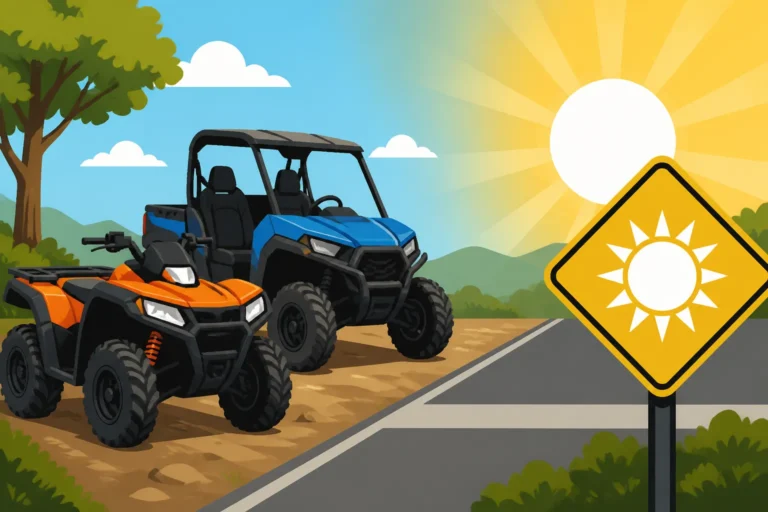
Beyond the speed limit, Oklahoma law places additional, equally important conditions on highway crossings. First, all crossings must occur during daylight hours only. This means no attempting to cross at dawn when the sun is just peeking over the horizon, no crossing at dusk as the light fades, and absolutely no crossing after dark. The reason is obvious: visibility. Your ATV or UTV, even with its lights on, simply isn't as visible to oncoming highway traffic in low-light conditions compared to a full-sized vehicle. Drivers often expect to see cars and trucks, not smaller off-road machines, especially when it's dark or dim.
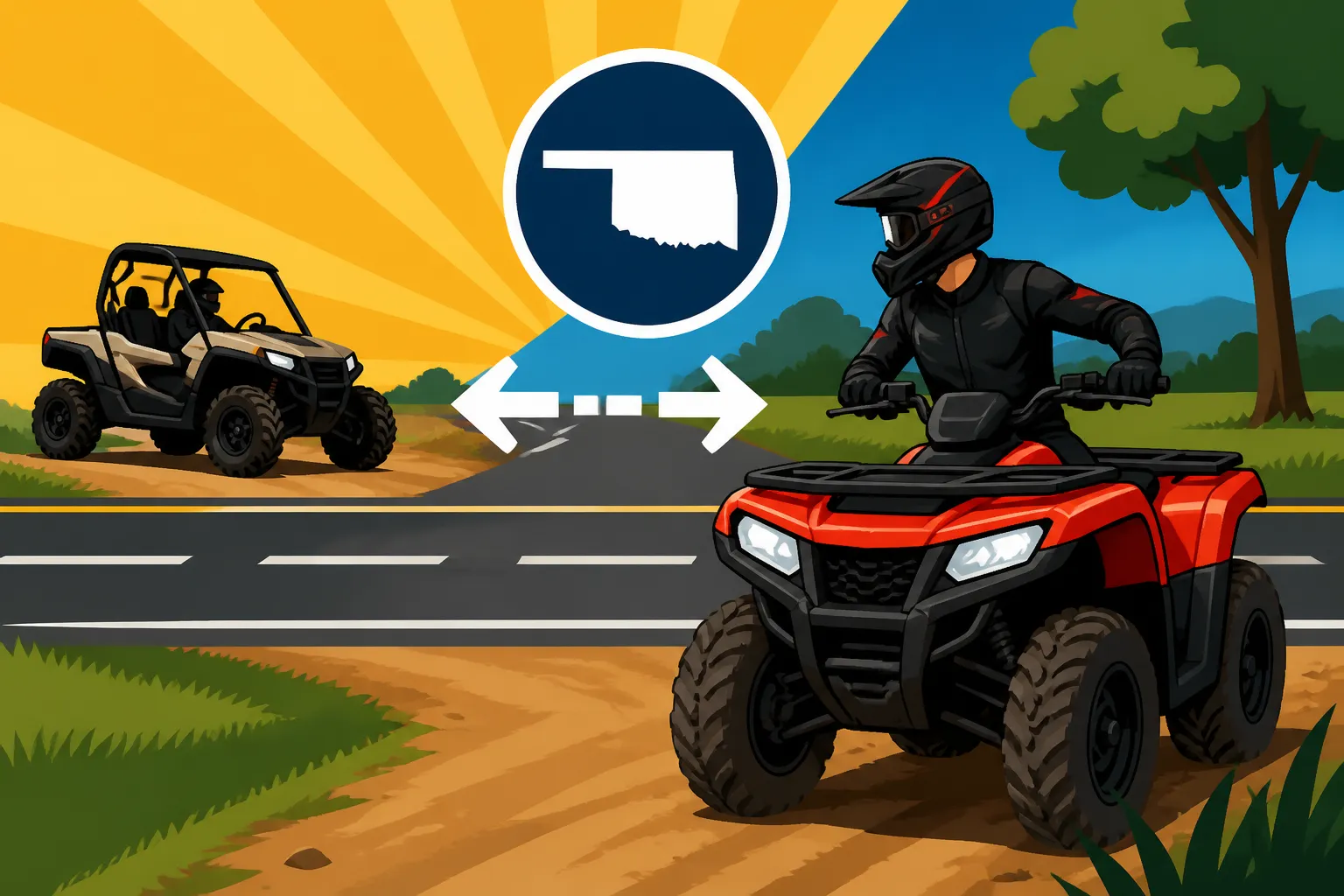
Second, the crossing must be made at approximately a 90-degree angle to the highway. This means you must cross directly from one side to the other, taking the shortest possible path. You cannot ride along the shoulder, or even briefly parallel to the highway, to find a "better" or "safer" crossing spot a few hundred feet down. The intent is to minimize the time your machine spends on the highway itself. You must make your intentions clear and execute the crossing swiftly and directly.
Third, and perhaps most crucially, you are required to yield to all oncoming traffic. Before you even think about putting tires on the pavement, you must ensure that the crossing can be completed safely without impeding the flow of traffic. This requires careful observation and good judgment. You must wait for a clear, substantial gap in traffic, giving yourself ample time to cross completely. Enhancing your visibility is also key. Consider wearing bright, high-contrast clothing. Some riders even attach a tall whip flag (like those required at sand dunes) when operating near roads, even if only for a crossing. Anything that makes you more noticeable to fast-moving vehicles is a smart move. After all, your safety is paramount. Remember these crucial requirements, which are often grouped under [Oklahoma Highway Crossings in Daylight].
Railway Crossings: A Specific Note
While our main focus is on highway crossings, it's worth briefly touching on railway crossings, as similar principles often apply. If you find yourself needing to cross railway tracks, the general expectation in Oklahoma is that you do so during daylight hours, again, making the crossing as direct and perpendicular as possible. Always yield to any approaching trains (obviously!) and be acutely aware of any specific signage or warnings around the tracks. The inherent dangers of rail crossings mean that they, too, are subject to stringent safety measures, mirroring the caution advised for highway interactions.
Equipment, Safety, and Enforcement During a Highway Crossing
Even for the briefest interaction with a highway, safety and legal compliance are non-negotiable. It's not just about avoiding a ticket; it's about minimizing the risk of a severe accident. When you're crossing a paved road, you're entering an environment with different speeds, vehicle types, and expectations, so your approach must be different too.
Essential Safety Considerations
When you're making a highway crossing, even a legal one at 35 mph or less, your personal safety equipment is your first line of defense. Always wear a helmet that meets federal safety standards, along with eye protection. These are non-negotiables, regardless of whether you’re on the trail or momentarily on pavement. The force of impact with a car or truck, even at low speeds, can be catastrophic, and your gear could be the only thing protecting you. If you have passengers, especially children, ensure they are also properly equipped and that your machine is designed to safely carry them. [Oklahoma Helmet Law for Riders Under 18] is a good resource to review, as youth riders are specifically covered.
Beyond personal gear, your machine's equipment plays a vital role in being seen and heard. Ensure your headlights and taillights are fully functional and clean. While you're crossing in daylight, having your lights on enhances your visibility to other drivers, making your machine stand out more. Consider adding bright reflective tape to the front, rear, and sides of your ATV or UTV, especially if your machine is a darker color. This extra bit of visibility could make all the difference, especially when a motorist might not be expecting to see an off-road vehicle. Remember, the onus is always on the rider to ensure a safe crossing, and being as visible as possible is a huge part of that.
What a Law Enforcement Officer Looks For
When a state trooper or county deputy sees an ATV or UTV on a highway, even crossing, their immediate focus is on compliance with the law. They're looking for several key indicators. Is the posted speed limit 35 mph or less at that exact crossing point? Is it clearly daylight? Is the crossing being made directly, at a 90-degree angle, or is the rider attempting to ride along the highway? Are there any obvious signs of reckless behavior, like attempting to cross in heavy traffic or without yielding?
If you violate any of these rules, you're highly likely to receive a citation. While the [Oklahoma Fine Cap for ATV Violations] is set at $25 for many off-road infractions, court costs and other fees can quickly add up, making a simple mistake much more expensive than you’d anticipate. It's easy to think, "It's just a quick dash across the road," but law enforcement doesn't view it that way. They are enforcing state law designed to prevent accidents. Getting caught riding on a highway with a speed limit over 35 mph, for instance, is a clear violation. These officers are well-versed in the specifics of [Oklahoma ATV Road Rules Under 11-1116] and other relevant statutes. Their job is to ensure public safety, and they won't hesitate to ticket someone who is putting themselves or others at risk.
The Street-Legal UTV Exception (But Not for All Highways)
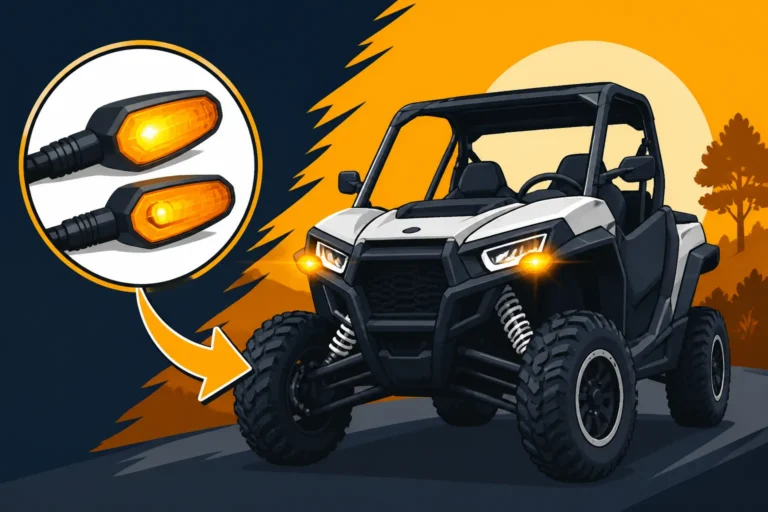
It's important to distinguish between typical ATVs/UTVs and a specific class of machines: properly equipped and registered street-legal UTVs. Thanks to recent legislation, Oklahoma now allows certain UTVs to be made street-legal, provided they meet a rigorous set of equipment requirements—think turn signals, mirrors, horns, windshields, and DOT-approved tires. These machines get an [Oklahoma Road Plates for a Street-Legal UTV] and annual renewals, similar to a car. Companies like SuperATV offer a range of accessories and kits designed to help UTV owners meet these requirements, from lighting kits to full windshields.
However, here's the crucial caveat that many riders misunderstand: even a fully street-legal UTV with a road plate still faces restrictions. While they can generally operate on county roads and city streets (where local ordinances permit, and usually excluding higher-speed highways), they are still generally prohibited from interstates and most U.S. highways. The rules for crossing these higher-speed highways remain the same: the posted speed limit must be 35 mph or less. A street-legal UTV gives you more flexibility on lower-speed public roads, but it doesn't grant you carte blanche to drive on all highways. So, while your shiny, street-legal UTV might let you ride down Main Street, don't assume it allows you to cross a 60 mph four-lane highway with impunity. The specific laws regarding these vehicles, like the [Oklahoma Street-Legal UTV Statute], carve out a distinct but still limited niche.
Practical Advice and Avoiding Costly Mistakes
Understanding the letter of the law is one thing, but applying it practically to your riding habits is another. Avoiding dangerous situations and costly tickets often comes down to smart planning and a healthy dose of caution. For Oklahoma riders, this means making informed decisions before you even start your engine.
Planning Your Route to Avoid Prohibitive Crossings
The best defense against violating highway crossing rules is to avoid the need to cross a prohibitive highway in the first place. Before you head out, whether for work or recreation, take some time to plan your route. Use physical maps, GPS apps, or even satellite imagery to identify alternative paths that either avoid highways entirely or direct you to designated crossing points where the speed limit is legally 35 mph or less. This might mean taking a slightly longer route on a series of county roads or seeking out an underpass or bridge designed for safer transitions.
Imagine you're taking your ranch UTV from one pasture to another, and a 55 mph state highway cuts right through the middle. Instead of risking a quick, illegal dash across, could you trailer your machine a mile down the road to a dedicated farm crossing point where the highway speed limit drops through a small community? Or perhaps there's an easement or a less-traveled county road that runs parallel to the highway for a stretch, allowing you to bypass the dangerous crossing altogether. Proactive route planning is not just about staying legal; it's about staying safe and ensuring your riding experience remains enjoyable, not stressful.
When in Doubt, Don't Cross It
This piece of advice might sound simplistic, but it's arguably the most important. If you're unsure about the legality of a crossing, if the traffic flow seems too heavy, or if the visibility isn't perfect, don't cross the highway. The risks involved in an ATV or UTV colliding with a highway vehicle are simply too high to justify taking a chance. A ticket is a minor inconvenience compared to a severe injury or worse. If no legal, safe crossing point exists, or if you feel uncomfortable with the conditions, the safest option is to find an alternative.
Sometimes, this might mean trailering your machine across the problematic stretch of highway, even if it feels like a hassle for a short distance. It’s an inconvenience, yes, but it’s a far better outcome than an accident or a citation. Always remember that when operating on any public thoroughfare, even briefly, you should have all your necessary paperwork readily available, including proof of ownership and registration. Keeping [Carrying Your Registration on a Section Road] on hand is a good practice, as you never know when a law enforcement officer might have questions about your presence on public land or roads.
Staying Informed About Local Ordinances
While state law dictates highway crossing rules, local ordinances can affect your overall ability to ride on other public roads. County commissioners and city councils in Oklahoma have the power to open or close specific roads to ATVs and UTVs within their jurisdictions. This means that what's legal in one county might be illegal in another. Staying informed about these local rules is crucial for avoiding tickets and respecting local communities. You can often find this information by checking the county clerk’s office, the city hall, or by looking up local ordinances online.
However, it’s critical to remember that these [Oklahoma County Commissioners and ATV Roads] and [Oklahoma Municipal Ordinances That Open Streets] usually pertain to county roads and city streets, not state or federal highways. Even if your county has opened several roads to ATV traffic, that permission almost never extends to state highways, which fall under a different legal authority. Always verify the specific rules for the type of road you intend to use. Ignorance of the law is never an excuse, and staying proactive in understanding the ever-evolving landscape of ATV and UTV regulations will save you a lot of headaches in the long run.
Here’s a quick summary of Oklahoma’s highway crossing rules for ATVs and UTVs:
| Rule Aspect | Requirement | Notes |
|---|---|---|
| Highway Speed Limit | 35 mph or less (posted) | Crucial: Higher speed limits are strictly prohibited for crossings. |
| Time of Day | Daylight hours only | No crossings at night, dawn, or dusk. |
| Crossing Angle | Approximately 90 degrees (shortest distance) | Do not ride along the highway, even briefly. |
| Yield to Traffic | Must yield to all approaching highway traffic | Ensure clear path, do not impede flow. |
| Visibility | Enhance visibility with lights, bright gear, or flags | Essential for rider safety and being seen by motorists. |
| Street-Legal UTVs | Same crossing rules for interstates/US highways remain | Even plated UTVs cannot use interstates or most US highways. |
| Local Ordinances | Do not typically override state highway crossing laws | County/city rules for local roads don't usually apply to state highways. |
Disclaimer
This article is for general informational purposes only and does not constitute professional advice. Laws, prices and regulations vary by location and change over time. Consult a qualified professional for guidance on your specific situation.