Oklahoma ATV Helmet Law Age
There's nothing quite like the thrill of riding an ATV or UTV across Oklahoma's diverse landscapes, from the sandy dunes of Little Sahara to the rugged trails of the Ouachita National Forest. But as exhilarating as it is, it's crucial to remember that safety comes first, especially when young riders are involved. Many parents and guardians feel a real knot in their stomach wondering if they're doing everything right to keep their kids safe and, just as importantly, stay on the right side of the law. This guide is here to untangle the specifics of Oklahoma's helmet law, particularly as it pertains to the age of the rider, so you can enjoy your adventures with peace of mind.
Understanding Oklahoma's ATV Helmet Law for Young Riders
When it comes to off-road riding in Oklahoma, the state has clear rules in place to protect its youngest enthusiasts. These aren't just suggestions; they're legal requirements designed to minimize serious injuries. It’s easy to get confused with different rules for different vehicles, or for public versus private land, but we're going to break it down.
Who the Law Applies To: Age Specifics
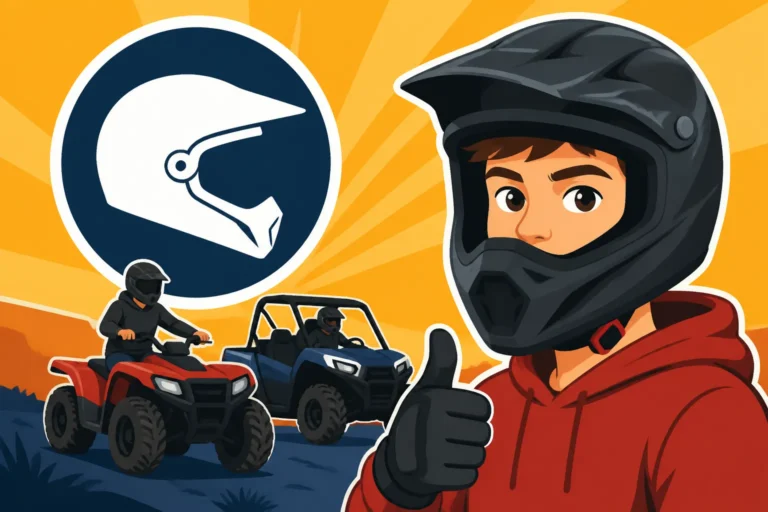
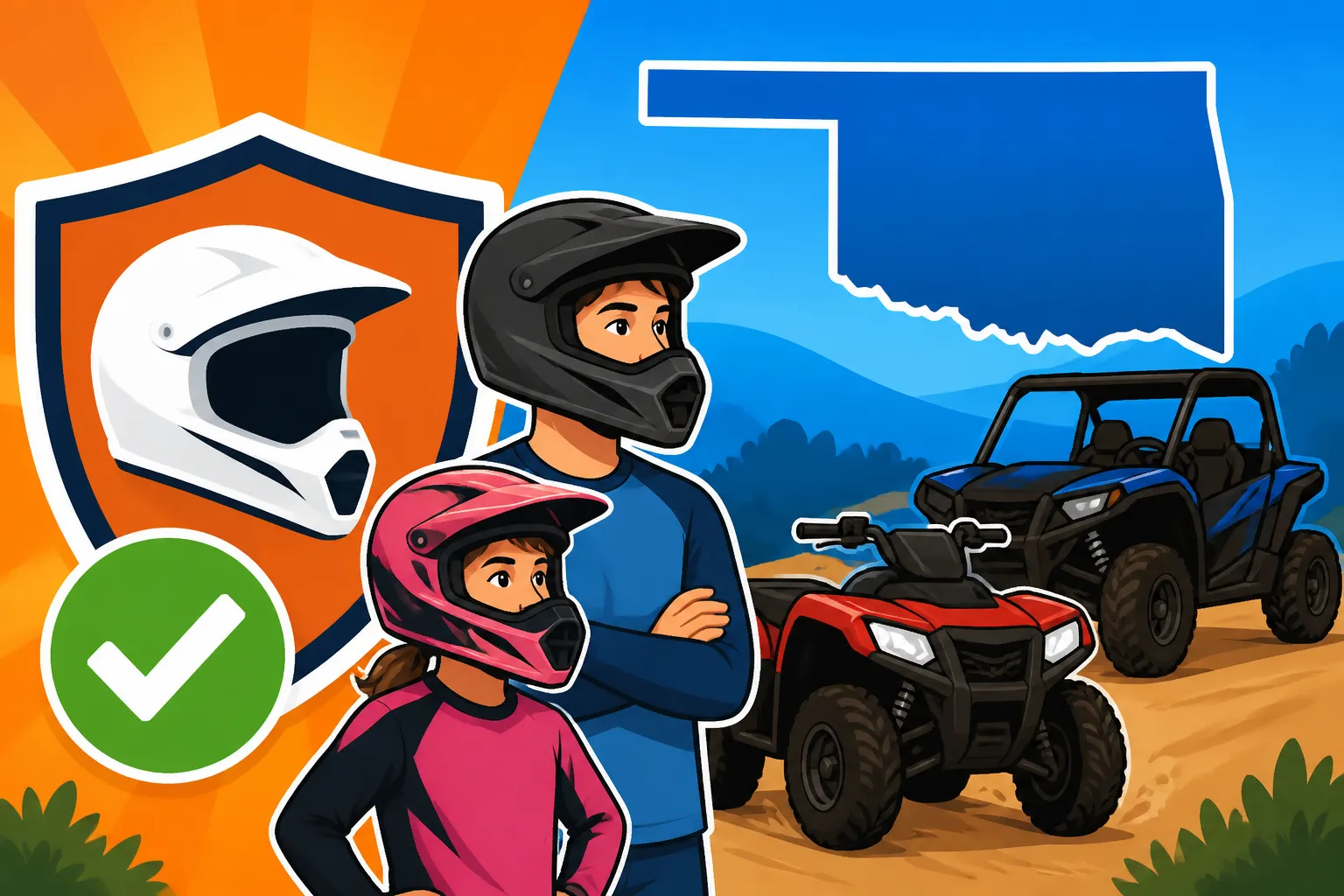
Oklahoma law is pretty straightforward when it comes to helmets and age. Any person under the age of eighteen (18) operating or riding as a passenger on an all-terrain vehicle (ATV) or an off-road motorcycle must wear a helmet. This isn't just a recommendation; it's a legal mandate that all riders and parents need to take seriously. It means if your child, grandchild, niece, or nephew is under 18, and they're on an ATV or dirt bike, that helmet needs to be on their head, fastened securely.
Imagine a beautiful Saturday morning. You've loaded up the side-by-side and your child's quad, ready for a day at Cross Bar Ranch. Your ten-year-old is practically bouncing with excitement to get on their ATV. Before they even think about starting the engine, you need to make sure that helmet is properly fitted and strapped. It's not about stifling their fun; it's about protecting their most vital asset. For many, this rule feels like a no-brainer, but it's surprising how often it gets overlooked, especially by those new to the sport or visiting from states with different regulations. The law here focuses specifically on the age of the rider, regardless of their experience level.
Where the Helmet Law Applies: Public vs. Private Land
This is where some riders get a little fuzzy on the details. Does this under-18 helmet law apply everywhere in Oklahoma, or just in specific places? For all-terrain vehicles and off-road motorcycles, the helmet law for riders under 18 generally applies on public lands, including state parks like Little Sahara, Wildlife Management Areas (WMAs), and any county roads or city streets where ATVs are permitted to cross or operate.
If you're out exploring trails in the Honobia Creek WMA or carving dunes at Little Sahara State Park, a park ranger or game warden can absolutely enforce this rule. It’s important to remember that when you're on public property, you're subject to state regulations. What about private land? This is a common question. While the state law primarily targets public areas, many private riding parks, like Cross Bar Ranch near Davis, also have their own strict rules requiring helmets for all riders, regardless of age, and certainly for minors. They do this for insurance purposes and to maintain a safe environment for everyone. Even if you're just riding on your own family's farm, while a state trooper might not be patrolling your pasture, it's still best practice, and frankly, common sense, to ensure all young riders wear appropriate head protection. Safety shouldn't stop at a property line.
What Kind of Helmet is Required: Safety Standards
It's not enough to just wear any helmet; it needs to be the right kind of helmet. Oklahoma's law implies that helmets worn by riders under 18 on ATVs and off-road motorcycles must meet recognized safety standards. This typically means a helmet approved by the Department of Transportation (DOT). You'll usually find a "DOT" sticker on the back of an approved helmet.
Why is this important? Not all helmets are created equal. A helmet designed for bicycling, for instance, offers significantly less protection than a DOT-approved ATV helmet. ATV helmets are built to withstand higher impact forces, offer better coverage for the head and face, and are designed for the specific types of falls and impacts that can occur in off-road riding. Imagine a scenario where a young rider takes an unexpected tumble on a rocky trail. A proper DOT-approved helmet, with its robust outer shell, impact-absorbing liner, and secure chin strap, is designed to disperse the force of the impact and protect against serious head trauma. Using a lesser helmet is like bringing a spoon to a knife fight; it simply won't offer the necessary protection when it matters most. Always check for that DOT certification, and ensure the helmet fits snugly without obstructing vision.
The Broader Context of Rider Safety and Oklahoma Law
While the helmet law is a critical piece of the safety puzzle, it's really just one part of a much larger picture. Responsible riding involves a comprehensive approach, especially when guiding younger generations into the sport.
Beyond Helmets: Other Safety Considerations for Youth Riders
Helmets are non-negotiable for young riders, but they are just the start. Ensuring a child's overall safety involves a combination of appropriate gear, proper supervision, and continuous education. This means:
- Machine Size: Making sure the ATV or UTV is appropriate for the child's age and size. Don't put a ten-year-old on an adult-sized quad they can't control. Many manufacturers offer youth models specifically designed with smaller engines and lower top speeds.
- Other Protective Gear: Beyond the helmet, riders should always wear goggles or a face shield, long sleeves, long pants, over-the-ankle boots, and gloves. These protect against scrapes, impacts, and debris, which are constant companions on the trail. A simple branch whipping back can take out an eye without goggles.
- Supervision: Young riders, especially beginners, should always be supervised by a responsible adult. This isn't just about watching them; it's about actively guiding them, teaching them proper riding techniques, and intervening if they get into a risky situation.
- Training Courses: Consider enrolling young riders in an ATV safety course. While Oklahoma does not currently have a mandatory safety course, programs like the [Oklahoma Safe Riders Program] provide invaluable hands-on training and teach critical skills for safe operation. These courses cover everything from basic controls to emergency maneuvers.
- Machine Maintenance: A well-maintained machine is a safer machine. Regularly check tires, brakes, lights, and steering. If you're adding aftermarket parts, make sure they enhance safety and are installed correctly. Companies like SuperATV offer a range of protective accessories, from full skid plates to sturdy bumpers, which can add an extra layer of safety to any machine.
Think of it like this: you wouldn't send a child to learn to swim in a deep pool without an adult present, or without basic swimming lessons. The same logic applies to off-road riding. It's a progressive skill that requires proper instruction and a safe environment.
Penalties for Non-Compliance with the Helmet Law
Ignoring the helmet law for minors isn't just a lapse in judgment; it can result in legal consequences, typically in the form of a citation and associated fines. While the penalties for ATV violations in Oklahoma are generally not as severe as for some other vehicle offenses—often [Oklahoma Penalties Capped at $25] for minor infractions—a citation still means a trip to court, potential court costs, and a mark on a record.
Who enforces these rules? On public lands, you might encounter [Oklahoma Park Rangers as Enforcers], game wardens, or even county deputies. If you're riding in an area where ATVs are allowed to cross or share a county road, you could also encounter highway patrol. Picture a scenario where a family is riding at Little Sahara. A ranger observes a child under 18 riding an ATV without a helmet. They have every right to stop the rider and issue a citation to the responsible adult. It's a disruption to your day, an expense you didn't budget for, and a stern reminder that these laws are there for a reason.
The Role of Parental Responsibility and Education
At the end of the day, the onus for ensuring a child's safety and adherence to the law falls squarely on the shoulders of parents and guardians. This means not only providing the correct gear but also instilling a culture of safety and respect for the rules.
Parents are their children's first and most important teachers. Explaining why a helmet is necessary—not just that it's the law—can help children understand and internalize the importance of safety. Talk about the risks of head injuries and show them how the helmet protects them. Leading by example is also incredibly powerful. If you, as an adult, wear your helmet and proper gear, your child is much more likely to do the same. This continuous education, combined with clear boundaries and consistent enforcement of safety rules, fosters responsible riders who will carry these habits throughout their lives. It's about nurturing a passion for off-road adventure safely and sustainably.
Navigating Street-Legal UTVs and Helmet Rules
The landscape of off-road vehicle laws has evolved, especially with the introduction of street-legal UTVs. This new class of vehicle adds another layer of questions regarding helmet requirements, particularly for younger passengers.
When a UTV is Street Legal: Equipment and Age Requirements
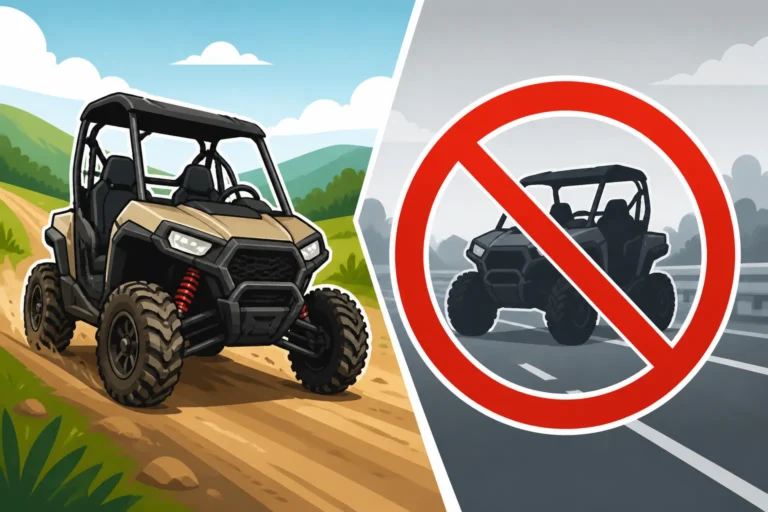
Oklahoma has made provisions for certain utility vehicles (UTVs) to be legally operated on public roads, creating an entirely new class: the street-legal UTV. To qualify, these machines must meet specific equipment requirements (like turn signals, mirrors, horns, headlights, tail lights, and seatbelts) and be registered with a special annual road plate. The driver of a street-legal UTV must be at least sixteen (16) years old and possess a valid driver's license, though [Oklahoma Skips the Motorcycle Endorsement].
Now, here's the nuance concerning helmets: for adult drivers and passengers in a street-legal UTV, if the vehicle is equipped with a factory-installed roll cage and seatbelts, helmets are typically not required on public roads. This aligns with how standard cars and trucks are treated. However, for a rider under the age of 18, even in a street-legal UTV, the overarching [Oklahoma ATV Helmet Law Age] might still apply, depending on the specific interpretation and enforcement. While a UTV offers more protection than an open-air ATV, especially with a roll cage and seatbelts, the safest practice for any minor in an off-road vehicle—regardless of whether it's on a trail or a county road—is to wear a helmet. Manufacturers like Polaris and Can-Am design their UTVs with safety in mind, and the addition of robust accessories from SuperATV, such as full doors or reinforced roll cages, further enhances occupant protection. Always check the specific wording of the local ordinances and state statutes, but when in doubt, put the helmet on.
Passengers and Helmets: What the Law Says for All Ages
The rules for passengers also differ significantly between ATVs and UTVs. On a traditional ATV, passengers are generally prohibited unless the machine is specifically designed by the manufacturer to carry more than one person. Most single-rider ATVs are not built for passengers, and carrying one dramatically shifts the weight distribution, making the machine unstable and increasing the risk of rollovers. If an ATV is designed for two riders, then any passenger under 18 must, by law, wear a helmet.
For UTVs, the situation is different. They are designed to carry multiple passengers, often with bucket seats and seatbelts. For adult passengers, as with adult drivers, a helmet is typically not required if the UTV has a roll cage and seatbelts, especially on a public road. However, as discussed, for a passenger under 18, the safest and often recommended practice is for them to wear a helmet, even in a UTV. While the vehicle might have a cage, impacts can still cause head injuries, especially with jarring movements or rollovers. When considering [Oklahoma Passenger Rules on a Quad] versus a UTV, remember the UTV often provides a much safer platform for carrying passengers, but the age of the passenger is still paramount when it comes to helmet use.
Future Changes and Advocacy for Helmet Laws
The world of off-road vehicle regulation is not static. There are always discussions and legislative efforts underway that could impact helmet laws, especially for youth riders. Advocates for rider safety consistently push for stricter requirements, citing the undeniable evidence that helmets prevent severe head injuries and fatalities.
These efforts often include calls for [Oklahoma Helmet Standards for Young Riders] to be more explicitly defined or expanded to cover a broader range of off-road scenarios for minors. While Oklahoma has not made a mandatory safety course a requirement, safety advocates often push for such measures to further protect riders, especially the young and inexperienced. Keeping an eye on proposed legislation and supporting organizations that promote safe riding practices is a great way to stay informed and contribute to a safer environment for all riders in Oklahoma. These conversations are vital to ensuring that as the sport grows, rider safety remains a top priority.
Here's a quick look at how helmet requirements typically break down in Oklahoma:
| Rider Age Group | Machine Type | Riding Location | Helmet Required by Law (for Public Land) | General Best Practice |
|---|---|---|---|---|
| Under 18 | ATV | Public/Private | Yes | Always Yes |
| Under 18 | Off-Road Motorcycle | Public/Private | Yes | Always Yes |
| Under 18 | UTV (Open Cab) | Public/Private | Yes (Strongly Recommended/Implied) | Always Yes |
| Under 18 | UTV (Street Legal, w/ Cage & Belts) | Public Roads | Yes (Highly Recommended, check local rules) | Always Yes |
| 18 and Over | ATV | Public/Private | No | Yes (Highly Recommended) |
| 18 and Over | Off-Road Motorcycle | Public/Private | No | Yes (Highly Recommended) |
| 18 and Over | UTV (Open Cab) | Public/Private | No | Yes (Highly Recommended) |
| 18 and Over | UTV (Street Legal, w/ Cage & Belts) | Public Roads | No (if equipped with roll cage/seatbelts) | Recommended for off-road situations |
Disclaimer
This article is for general informational purposes only and does not constitute professional advice. Laws, prices and regulations vary by location and change over time. Consult a qualified professional for guidance on your specific situation.