Oklahoma Street Legal UTV Requirements
There's a real buzz among UTV owners in Oklahoma about being able to finally take their machines onto paved roads, but the path to street legality can feel like navigating a maze blindfolded. Many of us just want to understand what's truly required to avoid fines or headaches from law enforcement. This guide is here to cut through the confusion and lay out exactly what you need to know to make your side-by-side legitimately street-legal in the Sooner State.
The Initial Hurdle: What Even Makes a UTV "Street-Legal" in Oklahoma?
For years, it felt like a pipe dream for Oklahoma UTV enthusiasts to legally drive their machines on public roads beyond specific, limited crossings or private land access. The rules were restrictive, often forcing riders to trailer their beloved side-by-sides everywhere. However, a significant legislative change offered a glimmer of hope, creating a new classification that, while not a free pass, definitely opened some doors. This wasn't about converting every dirt-devouring beast into a road warrior, but rather establishing a specific set of criteria that, once met, allows for limited road use.
The 2021 Legislation and Its Impact
The game-changer arrived with a bill passed in 2021, which effectively carved out a new category for "street-legal" utility vehicles. Prior to this, UTVs were generally treated as off-road vehicles, with very few exceptions for road use, usually limited to agricultural purposes or crossing minor roadways. This new legislation acknowledged the growing popularity and utility of side-by-sides and attempted to provide a framework for their safe integration onto certain public roads. It was a recognition that many UTVs are now capable machines, often equipped with features that blur the line between off-road and on-road vehicles, and that riders desired more flexibility. This bill established the necessary legal footing for what many had been asking for, outlining exactly what equipment and processes would be required. It really showed [How Oklahoma Created a Street-Legal UTV Class], addressing a long-standing need for clarity and expanded access for riders across the state.
Essential Equipment You'll Need
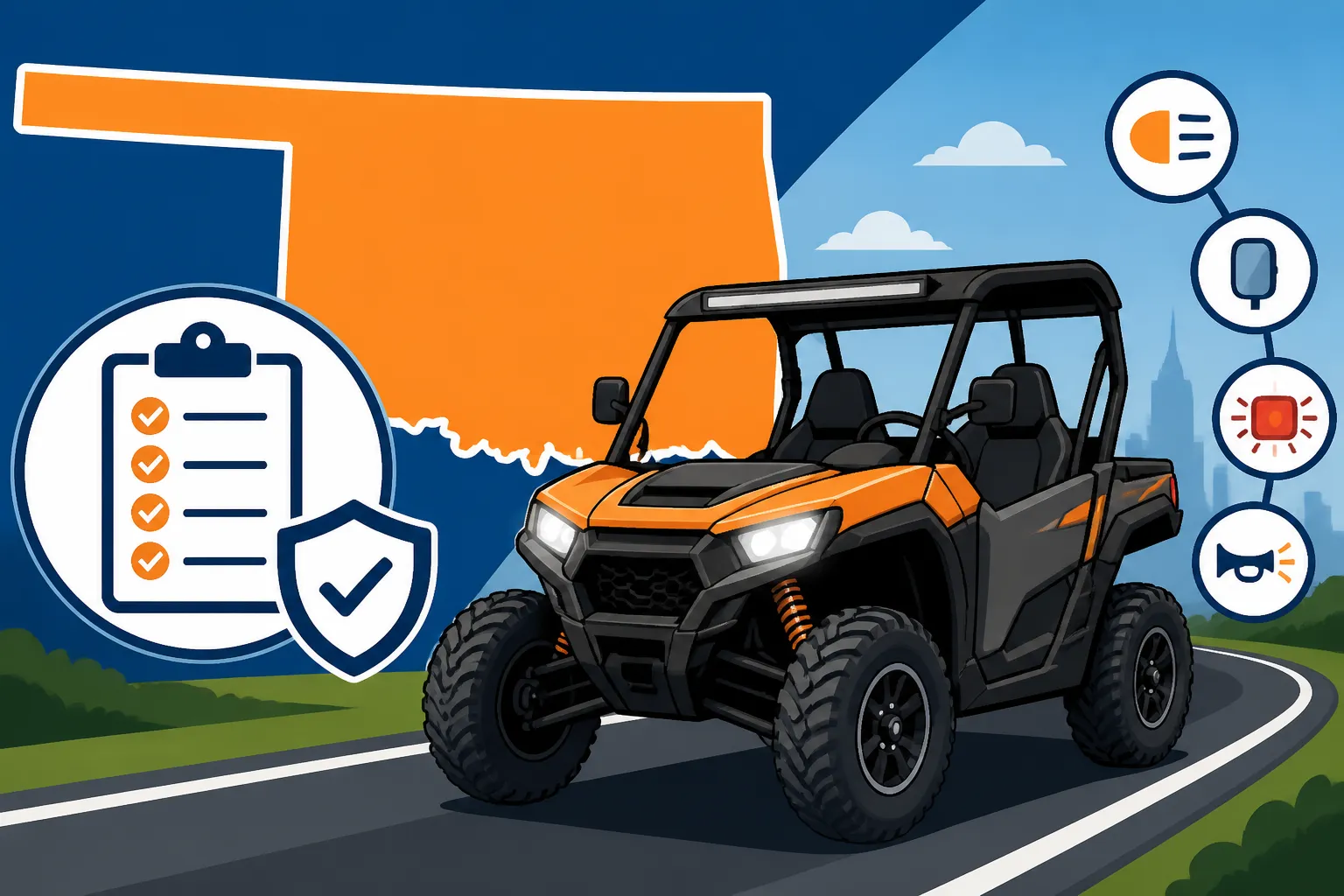
Converting your UTV from a pure trail machine to something that can legally cruise down a county road requires specific modifications, bringing it up to a standard that prioritizes safety and visibility for on-road travel. It's not just about slapping a license plate on it; you need to ensure your machine is equipped similarly to a standard vehicle in key areas. First and foremost, you'll need functional headlights and taillights. These aren't just for seeing the trail at dusk; they're crucial for being seen by other motorists. Bright, operational brake lights are also non-negotiable, signaling your intentions clearly to traffic behind you.
Next, turn signals are a must, both front and rear. Hand signals are not sufficient for a street-legal designation. A horn is also required, providing an audible warning when necessary. For visibility, you'll need at least one rear-view mirror, and many riders opt for side mirrors as well to maximize their field of vision, especially in traffic. A windshield is also part of the requirement, protecting occupants from road debris and bugs, just like in a car. Some UTVs come with these features from the factory, but for many, it means venturing into the aftermarket. You'll find a wide array of products available, and many riders turn to aftermarket suppliers like SuperATV for their turn signal kits, DOT-approved windshields, or robust mirrors to get their machine road-ready. Ensuring your UTV has [Oklahoma Equipment Required for Street UTVs] is the very first step, and it's vital to get it right. It’s about equipping your UTV to safely share the road with everything from bicycles to semi-trucks, and a quality setup makes all the difference.
Understanding the Registration and Licensing Process
Once your UTV is properly equipped for the road, the next hurdle is the bureaucratic one: getting it officially recognized and registered as a street-legal machine. This isn't the same as the typical, one-time off-road registration. This process involves a different kind of plate, specific annual renewals, and distinct requirements for the driver. It's important to understand these differences because mixing them up can lead to a lot of frustration and unnecessary trips to the tag agency.
The Special Road Plate and Annual Renewal
Unlike the typical off-road ATV or UTV registration in Oklahoma, which issues a front decal and is a one-time fee that never renews, the street-legal UTV class requires a proper license plate that must be renewed annually. This distinction is crucial. You’re not just getting a sticker to show you’ve paid your dues; you’re getting a plate that signifies your machine meets a higher standard for road use and is subject to yearly verification. Think of it more like your car's registration, not your traditional dirt bike's. When you go to the tag agency, you’ll be applying for this specific type of plate, often referred to as a "road plate." You'll pay your initial fees, which will cover the plate and registration for the first year. Then, just like with a car, you'll receive a renewal notice (or you'll need to remember to renew yourself) each year to keep your road plate active. This annual renewal is a key difference from the standard off-road registration process, making it essential for riders to budget for yearly costs and stay on top of their renewal dates. This means [Oklahoma Annual Plates for Street UTVs] are a recurring expense and administrative task, distinct from the simpler [What Oklahoma's $11 Registration Fee Actually Covers] for off-road machines.
Driver Licensing and Insurance Requirements
Beyond the machine itself, the person behind the wheel also needs to meet certain qualifications. First, the driver must hold a valid Oklahoma driver's license. This isn't a situation where a farm permit or a junior rider's license will suffice for street-legal operation. The state requires a standard driver's license, demonstrating that the individual has passed basic driving tests and understands traffic laws. Crucially, the good news for many UTV enthusiasts is that Oklahoma specifically states that you do not need a motorcycle endorsement (often called an "M" endorsement) on your driver's license to operate a street-legal UTV. This removes a significant barrier for many who might otherwise be hesitant to go through the motorcycle licensing process.
However, the state also mandates insurance for street-legal UTVs. Just like with any other registered vehicle on Oklahoma roads, you must carry minimum liability insurance. This protects you and others in the event of an accident. When you go to register your UTV for its road plate, you'll be asked to provide proof of insurance. It's wise to shop around and ensure your policy covers the specific type of road use you intend, as some standard ATV policies might not extend to public road operation. Your insurance agent can guide you through the options, making sure you have the right coverage for [Oklahoma Insurance at Street Registration]. Ultimately, [Oklahoma Drivers Must Be 16 for a Street UTV] and carry proper insurance to legally operate these machines on designated roadways.
| Requirement Category | Standard Off-Road UTV | Street-Legal UTV |
|---|---|---|
| Registration Type | Front Decal Only | Annual License Plate |
| Renewal | Never Renews | Annually Required |
| Driver's License | Not Required for Operation (varies by age/area) | Valid Standard Driver's License (16+) |
| M Endorsement | Not Applicable | Not Required |
| Insurance | Not Required by State (highly recommended) | Minimum Liability Required |
| Road Use | Very Limited Crossings/Ag | Permitted on Specific Roads |
Where You Can (and Can't) Ride Your Street-Legal UTV
So, you’ve put in the work, you’ve got the right gear, and your street-legal UTV is registered and insured. Fantastic! But don't just point it down the nearest highway. The "street-legal" designation in Oklahoma comes with some pretty important caveats about where you can actually ride. It's not an all-access pass, and understanding the limitations is key to avoiding tickets and staying safe.
Permitted Roads and Prohibited Areas
This is where many riders can get tripped up. While your UTV might be street-legal, it doesn't mean every road is open to you. The primary areas where you might legally operate a street-legal UTV are certain county roads and, in some cases, city streets, provided the local authorities have specifically opened them up. This means that [Oklahoma County Commissioners and ATV Roads] have a say in whether you can ride on rural roads in their jurisdiction, and city councils decide if [Oklahoma Municipal Ordinances That Open Streets] apply to their urban areas. It's a patchwork of regulations, and the onus is on the rider to know the local rules before hitting the pavement. Always check with county and city offices to understand their specific ordinances.
However, there are absolute prohibitions that apply statewide. Street-legal UTVs are strictly forbidden from operating on interstate highways. This means no I-35, no I-40, no I-44, period. You also cannot drive them on U.S. highways, such as US-75 or US-69. These are major arteries designed for high-speed traffic, and UTVs simply aren't built for that environment. This exclusion is a critical safety measure, preventing slower-moving UTVs from creating dangerous situations with faster vehicles. So, while you might be excited to show off your newly compliant machine, remember that [Oklahoma Street UTVs Stay Off Interstates] and other major thoroughfares for very good reasons. Plan your routes carefully, sticking to county roads and approved city streets.
Specific Crossing Rules and Daylight Restrictions
Even on roads where UTVs might be permitted, specific rules often apply to how and when you can cross certain roadways. If you need to cross a highway that isn't designated as a prohibited area (meaning a state highway or smaller, but not an Interstate or US Highway), there are strict conditions. You are generally allowed to cross these roads only during daylight hours. This is a common safety rule, as UTVs, despite their new equipment, might still have lower profiles or be less conspicuous than traditional vehicles, especially at night. Visibility is paramount.
Furthermore, if you are crossing a highway or a paved road with a posted speed limit, Oklahoma law specifies that you generally cannot cross if the speed limit is over 35 mph. This rule is designed to ensure that UTVs can safely enter and exit traffic flow without impeding high-speed vehicles. It's about minimizing the risk of collision by limiting interactions with fast-moving traffic. So, before you decide to cross that two-lane highway, check the speed limit and make sure it's during daylight hours. These rules extend to railway crossings as well; they must also be done in daylight. Adhering to [Oklahoma Crossing Rules at 35 mph] and daylight-only stipulations is not just about avoiding a ticket, but about keeping yourself and others safe.
Common Misconceptions and What to Watch Out For
Navigating the world of UTVs on public roads is full of nuances. What you might assume from other states or even from older Oklahoma laws might no longer apply or never did. It’s easy to fall into traps of misinformation, especially when it comes to the difference between a farm vehicle and a true street-legal machine, or how local rules can impact your riding. Let’s clear up some of the most persistent myths and point out what riders really need to pay attention to.
Farm Use vs. Recreational Road Use
One of the biggest areas of confusion revolves around farm or ranch vehicles. For a long time, and still to some extent, UTVs used exclusively for agricultural purposes have enjoyed certain exemptions from typical vehicle registration and road use rules under the "instrument of husbandry" designation. This allows a farmer to drive their UTV from one field to another across a public road, for instance, without needing a full street-legal setup or registration. However, many riders mistakenly believe that if their UTV could be used for farm work, or if they occasionally use it on their land, it automatically qualifies for these broad exemptions, allowing them unrestricted road access. This is simply not the case for recreational use.
The instrument of husbandry exemption is very specific to active agricultural operations, moving equipment, or working on land. It does not extend to taking your UTV out for a casual drive to the local store or to visit a friend down a county road, even if that road happens to run through agricultural areas. If your primary purpose for being on the road is recreational or personal transportation, your UTV must meet all the street-legal requirements, including the annual road plate and appropriate equipment. Relying on the farm-use exemption for non-farm activities is a surefire way to encounter problems with law enforcement. Understanding the strict limitations of [Oklahoma Farm Use on County Roads] is crucial to avoid any misunderstandings.
Local Ordinances and Enforcement
Even after you've gone through the trouble of making your UTV street-legal at the state level, your journey isn't over. Oklahoma's framework allows for a significant amount of local control over UTV road access. This means that while the state might say your UTV can be street-legal, individual counties and cities have the power to enact their own ordinances that either open or close their roads to these vehicles. A county commission might decide to open all county roads to street-legal UTVs, while a neighboring county might explicitly prohibit them. Similarly, a city might pass an ordinance allowing street-legal UTVs on certain city streets, while another city just a few miles away might ban them entirely.
This creates a patchwork of rules across the state, and it’s critical for riders to do their homework for every area they plan to ride in. A quick call to the local sheriff's department or city hall can save you a lot of grief. Furthermore, enforcement isn't just limited to Oklahoma Highway Patrol. Local law enforcement, including county deputies, municipal police officers, and even park rangers in some areas, are empowered to enforce these rules. They will check for proper equipment, a valid road plate (remember, [Street UTV Decals Renew Every Single Year]), and ensure you're operating on approved roads. Ignorance of local ordinances is not a valid excuse, and a ticket can certainly put a damper on your weekend ride. Always assume you need to confirm the local rules before venturing out.
Disclaimer
This article is for general informational purposes only and does not constitute professional advice. Laws, prices and regulations vary by location and change over time. Consult a qualified professional for guidance on your specific situation.