Street UTV Drivers Must Be at Least Sixteen
There's a common frustration among off-road enthusiasts in Oklahoma: you love your UTV, you use it for work around the property, and you might even trailer it to the dunes, but what about those short hops on paved roads? For years, getting your side-by-side legal for street use felt like navigating a legal maze with no clear path. It was all about local ordinances, and frankly, a lot of confusion. But things have changed significantly, and this comprehensive guide will walk you through everything you need to know about making your UTV street-legal in Oklahoma, focusing on the crucial rules and requirements so you can ride with confidence and peace of mind.
Understanding Oklahoma's Street-Legal UTV Class
For a long time, the idea of driving a UTV on public roads in Oklahoma was a grey area, if not outright prohibited in most places. Off-road vehicles were just that – off-road. The thought of taking your utility vehicle down Main Street felt like an invitation for a ticket. However, recognizing the growing popularity and utility of these machines, especially in rural communities, Oklahoma lawmakers stepped in to provide a clearer framework. This wasn't just a minor tweak; it was a significant legislative shift that created a new category of vehicle, specifically designed to bridge the gap between pure off-road fun and practical road use.
The 2021 Legislation That Changed Everything
The landscape for UTV owners in Oklahoma dramatically changed with the passage of legislation in 2021. This wasn't some minor amendment; it was a dedicated effort to create a legitimate "street-legal" class for utility vehicles. Before this, any road use was largely dependent on local city or county ordinances, which varied wildly and often left riders guessing. You might be perfectly fine riding a short distance on a county road in one area, only to be ticketed for the exact same action a few miles down the road in another jurisdiction. This inconsistency was a huge pain point for riders.
The 2021 bill aimed to bring uniformity and clarity, establishing a statewide standard for UTVs that wanted to venture onto certain public roads. It acknowledged that these machines are more than just recreational toys; they're vital tools for farmers, ranchers, and even homeowners in many parts of the state. This new law defined what a street-legal UTV is, what equipment it needs, and where it can (and cannot) go. It basically created a pathway for UTV owners to register their machines for road use, similar to how you would a car or motorcycle, albeit with specific restrictions tailored to the nature of UTVs. This was a welcome change for many who had long wished for a way to legally connect their properties or access local amenities without having to load their UTV onto a trailer every single time. This legislation specifically carved out the category of street-legal UTVs, giving them a distinct identity from other off-road vehicles. [Oklahoma's Street-Legal UTV Class Explained] provides more context on this legislative shift.
Why the "Instrument of Husbandry" Rule Isn't Enough for Road Use
Before the 2021 law, many UTV owners, especially those in agricultural settings, often relied on the "instrument of husbandry" exemption for limited road use. This rule generally allowed farm equipment, like tractors or combines, to briefly operate on public roads when moving between fields or to market, without needing standard vehicle registration. It made sense for slow-moving farm machinery. However, this exemption was never truly designed for the regular, recreational, or even general utility use of a UTV on public roads.
The problem was that while a UTV could be used for farm work and thus might technically qualify as an instrument of husbandry in specific circumstances, stretching that definition to cover routine trips to the store or visits to a neighbor was a risky proposition. Law enforcement officers often had differing interpretations, leading to confusion and, unfortunately, tickets for riders who thought they were operating within the law. The instrument of husbandry rule is very narrow in its application, typically requiring the machine to be actively engaged in or directly supporting agricultural operations. It doesn't allow for commuting, general transportation, or leisurely rides. So, while you might still qualify for the [Oklahoma Farm Use on County Roads] exemption if you're driving your UTV strictly for agricultural purposes, for anything beyond that very limited scope, the street-legal UTV registration is what you need. Relying solely on the "instrument of husbandry" for broader road use is a gamble that could easily land you in trouble, as it doesn't provide the same comprehensive legal coverage as a street-legal UTV registration.
Key Requirements for a Street-Legal UTV in Oklahoma
So, you're ready to make your UTV street-legal. That's fantastic! But it's not as simple as just slapping on a license plate. Oklahoma has a clear list of equipment and driver qualifications that must be met before your side-by-side can legally share the asphalt. These requirements are in place to ensure the safety of both the UTV operator and other drivers on the road, bringing these off-road machines closer to the safety standards expected of other street-legal vehicles. It's a bit of an investment in time and possibly parts, but it's well worth it for the freedom and peace of mind it provides.
Meeting the Equipment Standards
Transforming your off-road UTV into a street-legal machine means outfitting it with specific safety equipment designed for public road use. This isn't just about looking the part; it's about making your UTV visible, audible, and controllable in a way that regular automobiles are. You’ll need more than just the factory headlights and taillights. Think about what a standard car or truck has, and that's generally the direction you're headed.
First and foremost, your UTV needs proper lighting. This includes at least two headlamps (white or amber, emitting a white or amber light) and two taillamps (red, visible from at least 500 feet to the rear). But it doesn't stop there. You'll also need brake lights that illuminate when the brakes are applied, and turn signals both front and rear to clearly indicate your intentions to other drivers. Many aftermarket companies, like SuperATV, offer comprehensive street-legal kits that include many of these components, making the conversion process much easier than sourcing individual parts.
Beyond lighting, your UTV must have at least one rearview mirror, or preferably two (one on each side), to give you a clear view of traffic behind you. A functional horn is also mandatory for alerting others to your presence. These are all critical for safe operation on public roads where you'll be interacting with cars, trucks, and even pedestrians. Ensuring these equipment standards are met isn't just a legal formality; it's a vital step in making your UTV a safe and predictable vehicle on the street. You can learn more about specific requirements here: [Oklahoma Turn Signals and Mirrors] and [Oklahoma Horns on a Street UTV].
The Crucial 16-Year-Old Driver Age Rule
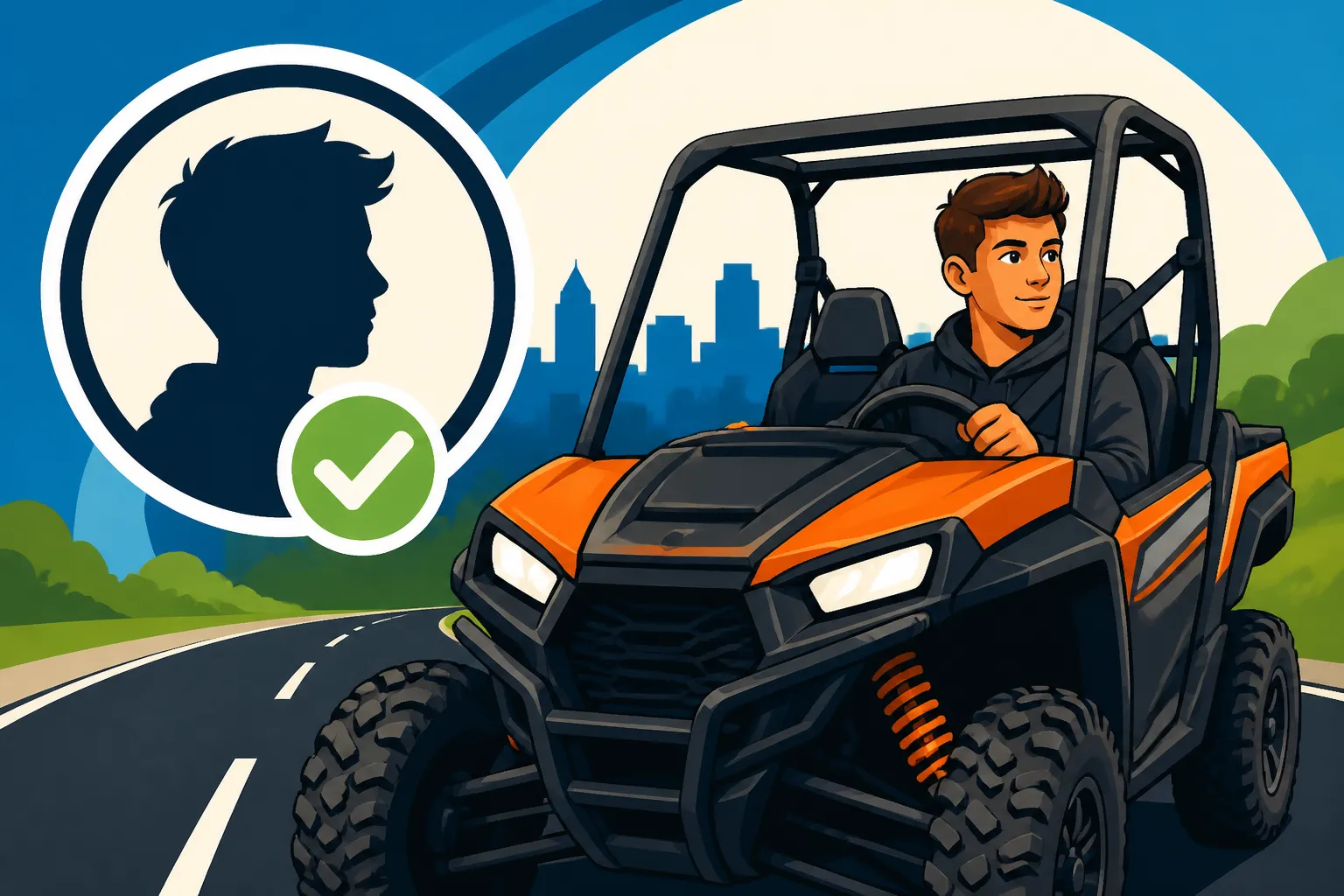
This is a really important one, and it's explicitly stated in the law: if you're driving a street-legal UTV on public roads in Oklahoma, you must be at least sixteen years old. There's no getting around this. It's not like riding an ATV on private property, where age restrictions might be more lenient or simply dictated by parental supervision. When you take that UTV onto a public street, you're operating a registered motor vehicle, and the state has deemed 16 to be the minimum age of competence for this responsibility.
This rule exists for a very good reason: road safety. Driving on public roads requires a certain level of maturity, judgment, and understanding of traffic laws that younger drivers might not possess. You'll be sharing the road with various vehicles, and you need to be able to react appropriately to unpredictable situations. So, if your teenager is itching to drive the street-legal side-by-side to a friend's house or down to the fishing pond on a public road, they'll need to wait until their 16th birthday. Additionally, they must possess a valid driver's license – a learner's permit typically isn't sufficient for independent operation of a registered vehicle on public roads without an accompanying licensed adult. The headline says it all: [Street UTV Drivers Must Be at Least Sixteen].
No Motorcycle Endorsement Needed
Here’s a piece of good news that often surprises people: even though a UTV might feel somewhat similar to an ATV or even a motorcycle in its open-air design, Oklahoma does not require a motorcycle endorsement (often referred to as an "M" endorsement) on your driver's license to operate a street-legal UTV. This is a significant distinction, as obtaining a motorcycle endorsement involves additional testing and specific riding skills that are different from driving a four-wheeled vehicle.
For street-legal UTVs, a standard Class D operator's license (the one you use to drive your car or truck) is perfectly sufficient, as long as you meet the minimum age requirement of 16. This was a deliberate choice by lawmakers, recognizing that UTVs, with their steering wheels, foot pedals, and generally more stable four-wheel platform, are more akin to automobiles in terms of driving mechanics than they are to motorcycles. It simplifies the process for many drivers who might not have the desire or experience to get a motorcycle endorsement. So, while you still need to be a licensed driver, you can breathe a sigh of relief knowing you won't need to take extra tests on two wheels just to drive your side-by-side on the street. [Oklahoma Skips the Motorcycle Endorsement] is a helpful resource for more on this.
Where You Can and Cannot Ride a Street-Legal UTV
Okay, your UTV is street-legal, and you meet the age and licensing requirements. That's a huge step! But before you head out, it's absolutely critical to understand where you're allowed to ride. "Street-legal" doesn't mean "everywhere-legal." Oklahoma has specific rules about which types of roads are open to UTVs and which are strictly off-limits. Disregarding these restrictions can quickly turn your excitement into a costly citation, or worse, a dangerous situation.
Navigating City Streets and County Roads
This is where your street-legal UTV really shines. Generally, once your UTV is properly registered and equipped, you're permitted to drive it on most city streets and county roads in Oklahoma. This is the primary benefit of making your UTV street-legal – the ability to run errands, visit neighbors, or simply enjoy a scenic cruise without the hassle of trailering. However, there's a crucial caveat: local control.
While the state law provides the framework, individual cities and counties still retain the authority to pass their own ordinances regarding UTV use within their specific jurisdictions. This means that even if your UTV is street-legal statewide, a particular town might have an ordinance that restricts or prohibits UTVs on certain streets, or perhaps even all public roads within their city limits. It's a good idea to check with the local city clerk or county commissioner's office in any area you plan to ride frequently to avoid surprises. Many [Oklahoma County Commissioners and ATV Roads] have opened certain routes to UTV traffic.
For example, a rural county might embrace UTVs on its gravel and paved county roads, seeing them as practical transportation, while a larger, more congested city might restrict them due to traffic concerns. Always be observant for posted signs, and when in doubt, make a quick phone call. Most of the time, though, these machines are a welcome sight on smaller, less busy roads.
Understanding Highway and Interstate Restrictions
Now, for the big "no-go" zones. Even with a street-legal designation, your UTV is explicitly prohibited from operating on interstate highways. This is a firm rule with no exceptions. Interstates are designed for high-speed traffic, and UTVs simply aren't built for those speeds, nor do they offer the same level of protection as a passenger car. Attempting to drive your UTV on an interstate is not only illegal but incredibly dangerous.
The rules for U.S. highways (those marked with a U.S. route shield, like US-69 or US-75) are also very restrictive. In most cases, street-legal UTVs are not permitted on U.S. highways either. These roads often have higher speed limits and greater traffic volumes than county roads, posing similar safety concerns as interstates. The law is quite clear: [Oklahoma Street UTVs Stay Off Interstates] and [Oklahoma Street UTVs Stay Off US Highways]. The intent of the street-legal UTV class is to allow for local transportation, not high-speed, long-distance travel on major arteries. Always plan your routes carefully, using local roads and county roads to reach your destination, and bypass any U.S. or interstate highways entirely.
Special Rules for Crossing Highways
While operating on U.S. highways is generally forbidden, there's a critical exception for crossing them. Oklahoma law allows street-legal UTVs to cross U.S. highways, but only under specific, strict conditions. This provision is designed to allow riders to access different local roads or properties without having to find an underpass or embark on a lengthy detour.
The key conditions for crossing a highway are:
- Daylight Hours Only: You can only cross a highway during daylight hours. No crossing after sunset or before sunrise. Visibility is paramount for safety.
- Perpendicular Crossing: You must cross the highway at a right angle, or as close to it as safely possible. You cannot drive along the highway, even for a short distance, to find a better crossing point.
- Speed Limit Restriction: This is perhaps the most critical. You can only cross a U.S. highway that has a posted speed limit of 35 miles per hour or less at the point of crossing. If the highway you want to cross has a 45 mph or higher speed limit, you cannot legally cross it in your UTV.
These rules emphasize safety and minimize the time your UTV spends in higher-speed traffic. Always ensure the path is clear, exercise extreme caution, and yield to all oncoming traffic. The specific language can be found in [Oklahoma Highway Crossings in Daylight]. Never assume you can cross just any highway; always check the posted speed limit at the intersection or crossing point.
The Importance of Licensing, Registration, and Insurance
Beyond the equipment upgrades and understanding where you can ride, there's the administrative side of making your UTV street-legal. This involves getting the proper paperwork, licenses, and coverage, which are just as important as the physical modifications. Neglecting these steps can lead to penalties, fines, and even legal complications if you're involved in an incident.
Getting Your Annual Street UTV Plate
Once your UTV meets all the equipment requirements and you're ready to hit the road, the next crucial step is to register it with the state and obtain your street-legal UTV plate. Unlike the one-time, non-renewing ATV registration decal, these street-legal UTV plates are issued annually, much like a car or truck tag. You'll need to visit an authorized tag agency with your UTV's title, proof of ownership (like a bill of sale or Manufacturer's Statement of Origin for new machines), and proof that you meet the insurance requirements.
The tag agency will process your application, confirm your UTV meets the necessary criteria (though they typically won't do a physical inspection, you attest that your machine is compliant), and issue you a unique license plate and a new decal that will need to be renewed every single year. This annual renewal process means you'll pay a fee each year to keep your UTV road-legal. It's a different system than the basic [Oklahoma ATV Registration You Pay Once] and [Oklahoma Registration Never Renews], reflecting the higher level of regulation for road-going vehicles. Make sure you display your plate clearly on the rear of your UTV, as this is your official proof of registration for street use. You can read more about it in [Oklahoma Road Plates for a Street-Legal UTV] and [Oklahoma Annual Plates for Street UTVs].
The Mandatory Insurance Requirement
Just like with cars and trucks, if you're going to drive your UTV on public roads in Oklahoma, it is absolutely mandatory to have liability insurance. This isn't optional; it's a legal requirement that you must meet at the time of registration and maintain continuously. The purpose of liability insurance is to protect other drivers and their property in case you are at fault in an accident. Without it, you could be personally responsible for significant damages, medical bills, and legal fees.
When you go to register your street-legal UTV, the tag agency will require proof of insurance. This typically comes in the form of an insurance card or a declaration page from your insurance provider. You'll want to shop around for UTV insurance, as many major providers offer policies specifically designed for these machines. Ensure your policy meets Oklahoma's minimum liability requirements, which are the same as for other motor vehicles. Don't let your policy lapse, as driving an uninsured street-legal UTV on public roads can result in fines, suspension of your driving privileges, and even impoundment of your machine. [Oklahoma Insurance at Street Registration] provides more detail on this essential requirement.
Street UTV Decals Renew Every Single Year
Let's reiterate this point because it's a common area of confusion for riders accustomed to the simple, one-time ATV decal: your street-legal UTV decal must be renewed every single year. This is a critical distinction from the general ATV registration, which is paid once and never expires for off-road use. When you get a street-legal plate, you are essentially treating your UTV more like a conventional vehicle in the eyes of the law, and that comes with annual renewal obligations.
You will typically receive a renewal notice in the mail from the Oklahoma Tax Commission (or Service Oklahoma), reminding you that your annual registration is due. It's easy to forget, especially if you're used to the "set it and forget it" nature of off-road ATV registration. Mark your calendar, set a reminder on your phone, or better yet, link your renewal to your other vehicle registrations. Failure to renew means your UTV is no longer legally street-legal, and you could face penalties for expired registration if you're caught driving it on public roads. The yearly renewal keeps your machine compliant and ensures you're able to continue enjoying the freedom of street access. [Oklahoma Street UTV Annual Renewal] is a key phrase to remember for this ongoing responsibility.
Common Misconceptions and What to Expect
Even with clear laws, new regulations often come with a learning curve and lingering questions. There are still many misunderstandings about what a street-legal UTV means in Oklahoma, and knowing what to expect from law enforcement or how these machines differ from other off-road vehicles can save you a lot of headaches.
What to Expect from Law Enforcement
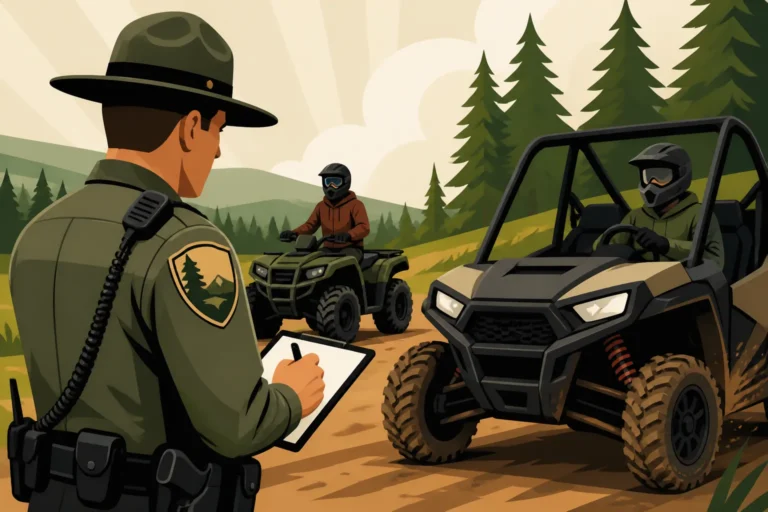
When you're out riding your street-legal UTV, you should expect law enforcement officers (whether state troopers, county deputies, or city police) to treat your UTV much like any other registered motor vehicle. This means they can pull you over for traffic infractions, just as they would a car or truck. Speeding, running a stop sign, improper lane usage, or even driving erratically can all lead to a traffic stop. During such a stop, the officer will likely ask for your driver's license, proof of registration (your street-legal plate), and proof of insurance. Having all these documents readily accessible and in order will make any interaction much smoother.
It's also important to remember that officers are enforcing the same traffic laws that apply to all vehicles. This includes rules about impaired driving. Operating a UTV while under the influence of alcohol or drugs is illegal and carries the same severe penalties as doing so in a car. While a street-legal UTV gives you more freedom, it also comes with more responsibility. Don't be surprised if an officer takes a closer look at your UTV's equipment, especially if it looks heavily modified. They'll be checking for those required turn signals, mirrors, and lights. Being respectful, cooperative, and having your paperwork in order will go a long way.
Distinguishing Street-Legal UTVs from Other Off-Road Machines
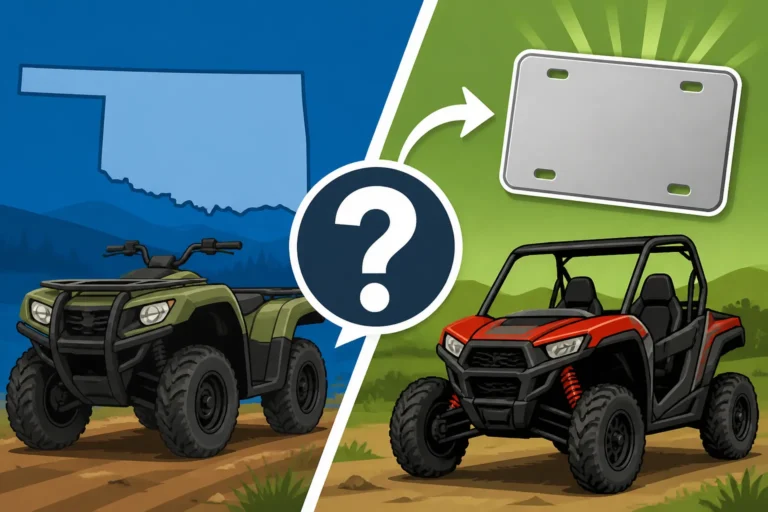
One of the biggest areas of confusion is distinguishing a fully street-legal UTV from other off-road machines like ATVs, dirt bikes, or even UTVs that are not street-legal. Just because you see a UTV on the road doesn't mean all UTVs are legal everywhere. The distinction is in the registration and equipment.
An ATV, for example, even if registered with the state, generally cannot be made street-legal in Oklahoma. Its registration is specifically for off-road use, and while it might be allowed to cross certain roads or operate under specific agricultural exemptions, it won't receive a standard vehicle license plate for general road travel. Dirt bikes and other off-road motorcycles also fall into a similar category; their basic off-road registration doesn't equate to street legality.
The key differentiator for a street-legal UTV is the specific annual registration plate, the mandatory equipment (like those turn signals and mirrors you might get from a brand like SuperATV), and the fact that it falls under the 2021 legislation. If a UTV doesn't have a valid, current street-legal license plate and hasn't been equipped according to state standards, it's still considered an off-road vehicle and is subject to all the restrictions of non-street-legal machines. Understanding this difference is crucial, both for your own compliance and for understanding what you see others doing on the roads. It's not a generic "ATV rule"; it's a specific "street-legal UTV" designation.
Here's a quick comparison of key aspects:
| Feature | Standard Off-Road ATV/UTV Registration | Street-Legal UTV Registration |
|---|---|---|
| Registration Type | One-time decal (no annual renewal) | Annual license plate and decal |
| Primary Use | Off-road trails, private land | Public roads (with restrictions), off-road |
| Required Equipment | Basic lighting (head/tail), spark arrestor | Full DOT lighting, mirrors, horn, turn signals, windshield |
| Driver Age Requirement | Varies by private property/trail rules, often 14+ with supervision | Minimum 16 years old |
| Driver's License | Not required for off-road operation | Standard Class D driver's license required |
| Insurance | Optional (liability recommended) | Mandatory liability insurance |
| Interstate/US Highways | Prohibited | Prohibited (except for specific crossings) |
| Local Roads | Generally prohibited (except specific ag exemptions or local ordinances) | Generally allowed (check local ordinances) |
This table clearly illustrates the different legal statuses and requirements. The street-legal UTV is a distinct category, and it's vital not to confuse it with its off-road counterparts. You now have a pathway to enjoy your UTV on many Oklahoma roads, but it comes with a specific set of responsibilities and rules to follow.
Disclaimer
This article is for general informational purposes only and does not constitute professional advice. Laws, prices and regulations vary by location and change over time. Consult a qualified professional for guidance on your specific situation.