Oklahoma Horns on a Street UTV
It’s a truly frustrating experience, isn't it? You’ve finally decided to upgrade your UTV, maybe even envisioning those easy rides down county roads or through town, only to be met with a mountain of questions about what it actually takes to make your machine street legal in Oklahoma. One of those sticky points often revolves around seemingly minor details, like whether your UTV needs a horn, and if so, what kind. This guide is here to untangle the confusion, lay out Oklahoma's requirements for UTV horns, and help you confidently equip your ride for the open road.
The Mandate: Why Your Street UTV Needs a Horn in Oklahoma
You might be thinking, "It's just an off-road vehicle, why does it need a horn like a car?" And that's a completely fair question. The reality is that when you want to take your UTV from the trail to the tarmac, Oklahoma law starts treating it a lot more like a conventional vehicle. This isn't just about paperwork; it's about integrating your machine safely into the flow of traffic alongside cars, trucks, and motorcycles.
Deciphering Oklahoma's Street-Legal UTV Legislation
Back in 2021, Oklahoma took a significant step by creating a specific class for street-legal UTVs, allowing riders to get a special license plate and legally operate these machines on certain public roads. This was a game-changer for many, opening up new possibilities for how and where people could use their side-by-sides. But with this new freedom came a new set of responsibilities and requirements, mirroring those that standard vehicles have. The intent was to ensure safety, and a crucial part of that safety net is the ability to communicate with other drivers.
When the state laid out the framework for [How Oklahoma Created a Street-Legal UTV Class], they didn't just wave a magic wand. They established clear criteria for equipment, just like they would for any other vehicle. This includes lights, mirrors, turn signals, and yes, a horn. The law specifically states that a street-legal UTV must be equipped with a horn that is in good working order and audible from a reasonable distance. This isn't a suggestion; it's a direct requirement for anyone looking to get that coveted street plate.
The Core Function of an Audible Warning Device
Think about why cars have horns. They’re not just for honking at slow drivers (though we’ve all been tempted!). A horn is primarily a safety device, an audible warning that can prevent accidents or alert pedestrians and other vehicles to your presence. On trails, you might use hand signals or just the roar of your engine, but on a busy street, those methods just don't cut it. The speed of traffic, the enclosed nature of most vehicle cabs, and the general ambient noise mean you need something that can cut through and demand attention.
Imagine you're driving your newly street-legal UTV down a two-lane road in a small Oklahoma town. A car starts to drift into your lane, their driver clearly distracted. Your quick blast of the horn could be the difference between a close call and a fender bender. Or perhaps a child is about to chase a ball into the street. A quick, sharp toot can alert them and their guardians. This is the core function: to provide an immediate, universally understood warning that prevents dangerous situations from escalating. Without it, you're missing a critical piece of the defensive driving puzzle, leaving both yourself and others vulnerable.
Safety on the Pavement: Alerting Other Drivers
While off-road, ATVs and UTVs are expected to be present, but on public roads, they're still a bit of a novelty for some drivers. This means other motorists might not always be looking for you, or they might underestimate your speed or presence. A horn becomes your voice in these situations. It helps you assert your presence and ensure you’re seen – or rather, heard – by everyone else sharing the road. This is especially important in scenarios like blind intersections, passing on a two-lane road (where legal, of course), or navigating parking lots.
It’s about being proactive. You can have the brightest lights and the biggest mirrors, but sometimes an audible warning is the only thing that will get through. The sound of a horn cuts through distractions like car radios, conversations, or even just the hum of daily traffic. It’s an instantaneous signal that something requires attention. So, don't just view the horn as a compliance item; see it as an essential tool in your street-legal UTV safety kit, right alongside your [Oklahoma Turn Signals and Mirrors] and proper lighting. It's all part of being a responsible and visible driver when you're no longer just on the back forty.
Choosing and Installing the Right Horn System
So, you know you need a horn. Great! But not all horns are created equal, and simply slapping any old noisemaker onto your UTV won't necessarily give you the safety or compliance you're looking for. There's a bit more to consider when picking out the perfect audible warning device for your street-legal machine.
Exploring Different Types of UTV Horns
When you start shopping, you’ll quickly discover a range of options for UTV horns. The most common type is the electric horn. These are typically compact, easy to install, and function by an electromagnet vibrating a diaphragm to produce sound. They often come in universal kits and are a solid, budget-friendly choice for meeting the legal requirement. You can find single-tone or dual-tone electric horns, with the latter often providing a more car-like sound. For many riders, an electric horn that's loud enough for daily use is all they need.
Then there are air horns. These tend to be much louder and produce a more attention-grabbing sound, similar to what you might hear on a semi-truck or train. They work by using compressed air to create a powerful blast of sound. Air horns require a small air compressor and often an air tank, which means they're a more complex installation and take up more space. However, if you really want to ensure you're heard in heavy traffic or noisy environments, an air horn definitely gets the job done. You also have marine-grade horns, which are designed to withstand water and harsh elements, making them a durable choice for UTVs that see a lot of mud or creek crossings, though they might be overkill for pure street use. Companies like SuperATV offer a variety of horn options, from simple button horns to more comprehensive kits that integrate with other street-legal components.
Mounting and Wiring for Optimal Performance
Once you've picked your horn, proper installation is key. First, think about mounting location. You want the horn to be in a spot where its sound isn't muffled by body panels or other components. Many riders choose to mount their horn under the hood, near the grille, or even high up on the roll cage if it's an external unit. The goal is to maximize sound projection. Also, consider protecting the horn from excessive mud, water, and debris, especially if it's not a marine-grade unit. Some riders fashion small splash guards or mount them inside a protective housing to extend their lifespan.
Wiring is another critical step. Most aftermarket horns come with a wiring harness that includes a relay, fuse, and switch. You'll need to tap into your UTV's 12V power source, connect the horn to the relay, and then wire the switch to a convenient location on your dash. The relay is important because it allows a small current from your switch to activate a larger current directly from the battery to the horn, preventing damage to your UTV's electrical system and ensuring the horn gets enough power for a strong blast. Make sure all connections are secure, waterproofed (if exposed), and neatly routed to avoid snagging or shorts. If you're using a comprehensive street-legal kit from a company like SuperATV, the wiring for the horn is often integrated into the larger harness for other accessories, simplifying the process.
Considering Aftermarket Kits and Accessories
For many UTV owners, the easiest and most effective way to address the horn requirement, along with all the other street-legal mandates, is to invest in an aftermarket kit. These kits are designed specifically for UTVs and often include everything you need: turn signals, horn, mirrors, license plate bracket, and all the necessary wiring. The beauty of these kits is that they streamline the installation process significantly. Instead of piecing together individual components, you get a cohesive system that’s designed to work together.
Brands like SuperATV are well-known for offering comprehensive street-legal kits for various UTV models. These kits take a lot of the guesswork out of installation and ensure compatibility. You’ll often find them with detailed instructions, sometimes even plug-and-play harnesses, which can be a huge time-saver. Beyond full kits, you can also find individual horn upgrades, like louder electric horns or compact air horn systems, if you already have the rest of your street-legal setup dialed in. Just remember to always check the kit's specifications to ensure it meets [Oklahoma Equipment Required for Street UTVs] before you make your purchase. It’s an investment in both convenience and peace of mind.
Ensuring Your Horn Meets Oklahoma's Standards
It’s one thing to have a horn; it’s another for that horn to meet the legal definition of "adequate" in Oklahoma. This isn't just about avoiding a ticket; it's about making sure the safety device you’ve installed actually performs its intended function when you need it most.
What Constitutes an "Adequate" Horn?
Oklahoma law, like many states, typically uses language like "good working order" and "audible from a reasonable distance" when describing horn requirements for vehicles. While there isn't usually a specific decibel level cited for a UTV horn, the general expectation is that it should be comparable in effectiveness to a horn on a standard passenger vehicle. This means it needs to be loud enough to be heard over typical road noise, inside other vehicles, and by pedestrians, to effectively warn them of your presence or impending action.
A bicycle bell, for instance, would clearly not be adequate. Neither would a novelty "duck call" horn, no matter how amusing. The sound should be clear, consistent, and recognizable as a warning signal. When you get your UTV inspected for its street-legal plate – if an inspection is required in your area or by your tag agency – the inspector will likely test the horn. They’ll want to hear a distinct, loud sound. If you have any doubts, stand about 100-200 feet away from your UTV while someone else activates the horn. Can you hear it clearly? Does it grab your attention? If not, you might need a louder option. This is where researching products and reading reviews can really help, as riders often share their experiences with different horn volumes.
Common Horn Pitfalls to Avoid Before Inspection
Many riders, in their excitement to get their UTV on the road, can overlook some simple things that might cause issues with their horn. One of the most common pitfalls is simply choosing a horn that’s too quiet. As mentioned, if it sounds like a toy, it won’t pass muster. Another issue can be improper wiring. If your horn only works intermittently, or if it sounds weak and tinny, it could be due to loose connections, corroded terminals, or insufficient power (perhaps not using a relay when one is needed). A horn that works flawlessly one day and fails the next is a safety hazard and a compliance nightmare.
Muffled sound is another frequent problem. If you mount the horn deep within the UTV's frame or under a thick plastic panel, the sound waves can be absorbed or deflected, significantly reducing its effective volume. Always test the horn after installation, with all body panels in place, to ensure it’s still loud and clear. Finally, don't forget the horn button. It needs to be easily accessible from the driver's position and clearly identifiable. Fumbling for a tiny, hidden button in an emergency defeats the purpose. Ensure your chosen button is robust, responsive, and positioned for quick, intuitive use, much like you'd find on a car's steering wheel.
What Law Enforcement Will Check on Your Machine
When a state trooper or local deputy pulls you over in your street-legal UTV, they’re not just looking for speeding. They’re often checking for compliance with all the regulations that make your machine roadworthy. As part of a routine stop or even a specific equipment check, they might ask you to demonstrate various functions of your UTV, and the horn is definitely on that list. They will want to confirm that you have a horn and that it produces an adequate, audible signal. This is part of the broader checklist for [Oklahoma Street Legal UTV Requirements].
They'll likely observe if the horn sounds like a proper vehicle horn, not something flimsy or indistinct. They'll also check that the button or switch is present and easily usable. If your horn isn't working at all, or if it produces only a weak, barely audible peep, you could face a citation. It’s not about being overly strict; it’s about safety. An inoperable horn means you're missing a key tool to prevent accidents on public roads. So, before you head out, make it a habit to do a quick check of your horn, lights, and turn signals – just like you would before driving a car – to ensure everything is functioning as it should be.
A Complete Picture: Beyond Just the Horn for Road Readiness
While we've spent a lot of time talking about horns, it's crucial to remember that a horn is just one piece of the larger puzzle when it comes to making your UTV truly street legal in Oklahoma. Each component works in tandem to ensure your safety and the safety of everyone else on the road.
The Full Spectrum of Oklahoma Street-Legal Equipment
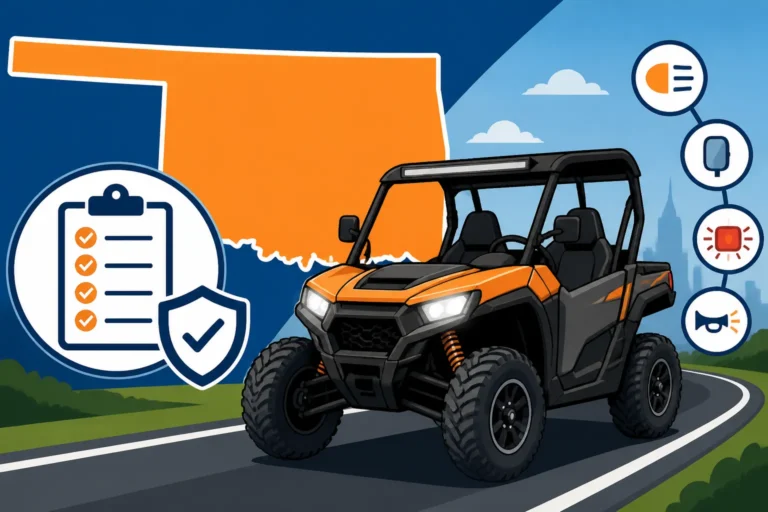
To truly be street-legal in Oklahoma, your UTV needs more than just a horn. The list is extensive because the intent is to make your machine as visible and controllable as a standard car. You'll need properly functioning headlights (both high and low beam), taillights, brake lights, and crucially, turn signals on both the front and rear. These lighting elements are paramount for communicating your intentions to other drivers, especially at dusk, dawn, or in inclement weather. [Oklahoma Equipment Required for Street UTVs] specifies these and more.
Beyond lighting, you'll need rearview mirrors – typically one on the driver's side and either a passenger side mirror or a center rearview mirror to give you adequate visibility of traffic behind you. A functioning windshield is also usually required, often with a wiper system if the UTV is enclosed. Adequate tires and brakes go without saying, as does a securely mounted license plate with proper illumination. Don’t forget seatbelts for all occupants and a clear, operational exhaust system that doesn't exceed noise limits. It’s a comprehensive list that transforms your off-road warrior into a responsible road vehicle.
Keeping Your Street-Legal Status Current
Getting your UTV street-legal isn't a one-and-done deal. Unlike the initial, single registration fee for typical ATVs in Oklahoma, street-legal UTVs operate under a different system. You will need to obtain a specific road plate, and this plate, along with its associated decal, must be renewed annually. This means budgeting not just for the initial setup, but also for the recurring costs and the effort of keeping your registration current each year. [Street UTV Decals Renew Every Single Year] is a key point that many new street-legal UTV owners sometimes overlook.
This annual renewal process ensures that the state maintains an up-to-date record of street-legal UTVs and that your machine continues to meet safety standards. It's a bit like renewing your car tags. You'll typically pay a fee each year, and you may need to confirm that your UTV still meets all the equipment requirements. Missing a renewal can lead to expired tags, which means your UTV is no longer legally allowed on public roads and could result in fines or other penalties. Setting a reminder for yourself each year will save you a headache down the line.
Navigating Open Roads and Understanding Restrictions
Even with all your equipment in place and your plate current, it's vital to understand that a street-legal UTV doesn't have all the same privileges as a car. Oklahoma has specific rules about where and how street-legal UTVs can be operated. For instance, while you can drive on many county and municipal roads, you are generally prohibited from using interstates and many U.S. highways. [Oklahoma Street UTVs Stay Off Interstates] is a very important distinction to remember. The speed limits on open roads also apply to your UTV, and you must adhere to all traffic laws, including those for stopping, yielding, and signaling.
Furthermore, while your UTV might be street-legal statewide, individual counties and municipalities may have their own ordinances regarding UTV use on their specific roads. It's always a good idea to check with local authorities if you plan on extensive riding within a particular town or county. Knowing the rules of the road, understanding the limitations of your street-legal status, and continuously practicing safe driving habits are just as important as having the right equipment. The goal is to enjoy the freedom of riding your UTV on pavement responsibly and safely, making sure you and your machine are fully prepared for whatever the road brings.
| Component | Requirement for Oklahoma Street UTVs | Details and Purpose |
|---|---|---|
| Horn | Yes, audible from reasonable distance | Essential audible warning device for alerting other drivers and pedestrians, preventing accidents. |
| Headlights | Yes (high/low beam) | Crucial for visibility to and from other vehicles, especially in low light conditions. |
| Taillights | Yes | Indicates presence from the rear. |
| Brake Lights | Yes | Illuminates when brakes are applied, signaling deceleration to following traffic. |
| Turn Signals | Yes (front and rear) | Communicates intent to turn or change lanes, mandatory for road safety. |
| Rearview Mirrors | Yes (at least one, usually two or center) | Provides visibility of traffic approaching from the rear. |
| Windshield | Yes (often with wiper) | Protects occupants from elements and debris; required for clear vision. |
| Tires | Yes (road-approved) | Must be suitable for highway use, often distinct from off-road only tires. |
| Brakes | Yes (functional) | Essential for safely stopping and controlling the vehicle. |
| License Plate | Yes (with illumination) | Legal identification; must be visible, securely mounted, and lighted at night. |
| Exhaust System | Yes (non-excessive noise) | Must meet noise regulations; prevents excessive noise pollution. |
| Seatbelts | Yes (for all occupants) | Crucial safety restraint for all passengers. |
Disclaimer
This article is for general informational purposes only and does not constitute professional advice. Laws, prices and regulations vary by location and change over time. Consult a qualified professional for guidance on your specific situation.