Oklahoma Turn Signals and Mirrors
For many of us who love the wide-open spaces of Oklahoma, the idea of taking our beloved UTVs from the dirt trails to paved roads used to be a dream. But with recent changes, that dream is now a reality for many, which brings up a whole new set of questions, especially around what equipment is absolutely necessary to stay safe and legal. This guide will dive deep into the crucial role of turn signals and mirrors for your street-legal UTV in Oklahoma, helping you understand the requirements and how to equip your machine properly.
The Shifting Landscape of Oklahoma's Street-Legal UTVs
For years, it felt like off-road machines were confined strictly to the dirt and private property, and any talk of taking them on public roads was met with a shrug or a quick "no way." That landscape has truly shifted in Oklahoma, offering exciting new possibilities for riders who want to expand their adventures. This isn't just about convenience; it's about connecting trails, accessing hunting leases more easily, or simply getting from point A to point B in a way that truly reflects our passion for these machines.
A Modern Approach to Off-Road Machines on Public Roads
The idea of riding your UTV on a county road or even through town used to feel like an outlaw move. However, recent legislative changes, notably a significant bill passed in 2021, have paved the way for a distinct class of "street-legal" utility vehicles. This wasn't just a casual decision; it was a recognition of how these machines are increasingly used for both recreation and utility across our state. It meant creating a framework where UTVs, under specific conditions, could safely share the road with traditional vehicles. The state understood that for many ranchers, farmers, and even everyday enthusiasts, a UTV is a versatile tool, and restricting its movement entirely to off-road environments simply didn't make sense anymore. [Oklahoma's Street-Legal UTV Class Explained] delves deeper into these changes, but for our purposes, it’s important to recognize that this new legal status comes with new responsibilities, especially concerning safety equipment.
The Critical Role of Visible Signaling and Awareness
With the privilege of road access comes the paramount responsibility of safety, not just for ourselves but for everyone else on the road. This is precisely where visible signaling and awareness become non-negotiable. When you're driving a car or a truck, signaling your intentions is second nature—you flip a turn signal, glance in your rearview mirror, and know you're communicating with other drivers. The same expectation now applies to street-legal UTVs. Without clear indicators like turn signals, other drivers have no idea if you're planning to turn, change lanes, or pull over. This ambiguity can lead to dangerous situations and misunderstandings that escalate quickly. Similarly, mirrors aren't just for checking your hair; they're your eyes in the back of your head, allowing you to monitor traffic, assess passing vehicles, and make informed decisions about your maneuvers. These aren't optional extras; they are fundamental safety components that transform an off-road machine into a road-worthy vehicle.
Understanding Oklahoma's Specific Equipment Requirements for Street-Legal UTVs
Oklahoma's laws are pretty clear about what it takes to make your UTV street-legal, and thankfully, it's not a mystery. When you're converting your machine for road use, you're essentially bringing it up to a standard that allows it to operate predictably and safely alongside cars and trucks. This means certain pieces of equipment aren't just good ideas; they're legal mandates. Getting these details right is crucial, not only to avoid a roadside chat with a trooper but, more importantly, to ensure you're as safe as possible when you venture onto public asphalt.
Turn Signals: Making Your Intentions Clear
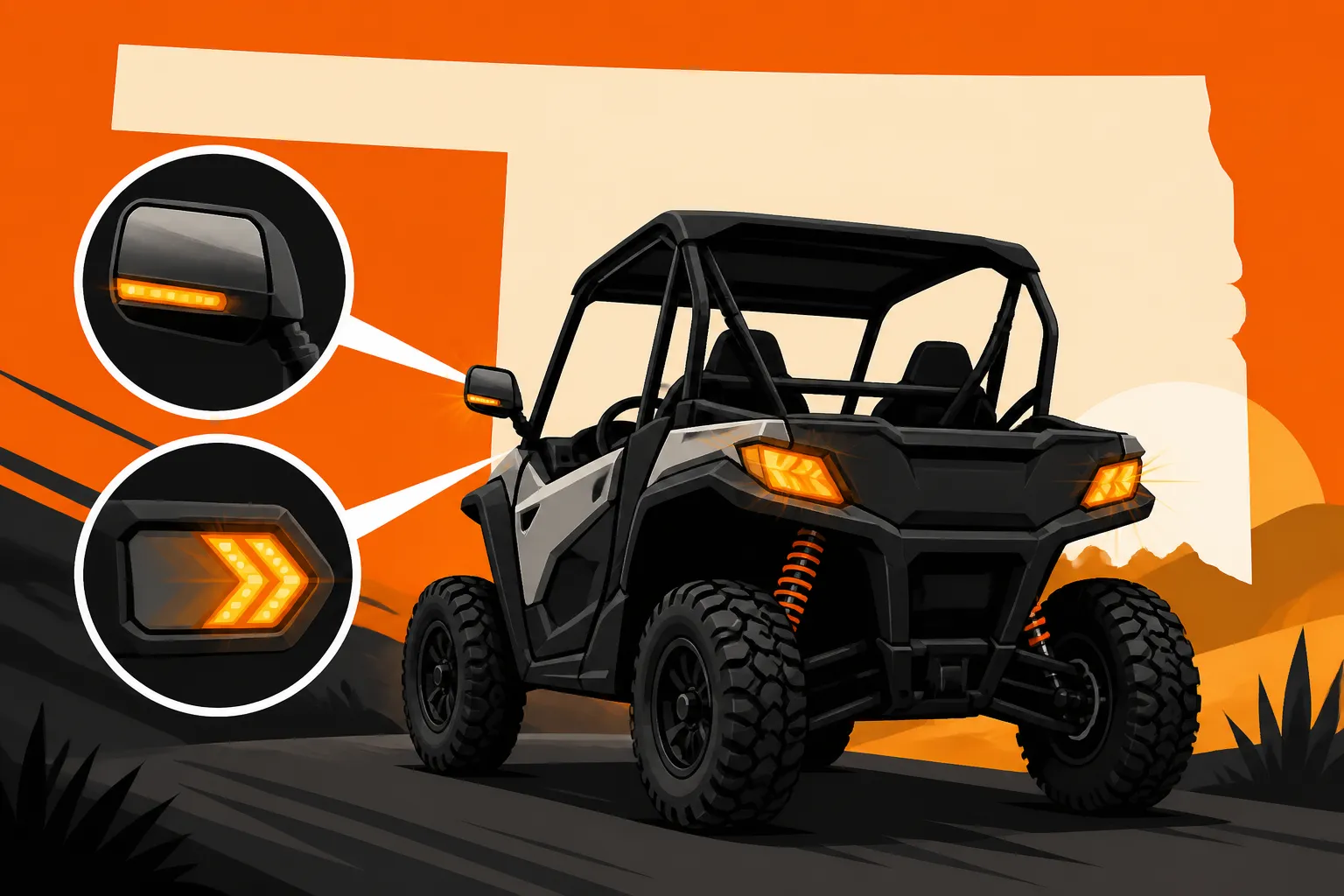
Imagine driving down a county road and the vehicle in front of you suddenly slows down and turns without any warning. It's frustrating, confusing, and outright dangerous. That's why turn signals are so fundamental to road safety. In Oklahoma, your street-legal UTV must be equipped with working turn signals that are visible from both the front and the rear of your machine. This isn't just a little light that blinks; it needs to be bright enough to be seen clearly during daylight hours and also distinct enough to grab attention at night. Many riders opt for LED turn signals because they are incredibly bright, draw less power, and last a long time, making them a practical choice for UTV applications. [Oklahoma Turn Signals and Mirrors] addresses these specific requirements directly. The system typically involves a switch on the handlebars or dashboard, signaling your intention to turn left or right. It's about letting that driver behind you know exactly what you're about to do, giving them time to react safely and preventing potential collisions.
When you're outfitting your UTV, you'll find various kits available. Some are universal and require a bit of wiring, while others are designed for specific makes and models, making installation a bit smoother. Regardless of the kit you choose, the key is proper function and placement. The lights should be securely mounted so they don't bounce or get damaged easily when you're still enjoying some off-road excursions. For rear signals, integrating them with your taillights is a common and effective solution. It's about creating a comprehensive signaling system that communicates your movements unequivocally to other road users, ensuring that your machine transitions seamlessly from trail to street.
Mirrors: Seeing What's Behind You
Just as crucial as signaling your intentions is being aware of what's happening around and behind you. This is where mirrors come into play, serving as your essential rear-facing eyes. Oklahoma law requires street-legal UTVs to have at least one rearview mirror, and typically, this means a mirror positioned to give you a clear view of the road behind you. While one is the minimum, many experienced riders and those who prioritize safety will opt for both a center rearview mirror and two side mirrors. Think about driving your car; you naturally check your side mirrors before changing lanes or merging. UTVs, with their often wider stance and open designs, benefit immensely from this multi-mirror setup.
The quality and placement of your mirrors matter a lot. They need to be securely mounted to withstand vibrations and the occasional bump, without losing their adjustment. A good set of mirrors should offer a wide field of vision, allowing you to see vehicles approaching from various angles. Aftermarket brands like SuperATV offer a fantastic range of UTV-specific mirrors that are built to withstand the rigors of both on-road and off-road use, featuring robust clamps and shatter-resistant glass. It's not just about meeting the letter of the law; it's about truly enhancing your situational awareness. With proper mirrors, you can monitor traffic, check for obstacles, and make safe lane changes, transforming your riding experience from reactive to proactive when navigating public roads.
Why These Components Are Non-Negotiable for Road Use
It's easy to look at a list of requirements and think, "Do I really need all this?" When it comes to turn signals and mirrors for your street-legal UTV, the answer is a resounding yes. These aren't just bureaucratic checkboxes; they are fundamental elements that transform your off-road machine into a predictable and safe vehicle for public roads. Ignoring them isn't just cutting corners; it's actively compromising your safety and risking legal trouble. They are the language you speak to other drivers, and without them, communication breaks down.
Safety First: Preventing Collisions and Enhancing Visibility
Let's be real: UTVs, even street-legal ones, are different from cars. They might be narrower, sit higher, or have a unique profile that other drivers aren't accustomed to seeing on the highway. This is precisely why turn signals and mirrors are absolutely critical for collision prevention. Your turn signals are your primary way of communicating your next move. Without them, a driver behind you might assume you're going straight, only to be surprised when you suddenly pivot into a turn. This can lead to rear-end collisions, sideswipes, or even more serious accidents, especially on faster roads or at intersections.
Mirrors, on the other hand, give you the vital information you need to make safe decisions. They let you see that semi-truck approaching rapidly from behind, or the car merging into your lane. In an open-cab UTV, wind noise and engine sounds can sometimes make it harder to hear approaching traffic, making visual cues from mirrors even more essential. They enhance your overall situational awareness, allowing you to identify potential hazards before they become imminent dangers. Proper visibility, both for you and of you, is the bedrock of safe road riding, and these components are at the very core of that.
Legal Compliance: Avoiding Fines and Headaches
Beyond safety, there's the undeniable fact that Oklahoma law requires these components for any UTV operating as a street-legal vehicle. [Oklahoma Equipment Required for Street UTVs] outlines many of these mandates. If you're pulled over by a state trooper or a local sheriff's deputy, one of the first things they'll likely check (after your registration) is your safety equipment. Driving a UTV on public roads without functioning turn signals and appropriate mirrors is a clear violation of the statute. This isn't just a friendly warning; it can result in a citation, a fine, and a mandate to fix the issue before you can legally operate your machine on the road again.
Think about the headache and expense. A ticket and court costs can quickly add up, easily surpassing the cost of installing a quality turn signal kit and a good set of mirrors in the first place. Furthermore, repeat offenses or serious incidents could lead to more severe penalties. It's simply not worth the risk. Ensuring your UTV is fully compliant means you can ride with peace of mind, knowing you've met all the legal obligations and won't have your adventure cut short by an equipment check.
Integrating Aftermarket Solutions
The good news is that outfitting your UTV with the necessary turn signals and mirrors is often a straightforward process thanks to a robust aftermarket. Many UTVs don't come from the factory with these street-legal components, as their primary design intent is off-road. This is where companies like SuperATV truly shine, offering a wide array of kits and individual components specifically designed for UTVs. You can find everything from complete turn signal kits that integrate seamlessly with your existing wiring harness to durable, adjustable mirrors built to withstand the elements and vibrations of off-road and on-road riding.
When considering aftermarket options, look for components that are robust, weather-resistant, and easy to install. Many kits come with clear instructions, and with a little mechanical know-how, you can often handle the installation yourself. If you're not comfortable with electrical work, a local powersports dealer or an experienced mechanic can quickly get your machine up to snuff. The market is full of innovative solutions, from sequential LED turn signals to breakaway side mirrors, ensuring that you can equip your UTV not just to meet the minimum requirements, but to truly enhance its safety and functionality for road use.
Practical Considerations for Installing Turn Signals and Mirrors
Once you've made the decision to go street-legal, the next step is actually equipping your UTV. It might seem daunting at first, especially if you're not a seasoned mechanic, but with the right approach and a bit of patience, it's a very manageable project. Choosing the right parts and installing them correctly is key to ensuring both compliance and long-term reliability. Don't rush this part; a well-thought-out installation will save you headaches down the road.
Choosing the Right Turn Signal Kit
When it comes to turn signals, you've got options. Universal kits are popular because they can be adapted to almost any UTV, often coming with all the necessary wiring, lights, and a switch. However, some manufacturers offer vehicle-specific kits that are designed to plug directly into your UTV's existing wiring harness, making installation significantly simpler. Consider the type of lights: LED turn signals are generally preferred due to their brightness, low power consumption, and long lifespan. They illuminate quickly, which can be a critical safety advantage, and they tend to be more resilient to vibration than traditional incandescent bulbs.
Think about where you'll mount the lights. For the front, often they integrate into the existing headlight housing or are mounted on the fenders. For the rear, they can be incorporated into the taillight assemblies or mounted separately on the rear fenders or bumper. The switch itself should be easily accessible from the driver's seat, ideally on the steering column or dash, so you can activate it without taking your hands off the wheel or fumbling around. Remember, clear visibility is paramount, so ensure the chosen lights are bright enough to be seen in full daylight. [Adding Turn Signals to a Street-Legal Side-by-Side] provides additional guidance on this process.
Selecting and Mounting Mirrors
Mirrors are just as varied as turn signal kits. For the mandatory rearview mirror, you can opt for a wide, panoramic mirror that clips onto your roll cage, offering an expansive view behind you. Many riders find these incredibly helpful for general awareness. For side mirrors, which are highly recommended for enhanced safety, you'll want something robust. SuperATV, for instance, offers a variety of side mirrors that clamp securely to your roll cage. These often feature breakaway designs, meaning they can fold in if they strike an obstacle, preventing damage.
When mounting, position them so you have a clear, unobstructed view without excessive neck craning. Adjust them carefully to minimize blind spots. The side mirrors should give you a good view down the sides of your UTV and into the adjacent lanes, while the rearview mirror should cover the area directly behind you. Pay attention to durability: UTVs experience a lot of vibration, so ensure the mirrors you choose are designed to stay in place and provide a clear image without blurring. Metal housings and sturdy clamps are a good indicator of quality that will last through many miles of varied terrain.
Ensuring Your Setup Meets Oklahoma Standards
The final, and perhaps most critical, step is to verify that your newly installed turn signals and mirrors meet Oklahoma's legal standards. This means checking a few key things. Are the turn signals visible from a reasonable distance, both day and night? Do they clearly indicate your intention to turn? Do you have at least one rearview mirror providing a clear view of the rear, and are your side mirrors (if installed) properly positioned to enhance your field of vision?
It's a good idea to perform a "pre-ride check" of all your equipment, including your lights and mirrors, every time you plan to hit the road. If you're ever unsure, a quick call to your local tag agency or a review of the state's official statutes can clarify any ambiguities. Remember, while most aftermarket parts are designed for compliance, ultimately, it's your responsibility as the owner and operator to ensure your machine is road-ready and legal. Don't just install them; verify them. This due diligence ensures you're riding safely and lawfully.
Beyond the Basics: Maintaining and Using Your Street-Legal UTV's Equipment
Getting your UTV equipped for street-legal status is a big step, but it’s just the beginning. The ongoing commitment to safety and compliance means regular maintenance and developing good driving habits. These components aren’t "install and forget" items; they are active parts of your UTV's safety system, and how you maintain and use them directly impacts your safety and the safety of those around you.
Regular Checks and Maintenance
Just like you wouldn't drive your car with a burned-out headlight, you shouldn't drive your street-legal UTV with a faulty turn signal or a loose mirror. Make it a habit to perform a quick visual inspection before every road trip, or at least before every few rides. Check all your turn signals—front and rear, left and right—to ensure they illuminate brightly and consistently. Test your hazard lights, too, if your kit includes them. Wiggle your mirrors to ensure they are securely mounted and haven't shifted out of adjustment from vibrations or bumps on the trail.
Also, keep an eye on wiring. Exposed wires can corrode or get snagged, leading to electrical issues. If you notice any dimming, flickering, or complete failure, troubleshoot it immediately. Often, it's a simple fix like a loose connection or a corroded terminal. Neglecting these small issues can lead to bigger problems down the line, and more importantly, it compromises your ability to safely signal your intentions on the road. A little proactive maintenance goes a long way in ensuring your equipment is always ready when you need it.
Developing Good Road Habits
Having the equipment is one thing; using it effectively is another. When you transition from off-road to on-road riding, your driving habits need to adapt. This means consciously using your turn signals every single time you plan to turn or change lanes, even if you think no one is around. It's about building muscle memory and making it second nature. Always signal well in advance of your maneuver to give other drivers ample time to react.
Equally important is actively using your mirrors. Make it a habit to constantly scan your mirrors, just like you would in a car, checking for traffic, blind spots, and potential hazards. Before braking, changing lanes, or making any significant maneuver, a quick glance in your mirrors should be automatic. This defensive driving approach, combined with clear signaling, makes you a more predictable and safer driver on public roads. Remember, you're sharing the road with vehicles that might not expect a UTV, so clear communication through your equipment and actions is paramount.
The Full Picture: Other Equipment for Road Readiness
While turn signals and mirrors are central to this discussion, it's worth remembering that they are part of a larger set of requirements for making your UTV truly street-legal in Oklahoma. These machines also need functional headlights and taillights, a working horn to alert other drivers, a windshield, and often specific tire types suitable for road use. [Oklahoma Equipment Required for Street UTVs] covers these broader requirements.
All these components work together to ensure your UTV is visible, can communicate effectively, and provides a level of safety appropriate for sharing public roads. For example, a horn is vital for emergency situations, and proper tires are crucial for adequate grip and handling on pavement. Thinking about your UTV's road readiness in a holistic way, with turn signals and mirrors as key communication tools, ensures that you're not just meeting minimum requirements, but are genuinely prepared for the unique demands of street riding.
| Component | Primary Function | Oklahoma Requirement | Recommended Use Case | Aftermarket Options (Example) |
|---|---|---|---|---|
| Turn Signals | Indicate direction of turn or lane change | Required | All road maneuvers; lane changes, turns | LED kits, handlebar switches |
| Rearview Mirror | View traffic directly behind UTV | At least one required | General awareness, pre-braking checks | Panoramic, roll cage mount |
| Side Mirrors | View traffic in adjacent lanes/blind spots | Highly Recommended | Lane changes, merging, blind spot reduction | Breakaway, clamp-on (SuperATV) |
| Headlights | Illuminate road ahead, visibility to others | Required | Night driving, low-light conditions | LED light bars, upgraded bulbs |
| Taillights | Indicate presence, brake application | Required | Rear visibility, signaling stops | Integrated with brake lights |
| Horn | Alert others to presence/danger | Required | Emergency signaling, polite warnings | Electric, push-button horn |
| Windshield | Driver protection, debris deflection | Required | Protection from wind, bugs, small debris | Full, half, folding acrylic |
Equipping your UTV with proper turn signals and mirrors is more than just a legal formality; it's a fundamental investment in your safety and the safety of everyone on Oklahoma's roads. By understanding the requirements, choosing quality components—perhaps from reliable brands like SuperATV—and committing to good maintenance and driving habits, you can confidently enjoy the expanded horizons that a street-legal UTV offers. It's about being responsible, visible, and fully prepared for any adventure, whether it's down a dusty trail or a paved county road.
Disclaimer
This article is for general informational purposes only and does not constitute professional advice. Laws, prices and regulations vary by location and change over time. Consult a qualified professional for guidance on your specific situation.