Oklahoma’s Instrument of Husbandry Exception
There's a persistent headache for many Oklahoma farmers and ranchers who rely on their ATVs and UTVs for daily operations: navigating the state's road rules without running afoul of the law. You've got fences to mend, cattle to check, and feed to haul, and your side-by-side is often the quickest, most practical way to get from one section of your property to another, even if that means a brief jaunt down a public road. But the question always looms: can you legally do that, or do you need to jump through all the hoops of making your utility machine fully street-legal? This guide will cut through the confusion, diving deep into Oklahoma's "instrument of husbandry" exception and explaining exactly how it applies to your farm and ranch machines.
What Exactly is an "Instrument of Husbandry" in Oklahoma?
When you’re out on the back forty, your ATV or UTV isn't just a recreational toy; it's a vital piece of farm equipment. Oklahoma law recognizes this crucial distinction, which is where the concept of an "instrument of husbandry" comes into play. It's a specific legal classification that allows certain machines used predominantly for agricultural purposes to operate on public roads under a different set of rules than a typical recreational or street-legal vehicle. This exception is designed to support the backbone of our state's economy: agriculture.
Defining the Terms: ATV, UTV, and Instrument of Husbandry
First, let's nail down what we're talking about. An ATV, or All-Terrain Vehicle, is generally understood as a motorized off-highway vehicle designed to travel on four low-pressure tires, having a seat designed to be straddled by the operator and handlebars for steering control. A UTV, or Utility Task Vehicle (often called a side-by-side), typically has a steering wheel, foot pedals for acceleration and braking, and side-by-side seating, often resembling a miniature car. Both are built for off-road use, but their application within agriculture is key to this exception.
An "instrument of husbandry" in Oklahoma refers to any vehicle designed and adapted exclusively for agricultural, horticultural, or livestock-raising operations. The critical phrase here is "exclusively for." This isn't about taking your UTV to the lake on the weekend and claiming it's a farm machine; it’s about a machine whose primary, dedicated purpose is integral to your farm or ranch work. Think of it as a tool, much like a tractor or a combine. It's built to work the land, manage livestock, or maintain agricultural infrastructure. The law looks at the machine's intended and actual use, not just its general capabilities. This distinction is paramount, as mischaracterizing its use could lead to penalties.
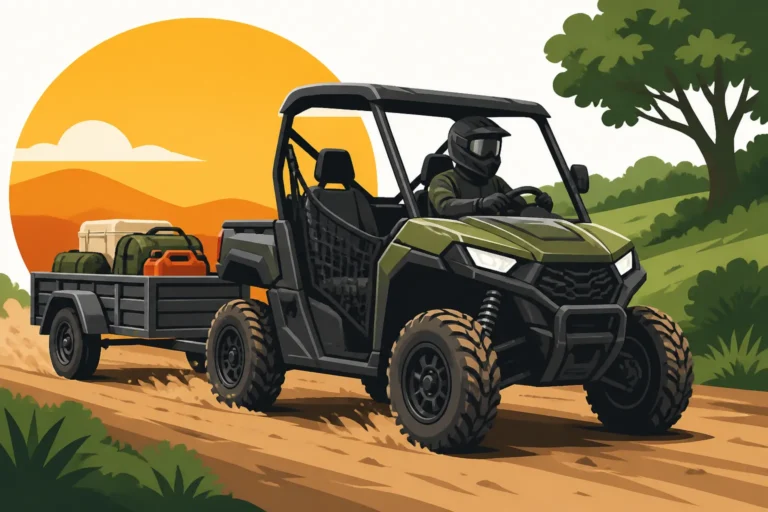
The real difference lies in validation of the machine's role. If your UTV spends its days hauling feed, spraying weeds, checking fences across sprawling acreage, or pulling small trailers loaded with tools around the farm, it likely fits the bill. If it's primarily used for trail riding on your days off, even if you live on a farm, it probably does not. This is about supporting genuine agricultural activities, acknowledging that these machines are essential modern farm implements.
The Legislative Intent Behind the Exception
Why does this specific exception exist in Oklahoma law? It's pretty straightforward: the state understands that agricultural operations often require movement across property lines, which are frequently bisected by public roads. Without this exception, every farmer and rancher would face immense logistical and financial burdens to make their essential utility machines fully compliant with standard motor vehicle laws, which are designed for entirely different contexts. Imagine having to load your UTV onto a trailer just to cross a county road to get to the next pasture – it’s simply not practical or efficient for farm work.
The legislative intent is to facilitate farming and ranching by providing a practical, legal pathway for ATVs and UTVs to perform necessary functions on or across public roads without converting them into street-legal vehicles or registering them as such for daily use. It's a pragmatic solution to a very real operational need. The law essentially carves out an allowance for farm equipment, including certain ATVs and UTVs, to share public thoroughfares under specific, limited conditions. This isn't a loophole for recreational riders; it's a lifeline for producers.
This legal framework strikes a balance. It acknowledges the vital role of these machines in agriculture while still attempting to maintain public safety on roads. The rules accompanying the instrument of husbandry exception are designed to minimize risks by restricting speeds, times of operation, and types of roads permitted. It’s a legislative nod to the unique challenges faced by the agricultural community, allowing them to continue their work efficiently without unnecessary bureaucratic hurdles, provided they adhere to the specific guidelines laid out for safety and appropriate use.
Where Can an Instrument of Husbandry Be Operated on Oklahoma Roads?
Okay, so you've established your ATV or UTV is genuinely an instrument of husbandry. Great! But this doesn't mean you can just hit the open road like any other car. The exception comes with very specific limitations on where and how you can operate these machines on public roads. Understanding these boundaries is crucial to avoid any unwelcome interactions with law enforcement. It's all about purpose and proximity to your agricultural tasks.
Crossing Public Roads: The "Briefest Distance" Rule
One of the most common scenarios for an instrument of husbandry is needing to cross a public road to get from one section of your property to another. Oklahoma law permits this, but it must be done for the "briefest distance necessary." This isn't a vague suggestion; it's a legal standard. Imagine your land is divided by a two-lane county road. You can drive your UTV directly across that road to access your other fields. You cannot, however, drive a mile down that road to get to your neighbor's property or to the nearest town, even if you are doing farm work there. The intent is minimal intrusion onto public thoroughfares.
When making these crossings, safety should be your absolute top priority. Treat every road crossing with the utmost caution. Slow down, look both ways multiple times, and yield to all oncoming traffic. Even though you might be a familiar sight to locals, drivers may not expect an ATV or UTV, especially a slower-moving one, to suddenly appear. It's essential to be highly visible and predictable. For detailed guidance on safe crossings, you might want to review [Oklahoma Highway Crossings in Daylight], which emphasizes the importance of visibility and careful judgment. It also reminds us that these crossings are generally restricted to daylight hours, further underscoring the need for clear visibility.
Think of "briefest distance" as a straight line across, or the shortest possible segment of road required to bridge two parts of your agricultural operation. If there's an alternative route, even if it's longer on your private land, that avoids public roads entirely, it's generally a better option. The spirit of the law is to accommodate the necessity of farm work, not to grant general road-riding privileges. Always exercise extreme caution, and if in doubt, err on the side of using the road as little as possible.
Traveling on County and Section Line Roads for Farm Work
Beyond mere crossings, instruments of husbandry can be operated on certain public roads for distances beyond just crossing, specifically for agricultural purposes. This primarily applies to unpaved county roads and section line roads that dissect vast rural properties. The key here is that the operation must be "directly related to the agricultural operation." You might be moving from one field to another that's a half-mile down a county road, or taking equipment to a pasture further away on a section line.
However, this privilege comes with limitations. The law often specifies speed restrictions, usually capping it at a low speed appropriate for farm equipment, and sometimes limiting it to daylight hours. You're not meant to keep pace with regular vehicular traffic. The primary function of these roads is for public travel, and your slow-moving farm equipment needs to be mindful of that. It's common for local county commissioners to have the authority to further regulate or even "open" specific county roads for ATV/UTV use, including for agricultural purposes. Checking with your local county commissioner's office is always a wise step to understand any specific rules in your area. For more on this, check out [Oklahoma County Commissioners and ATV Roads]. These local decisions can significantly impact where and how you can operate.
Remember, the moment your use shifts from agricultural necessity to anything else – whether it's going to the store, visiting a friend, or simply enjoying a ride – your machine loses its "instrument of husbandry" status for that particular journey, and you could be subject to different regulations, including potential citations for unauthorized road use. The intent is strictly for agricultural support, not general transportation. Always ensure your use is clearly and undeniably tied to your farm or ranch activities.
Restrictions on State and Federal Highways
Now, for the big ones: state and federal highways. These major arteries, like US Highways and Interstates, are generally off-limits for instruments of husbandry. The primary reason is safety. These roads are designed for higher speeds and heavy traffic volumes, making it incredibly dangerous for slow-moving ATVs and UTVs, even those used for farm work, to operate on them. The risks of severe accidents are simply too high.
While there might be extremely rare and specific exceptions, such as crossing a state highway at a designated intersection if it’s truly the briefest distance between two agricultural parcels and no other route exists, sustained travel along these roads is almost universally prohibited. This is a bright-line rule that rural operators need to understand implicitly. There is no special permit or exemption that allows continuous travel for farm machines on an Interstate or most US Highways.
If your agricultural operations require you to move equipment across or near a state or federal highway, the safest and most legally compliant method is often to trailer your ATV or UTV. While this might seem inconvenient, it completely removes the risk of a citation and, more importantly, ensures your safety and the safety of others on high-speed roadways. Always prioritize caution and adherence to these strict limitations, as violations on these types of roads carry significant risks and penalties.
What Equipment is Required for an Instrument of Husbandry?
Since an instrument of husbandry isn't a fully street-legal vehicle, it doesn't need to meet the exhaustive list of equipment requirements that a car or even a fully road-plated UTV would need. However, that doesn't mean there are no requirements. Safety on public roads, even for brief crossings or limited travel on county roads, demands basic visibility and operational functionality. This section will cover the essential equipment you should have, and what might be legally required, when using your farm machine on public ways.
Essential Lighting and Reflectors
Visibility is paramount, especially when your machine is slower and less expected than other vehicles. While a street-legal UTV needs specific headlights, taillights, brake lights, and turn signals, an instrument of husbandry has a slightly different baseline. At a minimum, if you're operating at dusk, dawn, or in any low-light conditions (even if technically daylight), your ATV or UTV must have functional headlights and taillights. These lights make your machine visible to others, reducing the risk of collisions. Many modern ATVs and UTVs come with adequate factory lighting, but it's crucial to ensure they are clean, working, and properly aimed.
Beyond active lighting, reflectors play a silent but critical role. Red reflectors on the rear and amber reflectors on the sides of your machine significantly enhance its visibility, especially when ambient light is low or when another vehicle's headlights sweep across it. You might consider adding extra reflective tape to the sides and rear of your machine, particularly if it's an older model or one with minimal factory reflectors. Companies like SuperATV offer a range of aftermarket lighting solutions, from brighter LED headlights to auxiliary light bars, that can dramatically improve your visibility, both for your own sight and for others seeing you. While not all are strictly mandated for an IOH, enhancing visibility is always a wise investment for safety.
Always double-check your lights before heading onto any public road, even for a short crossing. A quick walk-around can confirm that your headlights are on, your taillights illuminate, and your brake lights activate when you press the pedal. These simple checks can prevent accidents and ensure you're meeting the basic safety expectations of the law, even under the instrument of husbandry exception.
Visibility Aids: Flags and Other Markers
While a 10-foot whip flag with an orange pennant is a firm requirement for dune riding areas like Little Sahara, it's not explicitly mandated for an instrument of husbandry operating on public roads under this exception. However, that doesn't mean you should dismiss the idea of adding extra visibility aids. Anything that makes your machine stand out, especially a slow-moving one, is a benefit.
Consider mounting a brightly colored flag, even if it's not a full whip flag, on your UTV. The higher the flag, the more easily it can be seen over dips in the road or around gentle curves, alerting oncoming traffic to your presence sooner. Reflective triangle signs (SMV – Slow Moving Vehicle) are commonly used on tractors and other farm equipment and would be highly appropriate for an ATV or UTV functioning as an instrument of husbandry. These bright orange triangles are universally recognized as indicators of a vehicle traveling below normal road speeds. They are designed to stand out against rural backdrops and effectively communicate caution to other drivers.
Beyond physical markers, your presence on the road itself is a visibility aid. Drive predictably, avoid sudden movements, and always signal your intentions if your machine has turn signals (which are typically not required for IOH but are a bonus if present). Remember, you're sharing the road with vehicles that might be traveling much faster, and anything you can do to enhance your visibility and communicate your presence clearly is a responsible choice.
The Role of Basic Safety Equipment
Even though the "instrument of husbandry" exemption offers flexibility, it doesn't waive the need for basic mechanical safety. Your ATV or UTV must be in good working order when operated on public roads. This means functional brakes that can safely bring your machine to a stop, tires that are in good condition and properly inflated for traction, and steering that is responsive and stable. These are fundamental to any vehicle's safe operation, regardless of its classification.
You won't typically need specific street-legal additions like mirrors, a horn, or dedicated turn signals to qualify for the instrument of husbandry exception. These are usually requirements for the distinct "street-legal UTV" class. However, having a horn can be a safety advantage for alerting others, and mirrors can significantly improve your situational awareness, especially when pulling a trailer or making turns. While not legally required for the IOH designation, many aftermarket companies, including SuperATV, offer robust mirrors that can be easily added to most UTVs, providing a practical safety enhancement for minimal cost. These are practical considerations that go beyond the bare minimum legal requirements, making your operation safer and more confident.
Ultimately, whether mandated or not, responsible ownership means ensuring your machine is safe to operate. Regular pre-ride checks of your brakes, tires, lights, and steering components are not just good practice; they're essential for preventing accidents and ensuring your farm tasks can be completed without incident. The expectation, even with an exception, is that you will operate a safe and functional machine on shared public ways.
Who Can Operate an Instrument of Husbandry on Public Roads?
Another critical aspect of the instrument of husbandry exception revolves around the operator. Just because the machine is exempt from some typical vehicle rules doesn't mean anyone can hop on and drive it down a county road for farm work. Oklahoma law has provisions regarding driver qualifications and passenger rules that still apply, aiming to ensure safety even in these agricultural contexts. Understanding these details is key to staying compliant.
Driver Age and Licensing Requirements
This is a point of frequent confusion for many rural residents. For any general public road use of a motor vehicle in Oklahoma, a valid driver's license is typically required. While an instrument of husbandry isn't a traditional motor vehicle in every sense, its operation on a public road, even briefly, usually places it under the umbrella of needing a licensed operator. The general rule for any vehicle on a public road is that the driver must possess a valid driver's license. There's no specific carve-out in the "instrument of husbandry" language that explicitly exempts the driver from this fundamental licensing requirement.
Furthermore, Oklahoma has general age restrictions for operating ATVs and UTVs. While these primarily apply to recreational use and state park areas, the spirit of the law suggests that a mature and capable operator is expected when sharing public roads. For example, a street-legal UTV driver must be at least 16 years old. You can find more details on general age requirements under [Oklahoma Drivers Must Be 16 for a Street UTV]. While the instrument of husbandry is distinct, it's a good benchmark to assume that an unlicensed minor should not be operating these machines on public roads, even for farm work. Law enforcement will likely hold operators on public roads to the standard of a licensed adult.
Therefore, the safest and most legally sound approach is that anyone operating an ATV or UTV classified as an instrument of husbandry on a public road in Oklahoma must possess a valid driver's license. This ensures they have passed basic driving competency tests and understand traffic laws, which are vital when interacting with other vehicles, even for a short distance. Do not let an unlicensed family member or employee operate the machine on public roads, even if they're just crossing to the next field.
Passenger Rules for Farm Use
When it comes to passengers on an instrument of husbandry, the general rules for ATVs and UTVs largely apply, emphasizing safety and manufacturer design. Most ATVs are designed for a single rider, and carrying a passenger on a single-seat ATV, even for farm work, is generally unsafe and prohibited. UTVs, however, are designed with side-by-side seating, often for two, three, or even four occupants, depending on the model.
If your UTV is designed by the manufacturer with multiple seats and seatbelts, you can typically carry passengers up to the designed capacity, provided they are seated properly and using seatbelts. This means a passenger can accompany you for farm-related tasks, such as assisting with fence repairs or checking livestock, as long as the machine is designed for it. The critical factor is adherence to the machine's intended capacity and safety features. Carrying extra passengers, or allowing them to ride in an unsafe manner (e.g., in the bed of a UTV without proper seating), is extremely dangerous and can lead to severe injury, not to mention a potential citation. For more on general passenger rules, you can refer to [Oklahoma Passenger Rules on a Quad].
The exception for instruments of husbandry doesn't override fundamental safety principles or manufacturer design. Ensure that any passengers are securely seated, using available restraints, and are not interfering with the safe operation of the machine. The goal of the instrument of husbandry exception is to facilitate agricultural work, not to create a loophole for unsafe transportation practices. Always prioritize the safety of all occupants when operating on public roads, regardless of how brief the journey.
Registration, Titling, and Excise Tax Exemptions
This is where the "instrument of husbandry" classification offers some of the most tangible benefits for farmers and ranchers in Oklahoma. Unlike recreational ATVs and UTVs, or those converted to be street-legal, machines falling under this exception often have different requirements regarding registration, titling, and, significantly, excise tax. Understanding these distinctions can save you both time and money.
Is Special Registration Required for an IOH?
Here's the good news: an ATV or UTV that is exclusively used as an instrument of husbandry is generally exempt from the standard off-road vehicle registration fee that other ATVs and UTVs in Oklahoma must pay. This means you typically do not need to purchase the $11 lifetime registration decal for your dedicated farm machine if its sole purpose is agricultural work. This is a significant relief for farmers who might own multiple utility machines.
The standard ATV/UTV registration is primarily for machines used for recreational purposes, like trail riding or dune hopping. The instrument of husbandry exception acknowledges that these machines are akin to tractors or combines, which also operate on roads for farm purposes without needing typical vehicle registration. However, it's crucial to be honest about its use. If your machine sees any recreational use, even occasionally, it technically falls outside the "exclusively for agricultural purposes" definition and would require the standard registration. You can find more about general ATV registration costs at [Oklahoma ATV Registration Cost]. Always be truthful about your machine's primary use to avoid issues.
This exemption from registration is a direct benefit to the agricultural community, recognizing the utility role of these machines. It simplifies the administrative burden for essential farm equipment. Just remember, this specific exemption is tied directly to the "exclusive agricultural use" clause, so maintaining that clear distinction in practice is vital. If there's any ambiguity, or if you plan to use it for recreation at all, it's safer to register it.
Excise Tax Benefits for Agricultural Use
One of the most substantial financial benefits of properly classifying your ATV or UTV as an instrument of husbandry is the exemption from Oklahoma's 4.5% motor vehicle excise tax. This tax is typically applied to the purchase price of vehicles, including ATVs and UTVs, when they are titled in the state. For a new UTV costing tens of thousands of dollars, this excise tax can add a significant amount to your total out-of-pocket expense.
If your machine is purchased and designated exclusively for agricultural use as an instrument of husbandry, you can claim this excise tax exemption. This is a massive saving for farmers and ranchers. To qualify, you will typically need to complete an Agricultural Exemption Affidavit at the time of purchase or titling, certifying that the machine will be used solely for agricultural purposes. Your local tag agency or dealer can provide the necessary forms and guidance. This exemption is a core part of supporting the state's agricultural industry. Delving deeper into this benefit can be explored through [Oklahoma Agricultural Excise Tax Exemption]. It's one of the most compelling reasons to ensure your machine qualifies for and is properly documented as an instrument of husbandry.
It’s important to understand that this excise tax exemption is distinct from the registration fee exemption. Even if you're exempt from the $11 registration, the excise tax is a separate calculation. Make sure you understand the paperwork required to claim this exemption, as it typically involves declaring its intended use at the point of sale or when first titling the machine. This step alone can represent thousands of dollars in savings, making it an essential consideration for any agricultural purchase.
Titling an ATV/UTV for Farm Use
Even if your ATV or UTV qualifies as an instrument of husbandry and is exempt from registration fees and excise tax, it will generally still need to be titled in Oklahoma. A title is proof of ownership, and it's a fundamental document for tracking machines, preventing theft, and establishing legal ownership. Think of it like your tractor – it has a title, even if it doesn't get a tag. The same principle often applies to ATVs and UTVs used exclusively for agriculture.
The process for titling an instrument of husbandry is similar to titling any other ATV or UTV. You'll need the Manufacturer's Statement of Origin (MSO) for new machines, or a bill of sale and previous title (if applicable) for used machines. You'll also need to go to a local tag agency. The key difference will be the paperwork you fill out to claim the agricultural exemptions for registration and excise tax, as discussed above. The tag agency will process your application, confirm ownership, and issue an Oklahoma title. You can read more about general titling requirements at [Oklahoma Titles ATVs and UTVs].
Having a clear title is crucial for several reasons: it proves you legally own the machine, which is important if you ever need to sell it, finance it, or report it stolen. Even without an annual tag or registration fee, the title establishes its legal place in the state's records. Don't skip the titling process simply because it's an instrument of husbandry; the title is a foundational document that protects your investment and proves your rightful ownership.
Distinguishing IOH from Street-Legal UTVs and Recreational Use
One of the biggest sources of confusion for ATV and UTV owners in Oklahoma is understanding the distinct categories for machine use on public roads. The "instrument of husbandry" is a very specific designation, and it's crucial not to confuse it with the "street-legal UTV" class or general recreational use. Each has its own set of rules, equipment requirements, and operational limitations, and mistaking one for another can lead to fines, citations, or worse, accidents.
IOH vs. the Street-Legal UTV Class
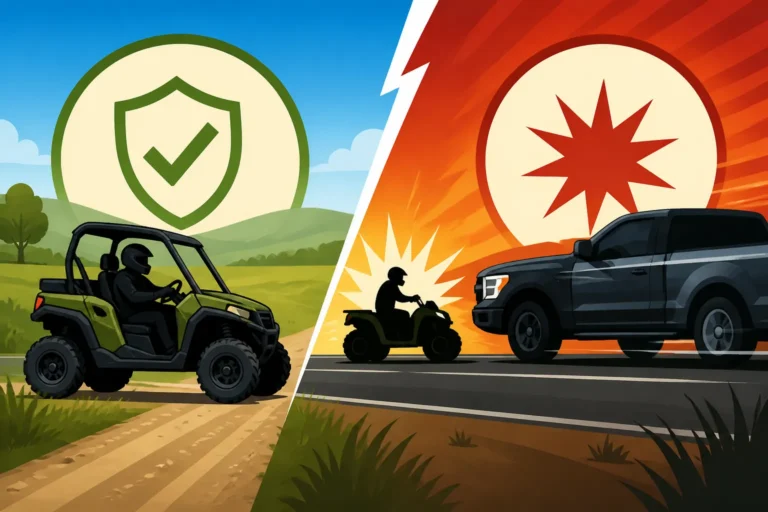
Let's draw a clear line in the sand: an instrument of husbandry is not a street-legal UTV. These are two entirely separate classifications with different purposes and requirements. An IOH is designed for, and limited to, agricultural operations on specific rural roads or for crossings. It's about necessity for farm work. A street-legal UTV, on the other hand, is a machine that has been specifically equipped to meet all motor vehicle safety standards (lights, turn signals, mirrors, horn, windshield, etc.) and has been registered and tagged by the state for general public road use, much like a car, though often with restrictions on interstates and major highways.
The key differences are purpose, equipment, and areas of operation. A street-legal UTV is meant for broader transportation, commuting, or even accessing trails via public roads, provided it meets all the specific requirements and has a valid annual road plate. An IOH is strictly a farm implement, and its road use is incidental to its agricultural function. The equipment requirements highlight this: an IOH needs basic visibility and safety features, whereas a street-legal UTV needs a comprehensive suite of motor vehicle safety equipment. For an in-depth look at what it takes to make a UTV street-legal, check out [Oklahoma's Street-Legal UTV Class Explained]. These are significant investments and modifications, far beyond what's needed for an IOH.
Companies like SuperATV produce parts for both categories. You can find heavy-duty suspension, axles, and winches from them that are perfect for a farm-tough instrument of husbandry. They also offer full street-legal kits including turn signals, mirrors, and horns for those looking to convert their UTV to the street-legal class. It's important for the owner to decide which path their machine will take and equip it accordingly, understanding that the choices lead to very different sets of rules and operational privileges. Do not expect your IOH to function as a street-legal vehicle, nor expect a recreational machine to operate under the IOH exception.
When Does Farm Use Become Recreational Use?
This is a critical distinction, and the line can sometimes feel blurry, but legally, it's quite stark. The instrument of husbandry exception hinges entirely on the machine being used "exclusively for agricultural, horticultural, or livestock-raising operations." The moment its use deviates from that, even for a short trip, it ceases to be an instrument of husbandry in the eyes of the law.
Let's consider some scenarios:
- Farm Use: Driving your UTV down a section line road to check on a herd of cattle in the next pasture. This is clearly agricultural.
- Recreational Use: Driving the same UTV down the same section line road to visit a friend down the road, even if your friend is also a farmer. The purpose has shifted from a direct agricultural task to a social one.
- Farm Use: Hauling a sprayer across a paved county road for the briefest distance to apply herbicide to a field on the other side.
- Recreational Use: Taking your kids for a joyride around the block on that same paved county road after the work is done.
The consequences of misrepresenting or blurring this line can be significant. If you're pulled over while using your "instrument of husbandry" for non-agricultural purposes on a public road, you could face citations for operating an unregistered vehicle, lacking proper equipment (like turn signals or a horn if it were a street-legal vehicle), and potentially other traffic violations. Your intentions matter, but ultimately, your actions and the demonstrable purpose of your trip will be judged.
It's tempting to use your versatile ATV or UTV for a quick non-farm errand, especially when it's already running. However, that convenience comes with legal risk. To maintain the integrity of the instrument of husbandry classification and avoid issues, be scrupulously honest about its use. If you anticipate any non-agricultural road use, even infrequent, then you need to consider the full street-legal conversion and registration, which is a different path entirely.
Important Considerations and Best Practices for IOH Use
Beyond the specific legal requirements, operating an instrument of husbandry on public roads requires a proactive approach to safety and diligence. Just because a machine is exempt from certain rules doesn't mean you're exempt from common sense or the responsibility to operate safely. These best practices can help ensure you protect yourself, your property, and others while performing essential farm work.
Insurance Recommendations for Farm Machines
One common misconception is that if a machine is exempt from registration fees, it's also exempt from the need for insurance. This is absolutely not the case. While Oklahoma law may not mandate liability insurance for an instrument of husbandry operating on public roads (as it does for regular motor vehicles), carrying adequate insurance for your farm ATV or UTV is an incredibly smart decision. Even for brief road crossings, accidents can happen.
Imagine a scenario where your farm UTV, while crossing a county road, is involved in a collision with another vehicle. Without insurance, you could be personally liable for significant damages to the other vehicle, medical bills for injured parties, and potential legal fees. This financial exposure could be devastating for a farm or ranch operation. Many farm insurance policies or general liability policies can be extended to cover ATVs and UTVs used for agricultural purposes, even when operated on public roads. It's crucial to speak with your insurance agent to ensure your specific machines and their intended use are properly covered. For more on general ATV insurance considerations, you might look into [Oklahoma ATV Insurance Costs].
Don't let the lack of a legal mandate lull you into a false sense of security. Comprehensive and liability insurance for your instrument of husbandry is about protecting your assets, your livelihood, and providing peace of mind. It’s a small investment that can prevent enormous financial strain in the event of an unforeseen incident.
Safety Best Practices for Road Operation
Even with the "instrument of husbandry" designation, safety on public roads is paramount. Your machine is slower, smaller, and less visible than typical road vehicles. Therefore, it's incumbent upon you, the operator, to maximize safety at all times.
Here are some best practices:
- Wear a Helmet: While Oklahoma's helmet law generally applies to riders under 18 (see [Oklahoma ATV Helmet Law Age]), wearing a DOT-approved helmet for all riders, regardless of age, is a non-negotiable best practice when operating on public roads. A helmet is your best defense against head injuries in a collision or rollover.
- Enhance Visibility: As discussed, ensure all lights are working, and consider adding extra reflective tape, a bright flag, or a Slow Moving Vehicle (SMV) triangle. Wear bright, high-visibility clothing, especially during dawn, dusk, or overcast conditions.
- Drive Defensively: Anticipate the actions of other drivers. Assume they don't see you. Yield the right-of-way, and be prepared to stop or take evasive action. Avoid distractions and focus entirely on the road and your surroundings.
- Maintain Your Machine: Regularly check your brakes, tires, steering, and fluid levels. A breakdown on a public road is not only inconvenient but can also be dangerous. If you're using aftermarket parts from companies like SuperATV, ensure they are properly installed and maintained for optimal performance and durability, especially under the rigorous demands of farm work. Durable parts contribute directly to safer operation.
- Avoid Impaired Operation: Never operate your ATV or UTV on public roads, even for farm use, under the influence of alcohol or drugs. DUI laws apply just as rigorously to these machines as they do to cars.
These practices aren't just suggestions; they are critical habits that can make the difference between a safe trip and a tragic accident. Your machine is a tool, and like any powerful tool, it demands respect and careful handling.
Staying Informed About Local Ordinances
While Oklahoma state law provides the broad framework for the instrument of husbandry exception, local jurisdictions — counties and even some municipalities — can sometimes have their own ordinances that affect ATV and UTV use on their roads. For example, county commissioners have the authority to open certain county roads for ATV/UTV use, and this might also impact how instruments of husbandry are treated or what additional rules might apply in those specific areas.
It is always a good idea to check with your local county commissioner's office or sheriff's department to inquire about any specific local rules or advisories regarding the operation of ATVs and UTVs for agricultural purposes on county or section line roads in your area. While the state exception generally holds, local input can provide valuable context or highlight specific areas where caution is needed.
Staying informed means you're less likely to run into unexpected issues. A quick phone call can often clarify any ambiguities and ensure you're fully compliant with both state and local expectations. Being a responsible operator means not just knowing the general rules, but also understanding how they might be nuanced in your specific corner of Oklahoma.
Instrument of Husbandry vs. Street-Legal UTV: A Quick Comparison
To help clarify the distinctions, here's a table summarizing the key differences between an ATV/UTV classified as an "Instrument of Husbandry" and a "Street-Legal UTV" in Oklahoma.
| Feature | Instrument of Husbandry (IOH) | Street-Legal UTV |
|---|---|---|
| Primary Purpose | Exclusive agricultural/farm/ranch work | General public road transportation, recreation, accessing trails |
| Road Access | Restricted to brief crossings, specific county/section line roads for farm work. No state/federal highways. | Broader road access, often limited to roads 35 mph or less, typically no interstates/US highways. |
| Registration (State) | Generally exempt from $11 lifetime ATV/UTV registration if exclusively farm use. | Requires annual vehicle registration and special road plate/decal. |
| Excise Tax | Generally exempt from 4.5% excise tax with agricultural affidavit. | Subject to 4.5% excise tax at titling. |
| Titling | Yes, typically required for proof of ownership. | Yes, required for proof of ownership. |
| Equipment Required | Basic functional lights (headlights, taillights, brake lights), reflectors. Functional brakes, tires, steering. | Comprehensive street-legal equipment: headlights (high/low), taillights, brake lights, turn signals, horn, mirrors, windshield, DOT tires, seatbelts, etc. |
| Driver's License | Yes, generally required for public road operation. | Yes, required. No motorcycle endorsement needed. |
| Passengers | Permitted if machine designed for it, within manufacturer's capacity. | Permitted if machine designed for it, within manufacturer's capacity. |
| Insurance | Not legally mandated for road use, but highly recommended. | Legally mandated liability insurance for road use. |
Disclaimer
This article is for general informational purposes only and does not constitute professional advice. Laws, prices and regulations vary by location and change over time. Consult a qualified professional for guidance on your specific situation.