Half a Mile for a Downed Animal
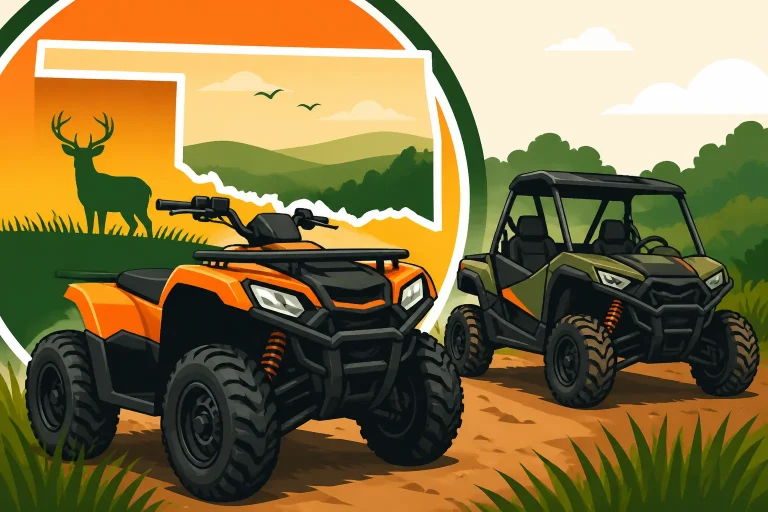
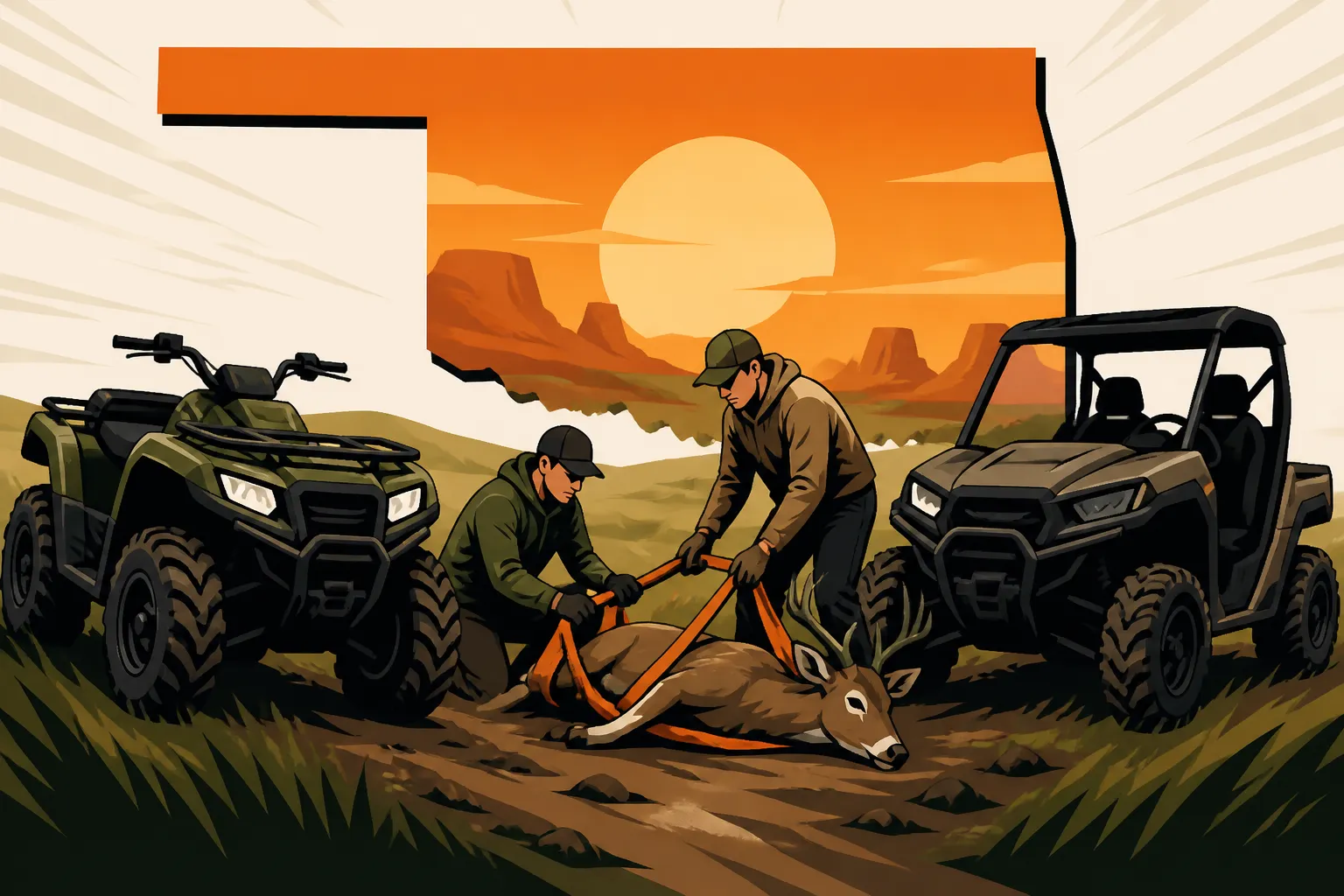
A downed deer can be a long way from the road, but Oklahoma’s timber-land riding rules do not turn every recovery into permission to ride cross-country. The half-mile allowance is a narrow exception tied to retrieving a downed animal. Knowing what it covers—and what it does not—can help you recover game without risking a violation or damaging the land.
What the Half-Mile Rule Means
On certain timber-company lands open to public access, an ATV may be used to retrieve a downed animal up to half a mile from a road. The key words are retrieve, downed animal, and up to half a mile. This is a limited allowance for recovery, not a general right to ride wherever you like.
The exception matters because ordinary travel on these lands is restricted to designated roads. Riding off those routes for recreation, scouting, reaching a different area, or taking a shortcut is not the same as going off-road to recover a downed animal. See Designated Roads Only on Timber Land for the basic route restriction and Riding Timber Land Requires a Deer License Too for the separate hunting-access requirement.
The half-mile limit is a maximum distance from a road for the recovery trip, not a blanket off-road zone. It does not mean you can use any route, cross any boundary, or ride half a mile from your starting point in whatever direction you choose. Land boundaries, closures, terrain, and posted rules still matter. If you are unsure how the rule applies in a particular area, check with the land manager before leaving the road.
It is also important to distinguish the recovery allowance from permission to hunt. The rule concerns moving a machine to retrieve a downed animal. It does not authorize hunting where hunting is prohibited, pursuing game by vehicle, or using an ATV to search an area for animals. Hunting rules, access rules, and rules for operating a machine all apply separately.
A useful way to think about it is: the road is the normal route; the half-mile allowance is for a specific recovery task. If the trip is not genuinely about retrieving a downed animal, do not assume the exception applies.
Conditions That Still Apply
The half-mile allowance does not cancel the other requirements for riding timber-company land. Before relying on it, check the access rules for the specific property and make sure you are eligible to be there.
Access and season
Some timber-company lands have a defined riding season and access conditions. The applicable dates and requirements can differ by property, so do not assume that a rule for one area automatically applies to another. October to January: The Timber Land Riding Window explains the seasonal window, and Why Machines Come Off Timber Land After January 15 covers the end of the riding period described for timber land.
A land access permit may also be required. The details depend on the area and the type of use, so review Oklahoma Land Access Permits Explained and the information for the property you plan to enter. Riders going to Honobia Creek or Three Rivers can also check Oklahoma Permits for Honobia Creek and Oklahoma Permits for Three Rivers. A permit for access does not, by itself, remove route limits or grant permission to ride off-road for reasons other than recovery.
Eligible riders and machines
Access may be limited to people who meet the area’s hunting requirements. In some timber-land settings, riding is tied to being a licensed deer hunter, rather than being an open recreational riding opportunity. Confirm the current conditions before bringing a machine onto the property.
Do not assume that a companion’s hunting license or permit covers everyone in a group. Check who must hold which documents, and whether passengers are allowed under the land manager’s rules. Carry required paperwork and be ready to show it if asked.
Road and speed rules
Where a speed limit applies on timber-company roads, it remains in force while traveling to or from a recovery. The half-mile allowance does not change road speed rules. See 25 mph on Timber Company Roads for that requirement.
Use only roads that are open and designated for travel. A track made by another vehicle is not necessarily an authorized route. Gates, signs, barriers, and closures take precedence over an assumption that a road is usable. Avoid damaging roads, timber, crops, stream banks, or other property while moving between the road and the animal.
| Situation | How to treat it |
|---|---|
| Traveling on an open, designated road | Follow the property’s access, speed, and permit rules |
| Leaving the road to recover a downed animal | Keep the trip limited to the permitted recovery and within the half-mile limit |
| Riding off-road for recreation or convenience | Do not assume the recovery allowance permits it |
| A route is closed, signed, or blocked | Do not use it unless the land manager confirms access |
| The animal is beyond the allowed distance | Do not exceed the limit; ask the land manager about recovery options |
The table is a practical summary, not a substitute for the rules posted for the specific property. If an area’s instructions are stricter or explain the recovery procedure in more detail, follow those instructions.
How to Use the Allowance Responsibly
A recovery trip can become confusing quickly, especially if the animal is injured, the terrain is difficult, or the route is not obvious. A little preparation helps keep the task focused and reduces the chance of treating the exception as general riding permission.
- Confirm the property and its current rules. Identify who manages the land and check whether it is open to riding and hunting during your planned visit. Confirm the season, permit, road, and recovery rules for that exact area.
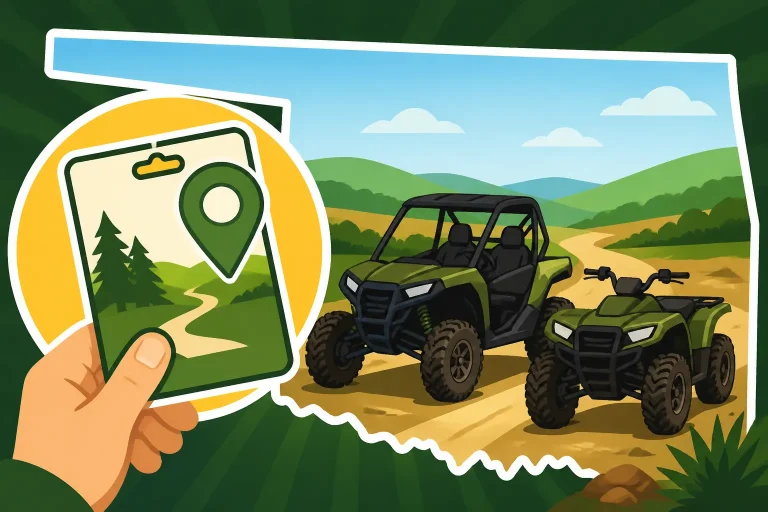
- Know your location before you leave the road. Note the road you are using and the animal’s location. A map or GPS can help you judge distance, but do not rely on a device to determine whether a route is legally open.
- Keep the machine’s use tied to recovery. Travel only as far as needed to retrieve the animal, within the half-mile allowance. Do not use the trip to explore, scout, or reach another destination.
- Stay within the property boundary. The half-mile distance does not give permission to cross into neighboring land or enter a closed area. If the animal is near a boundary, stop and contact the land manager for direction.
- Avoid unnecessary damage. Choose the least damaging practical route, avoid soft ground and sensitive areas, and do not widen an existing track. If conditions are unsafe or the machine cannot travel without causing damage, do not force it.
- Ask for help when the rule is unclear. If you cannot confirm that the route or recovery is allowed, contact the land manager or the relevant office before proceeding. A short check can prevent an avoidable citation or access problem.
If the animal is beyond half a mile from the road, the exception does not become broader because the recovery is difficult. Do not simply drive farther and hope the reason will excuse it. Ask the land manager what recovery methods are allowed. There may be a safer or authorized option, but it should not be assumed.
Likewise, if a machine becomes stuck during an allowed recovery trip, that does not automatically authorize additional off-road travel. Avoid expanding the route to retrieve gear, help another rider, or continue to a different location unless the land manager confirms what is permitted. Take care not to turn one limited recovery into several unrelated trips.
Common Misunderstandings and a Pre-Ride Check
The most common mistake is hearing “half a mile” and treating it as a general off-road distance. It is not. The allowance is tied to retrieving a downed animal, and the other access requirements remain in place.
Another mistake is assuming the rule applies everywhere in Oklahoma. Timber-company properties, wildlife areas, private riding parks, and other public-access lands can have different rules. An allowance described for timber land does not automatically apply at a state park, on a county road, or on private property. Check the rules for the land you are entering, not just the rules for a different riding area.
It is also easy to confuse a land access permit with permission to use a machine off-road. A permit may satisfy an access requirement, but it does not necessarily authorize a particular route or activity. Review the permit conditions and property rules together.
Before you go, use this checklist:
- Confirm that the land is open to your activity and that your visit falls within the allowed season.
- Check whether you need a land access permit, hunting license, or other documentation.
- Identify the designated roads and any closed areas.
- Confirm the speed limit and any machine or passenger restrictions.
- Understand that off-road travel is limited to the specific animal-recovery purpose and the half-mile maximum.
- Save the land manager’s contact information in case the animal is outside the permitted distance or the route is unclear.
- Carry a map or reliable navigation tool, but do not treat it as proof that a route is authorized.
If a sign, permit condition, or land manager’s instruction conflicts with your understanding of the half-mile rule, pause and ask for clarification. The allowance is narrow, and the safest interpretation is not to ride off a designated road unless the trip clearly qualifies as recovery and the property’s rules allow it.
Disclaimer
This article is for general informational purposes only and does not constitute professional advice. Laws, prices and regulations vary by location and change over time. Consult a qualified professional for guidance on your specific situation.