Oklahoma Timber Land Access Rules
Oklahoma timber land can offer miles of riding access, but it is not open like a year-round trail park. The land is privately owned, access is seasonal, and riders must meet hunting and permit requirements. Knowing the limits before unloading your machine helps prevent a trespass problem or an unnecessary trip.
What Oklahoma timber land access covers
The timberland riding access commonly discussed in Oklahoma applies to land made available to the public through access arrangements with timber companies. Honobia Creek and Three Rivers are the best-known areas associated with this kind of access. They are not the same as an unrestricted public trail system: access comes with conditions, and the land remains private.
That distinction matters. A land access permit is permission to use certain land under specific rules; it is not a general authorization to ride anywhere in the state. It also does not mean every road, trail, or patch of timberland is open. Before going, check the current access information for the area you plan to visit, including any closures or special restrictions.
The access program is separate from machine registration. Having a registration decal does not, by itself, give you permission to enter timber company land. Likewise, an access permit does not replace any registration obligation that applies to your machine. For a broader explanation of the permit system, see Oklahoma Land Access Permits Explained.
The areas have their own details, so check the information for the specific destination rather than assuming the same directions apply everywhere. These pages can help you narrow down what to confirm: Oklahoma Permits for Honobia Creek and Oklahoma Permits for Three Rivers.
| Access question | What to expect |
|---|---|
| Is the land public land? | No. Timber company land may be available under a public access arrangement, but it remains privately owned. |
| Is riding open year-round? | No. Timberland access is seasonal and tied to the applicable program rules. |
| Can anyone ride for recreation? | No. Riders must meet the program’s eligibility and permit requirements, including the hunting-related rules. |
| Can you ride anywhere on the property? | No. Travel is limited to designated roads, with narrow exceptions such as retrieving a downed deer. |
| Does an ATV registration decal grant access? | No. Registration and land access permission are separate issues. |
Who can ride and when access is open
Timberland riding is tied to deer-season access. Under the rules associated with these areas, riders must be licensed deer hunters, and access is limited to the applicable seasonal window. This is not simply a recreational riding permit that opens the property throughout the year.
The riding period generally runs from October into January. The exact opening and closing dates, and any changes or temporary closures, should be confirmed with the official program before you travel. In particular, do not assume that a permit bought for one season remains valid for the next, or that a machine can stay on the property after the riding window ends. The seasonal limits are summarized in Oklahoma Deer Season Access Windows and Riding Only From October to January.
A related rule requires machines to be removed from timberland by January 15. Treat that date as a planning deadline, not a suggestion to leave a machine parked until the last moment. Weather, a closed gate, a trailer problem, or a breakdown can make a late removal difficult. Check the current instructions for your specific area, and plan to take your machine out well before the deadline. See Why Machines Come Off Timber Land After January 15.
Before you leave, make sure the person riding is eligible and has the required documents. Do not assume that one rider’s hunting license or permit automatically covers everyone in a group. Check whether each person who will operate a machine needs a separate permit, and confirm what hunting license applies to your situation. Resident and nonresident rules may differ, and age-related exemptions can have their own limits.
A sensible pre-trip check includes:
- Confirm the area is open for the dates you plan to ride.
- Verify that each rider meets the deer-hunting and permit requirements.
- Check whether the permit must be carried or displayed in a particular way.
- Confirm any age-based exemption or nonresident requirement directly with the program.
- Check current closures, fire restrictions, and access notices.
- Save the official rules or permit details where you can refer to them without cell service.
The access window may overlap with hunting activity, which affects how you should ride. Wear visible clothing appropriate to the season, stay alert for hunters and other land users, and avoid assuming that a quiet road is unused. If you are visiting from outside Oklahoma, review Oklahoma Resident vs Nonresident Permits and confirm current requirements before leaving home.
Where you can ride and what the limits mean
On timber company land, the default is to stay on designated roads. The permit is not permission to make new trails, cut across the woods, or use every visible track. A narrow path may be a logging route, a private work road, or a route closed to public use. If it is not designated for your permitted access, do not ride it.
This rule can feel restrictive if you are used to a private off-road park, where the purpose is to explore marked trail networks. Timberland access works differently. The roads serve land management and hunting activity, and staying on them helps protect the property and keep access arrangements in place.
Speed is limited to 25 mph on timber company roads. That is a maximum, not a target. Reduce speed when visibility is limited, the surface is loose, another vehicle is approaching, or you are near a gate, work area, or group of hunters. Dust can hide other road users, and logging trucks or other large vehicles may need more room than a recreational machine. The rule is covered in 25 mph on Timber Company Roads.
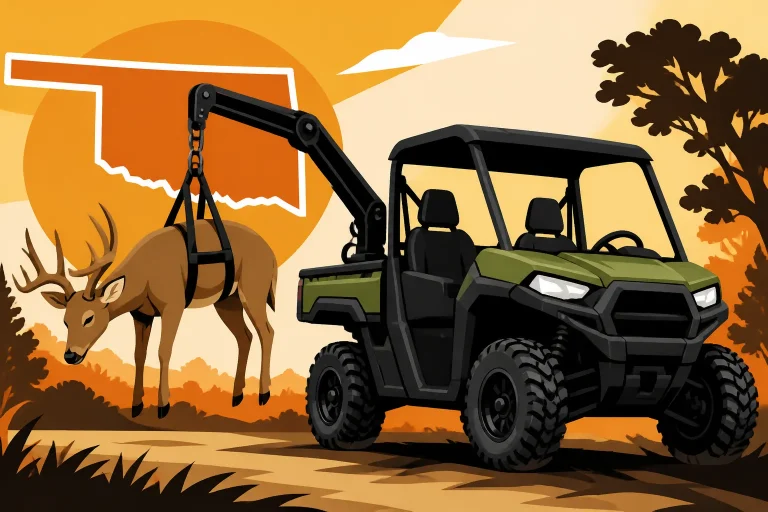
The limited off-road allowance is for retrieving a downed deer, not for general riding. Riders may travel up to half a mile off the road for that purpose under the applicable rules. Do not use that allowance to scout by machine, follow an animal before it is down, or explore terrain that is otherwise closed. For the boundary of this exception, see Half a Mile for a Downed Animal.
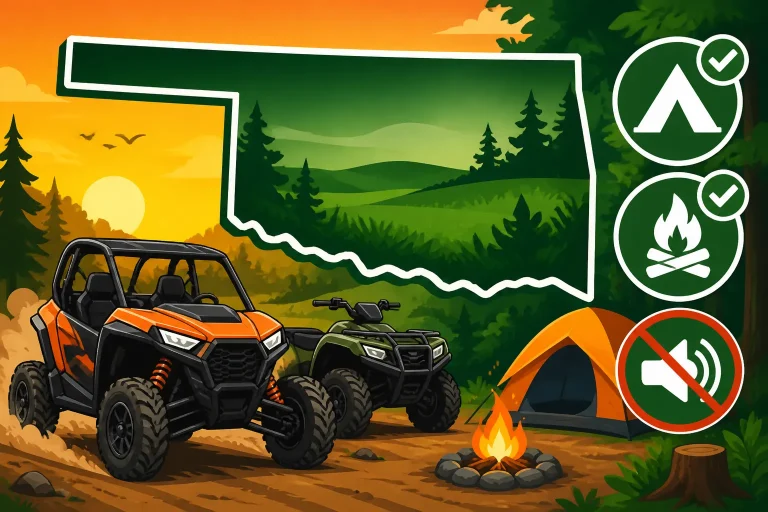
Camping is also restricted. The program’s rules allow primitive camping within 50 yards of a road, subject to the current requirements for the area. That does not mean you can camp anywhere along the route or assume that a roadside spot is available. Look for current site restrictions, respect gates and private work areas, and leave enough room for other road users. Details are available in Camping Within Fifty Yards of a Road.
A practical way to remember the main limits is:
- Use only designated roads.
- Keep to the posted speed limit, and ride slower when conditions call for it.
- Treat off-road travel as a specific deer-retrieval exception, not a recreation option.
- Camp only where the current rules allow.
- Leave the property by the required end of the season.
- Follow signs, gates, and closures even if a route appears passable.
If a sign and a general description seem to conflict, stop and check with the area’s official contact before proceeding. Do not move or bypass a gate to reach a route. A machine capable of crossing rough terrain does not make the land beyond the road available for riding.
Planning a compliant timberland ride
The best preparation starts with choosing the area and checking its current rules, not simply loading the machine and driving toward the nearest timber road. Access information can change because of seasonal operations, landowner needs, weather, or program updates. Verify the rules close to your trip, especially if you have not visited that property before.
Make a simple document check before leaving. Carry the required land access permit and hunting credentials, and keep them accessible rather than buried in a trailer or gear bag. Confirm whether your group needs individual permits. Also bring identification and any machine documents you may need for other parts of the trip. Requirements for riding on timberland do not automatically answer what you need for roads or other riding areas along the way.
Plan for limited service. Timberland routes may be remote, and cell coverage can be unreliable. Tell someone where you intend to ride and when you expect to return. Bring water, basic tools, a first-aid kit, and a way to navigate if a phone loses signal. These are practical precautions, not a substitute for following access rules.
The machine should be ready for low-speed travel on maintained or unimproved roads. Check tires, brakes, lights, fuel, and any cargo before entering. Secure equipment so it cannot fall into the road, and avoid blocking a gate while unloading. If you are traveling with several machines, agree on a meeting point and a pace before the group starts moving. Keep enough distance to avoid riding into the dust or debris kicked up by the machine ahead.
Respect the fact that this is working private land. Logging, road maintenance, hunting, and other activity may be underway. Yield when appropriate, do not interfere with workers, and never assume that a road is safe just because it is open to permitted access. If you encounter a closure, turn around rather than trying to find a way around it.
Finally, make an exit plan. Know when the access period ends and when machines must be removed. If you are staying overnight, make sure the campsite is allowed and that your vehicle and trailer are parked without obstructing the road. Pack out trash, avoid damaging vegetation, and leave gates exactly as you found them.
If timberland rules do not fit the kind of ride you want, look for a designated riding area with access terms suited to recreational trail use. The important point is to choose a location where your permit, the season, and the type of riding all match. On timber company land, staying within those limits helps preserve access for future seasons.
Disclaimer
This article is for general informational purposes only and does not constitute professional advice. Laws, prices and regulations vary by location and change over time. Consult a qualified professional for guidance on your specific situation.