Oklahoma Trails That Allow Dirt Bikes
Finding a dirt-bike trail in Oklahoma is only half the job: the other half is confirming that motorcycles are allowed on that specific route and that the land is open when you plan to ride. This guide compares several Oklahoma riding areas, explains how their rules differ, and walks through the checks that can keep a great ride from turning into a closed-gate surprise.
Oklahoma riding areas that allow dirt bikes
Oklahoma has a mix of state-managed riding areas, private off-road parks, and public or leased lands with rules that apply to particular roads and trails. “Dirt bikes allowed” does not mean every trail in the area is open to every motorcycle. Route signs, current maps, seasonal limits, and the type of land all matter.
Before leaving home, look up the area’s official rules and map. An off-road mapping app such as onX Offroad can help you plan and understand the route network, but treat it as a planning aid—not a replacement for posted signs or official land-manager information. For a broader list of places to investigate, start with [Oklahoma ATV Trails: Where to Ride].
Little Sahara State Park
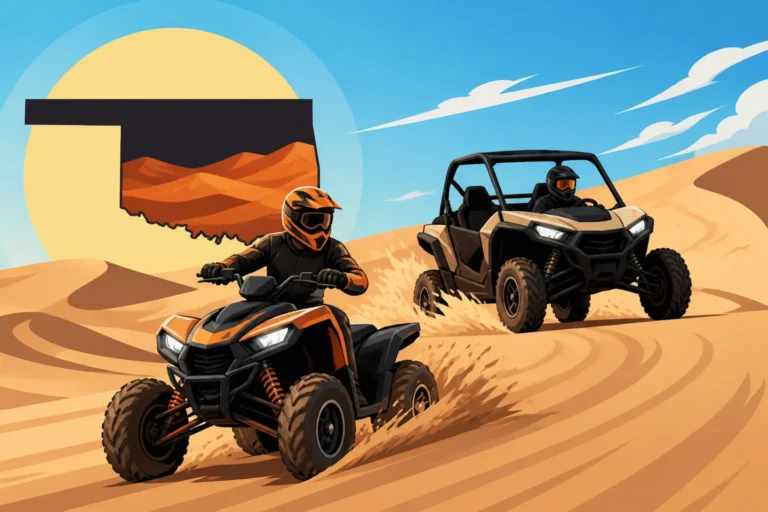
Little Sahara State Park near Waynoka is best known for open sand-dune riding. It can be a strong choice for a dirt-bike rider who wants a different experience from narrow wooded trails, but dunes call for different skills and preparation. Sand can shift, visibility can drop when other riders are moving nearby, and a route that looks easy from the parking area can feel very different once you are climbing or crossing a dune.
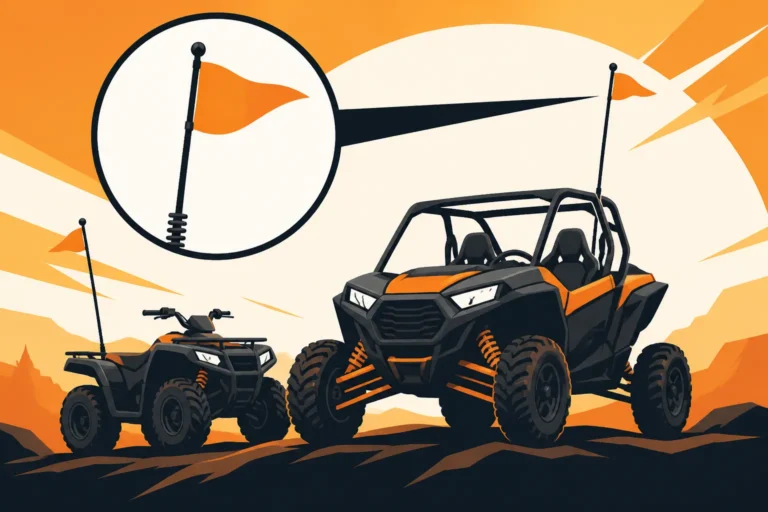
Check the park’s rules before unloading. Dune areas may have requirements for safety equipment, lighting, flags, or other gear, and those details are worth confirming before you make the drive. The park information in [Little Sahara State Park in Oklahoma] can help you plan your visit, while [Oklahoma Dune Riding Explained] covers the particular demands of riding on sand.
A dirt bike can be easier to maneuver in sand than a larger machine, but that does not eliminate the risk of getting stuck, losing control, or riding into another person’s path. Keep your speed appropriate for what you can see, give other riders room, and avoid assuming that a dune’s far side is clear. If you are new to sand, take time to watch traffic patterns before riding into busy sections.
Robbers Cave OHV Area
Robbers Cave OHV Area, near Wilburton, offers a very different setting: wooded, hilly ground rather than wide-open dunes. That makes it appealing to riders looking for a more technical day, but hills, uneven surfaces, and changing trail conditions can challenge a novice rider. The area has designated riding boundaries and operating rules, so check the park’s current guidance before planning your route.
Robbers Cave operates within set hours rather than serving as an always-open riding area. Plan your arrival and ride time around the posted schedule, and do not assume that a campsite nearby means the OHV trails are open after dark. [Robbers Cave OHV Area in Oklahoma] is a useful starting point for understanding the area, and [Robbers Cave Riding Is Daylight Hours Only] highlights an important planning distinction.
A smaller riding area can still hold plenty of variety, especially if you are riding with a group that has different experience levels. Agree on a meeting point and a simple plan before splitting up. If someone takes a slower line or needs to stop, the rest of the group should know where to wait rather than continuing out of sight.
Cross Bar Ranch
Cross Bar Ranch near Davis is a private off-road park with a varied landscape and trails for different kinds of riding. Before you head out, confirm that the routes you are considering accept dirt bikes and check the park’s current rules for admission, operating hours, waivers, speed, and camping. Private parks set their own policies, and those policies may differ from one riding area to another.
A trail map can make it easier to choose a route that fits your bike and skill level, but follow signs and staff instructions once you arrive. Don’t assume that a route suitable for one motorcycle will be suitable for every rider in your group. If you are bringing a newer rider, start with a manageable loop and leave room in the day for breaks and route changes. For additional planning details, see [Cross Bar Ranch in Oklahoma].
Designated routes in Ouachita National Forest
Riding in or around Ouachita National Forest requires a different kind of preparation. Forest access depends on which routes are designated for motorized use, what vehicle types are allowed, and whether the route is open at the time of your ride. Do not treat the forest as one continuous open riding area. A road or trail appearing on a general-purpose map does not automatically mean it is legal for dirt bikes.
Use the applicable motor-vehicle-use information and observe seasonal closures and signs at the trailhead. An app such as onX Offroad may help you compare your planned route with mapped access, but confirm the route against official forest information before riding. The overview in [Oklahoma Ouachita National Forest Access] can help you understand why checking the specific route matters.
| Riding area | Riding experience | What to verify before you go |
|---|---|---|
| Little Sahara State Park | Open sand and dunes | Park rules, safety equipment, access, and current operating information |
| Robbers Cave OHV Area | Wooded and hilly riding | Operating hours, permitted routes, and current trail conditions |
| Cross Bar Ranch | Private off-road park with varied terrain | Dirt-bike access, park rules, waivers, and route options |
| Ouachita National Forest routes | Designated forest roads and trails | Official motorized-use map, vehicle eligibility, and closures |
How to confirm a trail is open to dirt bikes
The most frustrating trip is the one where you tow for hours, arrive at a trailhead, and discover that your motorcycle is not allowed on the route—or that the route is closed. A quick check before departure can prevent that, but it needs to be more specific than searching for “Oklahoma dirt bike trails.”
Check the land manager’s rules first
Start with the person or agency responsible for the land: the state park, private park, forest office, or land-access program. Look for rules that name motorcycles, dirt bikes, or off-highway motorcycles rather than relying on broad wording like “motorized vehicles.” Ask whether the rule applies to the entire area or only certain trails.
If the information online is unclear, call or message the office before you load the bike. Ask direct questions: Are dirt bikes allowed on the route I plan to ride? Is the area open on my intended date? Are there seasonal closures, check-in requirements, or permits? A short conversation can reveal details that a general recreation page may not spell out.
Compare the route with a current map
Once you know which routes are eligible, trace the ride on a current map. Check the starting point, trail connections, road crossings, and any sections that may enter land with different rules. A route that starts inside a riding area may cross a boundary or connect to a road where motorized access is restricted.
Mapping tools can help you see distance and route layout. onX Offroad may be useful for planning and reviewing mapped access, especially when you are comparing a trailhead with nearby roads. Still, apps can’t override a closed sign or a land manager’s current restriction. If the map and posted information seem to conflict, stop and confirm with the responsible office rather than guessing. [Oklahoma ATV Trail Map Downloads] offers another place to start when organizing your route research.
Check trail conditions close to departure
A trail that is generally open may be a poor choice after heavy rain, maintenance work, or a seasonal closure. Mud and slick clay can turn a familiar route into a difficult recovery, while dry conditions can create dust that affects visibility. Check for recent updates and be willing to switch areas if the conditions do not suit your group.
This matters especially when you are towing from a distance. Before you hitch up, confirm the park is operating, the route is open, and the entrance you plan to use is available. [Oklahoma Trail Conditions Before You Tow] can help you build that check into your trip routine.
Permits, equipment, and riding safely
An open trail is not the only requirement. Depending on where you ride, you may need to satisfy park rules, land-access requirements, or equipment rules. Private facilities may have their own entry procedures, while public or leased lands may have restrictions tied to the location and season.
Check whether a permit applies
Permit rules depend on the land—not simply on whether you own a dirt bike or have registered it somewhere else. If you plan to ride on land with a specific access program, verify whether that program applies to your visit, whether a permit is required, and how to obtain it. Do not assume that one permit covers every riding area in Oklahoma.
The details in [Oklahoma Land Access Permits Explained] can help you distinguish land-access requirements from a park’s own admission or operating rules. When in doubt, ask the land manager which requirements apply to the exact trail or property you intend to use.
Match your ride to your bike and experience
Dirt bikes are not all set up for the same terrain. A bike and tire choice that work well on sand may not feel ideal on rocky or muddy trails. Before leaving, check the tires, brakes, chain, controls, fuel, and any protective equipment you rely on. Bring basic tools and supplies suited to your ride, and make sure someone in the group knows what to do if a bike develops a problem.
Be honest about experience, too. A route that looks short on a map may take longer than expected if it is steep, rutted, or unfamiliar. Start with a route that leaves you room to turn back, and agree on a pace that works for the least experienced rider. For a deeper look at route types, [Oklahoma Trails With Hills] and [Oklahoma Trails With Sand] help distinguish two very different kinds of riding day.
Ride with a plan for changing conditions
Before starting, tell someone where you are riding and when you expect to return. Carry water, basic first-aid supplies, and a charged phone, but do not count on reliable cell service everywhere. Keep your group together at turns, intersections, and trail junctions. If one rider stops, the others should know to stop too rather than leaving them to catch up alone.
Pay attention to signs and other users. Slow down when visibility is limited, avoid cutting outside marked routes, and give people on foot or in other vehicles room to pass. These habits are useful on busy dunes and just as important on narrow wooded trails.
Plan your Oklahoma dirt-bike trip before you load up
A reliable plan starts with the riding area, not the trailer. Choose the kind of terrain your group wants, confirm that dirt bikes are allowed on the routes you intend to ride, and check operating information close to your departure. Then match the route to the riders’ experience, review any permit or equipment rules, and make a backup plan in case the area is closed or conditions change.
| Before you leave | What to confirm |
|---|---|
| Riding area | The land manager and the exact access point |
| Motorcycle access | That dirt bikes are permitted on your intended route |
| Operating status | Hours, seasonal limits, closures, and weather-related updates |
| Maps | A route that agrees with official access information |
| Requirements | Permits, waivers, equipment, and check-in rules |
| Group plan | Meeting points, pace, supplies, and expected return time |
If you are comparing several destinations, [Oklahoma Trails That Allow Side-by-Sides] can help explain why vehicle access may differ even when riding areas seem similar. For dirt-bike planning, the key is to verify the motorcycle rule for each destination rather than assuming that access for one off-road vehicle means access for another.
A little preparation goes a long way. It helps you spend less time second-guessing the map at the trailhead and more time riding routes that fit your bike, your group, and the conditions on the ground.
Disclaimer
This article is for general informational purposes only and does not constitute professional advice. Laws, prices and regulations vary by location and change over time. Consult a qualified professional for guidance on your specific situation.