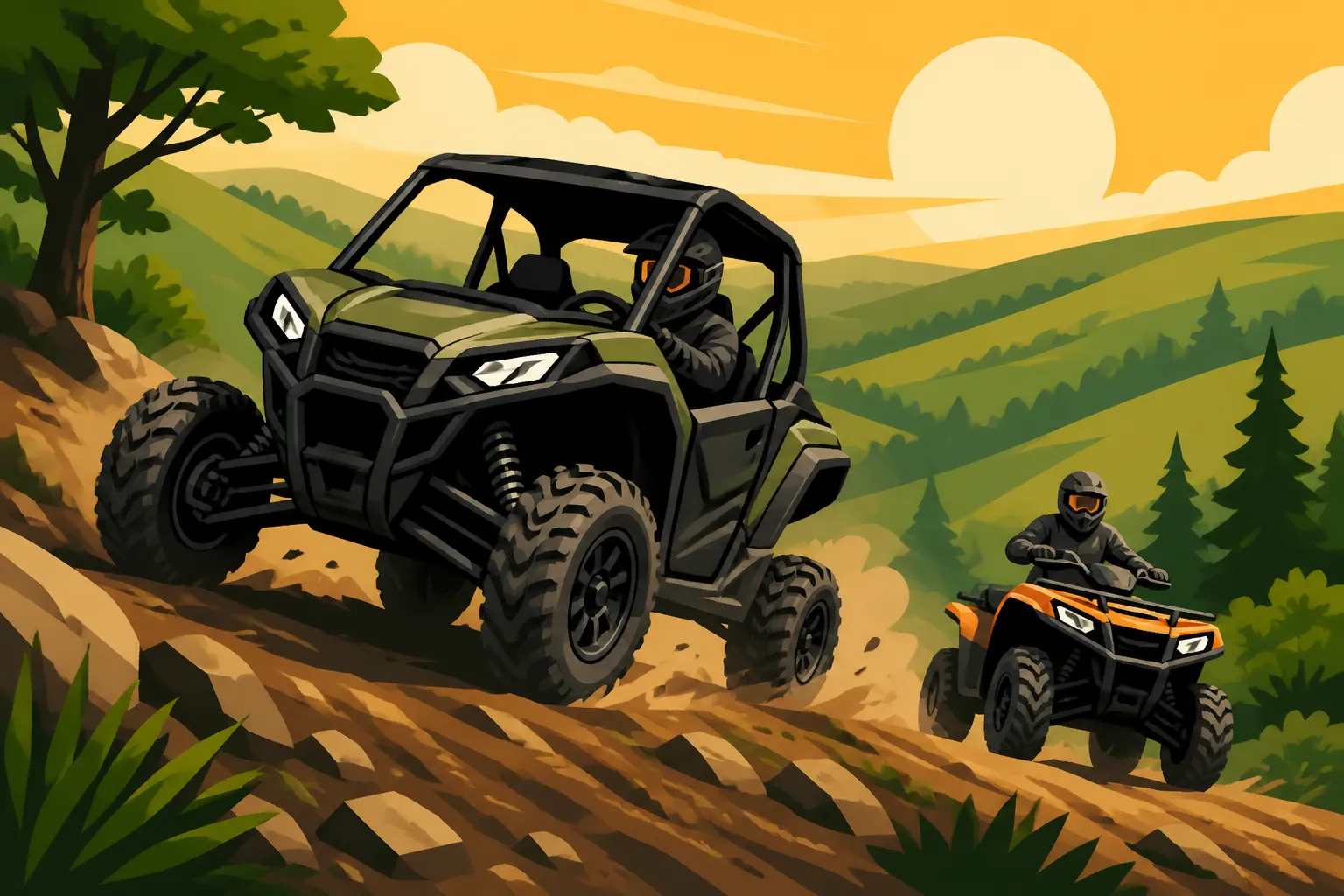
Hilly Ground in the San Bois
The San Bois hills can turn an easy-looking Oklahoma ride into a steep, rocky, and tiring day fast. Around Robbers Cave near Wilburton, the terrain rewards riders who slow down, choose routes that match their experience, and plan for changing traction. This guide explains what the hills are like, how to prepare your ATV or UTV, and how to ride them more safely.
What the San Bois terrain is like
Hills, rocks, and changing traction
The San Bois area is known for hilly ground, and that changes how a ride feels compared with a flat trail or open field. A route may climb, descend, bend around a slope, or pass over uneven ground. Even when a hill looks manageable from below, its angle, loose surface, and limited visibility can make it more challenging once you are on it.
Traction can change within a short distance. One section may feel firm, while the next has loose soil, exposed rock, or damp ground. Oklahoma clay can become particularly slick after rain, so a route that seemed straightforward in dry conditions may feel very different after a storm. For more on that shift in grip, see [Why Oklahoma Red Clay Turns Slick After Rain].
A slope also affects how your machine handles. On a climb, a quad may need steady momentum without a sudden burst of throttle. On a descent, braking too sharply can cause a tire to lose grip. A side-by-side’s extra weight can make downhill control especially important. The right approach is not to charge through a difficult section; it is to pause, assess the line, and decide whether your machine and riding ability are suited to it.
What to expect around Robbers Cave
Robbers Cave’s off-highway vehicle area sits in the San Bois region near Wilburton. It is a compact riding destination, not a sprawling network where you can assume every turn leads to a long, easy loop. The [Robbers Cave OHV Area in Oklahoma] is commonly described as covering about 250 acres, so it helps to arrive with realistic expectations about the size and character of the riding area.
The hills are part of the appeal, but they also make route choice matter. A short ride can still be physically demanding if it includes repeated climbs, rough surfaces, or careful maneuvering. If you are bringing a newer rider, a youth quad, or someone who has mostly ridden open ground, do not assume that a small riding area automatically means a beginner-friendly outing. Check the posted routes and current site guidance before choosing where to ride.
Robbers Cave is also associated with daylight riding hours. Confirm the operating schedule and any temporary restrictions before you unload. The overview of [Robbers Cave's Daylight Hours in Oklahoma] can help you plan around the time available, but posted information at the site should guide your visit if conditions or rules have changed.
Choosing routes and preparing for the ride
Match the route to your experience
Before setting out, take a moment to be honest about your group’s ability. A rider who is comfortable on level trails may still be learning how to handle a side slope, a rocky climb, or a narrow downhill turn. Start with terrain that feels manageable and build confidence gradually. The goal is a safe, enjoyable ride—not reaching the steepest hill first.
If riders have different experience levels, agree on a simple plan before leaving the staging area. Pick a pace that the least experienced person can maintain, establish where the group will stop, and make sure everyone knows what to do if a machine gets stuck or needs to turn around. A lead rider should not disappear around a blind bend while the rest of the group is still negotiating a hill.
Trail ratings can offer a useful starting point, but they do not replace a look at actual conditions. Rain, traffic, erosion, and fallen branches may change how a route rides. Use [Oklahoma Trail Difficulty Ratings] as background, then follow local signs and make a fresh judgment at each tricky section. If a trail looks beyond your comfort level, turning back is a sensible decision—not a failure.
Check maps, signs, and trail conditions
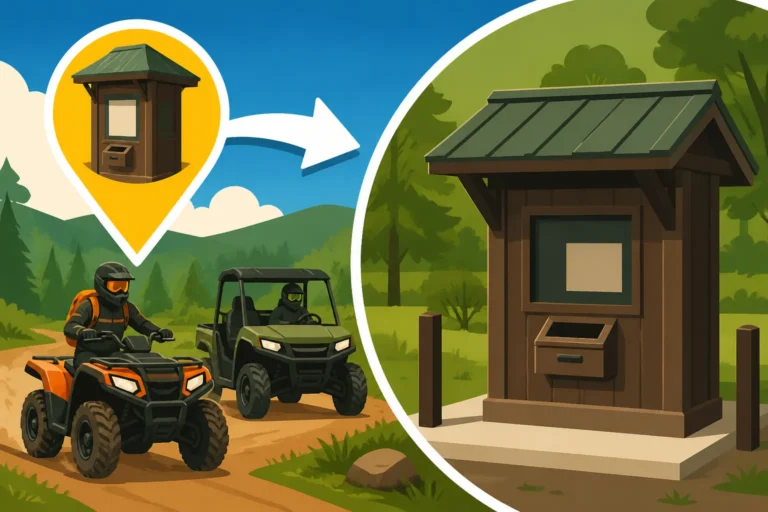
Look over the site map before riding and pay attention to marked boundaries and route designations. Digital mapping tools, including onX Offroad, can help you orient yourself and understand where you are, but an app should not be treated as permission to ride anywhere. Follow official signs and stay on routes the riding area allows.
Download or save useful map information before you leave home if your mapping tool supports offline access. Cell service can be unreliable in hilly or wooded areas, and a phone that cannot load a map is not much help when your group is trying to find its way back. Carry a paper map or write down key landmarks as a backup, and keep your phone protected from dust, water, and impacts.
Check for closures before unloading and again when you arrive. Rain can make clay slopes slippery and increase the chance of rutting or damage, while maintenance or other site conditions may close routes. The guidance in [Oklahoma Trail Closures After Rain] is a useful reminder to treat wet-weather access as a practical safety issue, not just a scheduling inconvenience.
| Before the ride | What to check | Why it matters |
|---|---|---|
| Route planning | Posted map, marked trails, and allowed vehicle types | Helps prevent accidental entry onto a closed or unsuitable route |
| Weather | Recent rain and the forecast | Wet clay and runoff can change traction quickly |
| Machine setup | Tires, brakes, steering, and protective equipment | Hills put extra demands on control and traction |
| Group plan | Experience levels, meeting points, and turnaround decisions | Keeps the group together when visibility is limited |
| Return plan | Operating hours and route back to staging | Reduces the chance of being caught out near closing time |
Riding hills with better control
Climbing and descending
Before a climb, stop where you have a clear view and look for a route that avoids loose edges, deep ruts, and obstacles you cannot safely clear. Choose a steady pace and keep your attention on the trail ahead. Sudden acceleration or sharp steering can unsettle the machine, especially if the tires are already searching for grip. If you cannot see over the crest, do not assume the trail is clear on the other side.
On a quad, body position helps: lean forward on a climb and adjust your weight gradually rather than making a sudden shift. On a UTV, keep the vehicle balanced and avoid abrupt throttle or steering inputs. Passengers should stay seated and follow the manufacturer’s guidance for handholds and restraints. If a hill feels too steep or rough, stop before you commit to it and use a safe, permitted route around or back the way you came.
Descending calls for patience. Use a controlled speed and avoid locking the brakes or turning sharply on loose ground. Keep enough room between machines that the rider below is not exposed to a sudden stop or a rolling vehicle. Never stop just over a blind crest or in the middle of a narrow slope if you can safely move to a stable, visible place.
If you are unsure whether a hill is appropriate for your setup, walk the line only where it is safe and permitted, or ask an experienced rider familiar with the area. Do not put yourself below a machine that could roll, and do not try to recover a stuck vehicle while standing in its downhill path.
Rocks, ruts, and protective equipment
The terrain may include rough or rocky sections, so inspect your machine before you ride. Check tire condition and pressure based on your machine’s recommendations and the type of riding you expect. Make sure the brakes respond properly, steering feels normal, and any loose cargo is secured. A damaged tire or a loose strap is a small problem in the staging area but can become a serious nuisance on a hill.
Underbody protection can be useful when a route has exposed rocks or uneven ground. A skid plate may help protect vulnerable components from impacts, but it does not make every obstacle safe to cross. For a closer look at the tradeoffs, read [Skid Plates for Rocky San Bois Trails]. Ride at a speed that lets you see and respond to the surface rather than relying on armor to absorb every hit.
Bring water, basic first-aid supplies, and a way to contact your group. Wear a helmet and appropriate riding gear, and keep tools or recovery equipment secured so they cannot shift. If you carry a winch, know how to use it before a recovery becomes urgent; never wrap a winch line around a person or stand near a loaded cable.
Planning a comfortable day at Robbers Cave
Make the campground and staging plan part of the trip
A smoother ride begins before you reach the trail. Confirm where you can park and unload, what facilities are available, and whether you need to arrange camping separately. Robbers Cave rides are associated with Deep Fork Campground across from the OHV area; details in [Robbers Cave Rides Across From Deep Fork Campground] can help you understand the layout, but check current site information before making plans.
Give yourself time to unload, inspect the machines, review the route, and explain the group plan. Rushing straight from the trailer to a steep trail is an easy way to miss a loose wheel, forgotten helmet, or confusing map. If the group includes children or new riders, allow extra time for a calm start and frequent breaks.
Keep the day flexible. If rain arrives, a route becomes muddy, or someone feels uncomfortable, switch to an easier plan or call it early. A planned turnaround is better than pressuring a rider to attempt a hill they do not trust. For broader destination ideas and planning context, [Oklahoma Trails With Hills] may help you compare the kind of terrain you want to ride.
Practice trail etiquette and protect the area
Stay on designated routes and avoid widening trails to get around mud or obstacles. Riding off-route can damage vegetation and create new tracks that other visitors may mistake for approved trails. Do not assume a visible track is open just because another machine has used it; signs and site rules take priority.
Give other riders room, especially on narrow slopes and blind turns. Slow down near people on foot, at intersections, and anywhere the view is limited. If your group needs to stop, move to a safe spot where you are visible and not blocking a route. Keep noise and dust in mind, and pack out trash, broken parts, and food wrappers.
A friendly wave and a patient pace can make a small riding area feel much less crowded. The basics in [Oklahoma Trail Etiquette Locals Expect] are especially useful when a route is narrow or riders are moving in both directions. Respecting the land and other visitors helps preserve access and makes the ride better for the next group, too.
Disclaimer
This article is for general informational purposes only and does not constitute professional advice. Laws, prices and regulations vary by location and change over time. Consult a qualified professional for guidance on your specific situation.