Bringing a Kid’s Quad to Cross Bar Ranch
Taking a child’s quad to Cross Bar Ranch can be a great family ride, but it takes more planning than simply loading the machine and heading to Davis. The right quad, required safety gear, park rules, waiver, trail choices, and backup plan all matter. This guide walks through what to check before you leave and how to make the day safer and less stressful.
Check the park rules before loading up
Confirm that your child and quad are a suitable fit
A child’s age alone doesn’t tell you whether a particular quad is right for them. Consider the rider’s height, strength, coordination, and experience, along with the machine’s size and power. Your child should be able to reach and use the controls comfortably, turn the handlebars fully, and keep both hands on the grips and feet on the footrests. If they struggle to manage the quad in a quiet, level area at home, a busy riding area is not the place to find out whether they can handle it.
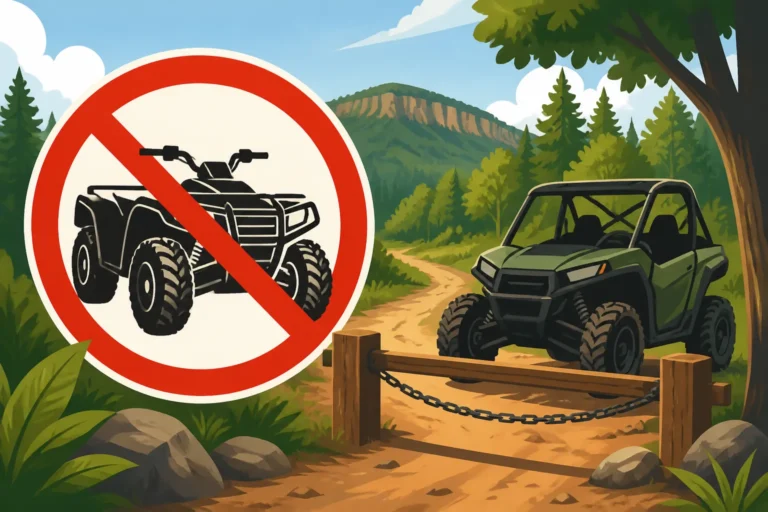
Before your trip, contact Cross Bar Ranch or check its official information for current rules about youth riders, machine types, riding areas, and required documents. Park policies can differ from general Oklahoma rules, and requirements may change. Don’t assume that a child can ride every trail just because the quad is allowed into the park. Ask what areas are appropriate for young riders and whether an adult must accompany them on the trail.
It’s also worth asking how the park handles waivers for minors. Cross Bar Ranch requires riders to sign a waiver, and a parent or guardian should be prepared to complete any paperwork required for a child. Review the rules with your child before arrival, not while a line of riders waits behind you. The linked guide Cross Bar Ranch Makes Everyone Sign a Waiver offers more context on what to expect.
Understand safety rules and park speed limits
Oklahoma’s youth helmet rules matter when you’re planning a ride. Riders under 18 must wear a compliant helmet, so bring one that fits securely and is in good condition. A helmet that shifts, sits too high, or leaves the chin strap loose is not doing its job. If you’re unsure about the requirements, review Oklahoma Helmet Rules Bind Under 18 and confirm any additional park rules before the trip.
Other protective gear makes a difference too. Long sleeves, sturdy pants, gloves, and over-the-ankle boots help protect against branches, gravel, hot engine parts, and scrapes. Goggles are useful when dust kicks up, particularly if several machines are riding together. Pack water and sunscreen where your child can reach them during breaks, and make sure the child knows to stop if they feel overheated, tired, or uncomfortable.
Treat park speed limits as maximums, not targets. Cross Bar Ranch information notes a lower limit through camp and a separate limit on a main road; obey signs and instructions on site, and slow further when visibility is poor or other riders are nearby. Explain that a child should never try to keep up with faster adults. Your group can ride at the youngest rider’s safe pace, regroup at agreed spots, and give other riders room to pass only where it is safe and permitted.
Ask practical questions before you drive to Davis
A quick call or message to the park can prevent a wasted trip. Ask whether your child’s specific type of quad is permitted, what age or supervision conditions apply, where youth riders may go, and what the park expects families to bring. Confirm the current operating arrangements and whether weather or trail conditions have affected access. If you are bringing more than one machine, ask about unloading and trailer parking so you can avoid sorting that out at the entrance.
The park may have rules that apply to everyone in your party, even if some adults are only accompanying the child. Ask whether every rider needs to check in, whether a waiver is required for each person, and what payment options are accepted. Check Questions to Ask the Park Office Before You Go for a useful pre-trip checklist.
A simple call also gives you a chance to explain your child’s riding experience. Someone familiar with the park may be able to suggest where a beginner should start or point out conditions that make a particular area unsuitable for a small machine. If the advice is to wait until a child gains more experience, that may be disappointing, but it’s far better to hear it before the quad is unloaded.
Prepare the quad and the rest of your gear
Inspect the machine before the trip
A small quad deserves the same careful pre-ride check as a full-size machine. Check the brakes, throttle, tires, steering, lights if fitted, and visible fasteners. Look for leaking fuel or oil, damaged cables, loose bodywork, and anything that could catch a child’s clothing. Test the throttle return and brakes in a safe, open area before you load it. If the quad has been sitting for months, a basic inspection and test ride at home can reveal problems before you are far from your tools.
Make sure the machine is suited to the child’s ability and that any speed-limiting or supervision features are set as intended. Don’t rely on a limiter as a substitute for instruction or oversight. Review the owner’s manual if you’re uncertain how to check a feature or adjust the machine. Bring the key, any tools you may reasonably need, and enough fuel for your planned riding time, while following park rules for fuel storage and handling.
If you’re buying or borrowing a quad specifically for the outing, check that you have the paperwork you need and that the machine is not subject to restrictions that would prevent its use. For a youth machine, the registration questions can be different from the park’s access rules; see Oklahoma Registration for a Youth Quad for related Oklahoma paperwork information.
Pack for dust, heat, and minor problems
The difference between a relaxed family ride and a frazzled one is often the small things in the truck. Bring drinking water for each rider, snacks, sun protection, a basic first-aid kit, and a change of clothes. Keep goggles and gloves easy to reach rather than buried under camping gear. A rag or small towel is handy for dusty faces and hands, while a small tool kit can help with minor adjustments.
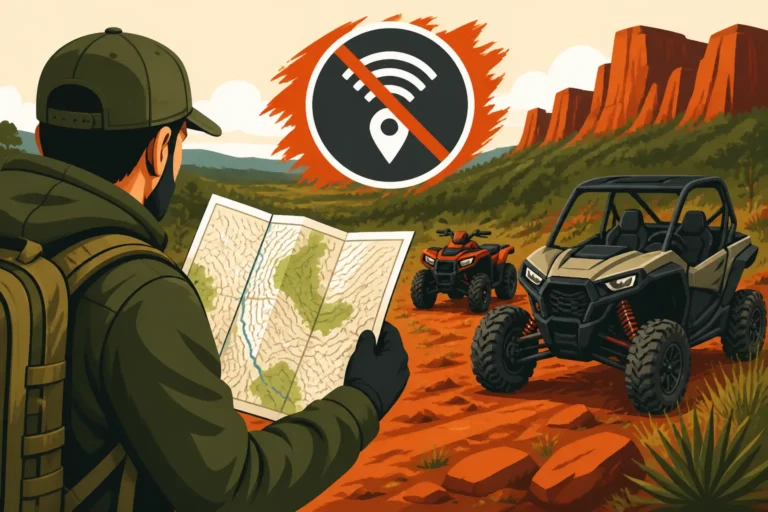
Pack a charged phone, but don’t assume you’ll have reliable service everywhere. If you use onX Offroad for planning or navigation, save the information you need before leaving home and understand how to use it offline. A digital map can help you keep track of your general location, but it does not replace park signs, staff directions, or posted closures. Agree on a simple plan with your child: stop in a safe place if separated, don’t continue searching alone, and wait for the adult at the agreed meeting point.
Choose gear that actually fits the child. Oversized gloves can make it harder to hold the controls, and a loose helmet can shift at the wrong moment. If your child is growing quickly, try everything on before the trip rather than discovering at the trailhead that boots pinch or goggles won’t stay in place.
Plan the transport and unloading
Secure the quad properly for the drive and check that it cannot roll, tip, or shift when you brake or turn. Keep fuel containers secured and separate from passengers, and follow safe transport practices. If you’re hauling several machines, plan the loading order so the child’s quad can come off without moving heavy equipment around it.
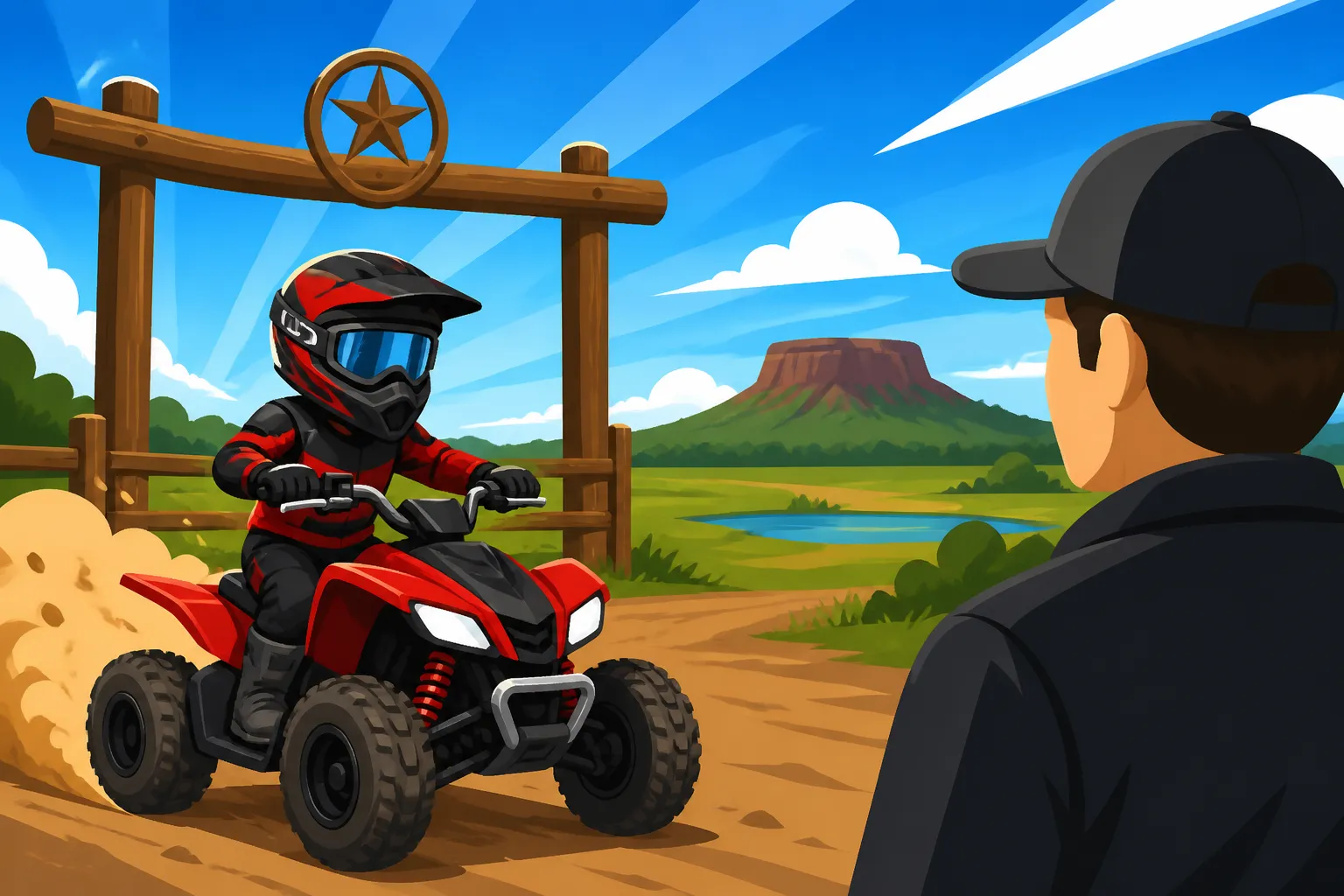
At the park, take a moment to get organized before anyone starts riding. Put on helmets and protective gear, review the rules, and show your child where to stop and wait if something feels wrong. Establish a clear signal for stopping, especially if engine noise makes normal conversation difficult. A child should know that stopping safely is always the right choice, even if the rest of the group has continued ahead.
Choose a manageable first ride
Start slowly and build confidence
Don’t make the first ride of the day a test of endurance. Begin with a short, easy outing in an area the park identifies as appropriate for your child. Let them get used to the terrain, traffic patterns, and sounds before attempting anything more demanding. Watch how they respond to bumps, turns, loose surfaces, and nearby machines. If they seem tense or are gripping the controls too tightly, take a break and talk through what they’re experiencing.
Keep the adult-to-child riding arrangement simple. An adult should be close enough to supervise and intervene, not far ahead where the child can’t see them or far behind where they can’t react promptly. Avoid creating a long line that makes it hard to check on the youngest rider. Set a pace that allows the child to stop comfortably, and resist the urge to turn every ride into a lesson in speed or distance.
A good first outing can be short. Children may tire sooner than adults, especially in warm weather or when the terrain is unfamiliar. Take breaks before the child is worn out, and be willing to call it early. If the child asks to stop, treat that as useful information rather than a problem to push through.
Pick trails by the rider, not by the adults
The more experienced riders in the group may be eager to explore, but the family route should be chosen for the least experienced person. Ask park staff which areas are suitable for a young rider and whether any recent conditions have made certain routes more difficult. A trail that looks simple on a map may include ruts, steep slopes, loose ground, or obstacles that are challenging on a small quad.
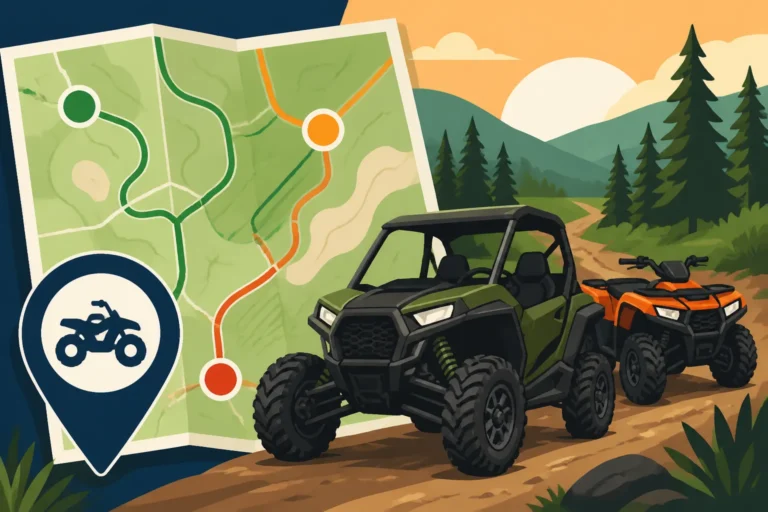
Use onX Offroad, if it’s part of your planning, to help orient your group and understand the broader area. Before you ride, review the map with your child and identify the route you intend to take, along with a place to regroup. Keep the map available, but follow park directions first. Apps can help with orientation; they cannot tell you whether a trail is currently open or appropriate for a particular child.
If the group splits, agree on a specific protocol before anyone moves. For example, everyone can stop at the next safe, clearly identified meeting point rather than continuing in different directions. Keep children within sight or close enough to maintain supervision, and don’t assume that a child can navigate back to camp alone. The guide Oklahoma Trail Etiquette Locals Expect can also help families think through how to share space responsibly.
Keep the day flexible
Weather and ground conditions can change how a trail feels. Dust can reduce visibility, while rain may make some surfaces slick or difficult to cross. Check conditions before traveling and again on arrival, then adjust your plan. A route that was manageable on dry ground may not be a sensible choice after a storm.
Set a turnaround point and a reasonable riding window. It’s easy for adults to lose track of time when they’re enjoying a new area, but fatigue affects a child’s attention and judgment. If your child is thirsty, frustrated, unusually quiet, or making repeated mistakes, stop. A break or an early return to camp is better than trying to squeeze in one more loop.
You can use onX Offroad to help remember where your group has traveled or to retrace a route, but don’t let screen-checking distract from watching the trail. Keep the phone secured, avoid handling it while riding, and have an adult manage navigation when possible. A paper or downloaded backup plan is sensible if your phone battery dies or reception is poor.
Use this pre-trip checklist
The table below is a planning aid, not a replacement for the park’s current rules. Confirm any questions about admission, rider eligibility, and access directly with Cross Bar Ranch before you leave.
| What to check | What to do before leaving | Why it matters |
|---|---|---|
| Youth rider rules | Confirm age, supervision, and permitted riding areas with the park | Park rules may set conditions beyond general state requirements |
| Waiver and check-in | Ask what paperwork is required for a minor and who must sign | Helps avoid delays or incomplete forms at arrival |
| Helmet and protective gear | Fit the helmet and check gloves, boots, clothing, and goggles | Poorly fitting gear can distract or fail to protect properly |
| Quad condition | Test brakes, throttle, steering, tires, and visible fasteners | A mechanical problem is harder to handle once riding begins |
| Route and ability | Ask about beginner-appropriate options and current conditions | The easiest route for an adult may still be too challenging for a child |
| Water and supplies | Pack water, snacks, sun protection, and a basic first-aid kit | Heat, dust, and fatigue can quickly affect a young rider |
| Navigation | Save needed map information and agree on a meeting point | Cell coverage and app access may not be dependable everywhere |
| Transport | Secure the quad and organize a safe unloading plan | A stable load makes the drive and arrival less stressful |
Before the trip, review Cross Bar Ranch’s Day Rates in Oklahoma only if you need general park-planning context, and check Oklahoma Trail Conditions Before You Tow for broader preparation ideas. For additional family riding considerations, Oklahoma Trails for Kids can help you compare the kinds of outings that may suit young riders. Those resources are useful for planning, but the park’s own current instructions should guide your visit.
A successful day is not measured by how many trails your child completes. It’s a day when the quad fits the rider, the rules are clear, the adults stay attentive, and the child finishes feeling safe enough to want to ride again. Prepare carefully, start small, and let your child’s comfort—not the group’s schedule—set the pace.
Disclaimer
This article is for general informational purposes only and does not constitute professional advice. Laws, prices and regulations vary by location and change over time. Consult a qualified professional for guidance on your specific situation.