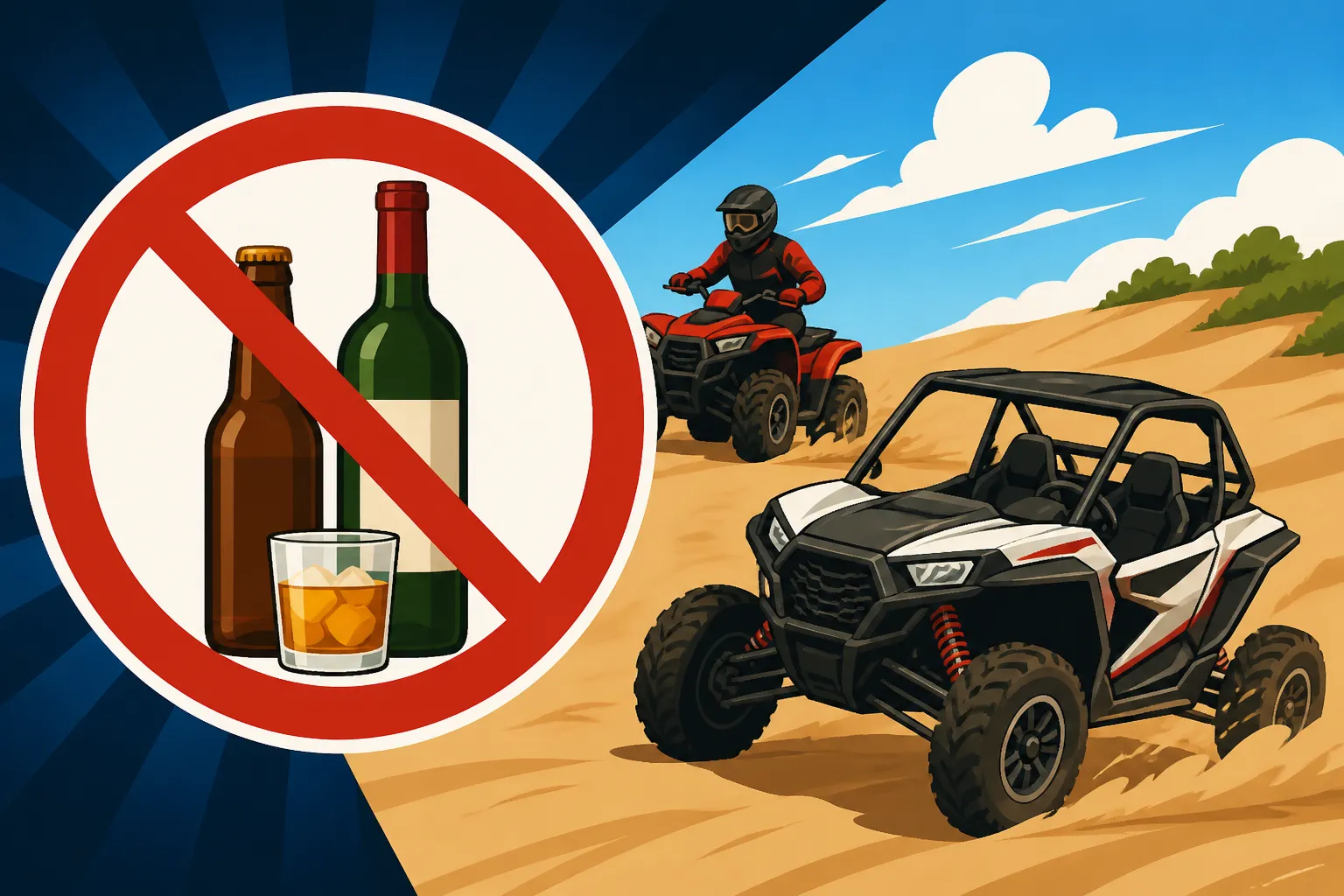
Alcohol Barred From a Dune Area
A dune weekend can go sideways fast when someone assumes the rules at camp also apply on the riding area. At Little Sahara, alcohol is barred from the dune area, so riders should plan to keep it out of that space and confirm where the park’s boundaries and other rules apply. This guide explains how to avoid confusion before unloading, riding, or settling in for the night.
What the alcohol ban means at Little Sahara
Keep alcohol out of the dune area
The practical takeaway is straightforward: do not bring alcohol onto Little Sahara’s dune riding area. The restriction is specific to the dune area, so do not assume that a cooler, a passenger, or a parked machine makes it acceptable to carry alcohol onto the sand. The safest plan is to leave it outside the riding area and follow signs and instructions from park staff.
That distinction matters because a dune day often involves several connected places: a parking or staging spot, a campground, a road, and the sand itself. It is easy to treat everything inside a park as if it had one set of rules. But restrictions can apply to a defined part of a property rather than every nearby space, and the boundary may not be obvious when you first arrive. If you are unsure where the dune area begins, ask before unloading.
For a fuller overview of the riding area, [Little Sahara State Park in Oklahoma] and [Oklahoma Dune Riding Explained] can help you understand what kind of terrain and riding experience to expect. The alcohol restriction is one part of preparing for that visit, not a substitute for checking the park’s other requirements.
Do not assume the rule applies identically everywhere
Little Sahara’s rule should not be treated as a universal description of every Oklahoma riding destination. A private ranch, a state-managed area, a campground, and public timber land may each have different rules. Even within one destination, the rules for a riding area may differ from those for a camping or parking area.
That is why it is better to ask about the exact location rather than relying on a broad assumption such as “alcohol is allowed at camp” or “everything on the property is covered by the dune rule.” Ask park staff which spaces are included in the restricted area and whether any separate rules apply to campgrounds, vehicles, or other facilities. Follow posted signs even if another rider describes a different practice.
| Situation | Safest approach |
|---|---|
| Riding on the dunes | Leave alcohol out of the dune area |
| Unsure where the dune area begins | Ask park staff before carrying anything farther |
| Staying at a campground | Check that campground’s specific rules rather than assuming |
| Visiting a different riding area | Read that location’s rules separately |
| Rules appear unclear or conflicting | Follow posted signs and ask an official before riding |
The point is not to guess at the edge of a boundary. A quick question at arrival is easier than trying to sort out a misunderstanding after your group has already unloaded and spread out.
Plan your day around the restriction
Decide in advance where drinks will stay
The simplest way to avoid a problem is to make the decision before you leave home. If anyone in your group plans to bring alcohol for later, agree on where it will remain and make sure that place is outside the dune area and permitted under the applicable rules. Do not pack it in a cooler that will be carried along with the riding group if that cooler could end up on the dunes.
A little planning helps when riders are sharing trucks, trailers, coolers, and supplies. Imagine that one vehicle is being used as a staging point while several people take turns riding. If the group’s cooler is loaded into a side-by-side for convenience, people may unintentionally carry it into a restricted area. Instead, separate riding supplies from anything that must stay behind, and make sure everyone knows which items are not coming along.
If you are arranging a campground stay, review [Oklahoma Campgrounds With Fee Kiosks] and check the rules for the exact site or facility you plan to use. Do not assume that permission to camp means every activity or item is allowed in every nearby part of the property. Campground policies and dune-area restrictions are separate questions worth confirming.
Make the boundary part of your ride briefing
Before the first ride, take a few minutes to tell the group what the restriction is and where you believe it applies. This is especially useful when the group includes guests who have not visited Little Sahara before. A clear briefing can prevent the familiar “I thought somebody else checked” problem, particularly when riders are arriving at different times or using separate vehicles.
A mapping tool such as onX Offroad can help your group orient itself and discuss where routes and destinations are in relation to one another. But a map is not an official interpretation of a park boundary or a replacement for posted rules. Use onX Offroad as a planning aid, then confirm the relevant boundaries and restrictions with signs or park staff.
Keep the ride briefing practical. Tell riders which items must remain out of the dune area, where to regroup, and who will ask staff if the group has a boundary question. If your group has a designated lead rider, make that person responsible for checking that everyone understands the plan—not for guessing where a rule applies.
Keep nighttime plans separate from alcohol rules
Some riders plan to stay late, and Little Sahara’s operating information includes [Oklahoma Dune Areas Open Around the Clock]. Open hours do not mean every activity is permitted at every time or in every location. Treat hours of access, alcohol restrictions, lighting requirements, and riding conduct as distinct rules.
If your group expects to ride after dark, review the park’s lighting requirements and make sure machines are equipped and operated appropriately. [Oklahoma Rules for Riding After Dark] offers broader context for nighttime riding, while park-specific directions should still guide your visit. A night ride also makes it harder to identify boundaries and signs, so it is sensible to settle any questions before daylight fades.
Alcohol and safe riding are separate concerns
A prohibition does not replace sober-riding judgment
The rule keeping alcohol out of the dune area and the broader responsibility to ride safely are related, but they are not identical issues. Even if someone believes a beverage is outside the restricted area, that does not make it safe to operate an ATV or UTV after drinking. Dunes can shift, visibility can change, and another machine may appear over a ridge with little warning.
For a realistic example, picture a group that finishes riding and returns to camp. One person plans to have a drink, then later wants to move a machine a short distance to reorganize trailers. “It is only a few yards” is not a good reason to mix alcohol and operation. Decide that the machine stays parked once anyone has been drinking, and arrange a sober person to handle any necessary vehicle movement.
The same principle applies to passengers and group leaders. A passenger who is impaired may be less able to respond to sudden movement, follow instructions, or help in an emergency. Make the group’s plan simple: riding and machine operation happen while everyone involved is sober, and alcohol stays out of the dune area.
Consider the people and machines around you
Dunes are shared terrain. A rider may crest a rise without seeing someone approaching from the other side, and a stopped machine can be difficult to spot against uneven sand. Safe riding depends on attention, communication, and predictable decisions. Alcohol can undermine those habits, which is another reason not to build it into the riding portion of the day.
Before starting out, agree on a few basics: ride within your ability, leave room between machines, stop in visible places, and regroup where other riders can see you. If a machine becomes stuck or has a mechanical problem, keep the group together and make sure helpers are not creating another hazard. Those habits matter whether the group is riding a small quad, a sport ATV, or a side-by-side.
Use onX Offroad or another mapping resource to help plan where your group intends to go, but do not let a phone screen distract the driver while the machine is moving. Have one person check the map while stopped, and use official park information for access rules. A route that appears straightforward on a screen may still involve changing sand, traffic, or local restrictions.
A practical checklist before you arrive
Confirm details that could affect your group
Before leaving, check the park’s posted rules and any available visitor information. Focus on the alcohol restriction, the location of the dune area, access hours, lighting expectations, camping rules, and any requirements that affect your machines or riders. If a detail is unclear, contact the park or ask staff when you arrive rather than relying on another visitor’s recollection.
A useful preparation list is:
- Decide that alcohol will not be carried onto the dune area.
- Separate riding supplies from anything intended to stay at camp or another permitted location.
- Ask staff where the restricted area begins if signs or maps are unclear.
- Review the rules for your specific campground or staging area.
- Brief every rider and passenger before the group starts.
- Set a no-operation-after-drinking plan for the entire group.
- Check riding conditions and access information before towing to the park.
For broader trip preparation, [Oklahoma Trail Conditions Before You Tow] can help you think through what to check before making the drive. If your visit includes a separate public-land riding stop, review [Oklahoma Land Access Permits Explained] as well; one destination’s rules or permits do not automatically cover another.
Avoid common assumptions
One common mistake is treating the nearest campground as though it defines the rules for the dunes. Another is thinking a container is acceptable because it is closed, stored in a vehicle, or being carried by a passenger rather than a driver. The most reliable approach is not to test those interpretations: keep alcohol out of the dune area and ask park staff about any location-specific questions.
It is also easy to rely on a friend’s past visit. Rules, signs, and access arrangements can change, and a friend may be describing a different part of the property. A short check before riding can spare the group an uncomfortable disagreement and help everyone focus on the reason they came: a safe day on the sand.
When using onX Offroad to orient your group, treat it as one planning tool rather than the final authority on park boundaries. Pair it with current posted information and direct guidance from staff. That combination is more useful than trying to resolve a boundary question from memory once the group is already spread across the dunes.
The practical rule is simple: keep alcohol off Little Sahara’s dune area, confirm where the restriction applies, and keep riding separate from drinking. When your group is uncertain about a boundary or a nearby facility, ask before acting.
Disclaimer
This article is for general informational purposes only and does not constitute professional advice. Laws, prices and regulations vary by location and change over time. Consult a qualified professional for guidance on your specific situation.