Airing Down on Oklahoma Sand
Oklahoma sand can turn an easy ride into a tiring struggle when tires dig in, spin, and bury a machine that should be floating across the surface. Airing down can improve traction, but too little pressure can damage a tire or let it come off the bead. This guide explains how to make careful adjustments, ride more smoothly, and prepare for places such as Little Sahara.
Why airing down helps on Oklahoma sand
More tire contact can mean less digging
On loose sand, a tire that is too firm may press into a small patch of ground and sink instead of rolling over the surface. Lowering tire pressure slightly can let the tread spread out and create a broader contact patch. That may help a quad or UTV float across soft sand rather than cut deep ruts.
You can often feel the difference in how the machine moves. With suitable pressure and steady throttle, it may roll forward more easily and need fewer abrupt bursts of power. That matters on dunes, where spinning tires can quickly dig a hole and leave you stuck.
Airing down is not a universal fix, though. Tire construction, machine weight, passenger and cargo load, sand conditions, and riding style all affect how a machine behaves. A setup that works for a lightly loaded sport quad may not be appropriate for a heavy, four-seat side-by-side carrying gear.
Lower pressure brings real tradeoffs
A softer tire can be more vulnerable to sidewall damage, punctures, and bead separation. The risk can increase if you make sharp turns at speed, hit a hard edge, or run very low pressure over rough ground. A tire that comes off its bead may lose air quickly, which can leave you stranded in an inconvenient spot.
Low pressure can also make steering feel less precise. A machine that feels planted at a moderate pace may feel sluggish or roll more in a fast corner. On a UTV, the extra weight and higher center of gravity make it especially important to avoid aggressive turns and sudden direction changes.
Treat airing down as a measured adjustment, not a contest to see how low you can go. Your tire and machine manufacturer’s guidance should come first. If the manuals provide a sand-specific range, follow that guidance and consider the actual load you are carrying.
Sand is not the only surface you may cross
A ride may start in soft sand and include packed ground, gravel, or a hard campground road. Lower pressure that feels helpful in a dune section can be a poor choice for faster travel on firmer surfaces. Watch for transitions, slow down when the terrain changes, and avoid treating a whole riding area as if it has one consistent surface.
At Little Sahara, for example, the riding experience can vary between open dune faces, tracks, and firmer areas near camp. Review the park’s current requirements before the trip, including Oklahoma’s 10-Foot Whip Rule and Oklahoma’s Orange Flag Requirement. Those safety preparations matter alongside tire setup.
How to air down safely
Start with the machine and tire guidance
Before changing pressure, find the recommended inflation information for your machine and tires. Check the owner’s manual, the tire manufacturer’s instructions, and any load guidance for passengers or cargo. A side-by-side carrying several people and camping equipment should not automatically use the same setup as an unloaded quad.
Use a reliable pressure gauge rather than judging a tire by appearance. Sand can make a tire look soft or firm in ways that are hard to read consistently. A gauge gives you a repeatable starting point and helps you make small, deliberate changes.
Measure before you ride, ideally when the tires are cool. Heat from riding can change pressure readings, so comparing a hot tire with a cold starting measurement can mislead you. Keep a note of the initial pressure and any adjustment. That simple record helps you avoid guessing when you set up for another ride.
Lower pressure in small steps
Begin at the manufacturer’s recommended pressure for the machine and load. If the tires are digging in and the conditions genuinely call for a softer setup, reduce pressure in small increments. Make one adjustment, ride slowly in a safe, open area, and notice how the machine responds before changing anything further.
Do not make a large pressure drop simply because another rider recommends it. Their tires, wheel setup, machine weight, and riding habits may be different from yours. A setup that works for someone’s paddle tires or specialized sand tires may not be suitable for your stock tires.
Watch the tire as well as the way the machine handles. Stop if a tire looks distorted, begins to feel unstable, or seems to shift on the rim. If you cannot confirm that your selected pressure is within the tire’s safe operating guidance, do not keep lowering it.
Carry the right tools and know when to reinflate
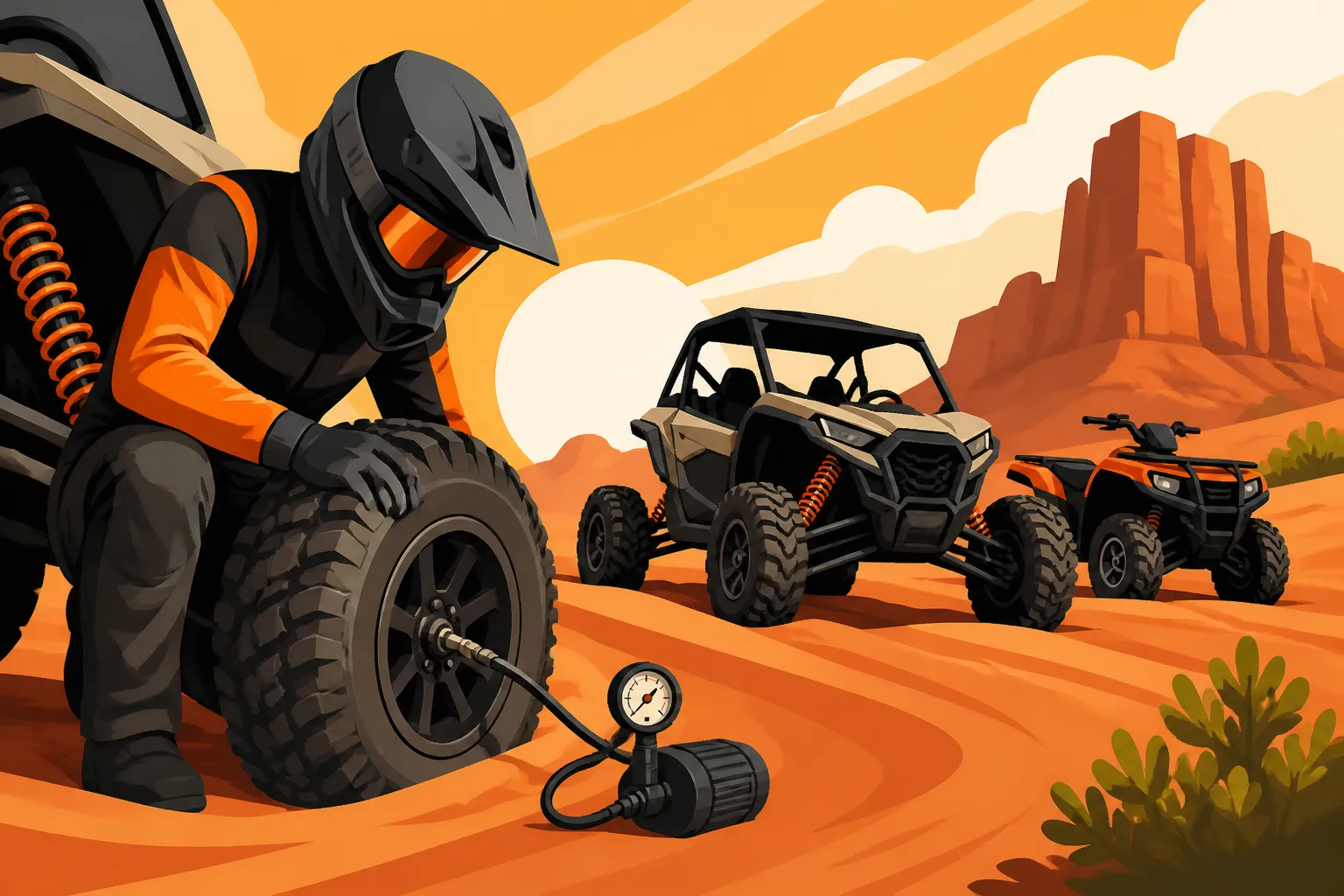
Bring a pressure gauge and a way to add air before you leave for the riding area. A portable compressor or other suitable inflation equipment can help you return to a road-ready pressure when you finish riding. Check that your equipment works before the trip rather than discovering a dead battery or missing hose at the trailhead.
A valve-core tool can make air adjustments easier, but use it carefully. Removing a valve core can release air quickly, and a small part is easy to lose in sand. Keep spare valve caps and any small parts secured in a clean container.
Reinflate before traveling over firm roads or towing the machine on a trailer. Also check pressure after the tires cool, and inspect for cuts, embedded debris, or a bead that looks out of position. The pressure suitable for low-speed sand riding is not necessarily suitable for faster travel on firmer ground.
How to ride after airing down
Use smooth throttle and broad turns
In soft sand, steady momentum usually works better than repeatedly punching the throttle. Sudden acceleration can spin the tires and dig trenches, while abrupt braking can make the front end plow. Look ahead, choose a clear line, and use smooth throttle inputs.
Make turns in a wide, controlled arc where space allows. A sharp turn puts extra force on the tire sidewalls and can make steering feel less predictable when pressure is reduced. If the front tires start to push, ease off, straighten the machine, and reassess rather than forcing it through the turn.
On a UTV, passengers and cargo affect balance. Keep heavy items secured and distribute weight sensibly. Avoid carrying loose equipment that can shift when the machine climbs or turns. If the vehicle begins to feel top-heavy or unusually loose, slow down and stop in a safe place to check the setup.
Read the sand and respond to signs of trouble
Soft, dry sand can behave differently from damp or packed sand. Look for changes in color, texture, and track depth, and be cautious around steep faces or areas where you cannot see the landing. If your machine starts losing momentum, ease off rather than spinning the tires harder. A short pause to choose a better line can prevent a small slowdown from becoming a recovery.
Pay attention to signs that pressure may be too low or the machine is being pushed too hard. These can include excessive tire flex, vague steering, the tire folding in a turn, or a bead that appears to move on the rim. Stop and inspect instead of continuing to test the limit.
If you get stuck, avoid digging a deeper hole with repeated throttle. Clear loose sand from around the tires, reduce unnecessary load if it is safe to do so, and use a suitable recovery method. Keep bystanders clear of tensioned straps and follow the recovery equipment’s instructions.
Adjust your expectations for different machines
A lightweight quad, a larger utility ATV, and a four-seat UTV will not respond identically. A heavier machine places more load on its tires, while a longer or wider vehicle can need more room to turn. Tire tread and construction also matter: stock all-terrain tires, paddle tires, and sand-focused tires do not behave the same way.
That is why copying another rider’s exact pressure number can be misleading. Instead, start with the manufacturer’s guidance, make gradual changes, and judge the results at low speed in a safe area. If you are new to sand, choose a conservative line and ride with someone who knows the area.
For trip planning, check the rules and riding conditions before loading up. Little Sahara State Park in Oklahoma is a prominent sand-riding destination, and Oklahoma Dune Riding Explained offers related context for preparing to ride. If your route includes other terrain, Oklahoma Trail Conditions Before You Tow can help you think through access and surface changes before the drive.
Prepare for the ride and protect your tires
Plan your route and access before you unload
Know where you are allowed to ride, where the designated routes are, and what areas may be closed. Do not assume that a visible track is open to public riding. At public lands, parks, and private areas, follow posted signs and the operator’s rules.
A map app such as onX Offroad can be useful when researching routes and access, but confirm important details with the land manager or riding area before you go. Download or review the information you need before entering a place where cell service may be limited. The app is a planning aid, not permission to ride across land or through a closed area.
If you are comparing destinations, Oklahoma ATV Trails: Where to Ride and Best Oklahoma ATV Trails for Beginners can help you explore options suited to your group. Conditions can change after rain or during busy weekends, so check directly with the riding area when practical. A little planning can spare you the frustration of arriving with a trailer only to find your intended route is unsuitable.
Make adjustments using a simple decision table
Use the table as a cautious decision aid, not as a substitute for your manual or tire instructions. If you are uncertain whether a pressure is safe, stay within the manufacturer’s guidance and ask a qualified tire or service professional.
| What you notice | What it may indicate | A sensible response |
|---|---|---|
| Tires dig in despite smooth throttle | Pressure or tire choice may not suit the sand and load | Stop in a safe area, check pressure, and make only a small adjustment within manufacturer guidance |
| Steering feels vague or tires flex heavily | Pressure may be too low, or the machine may be overloaded | Slow down, inspect tires, and restore pressure if needed |
| Tire slips on the rim or appears partly unseated | Potential bead problem | Stop riding and address the tire before continuing |
| Machine handles well in sand but feels unstable on firm ground | Soft setup may not suit the harder surface | Reduce speed and reinflate before faster travel |
| Tires seem fine, but the machine still struggles | Line choice, load, tread, or technique may be the issue | Choose a firmer route, reduce excess load, and use smooth inputs |
Finish with a tire and machine check
Before leaving the riding area, restore pressure as needed for the next part of your trip. Do not assume the tires are ready for highway or towing speeds just because the machine handled well in sand. Follow the manufacturer’s pressure and transport recommendations.
Inspect the tread, sidewalls, valves, and wheel area for cuts, lodged debris, or signs of air loss. Sand can hide damage, so brush it away and look closely. If one tire has lost noticeably more air than the others, do not simply inflate it and forget about it; check for a puncture or bead issue.
After a sandy ride, clean the machine according to its manual and pay attention to areas where sand can collect. A quick post-ride inspection is also a good time to note what worked: the load, tire setup, terrain, and handling. Those details make the next trip less of a guessing game. onX Offroad can help you review where you rode and plan a future route, while your pressure notes help you make more informed adjustments.
Disclaimer
This article is for general informational purposes only and does not constitute professional advice. Laws, prices and regulations vary by location and change over time. Consult a qualified professional for guidance on your specific situation.