Cross Bar Ranch Stays Open All Night
If you’re planning to ride at Cross Bar Ranch after dark, “open all night” sounds like permission to keep going until sunrise—but it’s still important to understand how nighttime access works in practice. This guide explains how to plan an overnight ride, prepare for darkness and changing trail conditions, and avoid assuming that every route or facility is available at every hour.
What “Open All Night” Means at Cross Bar Ranch
Riding after dark takes more planning than a late start
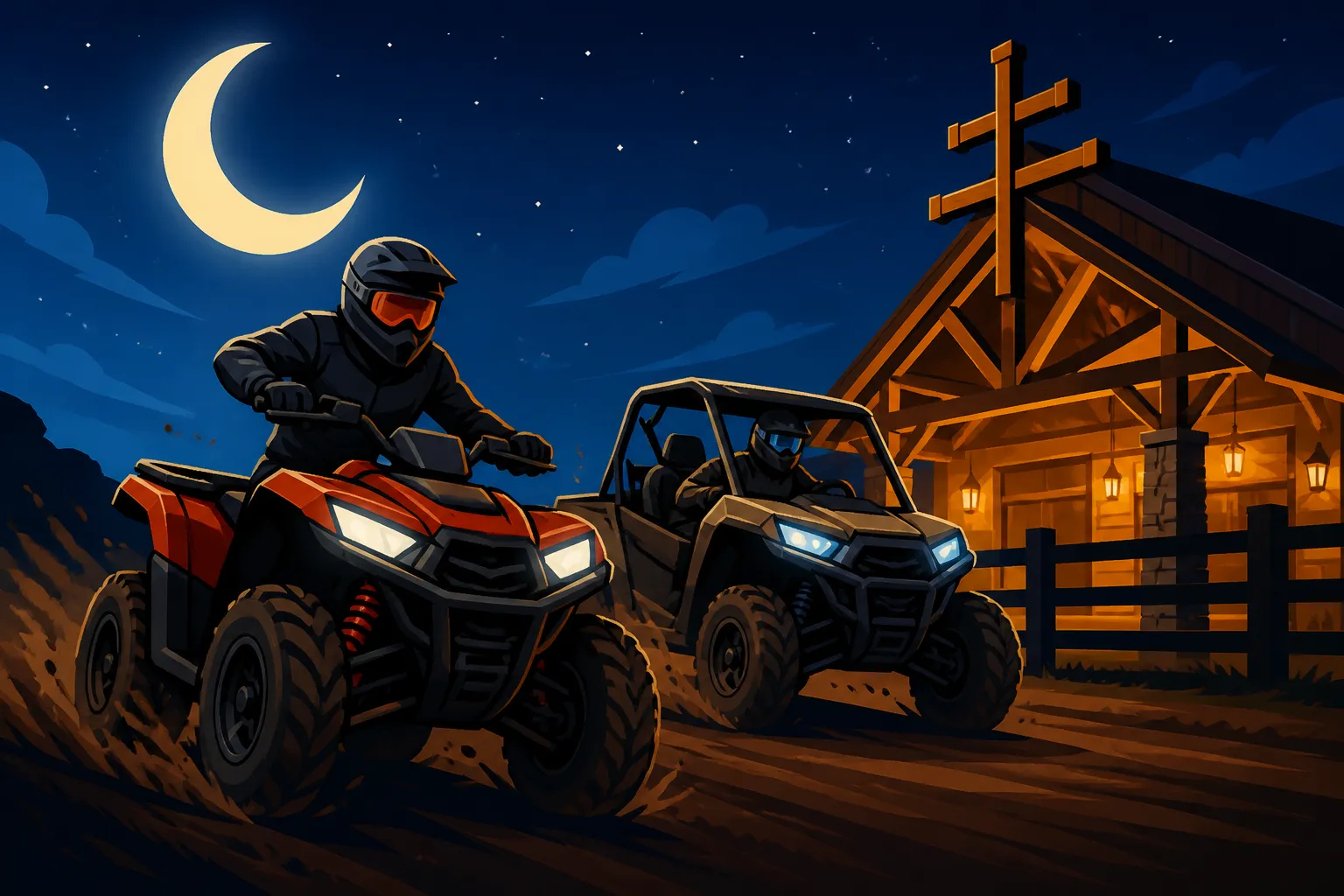
Cross Bar Ranch is an off-highway riding area near Davis, Oklahoma, and its all-night access can make it appealing for riders who want to stretch a visit beyond daylight hours. It can also change the shape of a trip: instead of racing to finish before sunset, you may be able to plan a longer ride, return to camp later, or take a break and head out again when conditions suit your group.
That flexibility is not the same as a guarantee that every trail is suitable or open at all times. A route that is straightforward in daylight can become confusing after dark, particularly if it has forks, narrow turns, uneven ground, or limited visual landmarks. Treat nighttime riding as a separate activity that needs its own route choice and preparation, not simply as daytime riding with the lights switched on.
Before unloading, check the ranch’s current instructions for access, trail use, camping, and any closures. Ask what “open all night” means for the areas you plan to use, including whether there are restrictions on certain routes or facilities. If you want a clearer picture of what a visit involves, What a Day at Cross Bar Ranch Includes can help you build a practical plan for the time you expect to spend there.
Confirm access and rules before you ride
An all-night schedule doesn’t necessarily mean the office, check-in point, or other services are staffed around the clock. Arrive with enough time to handle admission, waivers, unloading, and questions before you depend on the trails. If your group arrives late, know in advance how to check in and where to park or stage machines without blocking other visitors.
Follow the ranch’s posted rules even when the office is closed or other riders are out of sight. Those rules help keep a shared riding area usable and safer for people traveling in different directions and at different speeds. Make sure every rider in your group understands the expectations before anyone starts an engine. Cross Bar Ranch Makes Everyone Sign a Waiver is a useful reminder to take the required paperwork seriously rather than leaving it until the last minute.
For a late arrival, agree on a simple plan: who is responsible for checking the group in, where everyone will meet, and what to do if a machine needs attention. A little coordination on the ground is much easier than trying to sort it out by phone when it’s dark, noisy, and hard to find one another.
How to Plan a Safe Night Ride
Choose familiar, manageable routes
Darkness reduces how far ahead you can see and how quickly you can recognize a change in terrain. A dip, loose rock, rut, or sharp turn may be easy to spot in afternoon light but hard to read when your headlights pick it up only at the last moment. For that reason, consider starting with routes your group has already ridden during the day, and avoid turning a night outing into an exploration challenge.
Keep the group together at a pace that gives every rider time to respond. Agree on a lead rider and a last rider, and decide where you’ll regroup if someone loses sight of the machines ahead. Don’t let the faster riders disappear around a bend while newer riders are still working through a rough section. If someone wants to turn back, the group should have a clear plan for doing so safely.
A route-planning app such as onX Offroad can be useful for reviewing your intended route before you leave camp. If you use it, get familiar with the map while you still have good light and reliable connectivity. Don’t assume that a phone screen replaces a lookout, local directions, or your own judgment about whether a trail is safe to ride in the conditions you encounter.
Make lighting and visibility part of the pre-ride check
Check that the machine’s lights work before the ride, not after the group has already left camp. Test headlights and any other lights you plan to use, and bring a charged flashlight or headlamp for tasks such as checking a tire, finding gear, or helping someone reconnect a plug. A phone light can help in a pinch, but it is a poor substitute when you need both hands free.
Lights help you see, but they also help other riders notice you. Keep an appropriate following distance, especially in dust, and avoid aiming auxiliary lights in a way that makes it difficult for oncoming riders to see. If visibility becomes poor enough that you can’t confidently judge the trail or maintain separation, slow down, stop somewhere safe, and regroup rather than pressing on.
Before setting out, make sure each rider has a working way to contact the group and knows the agreed meeting point. A map downloaded in advance can be helpful if your phone loses service; onX Offroad may be one option for reviewing mapped routes, but check the app’s coverage and map details before relying on it in an unfamiliar area. In remote terrain, a paper backup or a clearly explained turnaround route can offer welcome reassurance.
| Before you leave camp | Why it matters at night |
|---|---|
| Test headlights and other lights | A failed light is harder to deal with once the group is on the trail |
| Choose a familiar route | Darkness makes turns and terrain changes harder to recognize |
| Set a lead and sweep rider | The group has a clearer way to stay together |
| Agree on a meeting point | Riders have a plan if visual contact is lost |
| Check current rules and closures | All-night access does not automatically mean every route is available |
| Carry water and basic repair supplies | A small delay can feel much longer after dark |
| Review your map before departure | It is easier to understand route choices in good light |
Preparing for Changing Trails and Camp Conditions
Rain, dust, and terrain can change the ride
Night riding is affected by more than the clock. Rain can make clay and uneven sections slick, while dry weather may leave dust hanging behind the machine in front of you. A route that seemed manageable earlier can feel very different after a storm, a busy riding period, or a change in temperature. Ask about conditions when you arrive, and be willing to adjust your route if the ground is not what you expected.
Check for closures before you set off, and don’t ride around a barrier or ignore a posted restriction simply because it is dark or the area appears quiet. Conditions and access can change, so use the ranch’s directions as the authority on where you may ride. For more general preparation, Oklahoma Trail Conditions Before You Tow and Oklahoma Trail Closures After Rain offer useful reminders to consider before making the drive.
An app can help you keep track of a planned route, but it should not be treated as proof that a trail is open. onX Offroad can be part of your navigation setup if you have checked the map and understand what it shows. Confirm route access locally and follow signs at the ranch; those steps matter more than what a screen appears to indicate.
Slow down around camp and shared roads
After a ride, the trip isn’t over when you reach camp. Riders may be walking between vehicles, trailers, and tents, and other machines may be moving through the same area. Use the posted speed limits and take extra care around people, parked equipment, and dark sections of the campground. 10 mph Through Camp and 20 mph on a Main Road point to rules worth checking and following as part of a safe visit.
Keep engine noise, headlights, and late-night activity in mind when other visitors are trying to rest. A quiet camp is easier to share when riders avoid unnecessary revving, keep conversations considerate, and plan where to park before driving through occupied areas. If you need to make a repair, choose a safe, well-lit spot and avoid leaving tools or equipment where someone could trip over them.
Good trail etiquette matters just as much at night as it does during the day. Keep to the route, give other riders room, and communicate clearly when stopping or regrouping. Oklahoma Trail Etiquette Locals Expect can help frame the kind of considerate habits that make a shared riding area more enjoyable for everyone.
A Practical Overnight Riding Plan
Build in a clear start, turnaround, and backup plan
A reliable night ride begins before sunset. While there is still light, check in, get oriented, inspect the machines, and review the route with everyone who is going. Mark a turnaround point based on the group’s experience and the time available. That way, the ride has a natural end point instead of continuing simply because nobody has said when to head back.
Keep the plan simple enough that every rider can remember it. For example, your group might agree to follow one familiar loop, stop at a known junction, and return by the same route. If anyone feels uncomfortable, the group turns back together or follows a plan everyone discussed in advance. Avoid splitting up to search for a missing rider unless you have a safe, agreed procedure and know where the person was last seen.
Make sure the person who is not riding—or someone at camp—knows where the group intends to go and when to expect you back. If the route changes, update the plan before moving on. Apps such as onX Offroad can support route review, but the group should still know its basic plan without needing to rely on a phone at every turn.
Pack for delays, not just the planned ride
A short ride can take longer than expected if a machine gets stuck, a tire loses air, or the group needs to stop and sort out navigation. Bring water, a basic first-aid kit, and tools suited to the machines in your group. Keep important items where they can be reached without unloading half a trailer in the dark.
Think through what you would do if a machine could not continue. Does someone know how to help, and can the rest of the group stay safely together? Do you have a way to contact help if needed? Cell service can be unreliable in rural areas, so don’t make a phone call your only backup. Cell Dead Zones in Southeast Oklahoma is worth considering when preparing for a ride away from dependable coverage.
Before departing, check that helmets, protective gear, and any required equipment are ready for the conditions and the riders in your group. Make sure less experienced riders know what to do if they lose sight of the person in front of them: slow down, stop somewhere safe, and use the agreed meeting plan rather than continuing to guess which way the group went. A careful plan makes all-night access more enjoyable because it removes avoidable uncertainty and gives everyone a sensible way to call the ride early.
Make the experience work for your group
An all-night riding opportunity can suit experienced riders who want extra time on familiar trails, but it may not be the best choice for every group. Young riders, first-time visitors, or anyone who is uncomfortable with limited visibility may be happier riding during daylight and using the evening for camp and recovery. There is no need to treat staying out late as a test of skill or toughness.
If your group does ride after dark, keep the outing modest on the first night. Learn how the trails feel, how dust or weather affects visibility, and how easily everyone can stay together. Then decide whether a longer ride makes sense. The best plan is one that leaves riders with enough energy and visibility to get back safely—not one that stretches the night just because the property remains open.
Disclaimer
This article is for general informational purposes only and does not constitute professional advice. Laws, prices and regulations vary by location and change over time. Consult a qualified professional for guidance on your specific situation.