Oklahoma Cabins Near a Riding Area
Finding a cabin near an Oklahoma riding area can make a weekend easier, but “nearby” does not always mean you can ride straight from the porch to a trail. This guide explains how to choose a base near Little Sahara, Robbers Cave, Cross Bar Ranch, and southeast Oklahoma riding areas, and what to confirm before booking.
Choose a cabin by the kind of riding weekend you want
Oklahoma riding destinations are spread across very different landscapes. Little Sahara is known for open sand, while the trails around Robbers Cave and Cross Bar Ranch offer wooded, hillier terrain. A cabin that works well for a dune weekend may be inconvenient for a wooded-trail trip, even if both look close on a map.
Start with the riding area, then search for cabins in the nearest practical town or campground area. Check the actual drive route, not just the distance between two map pins. A short straight-line distance can turn into a longer trip when roads, gates, trailhead entrances, or trailer access are involved.
Little Sahara and Waynoka
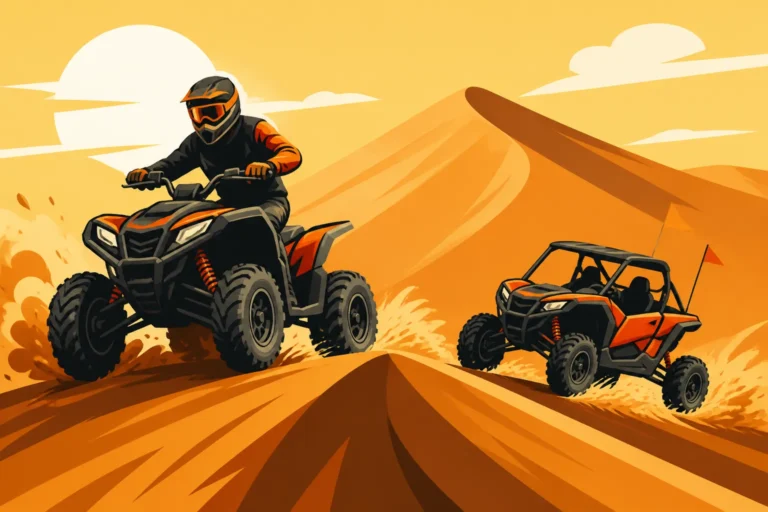
Little Sahara State Park near Waynoka is a natural choice for riders planning a sand trip. A cabin in or near Waynoka can provide a more sheltered place to sleep and a break from a full day in the dunes. Before choosing a property, ask how you will get from the cabin to the riding-area entrance and whether your trailer can be parked safely at the property.
Do not assume a cabin booking includes access to the dunes, a riding pass, or permission to operate machines on nearby roads. Those are separate details to verify. Check the riding area’s current entry procedures and rules, and ask the host whether machines can be unloaded and stored on the property. If the cabin is in town, you may need to trailer your machines to the park rather than ride them there.
A map app such as onX Offroad can help you explore roads and riding-area context while planning. Use it as a planning aid, not as proof that a particular road is open to ATVs or that private land is available for riding. For park details, see [Little Sahara State Park in Oklahoma] and [Oklahoma Trails With Sand].
Robbers Cave and the Wilburton area
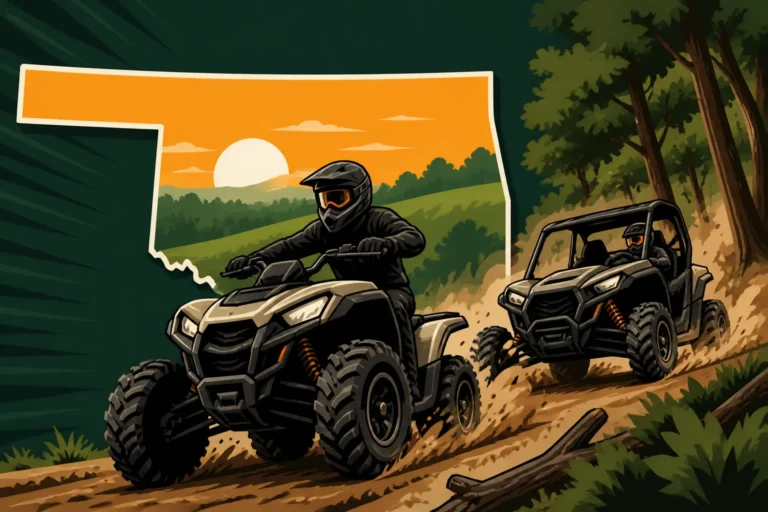
Robbers Cave State Park, near Wilburton, offers a wooded setting that suits riders looking for a different experience from the dunes. A cabin in the wider Wilburton area can put you within reach of the park, but verify the route and travel time with your trailer in mind. Some roads that are manageable in a car may feel tight or slow when you are towing.
Ask whether the cabin has enough room for your truck, trailer, and riding gear. A listing may show attractive photos of a porch or a wooded lot but say little about vehicle turnaround space, where a trailer can be left, or whether an access road is suitable for towing. If those details are unclear, get a direct answer before you commit.
Robbers Cave’s riding area has its own operating conditions, so check hours and access arrangements instead of assuming you can ride whenever you arrive. You can compare the cabin trip with [Robbers Cave OHV Area in Oklahoma] and use [Oklahoma Campgrounds next to a Riding Area] as another lodging-planning reference.
Cross Bar Ranch and southeast Oklahoma
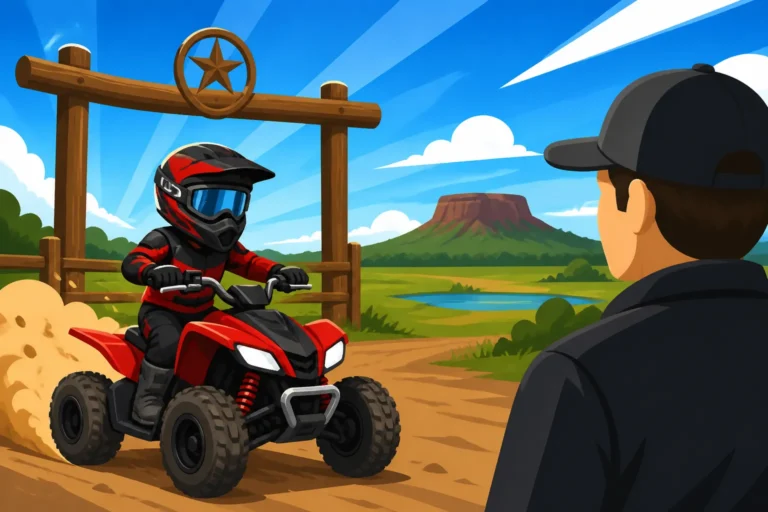
Cross Bar Ranch near Davis is another option for riders who want a private riding-area experience. A cabin in the surrounding region can work well if you are comfortable driving between lodging and the park. Confirm the address, the route, and the property’s trailer arrangements before booking, especially if your group is bringing more than one machine.
For a trip farther southeast, riders may look at areas around Honobia Creek or Three Rivers. These destinations involve different access conditions than a private ranch or state park, so lodging proximity alone does not establish that you can ride on the surrounding land. Check permit requirements, seasonal access, and designated-road restrictions before planning a route from a cabin to a riding area.
Use onX Offroad to study the general area and get a sense of road connections, but confirm access rules with the land manager or riding-area operator. A line on a map is not permission to cross private property or use a closed road. For more planning context, see [Cross Bar Ranch in Oklahoma], [Oklahoma Trails Near Broken Bow], and [Oklahoma Land Access Permits Explained].
| Riding destination | Useful lodging search area | What to confirm before booking |
|---|---|---|
| Little Sahara State Park | Waynoka and nearby communities | Route to the park, trailer parking, machine storage, and whether you must trailer to the entrance |
| Robbers Cave | Wilburton and nearby communities | Trailer access, distance to the riding entrance, operating hours, and where machines can be parked |
| Cross Bar Ranch | Davis and surrounding communities | Drive route, property rules, trailer space, and the ranch’s access procedures |
| Honobia Creek or Three Rivers | Communities in southeast Oklahoma | Seasonal access, permits, designated-road rules, and the distance to an authorized entry point |
Check the cabin details that matter to riders
A comfortable cabin is only part of a successful riding weekend. You also need a workable place for vehicles, machines, gear, and muddy or dusty equipment. Details that seem minor on a family getaway can become a real headache when you arrive after a long tow with several machines.
Trailer access and secure parking
Before booking, ask about the full vehicle setup: truck, trailer, and any extra guest vehicles. A property may have parking for a car but not enough space to turn around or leave a trailer attached. If the listing uses phrases such as “limited parking” or “narrow access,” ask what that means for your specific rig.
Get clear on where the trailer can stay while you ride. Some hosts may allow it on the property; others may require you to use a separate parking area or may not permit trailers at all. If your machines are valuable, ask whether parking is visible from the cabin, behind a gate, or otherwise secure. Do not assume “private property” means the host permits overnight storage of off-road machines.
If a cabin sits on an unpaved road, ask about its condition after rain. Oklahoma red clay can become slick, and a narrow muddy approach can be stressful with a loaded trailer. Checking [Oklahoma Trail Conditions Before You Tow] is useful for riding conditions, but ask the property host about the specific driveway and access road as well.
Machine storage, cleaning, and house rules
Ask where machines can be parked and whether they may be stored under a roof. A covered carport can protect equipment from sun and rain, but the host may not allow muddy machines near the house or on a paved patio. Get permission in advance rather than negotiating after you arrive.
Clarify the cabin’s rules about washing machines, changing oil, fueling, and storing gasoline. A host may prohibit maintenance work or fuel containers inside the cabin for safety reasons. Bring a tarp or portable mat if you expect muddy boots and gear, and plan to haul dirty equipment home if no wash station is available.
Also check occupancy limits, quiet hours, pet rules, and any cleaning expectations. A group of riders may arrive with helmets, boots, coolers, and wet gear that take up more space than a typical weekend bag. Look at sleeping arrangements realistically, especially if some people need a quieter room after a long day outside.
Distance, route, and arrival timing
Map the route from the cabin to the actual riding entrance, not just to the park’s general location. Confirm whether the route involves paved roads, gravel, a gate, or a check-in point. Your travel time can vary with towing, weather, and traffic, so leave a buffer rather than planning to arrive at the last minute.
Ask the host about check-in timing if you expect to arrive after dark. Late arrivals are harder when you need to back a trailer into a tight space or locate a cabin along an unlit road. Save the address and arrival instructions before you leave home, and download offline navigation if you expect weak cell service. onX Offroad can be helpful for offline trip planning in areas where reception is unreliable, but keep the host’s directions and official riding-area information available too.
Compare cabins with camping and other lodging
A cabin is not automatically the best option for every riding group. It can be a welcome break from tent setup, especially in bad weather or after a dusty day, but it may add a daily drive and tighter rules for equipment. Compare the whole trip, including parking, access, cooking, and recovery time after riding.
Cabin versus campground
A cabin generally offers a more enclosed place to sleep and may make it easier to rest, shower, or keep belongings out of the weather. That can matter for families, mixed-age groups, or riders planning several days outside. The tradeoff is that cabins may be farther from the riding entrance, and hosts can have restrictions on trailers, machine storage, pets, or outdoor gear.
Camping can put you closer to the activity and make it easier to stay with a group, but amenities vary. Check whether the campground has the facilities your group needs and whether its rules allow the machines and trailers you are bringing. Compare [Oklahoma Trails With Camping] and [Oklahoma Riding Areas With RV Hookups] if you are considering a tent or RV instead.
Do not compare only the nightly lodging cost. Include the extra drive, fuel, entry arrangements, and any separate camping or riding fees. A cabin that looks more expensive at first may suit a group sharing the space, while a campsite may be more convenient for riders who want to stay close to the trailhead.
Match the lodging to your group
For a family, prioritize sleeping arrangements, bathroom access, a safe place for children to move around, and a route that does not require a long drive after a tiring day. For a group of friends, trailer parking and clear machine rules may matter more than a large kitchen or scenic view. For a couple, a small cabin may be comfortable, but confirm whether it can accommodate riding gear and wet clothing.
If several people are traveling with different machines, agree on the lodging plan before anyone pays a deposit. One person may expect to ride from the property while another assumes machines will be trailered. Sorting that out early prevents awkward conversations with the host and helps you choose a place that fits the group’s actual needs.
A cabin can also be a good base for a longer trip that includes more than one activity. If you plan to ride on different days or visit more than one area, compare drive times and confirm that your machine access is permitted at each destination. [Oklahoma Weekend Riding Itineraries] can help you think through how to pace a trip rather than overloading one day.
Plan the booking and riding details before you leave
The easiest way to avoid a disappointing cabin stay is to turn vague assumptions into specific answers. Send the host a short message with your arrival time, vehicle and trailer setup, number of machines, and storage needs. Then confirm riding-area access separately with the park, land manager, or operator.
Questions to ask the host
Before booking, ask whether the driveway can accommodate your truck and trailer, where the trailer may be parked, and whether machines can be stored overnight. Ask whether outdoor washing or maintenance is allowed, whether there are quiet hours, and whether the property has any rules about fuel or equipment.
Get the exact property location and arrival instructions. Ask whether the road is paved or maintained, whether a gate code is required, and what to do if you arrive after dark. If your group has more vehicles than the cabin sleeps, confirm that extra parking is allowed.
A useful message is direct: “We are bringing a truck, a trailer, and two off-road machines. Can we park the full setup at the property, and may the machines stay there overnight?” That gives the host enough information to answer clearly. Save the response so your group has the same expectations.
Questions to ask the riding area
Confirm the riding area’s current access rules, operating schedule, entry process, and any permit or fee requirements. Ask whether the trail system allows your type of machine and whether a reservation is needed. These details can differ between a state park, private riding park, and public-land area.
Check whether the riding area permits overnight parking or camping if that is part of your backup plan. Do not assume a cabin reservation includes riding privileges, or that a state park camping pass covers every separate riding fee. For related trip planning, see [Oklahoma OHV Camping With Trail Access] and [Oklahoma Riding Areas With Showers].
Review weather and trail conditions close to departure. Heavy rain can change access on dirt roads and trails, while dry, windy conditions can make sand and dust more challenging. onX Offroad can help you organize a route and save map information, but use official notices and the riding area’s instructions to confirm closures and permitted access.
Pack for the cabin and the trail separately
Pack riding essentials where you can reach them without unpacking the entire trailer: helmets, protective gear, water, first-aid supplies, tools, and any required permits or registration documents. Keep cabin items—bedding, food, towels, and chargers—in separate bags so they do not get mixed with dusty riding equipment.
Bring a plan for dirty boots and damp clothing. A plastic tote, washable mat, and spare bags can keep sand and mud from spreading through the cabin. If the host does not allow machine washing or repairs on site, identify a suitable alternative before you travel.
Finally, share the address, check-in instructions, riding-area details, and meeting plan with everyone in your group. Rural cell service can be limited, so save directions and important contact information in advance. A little preparation makes it easier to spend your time riding rather than sorting out parking, access, or lodging surprises.
Disclaimer
This article is for general informational purposes only and does not constitute professional advice. Laws, prices and regulations vary by location and change over time. Consult a qualified professional for guidance on your specific situation.