Oklahoma Riding Areas With Wash Stations
A muddy quad or side-by-side can turn the drive home into a cleanup job: grit gets into the trailer, clay dries on the machine, and a quick rinse may not be available where you ride. This guide explains how to find and verify wash stations at Oklahoma riding areas, what to ask before you go, and how to clean your machine without making a bigger mess.
What to check before counting on a wash station
A riding area may have water nearby without having a place—or permission—for you to wash an ATV or UTV. A campground spigot, restroom sink, or drinking-water tap is not the same thing as a designated vehicle wash station. Before planning your trip around a post-ride rinse, confirm what the facility actually provides and whether riders are allowed to use it for machines.
Confirm what “wash station” means at that property
Ask the park or campground whether it has a designated wash area for off-road machines. Then clarify the practical details: Is there a hose or only a water source? Is the wash area open to day riders as well as campers? Do you need to bring your own hose, nozzle, or power washer? Are there rules about where wastewater can run?
It is also worth asking whether the washing area is usable after rain or during busy weekends. A facility can exist but still be inconvenient if it is far from the riding area, closed when the office is unattended, or shared by many returning riders. If you are riding with a group, ask whether there is room to line up machines without blocking traffic or campsite access.
Do not assume a wash station is included just because a riding area has camping, showers, or RV hookups. Those amenities serve different purposes, and water use may be restricted. If the answer is unclear, plan to do a basic field cleanup and wash the machine at home or at a suitable commercial wash facility afterward.
Verify details for the specific riding area
Oklahoma riding areas vary widely. A public recreation area, a private off-road park, and timberland open under particular access rules may have very different facilities. Start with the property’s own visitor information, then contact the office or manager directly before loading up. The guide to [Oklahoma ATV Trails: Where to Ride] can help you compare destinations, but amenities should be checked with the individual property.
For example, riders heading toward Waynoka may be focused on sand, while a trip near Wilburton or Davis could involve wooded or rocky terrain. Little Sahara State Park, Robbers Cave, and Cross Bar Ranch are distinct destinations with their own rules and facilities. Do not treat one park’s wash arrangements as a guide to another’s. See [Little Sahara State Park in Oklahoma], [Robbers Cave OHV Area in Oklahoma], and [Cross Bar Ranch in Oklahoma] when deciding which kind of riding trip suits your group.
A useful way to check is to make a short call or send a message with a few specific questions:
- Is there a designated ATV or UTV wash station?
- Is it available to day-use visitors, overnight guests, or both?
- What equipment should riders bring?
- Are there restrictions on power washing, soaps, or water use?
- Where does wash water drain?
- Is the area accessible when the office is closed?
Writing down the answers can prevent the frustrating situation of arriving with a muddy machine and discovering that the only nearby water source is not intended for washing vehicles.
Use maps to plan, but confirm amenities separately
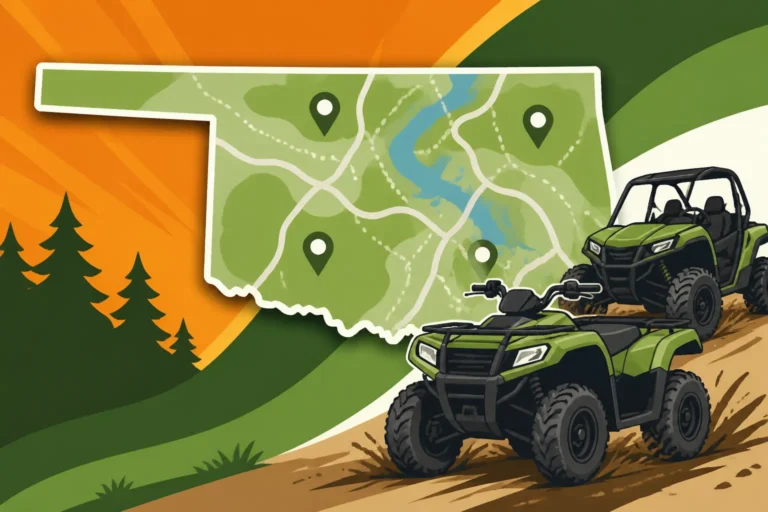
Mapping tools can help you understand where a riding area, campground, fuel stop, or nearby town sits in relation to your route. onX Offroad can be useful for organizing an off-road trip and reviewing mapped routes and access information, but a map should not be treated as proof that a wash station is open or available. Facility details can change, so confirm directly with the property.
That distinction matters when you are towing from Tulsa, Oklahoma City, or farther away. A map may make a destination look close to a town, but the route back to a suitable wash location could take longer than expected, especially with a trailer. Use onX Offroad for route planning if it fits your setup, then contact the riding area to verify amenities and any access restrictions.
| Trip detail | What to verify | Why it matters |
|---|---|---|
| Wash location | Whether a vehicle wash area is actually provided | A water tap or campground shower may not be for machine washing |
| Eligibility | Whether day riders, campers, or both can use it | Access rules may differ by visitor type |
| Equipment | Hose, nozzle, power washer, or personal supplies | Helps you pack appropriately |
| Water and runoff | Any limits on water use, detergent, or drainage | Prevents damage and avoids violating property rules |
| Hours and access | Whether the area is open when you expect to return | A station may not be available after office hours |
| Backup plan | A safe place to remove loose debris or wash later | Keeps mud and grit from coating your trailer |
Match your cleanup plan to Oklahoma terrain
The kind of cleanup you need depends on where you ride. Loose sand, fine dust, sticky red clay, and wet leaves behave differently on a machine. A sensible plan starts before the first ride: know what is likely to collect around the tires, guards, radiator, and suspension, then bring the tools to remove it safely.
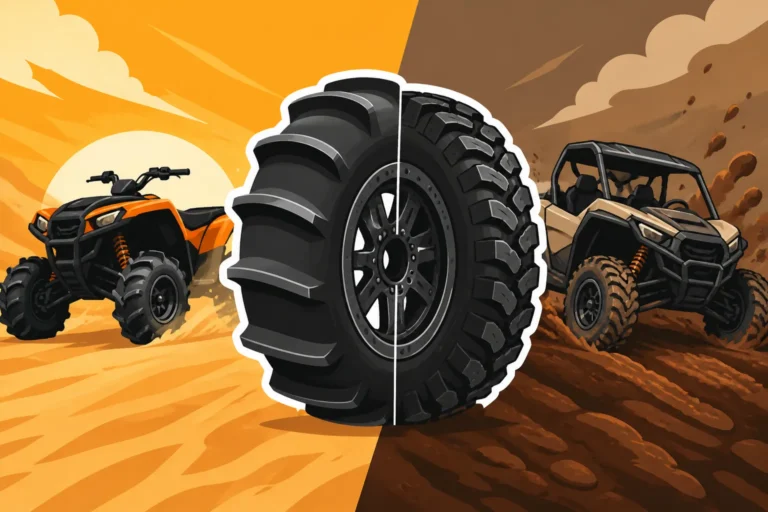
Sand and dust need a different approach from mud
At a sandy destination such as Little Sahara, sand can work into places that are easy to overlook, including underbody panels, footwells, seat seams, and moving parts. A strong blast of water is not always the best first step. Begin by letting loose material fall away, then use a soft brush or low-pressure air where appropriate. Avoid forcing grit deeper into seals, electrical connections, bearings, or the radiator.
Fine dust is especially easy to spread around a campsite or trailer. If you have access to a designated wash area, follow its instructions and try to contain the mess rather than rinsing dirt toward neighboring sites. If there is no approved place to wash, remove loose material with a brush and do a more complete clean later. The article [Washing Dune Sand Out After a Weekend] offers additional guidance for dealing with sand after a ride.
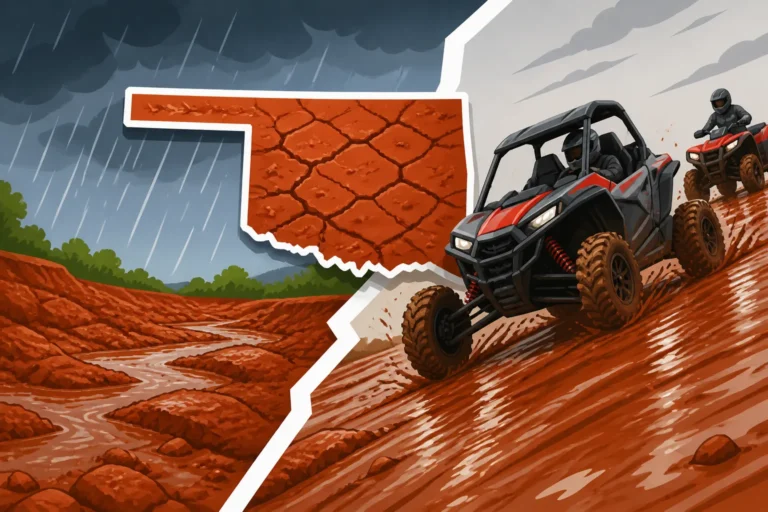
Do not assume that a muddy-looking machine needs the same treatment as a sandy one. Sand may fall away when dry, while wet clay can cling to the frame and pack around components. The best cleanup is the one that removes the material without damaging the machine or creating runoff where it is not allowed.
Clay and wooded trails call for patience
In wooded areas and after wet weather, clay can build up in wheel wells, around suspension parts, and beneath the chassis. A rinse may remove the visible layer while leaving packed mud in less obvious spots. Let heavy mud soften if necessary, then work carefully with a plastic scraper or brush that will not gouge painted or coated surfaces.
Mud packed around the radiator deserves attention because it can limit airflow. Use the cleaning method recommended for your machine, and avoid directing high pressure at delicate fins or electrical parts. If you are unsure about the right pressure or cleaning products, check the owner’s manual rather than relying on a generic wash routine.
Oklahoma weather can change the trail surface quickly. A route that was dusty earlier in the week may be slick after rain, and a machine that looks clean from the side can still carry heavy clay underneath. Check [Oklahoma Trail Conditions Before You Tow] before leaving, and review [Oklahoma Trail Closures After Rain] when wet weather could affect access. If the property asks riders not to wash machines on-site, respect that request even if the machine is heavily coated.
Protect the trailer and the ride home
A few minutes of cleanup before loading can save a lot of work later. Knock loose mud from tires and footwells, remove branches or grass caught under the machine, and check that nothing is hanging near the trailer ramp. Keep a stiff brush, gloves, a small scraper, and a ground tarp in your tow vehicle. These items will not replace a proper wash, but they can prevent a layer of grit from being ground into the trailer floor.
If you are transporting more than one machine, clean them in a consistent order. For example, brush the first machine before loading it, then inspect the trailer floor before bringing the next one aboard. This is easier than trying to sweep out a trailer after several muddy machines have been strapped down.
For longer trips, plan a realistic wash stop rather than assuming you will find one beside the trail. onX Offroad may help you organize the route and identify nearby communities, but call any wash business or facility directly to confirm that it accepts off-road machines and trailers. Keep a backup plan in mind in case the location is closed or unsuitable.
Build a practical wash plan for your trip
A wash plan does not need to be complicated. It should answer three questions: what will collect on the machine, where you are allowed to clean it, and what you will do if the expected facility is unavailable. Answering those questions before departure can make the end of a riding day feel far less rushed.
Pack for a basic trail-side cleanup
Your kit should match the trip rather than trying to recreate a full service bay. A few useful items include:
- A stiff brush for dry dirt and loose debris
- A plastic scraper for stubborn mud
- Work gloves and a small trash bag for debris
- A towel or absorbent cloth for drying accessible areas
- A compact flashlight for checking underneath the machine
- A tarp or removable floor covering for muddy gear and tools
If the property confirms that it has a wash station, ask whether you need to bring a hose or other equipment. Do not bring cleaning chemicals unless the property allows them and you know they are suitable for your machine. A product that is safe for one surface can damage another, and runoff may be a concern even when a wash area is available.
For riders who camp, it can help to separate clean and dirty gear. Store muddy gloves, boots, and straps in a washable container rather than dropping them into the same tote as dry clothes. If you are staying overnight, check [Oklahoma OHV Camping With Trail Access] and [Oklahoma Riding Areas With RV Hookups] while comparing destinations, but confirm wash arrangements separately. Camping or hookups do not automatically mean machine washing is permitted.
Ask the right questions when choosing a destination
Wash facilities may influence which park is most convenient, but they should not be the only factor. Think about the group’s riding experience, machine type, trail difficulty, camping needs, and the amount of towing involved. A convenient wash area does not make a route appropriate for every rider or every vehicle.
When comparing options, ask the property about trail access for your machine and any limits on where different vehicle types can ride. Check whether a UTV is allowed on the routes you plan to use, and whether the riding area has operating rules for guests, trailers, or camping. If you are traveling with children or a mixed group of quads and side-by-sides, clarify those details before the trip.
Use onX Offroad or another planning tool to prepare your route, but keep direct confirmation in the process. A mapping app can help with trip organization; the park office or land manager is the right place to verify whether a wash station exists, what it is for, and what rules apply. That small extra check can spare you a long drive with a trailer full of mud and no practical place to clean up.
Follow a simple arrival-to-departure routine
Before riding, identify the property’s cleaning rules and locate any designated wash area. Keep your cleaning tools accessible rather than buried under camping gear. If the park asks riders to clean only in a particular spot, make that part of your end-of-day routine.
After riding, inspect the machine before loading. Remove branches and loose debris, check for packed mud around the radiator and suspension, and clean only where permitted. If the station is busy, avoid blocking access while you wait. If the facility is closed or unavailable, do a dry cleanup that will not spread debris across the site, secure the machine, and plan to wash it later at an appropriate location.
Finally, check your trailer and tie-downs before getting on the road. Mud can collect around ramps, straps, and trailer corners, while wet equipment can make surfaces slippery. A quick inspection helps keep the trip home safer and makes unloading at your house or storage area easier.
Choosing Oklahoma riding areas with cleanup in mind
The most reliable way to find an Oklahoma riding area with a wash station is to treat the amenity as something to verify—not something to assume. Start with the terrain and access that suit your group, compare nearby camping and travel options, and then contact the property about vehicle washing specifically. That approach works whether you are headed toward the dunes near Waynoka, wooded trails in the southeast, or a private off-road park.
It also helps to think about what you mean by “wash station.” If you need a full rinse after deep mud, ask about water, pressure, drainage, and operating hours. If you mainly want to keep sand and dust out of your trailer, a brush and a designated cleanup spot may be enough. The right answer depends on the machine, the terrain, and the property’s rules.
For broader trip planning, browse [Oklahoma Trail Etiquette Locals Expect] and [Oklahoma Trails With Camping] alongside facility information. Then confirm the details directly before departure. A short conversation with the park can tell you whether to pack a hose, plan a post-ride wash elsewhere, or choose a destination that better fits your cleanup needs.
Disclaimer
This article is for general informational purposes only and does not constitute professional advice. Laws, prices and regulations vary by location and change over time. Consult a qualified professional for guidance on your specific situation.