Oklahoma Riding With a Group of Ten
A ten-person ATV or UTV ride can be a great day out—or a slow-moving tangle of trailers, missed turns, and people wondering where everyone went. The difference usually comes down to planning for the group’s pace, machines, and chosen riding area. This guide walks through how to organize a safer, smoother Oklahoma group ride from the first planning conversation to the final headcount.
Choose an Oklahoma riding area that fits the whole group
Match the riding area to your machines and experience
Before settling on a destination, find out what kind of ride the group actually wants. A family outing with newer riders may call for a different setting than a day of dune riding or a more technical trail loop. Also confirm that the area allows every type of machine in your group. A plan built around a narrow trail can fall apart if someone brings a side-by-side that cannot use it.
Oklahoma offers a range of riding settings, from the sand at Little Sahara State Park near Waynoka to the wooded, uneven terrain around Robbers Cave State Park and Cross Bar Ranch near Davis. Those examples are not interchangeable. Sand riding can call for different equipment and riding habits than rocky or wooded trails, while trail width and surface can affect whether a side-by-side can follow the route. Check the rules for your chosen area and compare them with the group’s machines before anyone hooks up a trailer. [Oklahoma Trails That Allow Side-by-Sides]
Be candid about ability, too. If one rider is new, or a machine is unfamiliar to its owner, choose a route and pace that leave room for learning. A ten-person ride should not depend on the least experienced person pretending to be comfortable. Ask everyone what they can manage, whether they have ridden similar terrain, and whether they are prepared to turn back if a route becomes too difficult.
Check access, conditions, and practical details
A riding area’s general reputation is not a substitute for checking its current access information. Before leaving home, confirm the area is open, learn how it handles entry and parking, and ask about rules that apply to your machines or group. Conditions can change after rain, and a road or trail that looked straightforward on a map may be muddy, rutted, or temporarily closed. [Oklahoma Trail Conditions Before You Tow] and [Oklahoma Trail Closures After Rain] are useful topics to review when you are choosing a date and route.
Think through the less glamorous logistics as well: where the convoy can park, whether there is room for multiple trailers, where people can regroup, and what facilities are available. If your group plans to camp, check the site’s camping arrangements rather than assuming that a nearby riding area has suitable space for ten people. [Oklahoma Trails With Camping]
A quick call or message to the riding area can clear up details that are easy to overlook. Ask whether there are restrictions on group size, parking, trail access, or operating hours, and whether rules differ for particular sections. Keep a note of the answers and share them with the group so everyone hears the same plan. For a more complete pre-trip checklist, see [Questions to Ask the Park Office Before You Go].
Plan the group so ten riders can move together
Decide whether to ride as one group or smaller pods
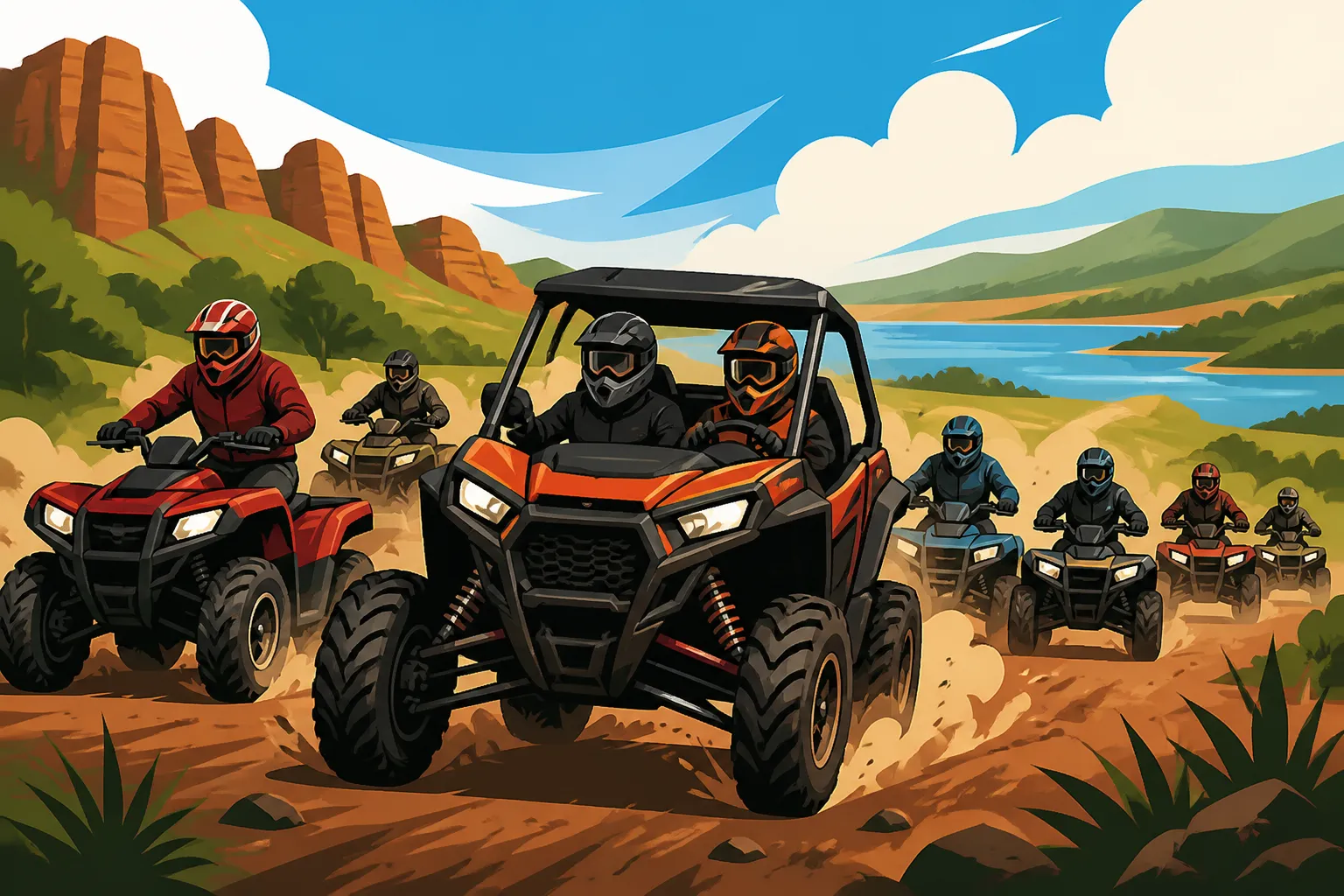
Ten people do not always need to travel as one long line. On a broad, familiar route, the group may be able to stay together while maintaining comfortable space between machines. On narrower trails, in busy areas, or where visibility is limited, smaller pods can make it easier to keep a steady pace without crowding riders or blocking others.
A simple arrangement is to divide the group into two smaller pods, each with a designated lead and sweep rider. The lead knows the intended route; the sweep stays behind the last machine and makes sure no one is left behind. Agree on regrouping points before departure, such as a signed junction or a broad, safe place to pull over. Do not rely on a rider noticing that someone has fallen behind only after the group has traveled a long distance.
Choose the structure based on the area’s rules and conditions, not just convenience. Some places may have specific expectations for organized rides or group use, so check before splitting into separate units. If the group does divide, make sure every rider knows which pod they belong to and how to contact the other group. A smaller pod should not quietly take a different route without informing the other riders.
Agree on communication and riding etiquette
Before starting, explain how the group will handle stops, turns, and unexpected delays. A rider who needs to pull over should signal when safe to do so; the riders behind should avoid passing unless the trail and local rules make it appropriate. At a junction, the lead can pause somewhere that does not block traffic and confirm the route. If a machine has a problem, the group should stop in a safe location and make a plan rather than gathering across the trail.
Set expectations about passing, dust, following distance, and noise. Even friends can have different ideas about how quickly to ride or how close to follow. Discussing those expectations at the trailhead is less awkward than correcting someone after a near miss. Leave room for other riders, yield or pass according to posted rules and conditions, and avoid stopping where an approaching machine cannot see the group. [Oklahoma Trail Etiquette Locals Expect]
For a ten-person outing, a few agreed signals can help when engines make conversation difficult. Keep them simple and review them before moving. Make sure the lead and sweep know who is responsible for checking that everyone has regrouped. If a rider becomes separated, the group should follow the plan rather than sending several machines off in different directions.
| Planning decision | Why it matters for a group of ten | What to agree on |
|---|---|---|
| Group size on the trail | A long line can stretch out and make turns harder to coordinate | Whether to ride together or in smaller pods |
| Lead and sweep riders | Helps keep the route clear and reduces the chance of leaving someone behind | Who leads, who rides last, and how they communicate |
| Regrouping points | Gives riders a predictable place to stop and count the group | Where to wait at junctions or after a delay |
| Machine and route fit | Not every route suits every machine or skill level | Which machines are coming and what terrain is appropriate |
| Emergency plan | Breakdowns and injuries are harder to manage without a shared plan | Who carries supplies and what to do if someone separates |
Prepare navigation, supplies, and backup plans
Make sure everyone can follow the route
The route should be known to more than the person in front. Share the destination and planned loop with the group, point out major junctions, and make sure riders understand where the meeting points are. If you use a navigation app such as onX Offroad, review the route before the ride and make sure everyone knows how to identify the correct trail or junction. The app can be one part of the plan, but it should not be the only plan.
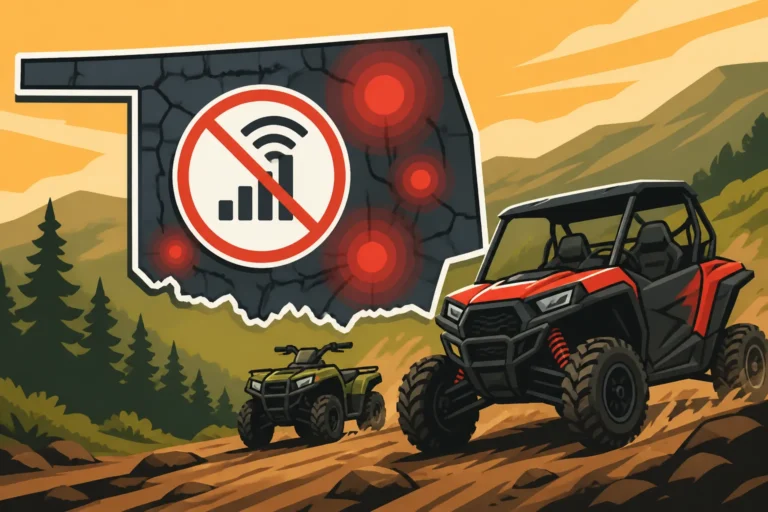
Cell reception can be unreliable in some parts of southeast Oklahoma and in wooded or remote riding areas. Do not assume that a phone will load a map or send a message everywhere you go. Before departing, check the map coverage and download any offline information you expect to need. Carrying a paper map or keeping a written route note gives the group another option if a phone runs low on power or loses service. [Cell Dead Zones in Southeast Oklahoma] and [Carrying a Paper Map Where GPS Fails]
If different riders use different navigation tools, agree on one route as the reference. It is easy for two apps to display routes differently or for someone to mistake a nearby track for the planned trail. onX Offroad may help riders review and follow a route, but the lead should still pay attention to posted signs, closures, and the terrain in front of the group. A digital track does not override an area’s rules or make an unsafe trail suitable.
Carry essentials and set a realistic turnaround plan
With ten riders, small inconveniences can become group-wide delays. Ask each person to bring water, weather-appropriate clothing, personal medication, and any basic supplies they normally need for a day outdoors. Agree on who is carrying first aid equipment and who has tools or recovery gear suited to the machines and terrain. Do not assume that one person’s supplies will be enough for every possible problem.
Plan for the trip home, not only the ride itself. Confirm that machines are secured properly, trailers are ready, and drivers know where the group will meet after the ride. Set a turnaround time that allows for loading, cleanup, and the drive back. If the route is taking longer than expected, shortening the ride is often better than pushing on because the group had hoped to complete a particular loop.
Have a basic plan for a breakdown or separation. Decide where the rest of the group will wait, who will stay with the rider who needs help, and how the two pods will communicate if they are apart. Keep the plan realistic: sending several people to search without agreeing on a meeting point can create a second separation. A short conversation at the start can prevent a lot of confusion later.
Keep the day flexible and respectful
Give the ride a simple structure
A useful group plan does not need to be complicated. Before departure, confirm the riding area, machines, route, group assignments, communication plan, and estimated return time. At the trailhead, do a quick headcount and check that everyone understands the plan. During the ride, pause at agreed points and count again before moving on.
If conditions or the group’s comfort level change, adapt. A route that feels easy for the lead rider may be difficult for someone on a different machine or with less experience. Mud, dust, heat, fatigue, or a mechanical issue can also change the day. Let the group know that turning around or choosing an easier route is a valid decision, not a failure to finish.
That flexibility matters especially when a group includes mixed experience levels. One rider may be eager to push farther, while another is already tired or concerned about the terrain. Agree beforehand that anyone can raise a concern and that the group will stop to discuss it. This keeps a personal safety concern from becoming a rushed decision made while everyone is separated on the trail.
Respect the riding area and other users
A group of ten is noticeable, so its conduct affects more than its own day. Follow posted rules, stay on routes that are open to your machines, and avoid blocking trail access when stopping. Keep the group’s noise and speed appropriate for the area, and give other visitors room to pass. Pack out trash and leave campsites or staging areas as you found them.
If you are organizing the outing for friends, make sure each person knows the rules rather than assuming the lead rider will handle everything. Share any park-specific instructions before arrival, and do not treat a familiar route as permission to ride wherever the group wants. Regulations and access arrangements can differ from one area to another. [Oklahoma Group Ride Planning]
Finally, close the loop after the ride. Confirm that everyone is accounted for, machines are loaded safely, and nobody is leaving behind essential gear or trash. If a route was closed, unusually difficult, or in poor condition, share that information with the appropriate riding-area staff or other riders through suitable channels. A little consideration on a busy day helps keep the area enjoyable for the next group, too.
Disclaimer
This article is for general informational purposes only and does not constitute professional advice. Laws, prices and regulations vary by location and change over time. Consult a qualified professional for guidance on your specific situation.