Oklahoma Riding Areas That Rent Machines
Renting an ATV or UTV can save you from towing a machine across Oklahoma, but finding a rental that matches your riding area, experience, and group size takes planning. This guide explains where to start looking, what to confirm before booking, and how to avoid arriving at a trailhead with a reservation but no suitable machine.
Where to look for ATV and UTV rentals in Oklahoma
In Oklahoma, a riding area and a rental provider may be separate businesses. A park might offer trails and camping without maintaining a fleet of machines, while an independent outfitter nearby may handle rentals, safety instructions, and sometimes delivery. Confirm who supplies the machine and who is responsible for getting it to the riding area before you build your trip around a booking.
| Riding destination | Terrain and riding style | Rental planning |
|---|---|---|
| Little Sahara State Park near Waynoka | Open sand and dunes | Start by checking rental providers in the Waynoka area and ask whether the machine can be used in the park |
| Cross Bar Ranch near Davis | Varied, hilly off-road terrain | Contact the ranch and nearby providers to confirm availability, machine types, and trail access |
| Robbers Cave OHV Area near Wilburton | Wooded, rocky terrain | Verify whether rentals are available nearby and whether the machine is permitted in the riding area |
| Honobia Creek and Three Rivers areas in southeast Oklahoma | Large timberland areas with specific access conditions | Confirm current access requirements first; do not assume a rental provider can arrange entry |
This is a starting list, not a promise that a rental counter operates at each site. Inventory, operating arrangements, and access rules can change. For a wider look at destinations and the practicalities of renting, see [Oklahoma Riding Areas That Rent Machines].
Little Sahara is a natural place to start a rental search
Little Sahara State Park, near Waynoka in northwest Oklahoma, is known for sand riding. That makes it an appealing destination for visitors who want a full day of off-road riding without bringing a machine from home. It also means the rental questions matter: the sand can be demanding on both riders and equipment, and a machine that is suitable for a compact trail may not be the right choice for dunes.
Look for rental providers in or around Waynoka, then ask specifically whether the rental is approved for use at Little Sahara. A rental business may have its own pickup location, riding boundaries, and return requirements. The park itself and the rental provider are not necessarily the same operation, so clarify where you collect the machine, where you may ride, and whether any park entry arrangements are separate. For a destination overview, read [Little Sahara State Park in Oklahoma].
Before booking, describe your group honestly. A first-time rider, a family with children, and an experienced dune rider may need different machine types and instructions. Ask whether the provider has youth-sized machines, passenger-capable UTVs, or only adult single-rider ATVs. Also ask whether the rental includes required safety equipment or whether you need to bring your own. For terrain and destination comparisons, [Oklahoma Trails With Sand] can help you decide whether a dune day fits your group.
Check rental availability around Cross Bar Ranch and Robbers Cave
Cross Bar Ranch, near Davis, is another destination worth checking when you want an organized off-road riding area. The terrain differs from the open dunes at Little Sahara, so don’t assume the same machine setup will suit both trips. Ask about the kind of routes the rental machine can handle, whether the provider has experience with the ranch, and whether your planned riding area is open to that vehicle type. Learn more about the destination in [Cross Bar Ranch in Oklahoma].
Robbers Cave OHV Area, near Wilburton, offers a different kind of outing, with wooded and hilly terrain. If you are traveling without your own machine, call ahead rather than assuming rentals will be waiting at the entrance. Ask local providers whether they rent machines for use at the OHV area, how pickup and return work, and whether the rental is permitted on the trails you plan to ride. You can get a sense of the destination from [Robbers Cave OHV Area in Oklahoma].
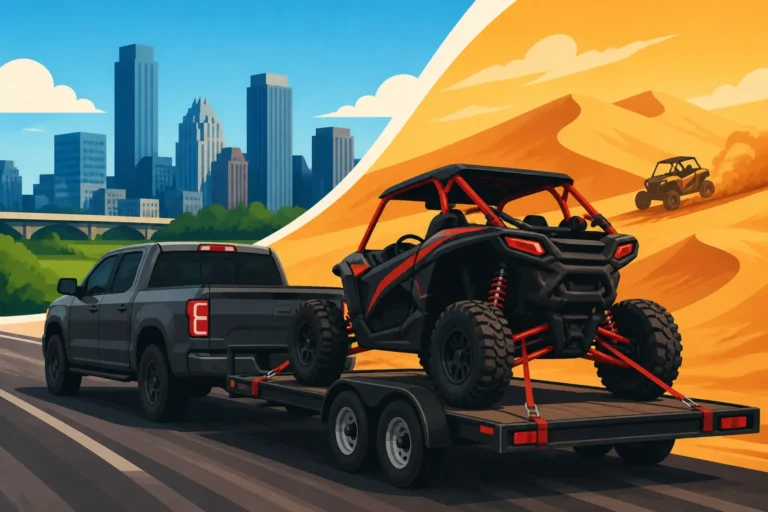
For either destination, pin down the practical details before paying or making a long drive. Ask for the provider’s exact pickup address, the required arrival time, what identification or paperwork the driver needs, and what happens if weather affects the ride. Confirm whether you must transport the machine yourself or whether delivery is available. Some rental arrangements require you to haul the vehicle to the riding area, which can make a trailer, hitch, and tow-capable vehicle part of the plan.
Match the rental to your riders and the terrain
Choosing a rental is about more than deciding between an ATV and a UTV. Think through who will drive, whether anyone needs a passenger seat, how familiar the group is with off-road riding, and what sort of terrain you will encounter. A machine that looks powerful in a listing may be uncomfortable or difficult to manage for a beginner.
Decide between an ATV and a UTV
An ATV is generally a single-rider machine, so it can work well for an individual who wants a more direct riding experience. A UTV, often called a side-by-side, has seats and seat belts, making it a possible option for a couple, a family, or a group that prefers to ride together. But a UTV is not automatically the right choice for every trail. Some routes may have restrictions, narrow sections, or conditions that make a larger vehicle unsuitable.
Ask the rental provider how many people the machine is designed to carry. Don’t treat a cargo bed or rear rack as a passenger seat. If you want to bring a child or another passenger, confirm that the rental is built and approved for that use, and ask what protective gear is expected. For more on the difference in trail access, see [Oklahoma Trails That Allow Side-by-Sides].
Also ask about controls and any required orientation. A novice may benefit from a provider who takes time to explain starting, stopping, shifting, braking, and what to do if the machine gets stuck. If your group includes riders with very different experience levels, ask whether the provider offers machines with different power or handling characteristics rather than assuming everyone should use the same model.
Tell the provider what kind of riding you plan to do
Describe your destination and your experience level when requesting a rental. “We’re going riding” does not give the provider enough information to recommend a machine. Explain whether you expect to ride sand, wooded routes, hills, or a mix of terrain, and whether you are planning a short beginner outing or a longer day. This is especially important if your group has not ridden off-road before.
Ask what is included in the rental and what you need to bring. Protective gear, fuel, a trailer, a recovery strap, or other equipment may not be part of the booking. Find out how the machine is fueled, what condition it should be in when returned, and whether you are expected to clean it. For sand or dusty routes, ask what the provider recommends for post-ride care and whether any operating instructions are specific to that machine.
Before departure, take a few minutes to inspect the rental. Note visible damage, check that the machine starts and stops as expected, and make sure the controls and safety equipment are accounted for. Photograph existing marks with the provider’s permission and ask how to report a mechanical issue or damage during the ride. That small bit of preparation can make a frustrating disagreement easier to avoid later.
Plan the trip beyond the rental booking
A machine reservation is only one part of an Oklahoma riding trip. You also need to check that the destination is open to your type of vehicle, understand any entry or permit requirements, and plan for weather, fuel, parking, and communications. These details are easy to overlook when the exciting part is choosing the machine.
Confirm trail access, rules, and conditions
Ask both the rental provider and the riding area whether the machine can be used where you plan to ride. A provider’s permission to rent a vehicle does not, by itself, establish that every trail or public area allows that vehicle. Confirm current access rules, any required permits, operating hours, and restrictions on passengers. For public or managed land, be especially careful to distinguish approved roads and trails from closed areas.
Trail conditions can change after rain, during seasonal closures, or when maintenance is underway. Before towing or driving a long distance, check with the riding area for current conditions and closures. [Oklahoma Trail Conditions Before You Tow] is a useful reminder to make that check part of the plan, not an afterthought. If you use onX Offroad to review route options, treat it as a planning aid and confirm access and closures with the land manager or riding area. A mapped route is not proof that a trail is currently open or that a rental machine is permitted there.
The same care applies to private property. A visible track, gate, or road does not necessarily mean public access is allowed. Follow posted signs, stay on designated routes, and ask for permission where required. Review [Oklahoma Trail Etiquette Locals Expect] before riding so your group understands how to share narrow routes, pass other riders, and leave the area in good condition.
Make a practical day-of-ride checklist
A simple checklist reduces the chance of losing riding time to a missing document, late pickup, or dead phone. Keep the provider’s contact details accessible, and make sure every driver knows the pickup location and the agreed return time. If the rental must be transported, check your vehicle’s towing setup and confirm that the trailer is appropriate for the machine’s size and weight.
Before leaving home, check the weather and pack for the conditions. Bring water, snacks, sunscreen, suitable clothing, and any personal safety gear you need. In remote areas, cell service may be limited, so download or save essential directions before you go. onX Offroad can help you organize route information, but keep a backup plan and don’t rely on a phone map as your only source of directions.
If you plan to camp, confirm whether the riding area has camping and whether reservations or separate fees apply. A place to sleep nearby can make an early pickup or a long ride home much easier, especially for families. Use [Oklahoma Trails With Camping] to explore trip-planning options, then verify details directly with the campground or riding area.
A useful booking call can be as simple as asking:
- Is the machine available for my date, and what type is it?
- Where do I pick it up, and how early should I arrive?
- Is it approved for the riding area I plan to visit?
- How many riders can it safely carry?
- What safety equipment, fuel, and transport are included?
- What are the rules for damage, breakdowns, weather, and late returns?
- Are there separate park fees, permits, or reservations I need to arrange?
A little advance checking makes it easier to choose the right Oklahoma riding area and avoid surprises on the day of the trip. Reserve only after you have confirmed the machine, access, transport, and safety details with the rental provider and the destination.
Disclaimer
This article is for general informational purposes only and does not constitute professional advice. Laws, prices and regulations vary by location and change over time. Consult a qualified professional for guidance on your specific situation.