Oklahoma Riding in Winter
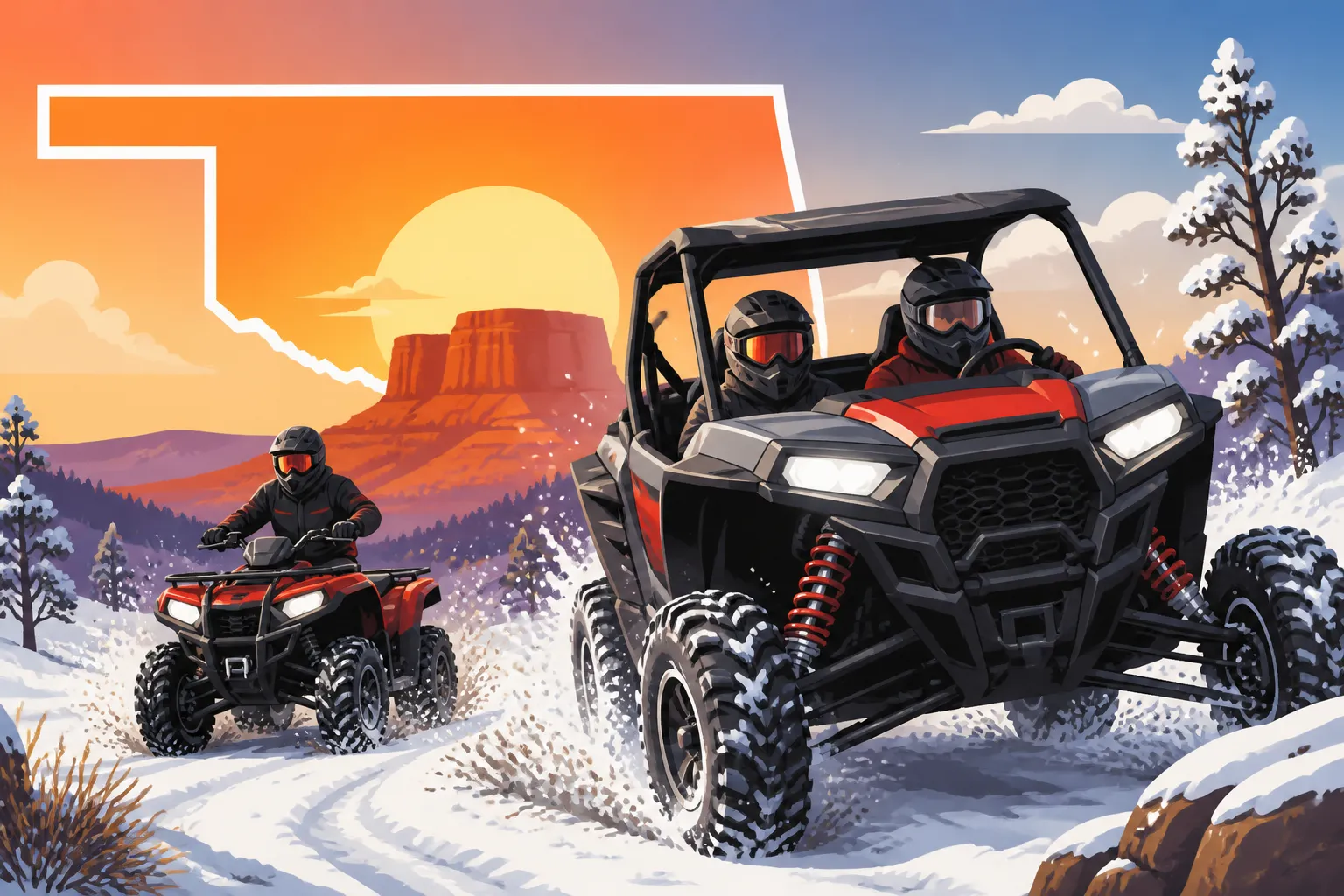
A winter ride in Oklahoma can start with frozen ground near sunrise and turn into slick red clay by lunchtime. That swing catches riders off guard, especially when a trail looks firm at the parking area but softens deeper in the woods. This guide explains how to choose a riding area, check conditions, prepare your machine, and make sensible decisions when the weather changes.
What Oklahoma winter conditions mean for ATV and UTV riders
Expect fast changes in temperature and trail surface
Oklahoma winter weather can shift quickly. A cold, dry morning may give way to sunshine, wind, or rain, and the ground can respond differently from one part of a trail system to another. Shaded hollows and wooded sections may stay frozen while exposed roads thaw into mud. Near streams, low spots can hold water long after higher ground looks dry.
The most important question is not simply whether it is cold. It is whether the trail surface can support your machine without causing damage or putting you in a recovery situation. Frozen soil can feel firm at first, then break into ruts as tires cut through the thawing layer. On clay, a thin wet surface over firmer ground can be especially slippery. For more on that local challenge, see [Why Oklahoma Red Clay Turns Slick After Rain].
Conditions can also vary by riding area. Around the Ouachita foothills and southeast Oklahoma, wooded terrain, hills, and creek crossings can create shaded, damp stretches. Open areas around Waynoka may be more exposed to wind and sun. Check the forecast for the riding area itself rather than relying only on conditions at home; a forecast for Tulsa or Oklahoma City may not reflect the weather near your destination.
Check access and closures before towing
A winter trip is frustrating enough when the weather is uncomfortable. It is worse to arrive with a trailer and find that a trail is closed, access is limited, or recent rain has made the route unsuitable. Before leaving, check the riding area’s official information for operating status, permitted vehicle types, seasonal restrictions, and any temporary closures. Rules can differ between state parks, private riding areas, public land, and timber company property.
Do not assume that a place you visited in summer will offer the same access in winter. Some properties have seasonal access windows, and land-management rules may limit where or when riders can travel. Areas such as Honobia Creek and Three Rivers, for example, have specific access requirements that riders should check before planning a trip. For general guidance on weather-related trail closures, read [Oklahoma Trail Closures After Rain]. For a broader pre-trip check, see [Oklahoma Trail Conditions Before You Tow].
Use a map as a planning aid, not as proof that a route is open. onX Offroad can help you review route information and understand where a planned ride sits in relation to roads and terrain, but confirm access with the land manager or riding area before setting out. A line visible on a map does not automatically mean the route is open to ATVs or UTVs.
How to choose a winter riding area in Oklahoma
Match the destination to the forecast and your group
Winter riding is often more enjoyable when you choose a destination that suits the conditions instead of trying to force a particular route. If rain has recently moved through, a sandy area may behave differently from a clay-heavy wooded trail. If the wind is biting and temperatures are low, a shorter route with an easy return to the staging area may be a better choice than a long, exposed ride.
Oklahoma has several kinds of riding areas, but each has its own terrain and rules. Little Sahara State Park is known for dune riding, while Robbers Cave offers wooded, hilly terrain. Cross Bar Ranch is another private riding destination, with its own operating rules and requirements. Check each place’s current information before you go, including whether it is open, what equipment is expected, and whether camping or other facilities are available. These guides can help you compare the kinds of trips involved: [Little Sahara State Park in Oklahoma], [Robbers Cave OHV Area in Oklahoma], and [Cross Bar Ranch in Oklahoma].
Think about the least experienced rider in your group. A steep, muddy trail can be manageable for an experienced driver and stressful for a newer one, particularly when cold hands make it harder to operate controls. A family ride may call for a shorter outing, more frequent warm-up breaks, and a route that allows riders to turn back without navigating a difficult section in reverse.
| Winter condition | What it can mean on the trail | Practical choice |
|---|---|---|
| Frozen ground early in the day | Firm surface may soften as temperatures rise | Reassess trail conditions before continuing deeper |
| Recent rain or thaw | Mud, standing water, and rutting may develop | Confirm that the area is open and avoid soft routes |
| Strong wind | Greater chill on exposed sections and at speed | Wear wind-blocking layers and plan shorter loops |
| Low cloud or early darkness | Reduced visibility and less time to return | Set a firm turnaround time and use approved lighting |
| Cold, wet conditions | Greater risk of discomfort and poor judgment | Carry dry layers and be ready to end the ride early |
Plan around daylight and facilities
Winter days are shorter, so leave enough time for unloading, gearing up, riding, and loading again before dark. Build in a margin for a slow trail, a stuck machine, or a rider who needs a break. Avoid planning a route that only works if every leg goes perfectly. If the group has to stop to clear mud from a radiator screen or help a machine through a difficult section, that delay can quickly eat into daylight.
Facilities matter more in cold weather than they might during a warm-weather outing. Find out whether restrooms, water, fuel, camping, and visitor services are available, and whether those facilities operate on the day you plan to visit. Do not count on cell service in a remote area. The guide [Oklahoma Riding Areas With Cell Service] can help you think about connectivity, but even where a signal is sometimes available, coverage can be inconsistent.
Download or save route information before you leave service. onX Offroad may be useful for reviewing a planned route offline when configured in advance, but bring a backup plan as well: tell someone where you are going, note the entrance and meeting point, and carry a paper map or written directions for the area. For tips on preparing for weak-signal riding, see [Carrying a Paper Map Where GPS Fails].
Prepare your machine and gear for cold-weather riding
Give the ATV or UTV a pre-ride check
Cold weather can make small mechanical problems more disruptive. A machine that starts reluctantly at home may be harder to restart in a remote staging area, and a loose connection or weak battery can become a trip-ending issue. Before loading, check the battery condition, tires, brakes, throttle, steering, lights, and fluid levels. Follow the manufacturer’s maintenance guidance for your specific machine rather than relying on a one-size-fits-all winter checklist.
Mud and wet leaves can clog cooling areas, especially during slow riding. Check the radiator screen and cooling-air paths during breaks, and stop to clear debris if the machine is showing signs of overheating. On a UTV, inspect the windshield, wipers if equipped, and cab seals so that poor visibility or water intrusion does not become a distraction. On a quad, make sure your hands can reach the controls comfortably while wearing winter gloves.
Carry recovery equipment appropriate to the machine and terrain, such as a properly rated winch setup or a tow strap designed for the task. Know how to use it before you need it. A recovery attempt made in a hurry, on a slope, or with an unsuitable attachment point can injure someone or damage the machine. Keep other riders clear of a loaded line, and avoid trying to pull a stuck vehicle from an unstable position.
Dress for wind, moisture, and stops
The temperature you feel while riding can be very different from the temperature you feel while standing still. Moving air makes exposed skin and damp clothing uncomfortable quickly, while a long recovery stop can leave riders cold even if they felt warm on the trail. Use layers that you can adjust: a moisture-managing base layer, an insulating layer, and an outer layer that blocks wind and sheds water. Keep a dry change of gloves or socks in a sealed bag.
Choose gear that lets you operate the controls safely. Bulky gloves that make it hard to brake, shift, steer, or use a kill switch are not a good trade for warmth. Test your gloves and layers before the ride, not after you reach the trailhead. A full-face helmet or a helmet with suitable eye protection can also help reduce wind exposure, but make sure your vision remains clear and your equipment meets the riding area’s requirements.
Pack water and food even when the weather is cold. Riders sometimes drink less in winter because they are not sweating as noticeably, but a long ride still takes effort. Add a basic first aid kit, a flashlight or headlamp, a phone power bank, and an insulated layer for anyone who may have to wait outdoors. For a more complete list of trail essentials, see [What a First Aid Kit Needs on Timber Land].
Make a safer winter ride plan
Set group rules before the engines start
Agree on a lead rider, a sweep rider, and a simple procedure for stops. The lead should not disappear around a blind corner while the rest of the group is still navigating a slippery climb. The sweep should make sure no one is left behind, especially if a machine needs attention. Decide in advance what the group will do if someone gets cold, a vehicle becomes stuck, or the route deteriorates.
Use conservative spacing on loose, wet, or icy sections. Following too closely makes it harder to react if the rider ahead slides or stops suddenly. On a UTV, keep passengers seated and belted where the vehicle is equipped with restraints. On a quad, avoid carrying a passenger unless the machine was designed for one and local rules allow it. Stay on permitted routes and respect gates, signs, private property, and posted restrictions. [Oklahoma Trail Etiquette Locals Expect] covers the habits that help keep riding areas usable for everyone.
Make the turnaround decision before the group is tired. If a trail is becoming rutted, a creek crossing is higher or slicker than expected, or someone is struggling to stay warm, changing the plan is sensible—not a failed ride. A shorter outing with everyone and every machine back in good shape is better than pushing on simply because the original route looked manageable on a map.
Know when to postpone
Some conditions are a clear reason to change plans: heavy rain, severe wind, ice on the route, poor visibility, or a closure issued by the riding area. A forecast that looks tolerable at the start of the day may worsen while you are on the trail. Check the weather again before unloading and keep a way to receive local updates if service is available.
Pay attention to the ground, not just the forecast. If tires are cutting deep ruts, the trail is becoming damaged, or machines are losing traction in places that are normally easy, turn back and report the problem to the land manager when appropriate. Avoid making repeated attempts through a muddy section; spinning tires can deepen the damage and leave the whole group stuck.
Before towing, verify that the trailer, tie-downs, spare tire, and vehicle are ready for winter conditions too. Cold, wet roads can make the drive home as demanding as the ride. Secure muddy equipment, keep wet gear contained, and leave enough time to load without rushing in fading light. Reviewing [Oklahoma Trail Map Downloads] and the destination’s official rules before departure can help you arrive with a realistic plan rather than relying on guesswork at the gate.
Disclaimer
This article is for general informational purposes only and does not constitute professional advice. Laws, prices and regulations vary by location and change over time. Consult a qualified professional for guidance on your specific situation.