Oklahoma Trails Near Enid
Enid riders can find open pasture roads tempting, but public land and lake access do not automatically allow ATV or UTV riding. The closest well-known designated OHV destination is Little Sahara State Park near Waynoka, where the riding is on sand dunes rather than wooded trails. This guide covers what to expect, how to prepare, and how to avoid a wasted trip.
The closest riding area to Enid
Little Sahara State Park near Waynoka
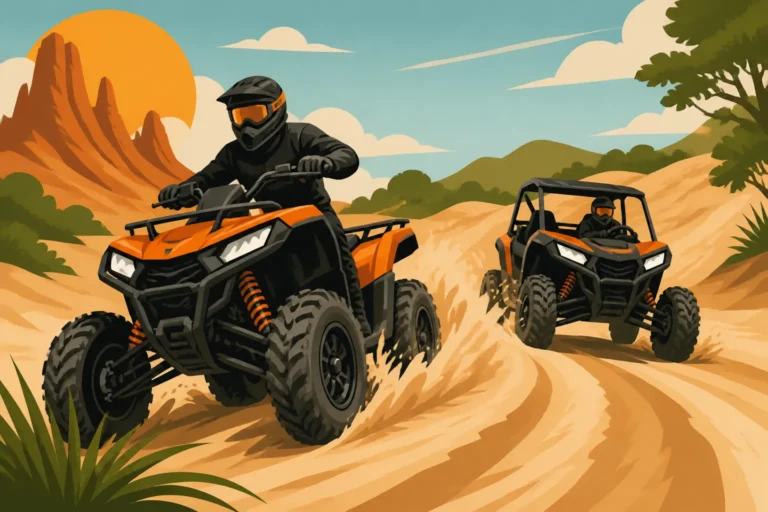
For a planned ride from Enid, Little Sahara State Park is the most practical starting point to investigate. It is near Waynoka, west and slightly north of Enid, and offers a very different experience from a narrow woodland trail: the park’s signature terrain is open sand dunes. Expect to spend your time reading changing slopes, choosing safe lines, and keeping track of other riders—not following a single marked route through the woods.
That difference matters when you are deciding which machine to bring. A sport quad or a side-by-side with suitable tires can be a better fit for dune riding than a setup intended mainly for rocks or heavy mud. A vehicle’s size, clearance, tires, and condition all affect how comfortable it feels in soft sand. If you have never ridden dunes, start conservatively and give yourself time to get used to the terrain before tackling steep faces or following a faster group.
Little Sahara is a specific riding destination, not a sign that all nearby public land is open to ATVs. Before setting out, review [Little Sahara State Park in Oklahoma](Little Sahara State Park in Oklahoma) and the broader [Oklahoma ATV Trails: Where to Ride](Oklahoma ATV Trails: Where to Ride) guide. Those topics can help you compare the park with other Oklahoma riding areas if you are willing to make a longer trip.
Is Little Sahara a good fit for your group?
Little Sahara may suit a group looking for open, sandy riding and a destination where different machines can ride in the same general area. It may be less appealing to someone who specifically wants shaded forest tracks, technical rocky climbs, or a quiet scenic loop. If your group includes new riders, children, or passengers, agree on a conservative pace and meeting point before anyone heads off. Dunes can make it harder to see another machine approaching from the other side of a rise.
A side-by-side also needs a different kind of planning than a single quad. Consider its width, turning space, tire setup, and how comfortable the driver is on loose sand. For a closer look at choosing a destination by vehicle type, see [Oklahoma Trails That Allow Side-by-Sides](Oklahoma Trails That Allow Side-by-Sides). Confirm the park’s current rules for the machines and passengers in your group before leaving home; don’t assume that an ATV rule automatically covers every UTV situation.
If you are coming from Enid for a short outing, think about the whole day, not just the ride itself. Allow time to load machines, travel, check in, get equipment ready, and take breaks. Heat, wind, and blowing sand can make a long day more tiring than expected. A group that arrives late and rushes straight into difficult terrain is more likely to make avoidable mistakes than one that starts with a quick vehicle check and a calm first ride.
Places near Enid that are not automatically ATV trails
Lakes, public ground, and rural roads
Canton Lake and other nearby outdoor destinations may come up when you search for recreation around Enid, but proximity does not mean an ATV can be ridden there. A boat ramp, campground, shoreline, wildlife area, or gravel road can each have separate access rules. Some areas allow vehicles only on designated roads; others may prohibit recreational riding altogether. Check with the land manager or local authority responsible for the exact property before unloading a machine.
The same caution applies to farm roads, section lines, oil lease roads, and private ranch ground. A route that looks open on a map may cross private property or have restrictions that are not obvious from the vehicle. Get permission from the landowner when needed, and don’t treat a gate left open or tire tracks in the dirt as permission to ride. The guide to [Oklahoma Landowner Permission Rules](Oklahoma Landowner Permission Rules) is useful if you are considering riding anywhere outside a clearly designated OHV area.
Oklahoma’s public riding opportunities are not all managed under the same rules. A state park, wildlife management area, private riding park, and timber company property can each have different access periods, permits, and vehicle limits. In particular, a land access permit for one kind of property should not be assumed to grant entry to every riding destination. Review [Oklahoma Land Access Permits Explained](Oklahoma Land Access Permits Explained) and verify the rules for the specific place you plan to visit.
When a longer drive makes more sense
If you want wooded trails rather than dunes, you may need to plan a longer trip from Enid. Areas such as Robbers Cave OHV Area and Cross Bar Ranch are farther from town and offer different terrain and riding arrangements. They are not quick substitutes around the corner, so check the route, access rules, hours, and machine restrictions before you commit to the drive.
A useful way to compare destinations is to start with the ride your group actually wants. Are you looking for sand, hills, shaded trails, camping, or a place that accommodates a particular machine? Then check whether the location allows your vehicle and whether the route is open when you plan to go. The overview at [Oklahoma Trail Conditions Before You Tow](Oklahoma Trail Conditions Before You Tow) can help you build this check into your trip planning rather than discovering a closure after you arrive.
| Riding option | What it is best suited for | What to confirm before leaving Enid |
|---|---|---|
| Little Sahara near Waynoka | Open sand-dune riding | Park rules, access details, required equipment, and fees |
| A public wildlife or timber area | Riding only where that property expressly allows it | Seasonal access, permits, designated routes, and vehicle limits |
| A private riding park or ranch | Riding under the operator’s own rules | Reservations or entry process, age rules, machine limits, and waivers |
| A rural road or private property | Only where road rules or landowner permission allow it | Whether riding is legal there and who controls access |
Prepare your ATV or UTV for the ride
Registration, equipment, and the basics
Before you load up, confirm that your machine’s registration and ownership paperwork are in order for the riding you plan to do. Oklahoma registration requirements and park access rules are related but not identical: having a registration decal does not mean a machine is allowed on every road or piece of land. For the state-specific process, see [How to Register an ATV in Oklahoma](How to Register an ATV in Oklahoma). If you are unsure whether your machine needs registration, check [Do You Need to Register an ATV in Oklahoma?](Do You Need to Register an ATV in Oklahoma?).
For dune riding, inspect the machine for issues that are easy to overlook when you are focused on packing. Check tires, brakes, throttle operation, lights, fuel, and any manufacturer-recommended protective equipment. Secure loose cargo so it cannot shift when the machine pitches or turns. If you ride a UTV, check that passengers have secure seating and that any required safety equipment is in place. A basic inspection at home is far easier than trying to diagnose a problem in a busy staging area.
Little Sahara has specific equipment expectations for dune riding, including a tall whip and bright flag. Read [Oklahoma's 10-Foot Whip Rule](Oklahoma's 10-Foot Whip Rule) before you go, and verify current requirements with the park. A flag helps other riders see a machine beyond a dune crest, but it does not make it safe to charge over a blind rise. Slow down where visibility is limited, stay alert for cross-traffic, and avoid stopping where another rider is likely to come over the crest.
Pack for heat, sand, and mechanical trouble
A comfortable ride starts with practical supplies. Bring drinking water for everyone, sun protection, eye protection, gloves, and clothing that covers exposed skin. Sand and wind can make eyes uncomfortable quickly, and summer heat can wear down even experienced riders. Plan breaks before people are exhausted, especially if children or inexperienced riders are in the group. Keep water accessible rather than buried under luggage.
Sand also gets into places you would rather keep clean. Secure bags and loose gear, and consider how you will clean the machine after the trip. Check the air filter and follow the machine maker’s maintenance guidance after dusty riding. If you are hauling from Enid, inspect the trailer, tie-downs, tires, and lights before departure. It is frustrating to discover a weak strap or trailer issue when you are already at the park entrance.
For navigation, download or save useful map information before leaving home, particularly if your phone signal is unreliable where you ride. onX Offroad can help you review mapped riding areas and plan a route, but a mapping app is not a substitute for posted signs, landowner permission, or park rules. Use it as a planning aid, then confirm that the route is legal and open. You can also review [Oklahoma ATV Trail Map Downloads](Oklahoma ATV Trail Map Downloads) and keep a simple meeting plan in case the group gets separated.
Plan a smoother ride from Enid
Check the details before you tow
A little advance checking can prevent the classic bad-start scenario: the trailer is packed, everyone is ready, and then you discover that the destination has a restriction, a closure, or an entry requirement you did not plan for. Confirm park access and current rules directly with the managing office before departure. Check the forecast as well, and think about how wind, heat, or recent weather could affect the ride and the drive.
Review the expected costs before your group leaves. Entry and camping arrangements can differ by location, and one park’s fees or passes do not necessarily apply somewhere else. For Little Sahara, check [Little Sahara's Day Fees in Oklahoma](Little Sahara's Day Fees in Oklahoma) for details to verify with the park. Bring a payment method that works for the location, and keep enough time in your schedule for check-in and unloading.
If the trip involves more than one machine or family, agree on responsibilities in advance. One person can confirm the destination rules, another can check the trailer and tie-downs, and each rider can inspect their own machine. Decide where the group will meet if it gets separated and set a turnaround time so nobody is left searching across the dunes after the rest of the group has packed up.
Ride with visibility and courtesy
Dunes and busy riding areas reward patience. Keep enough space between machines to react, avoid following too closely over a crest, and don’t assume the rider in front can see you. If you stop, choose a visible place that is out of the path of moving traffic. Make sure everyone in your party understands the route back to the staging area, especially if the group includes young or first-time riders.
Respect posted restrictions and leave closed or private ground alone. Riding off an authorized route can damage land, create conflicts with property owners, and put future access at risk. Take your litter with you, be considerate around campsites, and keep noise in mind when people nearby are resting. For a practical refresher before a group outing, read [Oklahoma Trail Etiquette Locals Expect](Oklahoma Trail Etiquette Locals Expect).
A good Enid-area riding plan is not simply “find a dirt road and go.” Choose an authorized destination, confirm its rules, match the terrain to your machine and experience, and arrive prepared for the conditions. For many local riders, Little Sahara near Waynoka is the first place to investigate for dedicated OHV riding; for forest trails or other terrain, expect to plan a longer trip and verify access before towing.
Disclaimer
This article is for general informational purposes only and does not constitute professional advice. Laws, prices and regulations vary by location and change over time. Consult a qualified professional for guidance on your specific situation.