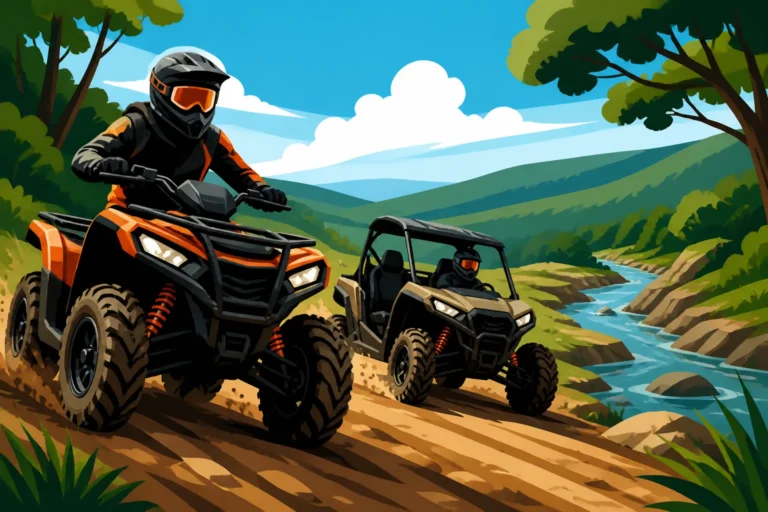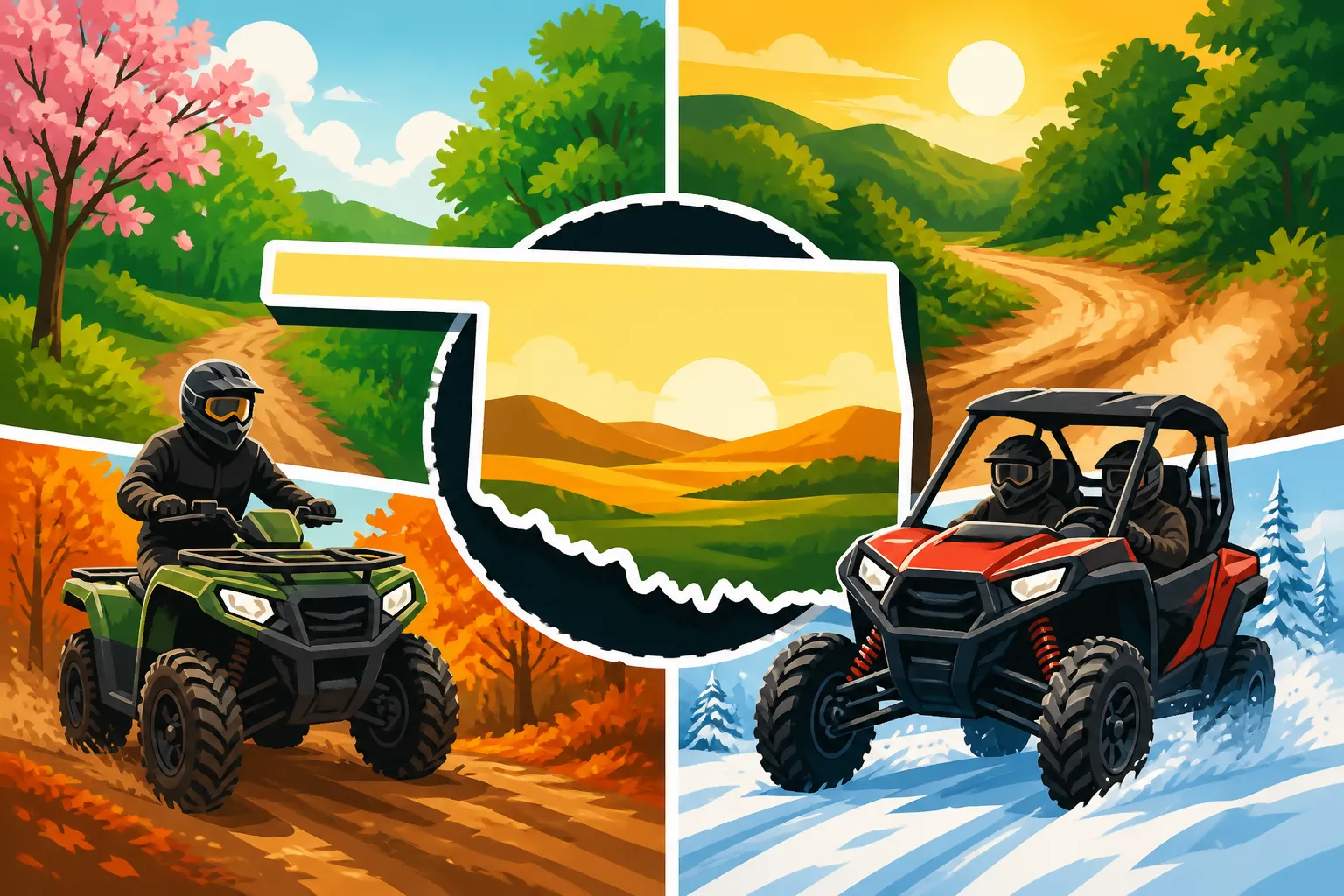
Oklahoma Trails Open Year-Round
Finding an Oklahoma trail that is open year-round is only half the job: rain, hunting seasons, private-park schedules, and temporary closures can still change your ride plans. This guide explains which riding areas are worth checking in every season, what can limit access, and how to confirm a trail is open before you load the machines and head out.
What Year-Round Trail Access Really Means in Oklahoma
Open on the map does not always mean open today
A riding area described as year-round may be available in every season without being open every day or under every condition. A park can close trails after heavy rain, adjust access for maintenance, or use a different schedule in winter. Public land can have additional rules tied to hunting seasons, vehicle types, and designated routes.
That distinction matters in Oklahoma, where a sunny morning in one part of the state can follow a soaking rain in another. A trail that looked manageable on a map may be slick, rutted, or closed by the time you arrive. Check the land manager’s or park operator’s current notices before setting out, and call if the posted information leaves you unsure.
It also helps to check what “open” means for your particular machine. Some routes are suitable for ATVs but not wider side-by-sides, while other areas are made up of dunes, private-park tracks, or designated forest roads with different access rules. For a broader planning checklist, see [Oklahoma Trail Conditions Before You Tow] and [Oklahoma Trail Closures After Rain].
Know the difference between parks, public land, and private riding areas
Oklahoma riding opportunities include state park terrain, private off-road parks, and public lands where vehicle access may be limited to specific roads or seasons. Each comes with a different set of rules. A private park might set its own hours and closures; public land may have separate requirements for permits, vehicle types, and where you can ride.
That is why a trail app or downloadable map should be treated as a planning aid, not as permission to ride. onX Offroad can help you review routes and land boundaries while planning, but you should still confirm access with the property owner, park, or public-land manager. A track visible on a map is not proof that it is an authorized OHV route.
Before you leave, check the day’s access status, the allowed vehicle types, parking and trailer arrangements, fees or permits, and any seasonal restrictions. If your group includes both quads and side-by-sides, ask specifically whether the routes you plan to use accommodate both. A little checking at home can save a long tow to a locked gate or a trail that does not fit your machine.
Oklahoma Riding Areas to Check in Every Season
Little Sahara State Park
Little Sahara State Park near Waynoka is one of Oklahoma’s best-known places for dune riding. Its open sandy terrain offers a very different experience from wooded trails, and it is a natural area to investigate when you want a ride outside the usual spring and fall windows. Learn more about the setting and planning considerations in [Little Sahara State Park in Oklahoma].
Dune riding still depends on conditions and park access. Check for current notices before traveling, and be prepared to adjust your plans if weather or park operations affect access. Sand can be tiring for both riders and machines, especially in hot weather, so bring water, suitable protective gear, and a plan for regrouping if someone gets separated from the group.
Dune safety rules matter here, too. Confirm the current flag, lighting, and helmet requirements before unloading. Do not assume that a familiar setup from another riding area meets the rules at Little Sahara. If you are bringing a side-by-side, check the park’s requirements for its equipment and passenger capacity as well as the current access conditions.
Cross Bar Ranch and Robbers Cave
Cross Bar Ranch near Davis is a private off-road riding area worth checking when you want varied terrain. Because it is privately operated, access depends on the operator’s schedule, rules, and trail conditions—not simply on the season. Review the latest visitor information before making the drive, particularly if you are planning a group ride or bringing a trailer. The [Cross Bar Ranch in Oklahoma] guide can help you think through what to ask.
Robbers Cave OHV Area near Wilburton is another option to investigate, especially if you are looking for a wooded, hillier ride rather than open sand. Its riding hours and access conditions may differ from those at a private park, so do not plan on riding after dark or assume every trail is open on arrival. Check [Robbers Cave OHV Area in Oklahoma] for more location-specific planning context, then confirm current access directly.
Neither location should be treated as a guaranteed, every-day ride without checking first. Private operators can change access for weather, maintenance, or events, while public recreation areas can post restrictions or closures. If you are traveling a long distance, confirm the status on the day you leave and again before you unload.
| Riding area | Why to consider it | What to verify before traveling |
|---|---|---|
| Little Sahara State Park | Dune riding in northwest Oklahoma | Park access, current safety rules, weather, and fees |
| Cross Bar Ranch | Private off-road riding with varied terrain | Operating schedule, machine restrictions, trail conditions, and admission rules |
| Robbers Cave OHV Area | Wooded and hilly riding near Wilburton | Current access, riding hours, closures, and allowed vehicle types |
| Timber company or wildlife management land | Public-land riding opportunities in some areas | Season, permits, hunting rules, designated routes, and vehicle eligibility |
Seasonal Limits That Can Affect a “Year-Round” Ride
Rain, mud, heat, and winter conditions
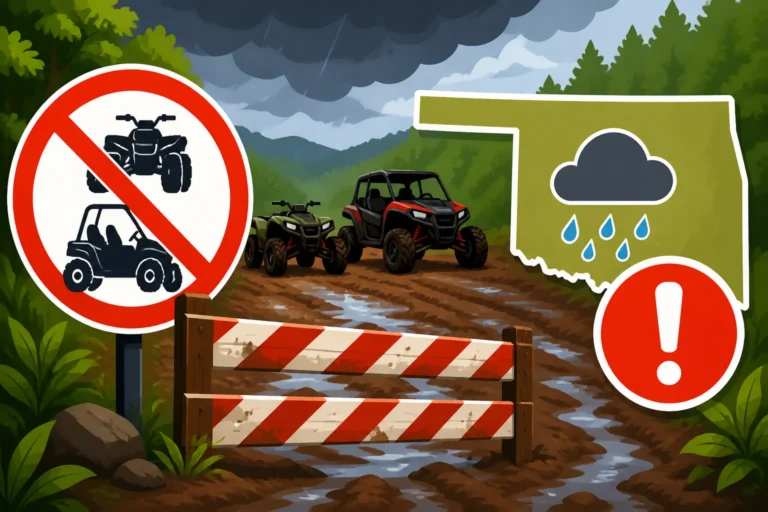
Oklahoma weather can change the ride quickly. Heavy rain may leave clay trails slick and rutted, and a route that seemed easy on the way in can become difficult on the way out. If conditions are wet, avoid forcing your way through closed or badly damaged sections. Check [Oklahoma Trail Riding After Heavy Rain] before deciding whether a recent storm has made your destination a poor choice.
Summer brings a different challenge: heat. Riding slowly through open areas or spending hours in the sun can take more out of a group than expected. Carry more water than you think you will need, take breaks in shade when possible, and agree on a turnaround point before anyone feels worn down. A route that is manageable in cool weather may be a poor choice during a hot afternoon.
Winter riding can be rewarding, but shorter daylight and colder starts call for a little more preparation. Check [Oklahoma Riding in Winter] for seasonal planning ideas, and look over your machine before you head out. Cold-weather layers should allow you to move comfortably, while a charged phone, basic tools, and a realistic plan for getting back before dark can make the day less stressful.
Hunting seasons and public-land access
Some public riding areas have seasonal rules that make them unsuitable for a spontaneous year-round plan. Timber company land, for example, may restrict machine access to a particular window and require riders to use designated roads or meet additional conditions. Wildlife management areas can also have rules that change with hunting activity or the area’s management plan.
Do not assume that a public road through a wildlife area is open to recreational riding just because it appears on a navigation map. Check the specific property rules, seasonal dates, required permits, and whether ATVs or UTVs are permitted. [Oklahoma WMA Access for a Quad] and [Oklahoma Timber Land Access Rules] are useful starting points for understanding why public land can have narrower access than a dedicated riding park.
When the rules are complicated, contact the land manager before you go. Ask about the exact area you plan to ride, not just the county or nearest town. If the answer is unclear, choose a destination with simpler, confirmed access rather than risking a ticket, trespass problem, or a wasted trip.
How to Confirm a Trail Is Open Before You Tow
Use maps to plan, then confirm with the operator
Start with the official park or land-manager information for your destination. Look for closures, weather updates, hours, admission or permit details, and machine-specific rules. For public-land routes, verify that your chosen road is open to the type of vehicle you are bringing and that any seasonal restrictions do not apply.
A tool such as onX Offroad can help you review mapped routes and property boundaries while planning your approach. Downloading map information for offline use can also be helpful if cell service is unreliable near the riding area. Still, use it alongside official access information: digital mapping does not replace posted signs, permission from a landowner, or a park’s current rules. [Oklahoma ATV Trail Map Downloads] offers more context on mapping your ride.
For a trip with several machines, share the planned location and route with everyone before departure. Make sure the group knows where to park, where to meet if separated, and which trails are appropriate for the least experienced rider. Review [Oklahoma Trail Difficulty Ratings] and [Oklahoma Trail Etiquette Locals Expect] as part of that conversation.
Make a practical pre-ride checklist
Before you load the trailer, confirm the following:
- Access: Is the specific riding area open on your planned day, and are there any weather or maintenance closures?
- Machine eligibility: Are your ATV or UTV, its width, and its equipment allowed on the routes you intend to use?
- Seasonal rules: Do hunting activity, land-access permits, or public-land restrictions affect your destination?
- Costs and logistics: Check current admission or permit requirements, parking arrangements, and whether camping is available if you need it. For options to investigate, see [Oklahoma Trails With Camping].
- Safety: Review helmet, flag, lighting, passenger, and other site-specific requirements before unloading.
- Backup plan: Pick a second destination or activity in case rain or a closure changes the day’s ride.
If the operator does not answer, avoid treating silence as confirmation. Choose a location with clearly posted access information or postpone the trip. That may feel frustrating after arranging a weekend around a ride, but it is still better than arriving at a closed entrance or discovering that your machine is not allowed on the route.
A dependable year-round riding plan is less about finding a trail that never closes and more about having a few suitable options and checking each one before you go. Keep the current rules, weather, machine type, and season in view, and your chances of a smooth Oklahoma riding day improve considerably.
Disclaimer
This article is for general informational purposes only and does not constitute professional advice. Laws, prices and regulations vary by location and change over time. Consult a qualified professional for guidance on your specific situation.