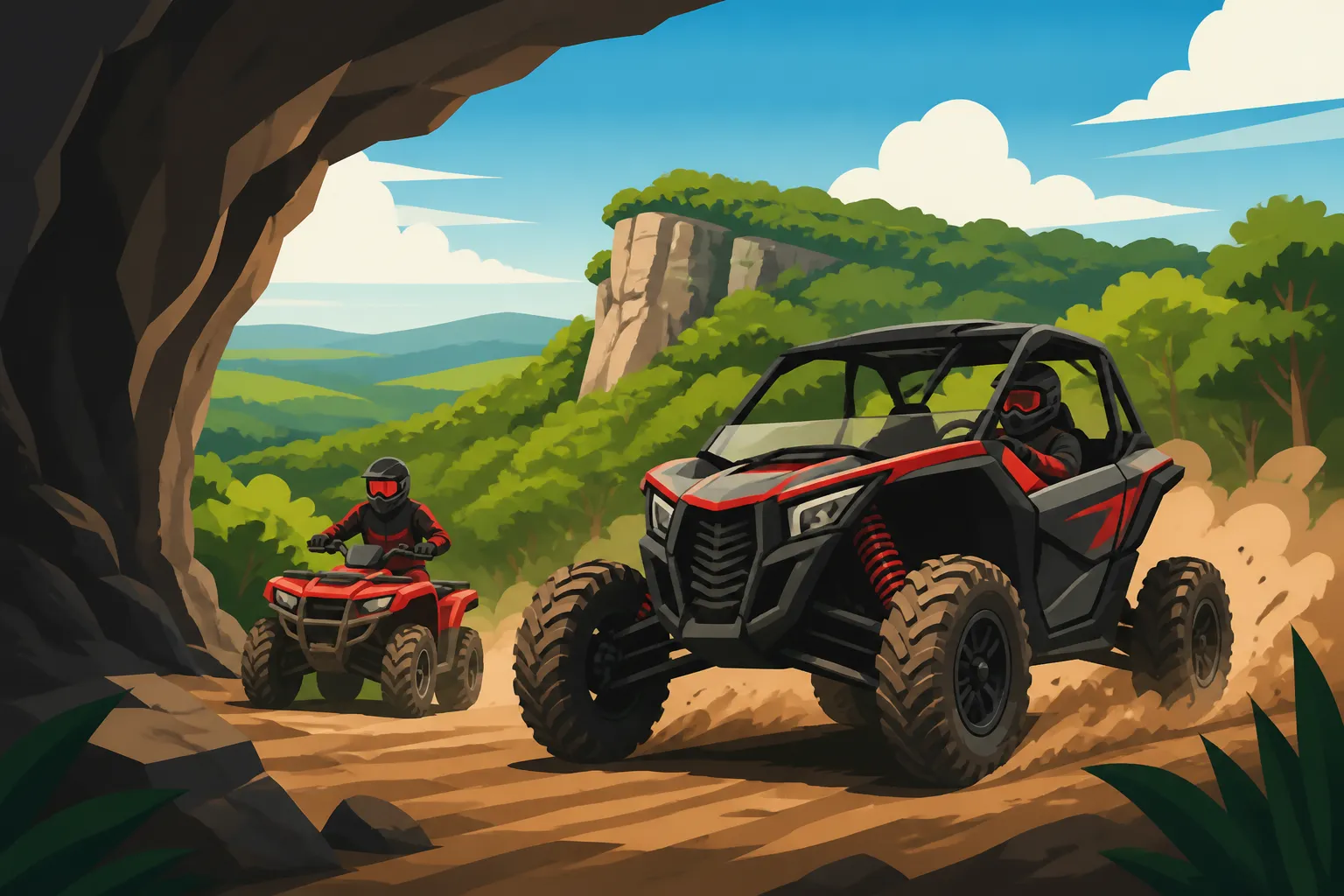
Robbers Cave’s 250 Acres in Oklahoma
Robbers Cave’s OHV area is a compact ride near Wilburton that can feel very different from a wide-open trail system: the terrain is hilly, the riding area is limited in size, and access details matter. This guide explains what to expect, how to plan your day, and what to check before towing a machine to southeastern Oklahoma.
What to Expect at Robbers Cave OHV Area
A compact riding area in the San Bois
Robbers Cave’s OHV area is known for its roughly 250 acres of riding in the San Bois region of eastern Oklahoma. That size is useful to keep in mind when planning: this is not a sprawling trail network where you can expect to ride for hours without repeating ground. A smaller area can still make a satisfying day, especially for riders who enjoy changing terrain and don’t need long-distance routes.
The landscape is hilly, so the ride may feel more varied than the acreage alone suggests. Slopes, turns, and changes in elevation can keep you engaged, but they also call for attention. A machine that feels easy to handle on flat ground can behave differently on a climb or descent, particularly if the surface is loose, rutted, or damp.
If you’re comparing destinations, start with the kind of day you want rather than acreage alone. Robbers Cave may suit riders looking for a compact, hill-country outing; a larger riding area may be a better fit for a group hoping to cover more distance. For a broader comparison, see [Oklahoma Trails With Hills] and [Oklahoma Trail Difficulty Ratings].
How the OHV area fits with Robbers Cave State Park
The OHV riding area is associated with the Robbers Cave area near Wilburton, but don’t assume that every road, path, or open-looking patch within the broader park region is an OHV route. Public recreation areas can include separate facilities and lands with different rules. Follow posted signs and stay within designated riding areas rather than using a map’s apparent connection between roads as permission to ride there.
The Deep Fork Campground is located across from the OHV area, making the vicinity useful for trip planning. Still, camping access and riding access are separate questions. Confirm whether your chosen campground has availability, what its rules are, and whether you’ll need to trailer your machine between the campsite and riding area. Being nearby does not necessarily mean a trail runs directly from your site to the riding area.
It also helps to distinguish the OHV area from other attractions around Robbers Cave State Park. A visit to the park can involve hiking, camping, or sightseeing, but those activities do not automatically share the same access rules as off-highway vehicle riding. Before you go, check the current information from the relevant park or land manager and confirm which entrance or parking area is intended for OHV use.
Plan a Ride That Matches the Terrain
Pick machines and routes with hills in mind
Hilly terrain asks more of both rider and machine than a level, open trail. Before riding, make sure the machine is in good condition, with reliable brakes, tires suited to the expected surface, and enough fuel for your planned session. Check controls and steering, too. A loose component or worn tire that seems manageable in the driveway can become a bigger concern on uneven ground.
Your riding group should agree on a pace that works for the least experienced person, not just the fastest rider. On climbs, keep enough space between machines to avoid crowding someone who slows or stops. On descents, avoid following so closely that you have no room to react. If someone is unsure about a section, pausing to assess it is better than feeling pressured to follow another rider.
A side-by-side and a quad may also handle the same route differently. Width, turning radius, ground clearance, and the number of occupants can affect whether a route is a comfortable fit. Before bringing a larger machine, check whether the riding area permits it and whether the available trails suit its size. The guide to [Oklahoma Trails That Allow Side-by-Sides] can help you think through the questions to ask at other destinations as well.
Set expectations for a short-area outing
With a compact riding area, a good day does not have to mean chasing mileage. You might plan a few relaxed loops, take breaks, and give newer riders time to get comfortable. A smaller area can make it easier to regroup than a huge trail system, but it still pays to choose a meeting point and agree on what the group will do if someone gets separated.
Think about how your group defines a successful ride. Families with younger riders may prefer a slower pace and frequent stops. Experienced riders may want to explore more of the available terrain, while still respecting the area’s boundaries and posted rules. If you are bringing riders with different abilities, discuss those differences before unloading so nobody feels pushed into terrain they would rather avoid.
Bring enough water, basic first-aid supplies, and practical clothing for the weather. Eastern Oklahoma can be hot and humid in warm seasons, while wet or cool conditions can make a ride tiring in a different way. Leave room in your schedule for loading, unloading, breaks, and a quick machine check afterward. Planning around the day’s actual pace is more enjoyable than trying to squeeze in a rushed ride before closing.
Check Access, Rules, and Trail Conditions
Confirm hours and riding access before leaving
Robbers Cave’s OHV riding is associated with daylight hours, so plan to arrive with enough time to unload, prepare, and ride without pushing into dusk. Confirm the current operating schedule before making the drive. Hours, access procedures, and temporary closures can change, and a past visit or old online post is not a reliable substitute for current instructions from the managing agency.
Also verify where to park and how riders are expected to enter the riding area. If you are towing a trailer, ask about designated parking and whether there is enough room to maneuver. A group arriving in several trucks can need more space than one vehicle, especially if people are unloading at the same time. Sorting out those logistics at home is easier than trying to coordinate them in a crowded lot.
Before departure, check whether any permits, registrations, waivers, or other documentation apply to your machine or visit. Requirements can differ between public areas, private parks, and land-access programs. If you ride in multiple places, don’t assume that a decal or permit accepted at one location covers another. [Oklahoma Land Access Permits Explained] offers helpful background on why access requirements can vary.
Treat weather and closures as part of the plan
Rain can change the experience on hilly ground. A surface that was manageable when dry may become slippery, rut-prone, or harder to climb after a storm. Mud can also obscure rocks and other obstacles. Check for closure notices and recent conditions before loading up, and be prepared to change plans if the riding area is closed or conditions are unsuitable.
Use maps as planning aids, not as permission to ride wherever a line appears. Mapping apps such as onX Offroad can help you review the surrounding area and keep a route reference handy, but posted signs and land-manager directions take priority. Download maps or save useful information before you leave home if cell coverage may be limited, and make sure everyone in the group knows how to find the meeting point.
If you arrive and find that trails are wet, damaged, or closed, don’t try to create a new route around the problem. Riding outside designated areas can damage land and create conflicts with other visitors or land managers. For trip-planning tips that apply beyond Robbers Cave, see [Oklahoma Trail Closures After Rain] and [Oklahoma Trail Conditions Before You Tow].
| Planning question | Why it matters | What to do |
|---|---|---|
| Is the OHV area open? | Hours and access can change | Confirm with the managing agency before leaving |
| Is riding limited to daylight? | You need time to unload and finish before dark | Plan arrival and departure around the posted schedule |
| Are conditions suitable? | Rain can make hills and trails more difficult | Check for weather impacts and closure notices |
| Does your machine fit the trails? | Width and handling affect route suitability | Ask whether your ATV or side-by-side is permitted |
| Where can you park and unload? | Trailers need room to maneuver | Confirm the designated parking or staging area |
| What paperwork applies? | Requirements can differ by riding location | Check current rules for your machine and visit |
Make Camping and Trail Logistics Work
Decide whether to camp nearby
The Deep Fork Campground, across from the OHV area, can make a multi-day trip more convenient, but check the details before building your plans around it. Confirm whether reservations are needed, what facilities are available, and whether the campground’s rules allow your intended setup. Don’t assume that camping means you can ride directly from your site; access may require a separate route or a short tow.
If you’re traveling with children or a larger group, nearby camping can reduce the pressure to finish the ride and drive home the same day. It also gives everyone a place to eat, rest, and check equipment. On the other hand, a day trip may be simpler if your group only plans a few hours of riding or if you prefer to avoid campground logistics.
Pack for both the ride and the campsite. Keep riding gear separate from food and sleeping equipment, and bring a way to secure helmets and other items when you’re not using them. A post-ride clean-up plan is useful too: mud and dust can quickly spread through a truck or camper if there’s no place to store dirty gear. For more trip ideas, explore [Oklahoma OHV Camping With Trail Access].
Trailer and unload with room to spare
A smooth arrival begins before you reach the parking area. Check that your trailer lights, tires, tie-downs, and ramps are in good shape, and make sure the machine is secured for the drive. If you’re bringing more than one vehicle, set a meeting point and decide who will handle check-in or parking questions. That prevents a long line of trucks from arriving without a clear plan.
When unloading, choose a stable spot and keep people clear of the ramp. Avoid rushing because other riders are waiting. After the machine is on the ground, check that the straps and ramp are put away safely, then take a moment to inspect the machine before riding. Loose cargo, a soft tire, or a fuel issue is easier to address in the staging area than after you’ve started a trail.
For a group, keep the staging area orderly and respect other visitors’ space. Make sure children understand where they can walk and where they should stay clear of moving vehicles. If you need a reference for choosing a suitable staging spot at other destinations, see [Oklahoma Trailheads With Trailer Parking]. Local conditions and parking layouts vary, so verify the arrangement for Robbers Cave directly.
Ride Responsibly and Leave the Area in Good Shape
Keep the group together without crowding
Agree on a simple group plan before starting: who leads, who rides at the back, where to regroup, and what to do if someone stops. On a hilly trail, riders may lose sight of each other around bends or changes in elevation. A lead rider should avoid racing ahead, while the last rider should not feel responsible for catching up at an unsafe pace.
Give other riders room, especially where visibility is limited. Avoid stopping in a spot where someone coming over a rise cannot see you in time. If you need to pull over, choose a safe place off the active route where permitted, and signal the rest of your group. These small habits lower the chance of a collision and make the outing less stressful for everyone.
Follow posted speed limits and route markers, and don’t pass another rider unless the situation is clearly safe and allowed. The area’s size may make repeated encounters more likely, so patience matters. For practical reminders on sharing trails and respecting other visitors, read [Oklahoma Trail Etiquette Locals Expect].
Leave trails and facilities ready for the next visit
Stay on designated routes and avoid widening a trail to get around a muddy or damaged patch. Riding around the edge can crush vegetation and create a second path that grows wider with every visit. If a route is blocked or appears unsafe, turn back and report the issue through the appropriate park or land-management channel rather than attempting an improvised detour.
Pack out everything you bring in, including food wrappers, broken straps, and small pieces of equipment. Check your parking area before leaving, and make sure nothing has fallen from the trailer or cargo box. If you’re camping, follow the campground’s waste, fire, and quiet-hour rules. A clean departure helps protect access and makes the site more pleasant for the next group.
A little post-ride care can also prevent avoidable wear on your machine. Remove mud and grit where appropriate, inspect tires and controls, and note anything that needs attention before your next trip. If rain or trail conditions made the ride unusually demanding, check for damage rather than assuming the machine is fine because it made it back to the truck. Thoughtful preparation and respectful riding are what make a compact destination worth returning to.
Disclaimer
This article is for general informational purposes only and does not constitute professional advice. Laws, prices and regulations vary by location and change over time. Consult a qualified professional for guidance on your specific situation.