Passengers Only If the Machine Was Built for Them
It's such a natural instinct to want to share the thrill of off-road riding, isn't it? Whether it's carving through the dunes at Little Sahara, navigating the trails at Robbers Cave, or just cruising around the farm, the idea of having a friend or family member along for the adventure often crosses our minds. But when it comes to ATVs and UTVs in Oklahoma, carrying passengers isn't as simple as just finding a spare spot to sit. This guide will help you understand Oklahoma's rules and the crucial safety considerations when deciding whether your machine can legally and safely carry an extra rider.
The Fundamental Rule: Factory Design Dictates Passengers
When it comes down to it, Oklahoma law, and frankly, common sense and safety, hinge on one core principle: your machine’s design dictates its passenger capacity. This isn't about how much space you think there is, or how comfortable someone might be perched somewhere. It’s about how the manufacturer engineered and built that machine from the ground up. Ignoring this can lead to not only legal trouble but, far more importantly, serious accidents and injuries.
Understanding "Designated Seating"
So, what exactly does "designated seating" mean in the eyes of the law and safety experts? It’s far more than just a flat surface or a piece of foam strapped onto a rack. Designated seating refers to a specific, engineered area on the machine that includes a proper seat, often with a backrest, secure handholds that a passenger can easily reach and grip, and dedicated footrests that prevent their feet from dragging or getting caught in moving parts. For UTVs, this also almost always includes factory-installed seatbelts and a protective roll cage structure.
Think about it: manufacturers spend countless hours designing these machines for optimal weight distribution, stability, and handling characteristics. When a machine is designed for a single rider, its center of gravity, suspension, and steering geometry are calibrated for that one person's weight and movements. Adding a passenger to a machine not built for it drastically alters these dynamics, making the vehicle unpredictable and significantly increasing the risk of a rollover or loss of control, especially when turning, climbing hills, or traversing uneven terrain. It's not just a suggestion; it's a critical safety feature.
The Legal Ramifications of Modifying Your Machine
I've seen it countless times: riders adding a small seat to the rear rack of an ATV, or even fabricating some makeshift footrests. The intention is usually good – wanting to share the fun. However, these modifications, while seemingly harmless, do not magically make a single-rider ATV legal for two. In Oklahoma, the law largely refers back to the manufacturer's original design. If your ATV came off the assembly line as a "single-rider" machine, that's its legal classification, regardless of what you bolt onto it later.
A law enforcement officer seeing a passenger on a single-rider ATV will likely view it as a violation. Beyond the potential citations and fines, the real danger lies in the physical risk. A homemade seat rarely provides the safety and support of a factory-designed passenger system. If an accident occurs, that passenger is at a much higher risk of being ejected or crushed. Furthermore, if you've added a seat to a machine never intended for it and an injury occurs, your liability could be substantial, potentially even affecting insurance coverage. It's a risk that, in my opinion, just isn't worth taking. Remember, [Oklahoma Passenger Rules on a Quad] are pretty clear on this.
Breaking Down Passenger Rules for ATVs vs. UTVs
The distinction between ATVs (All-Terrain Vehicles) and UTVs (Utility Terrain Vehicles, often called side-by-sides) is paramount when discussing passenger rules. While both are off-road machines, their fundamental design philosophies differ significantly, and so do the rules surrounding who can ride on them.
Single-Rider ATVs: The Clear-Cut Case
For the vast majority of traditional ATVs, the rule is simple and uncompromising: one rider, period. These are the machines with the straddle-style seat, handlebars, and typically no rollover protection beyond the rider's own body. They are designed to be ridden actively, with the operator shifting their weight to maneuver and maintain balance. Introducing a passenger on a single-rider ATV compromises this active riding style.
Imagine trying to lean into a turn with someone else sitting rigidly behind you, or attempting to shift your weight to prevent a tip-over on an incline. It’s incredibly difficult, if not impossible, to do safely. The passenger’s weight, often positioned high and to the rear, raises the machine’s center of gravity and makes it inherently unstable. This is especially true for children. While a child might fit, the risk is exponentially higher. When considering [Oklahoma Rules for a Child Passenger] or [Oklahoma Rules for a Teen Rider], the machine's factory design for a single occupant remains the overriding factor. Even if you're just putting around your own property, an accident with a passenger on a single-rider ATV is always a possibility, and the consequences can be severe.
Multi-Passenger UTVs: The Factory Advantage
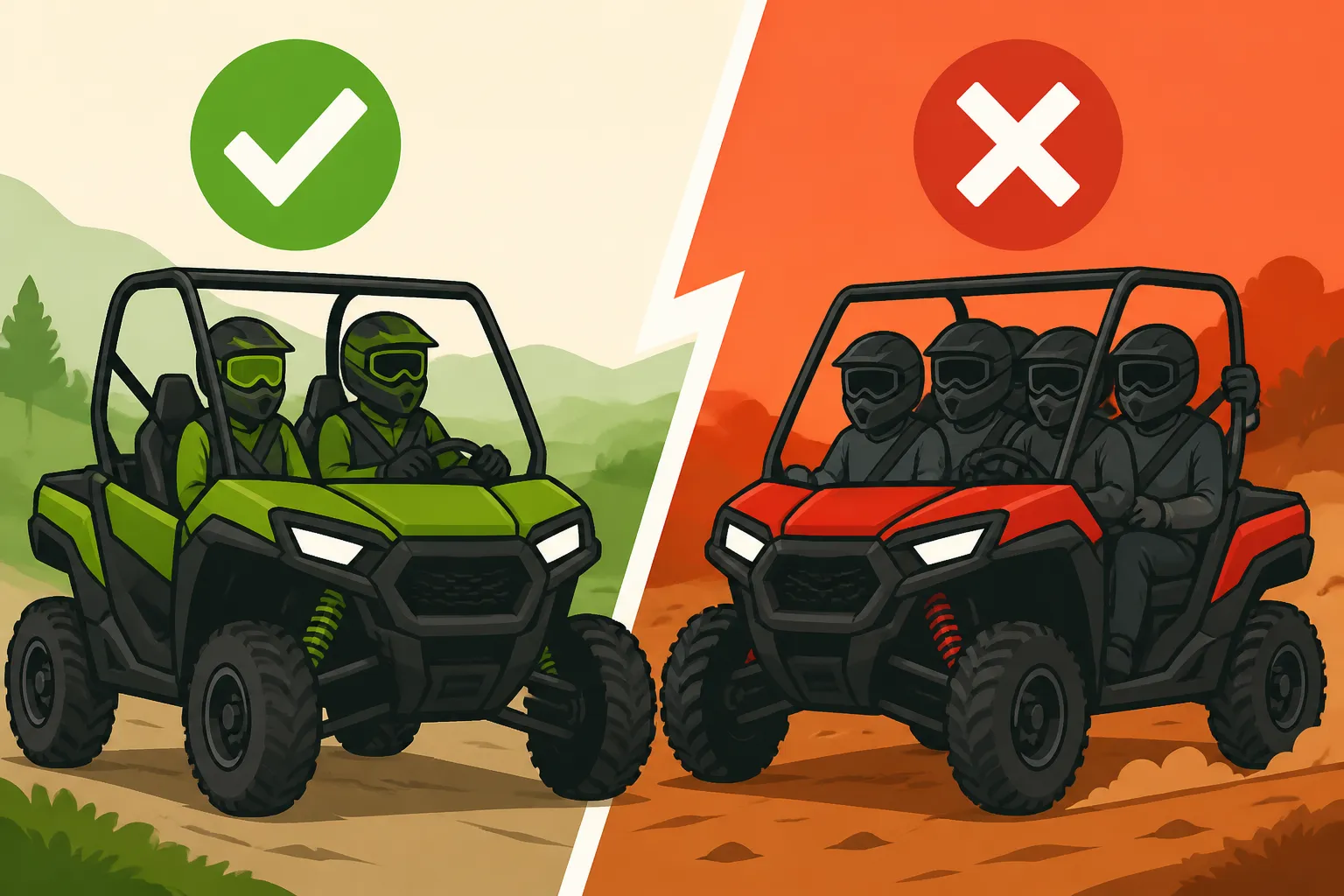
This is where UTVs truly shine as a family-friendly or group-friendly option. Unlike most ATVs, UTVs are designed from the ground up to carry multiple occupants. They feature side-by-side seating (hence "side-by-side"), often in bench or bucket seat configurations, with dedicated seatbelts for each passenger, and a factory-installed Roll Over Protective Structure (ROPS) or roll cage. These machines are engineered with a wider stance, a lower center of gravity, and a suspension system built to handle the weight of multiple people and gear.
Oklahoma recognizes this design difference. If a UTV is manufactured with multiple seating positions, then those positions can be legally occupied by passengers. This is a crucial distinction. It means you can confidently bring friends and family along, knowing your machine is built for it and you're within the bounds of the law. When outfitting your UTV for those family adventures, consider quality accessories that enhance the comfort and safety of your passengers, such as durable roofs or windshields. Many riders look to companies like SuperATV for these types of upgrades that complement the factory design. Just be sure that all passengers, including yourself, are properly secured with seatbelts and adhere to all safety guidelines. [Oklahoma Rules for Passengers on a UTV] clearly allow for this when the machine is designed for it.
Safety First: Why Oklahoma's Rules Matter for Passengers
The rules around carrying passengers on ATVs and UTVs in Oklahoma aren't just bureaucratic red tape; they're rooted deeply in rider safety. Off-road machines, by their very nature, operate in dynamic, unpredictable environments. Adding human variables without proper design considerations dramatically increases risk.
The Dangers of Improper Passenger Carrying
When you place a passenger on a machine not designed for two, you invite a host of dangers. Firstly, stability is severely compromised. An ATV designed for one rider relies on that rider's ability to shift their weight quickly and instinctively to navigate turns, bumps, and inclines. With a passenger, this ability is lost or severely hampered. The passenger's weight, often static and high up, can make the machine top-heavy and prone to rollovers, especially on side slopes or during sharp turns.
Secondly, there's the risk of ejection. A passenger on an improperly equipped machine lacks proper handholds and footrests. A sudden jolt, a quick acceleration, or an unexpected obstacle can easily throw them off, leading to serious impact injuries. This risk is amplified for younger, smaller passengers who may not have the strength or coordination to hold on tightly. The machine's suspension and braking systems are also calibrated for a specific weight; overloading them can lead to longer stopping distances and a rougher, less controlled ride, further increasing the chance of an accident.
Helmets and Protective Gear for All Riders
Regardless of whether you're riding a single-rider ATV or a multi-passenger UTV, protective gear is non-negotiable for everyone aboard. In Oklahoma, the law specifically mandates helmets for riders and passengers under the age of 18 on ATVs and UTVs operated on public lands or public access areas. While the law might not require adults to wear helmets, it is undeniably the smartest choice. I've personally seen how a helmet can be the difference between a minor bump and a life-altering injury.
Beyond helmets, think about sturdy over-the-ankle boots, long pants, long-sleeved shirts, and gloves. These items offer crucial protection against scrapes, impacts, and debris that can fly up from the trail. For UTV passengers, even with the added protection of a roll cage and seatbelts, proper gear is still essential. When preparing for a ride, ensure every single person has correctly fitting gear. It’s an easy step that can prevent immense heartache. You can find more details on [Oklahoma Helmet Law for Riders Under 18].
Common Misconceptions and How to Stay Legal
Even with clear rules and obvious safety considerations, several common misunderstandings often lead riders into risky situations. Clearing up these myths is key to safe and legal off-road enjoyment.
"Just For a Short Ride" or "On My Own Property"
One of the most frequent refrains I hear is, "Oh, we were just going for a short ride," or "It was only on my property, so it's fine." It's tempting to think that a quick trip won't matter, or that private land exempts you from the rules. However, the laws concerning passenger capacity apply regardless of the duration of the ride or the ownership of the land.
While law enforcement might be less likely to patrol private property, the fundamental safety concerns remain. An accident can happen in an instant, whether you're going a quarter-mile or twenty miles, and whether you're on your back forty or a designated trail. On private land, if a guest is injured while riding improperly as a passenger on your machine, you could face significant liability. Your homeowner's insurance might not cover such an incident, especially if you were operating the vehicle outside of its intended design parameters. It's a heavy burden to carry, both emotionally and financially. Always prioritize safety over convenience, no matter the circumstances.
Making Sure Your UTV is Ready for Guests
If you are fortunate enough to own a UTV designed for multiple passengers, you've already cleared the biggest hurdle. However, merely having the factory seating isn't the end of your responsibilities. Preparing your UTV for guests involves a few critical checks to ensure their comfort and safety.
First, always check all seatbelts before anyone buckles in. Ensure they are fully functional, latch securely, and retract properly. Inspect the seating areas for any damage or loose components. Next, remind passengers of the importance of keeping their arms and legs inside the vehicle at all times, especially while moving. Show them where the grab handles are located – these are vital for stability, especially on rough terrain. Some riders even add extra grab handles or safety nets from reputable manufacturers like SuperATV to enhance the security for their passengers further.
For those planning to ride on roads where allowed, remember that your street-legal UTV will have its own specific [Oklahoma Street UTV Equipment Required], which might include mirrors and turn signals, all contributing to a safer ride for everyone aboard. Whether you're riding a [Oklahoma Rules for Riding a County Road] or a [Oklahoma Rules for Riding a City Street], ensuring your machine is in top condition and your passengers are well-briefed is paramount.
Here's a quick comparison of passenger considerations for ATVs and UTVs:
| Feature/Consideration | Most ATVs (All-Terrain Vehicles) | UTVs (Utility Terrain Vehicles/Side-by-Sides) |
|---|---|---|
| Factory Design | Primarily single-rider | Designed for multiple passengers (2, 3, 4+ seats) |
| Seating Type | Straddle seat | Bench or bucket seats |
| Passenger Legality | Generally not legal for passengers | Generally legal for designated passengers |
| Seatbelts | Not typically equipped | Factory-installed for each seating position |
| Roll-Over Protection | No integrated ROPS/roll cage | Factory-installed ROPS/roll cage |
| Stability with Passenger | Severely compromised, high rollover risk | Engineered for multi-passenger stability |
| Weight Distribution | Calibrated for single rider; easily unbalanced | Engineered for multiple occupants and gear |
| Footrests/Handholds | Only for operator | Dedicated footrests & grab handles for passengers |
| Liability Risk (Improper) | Very High | Lower (if used as designed) |
Remember, an informed rider is a safe rider. Understanding these distinctions and prioritizing the safety of everyone on board will ensure your off-road adventures are memorable for all the right reasons. If an unfortunate incident occurs, knowing about [Oklahoma Accident Reporting for an ATV Crash] and understanding [Oklahoma Liability When a Guest Rides Your Quad] can become very important.
Disclaimer
This article is for general informational purposes only and does not constitute professional advice. Laws, prices and regulations vary by location and change over time. Consult a qualified professional for guidance on your specific situation.