Street UTVs Still Cannot Use the Interstate
It's easy to feel a bit lost trying to figure out where your UTV can legally roam in Oklahoma, especially with all the talk about new "street-legal" rules. Many riders dream of hitting the open road, but there are crucial restrictions that often get overlooked, particularly when it comes to major highways. This guide will cut through the confusion and explain exactly where your UTV can and cannot go, helping you ride safely and legally.
Understanding Oklahoma's Street-Legal UTV Laws and Their Limits
For years, the idea of legally driving your UTV on public roads in Oklahoma felt like a distant dream for many off-road enthusiasts. The rules were complex, often leaving riders to guess or simply avoid public roadways altogether to avoid potential fines or accidents. However, legislative changes have introduced a new category, bringing the possibility of street-legal UTVs to the Sooner State. This doesn't mean a free-for-all on every asphalt surface, though; there are very specific limits and requirements that every UTV owner needs to understand before hitting the pavement.
The 2021 Legislation: What It Changed
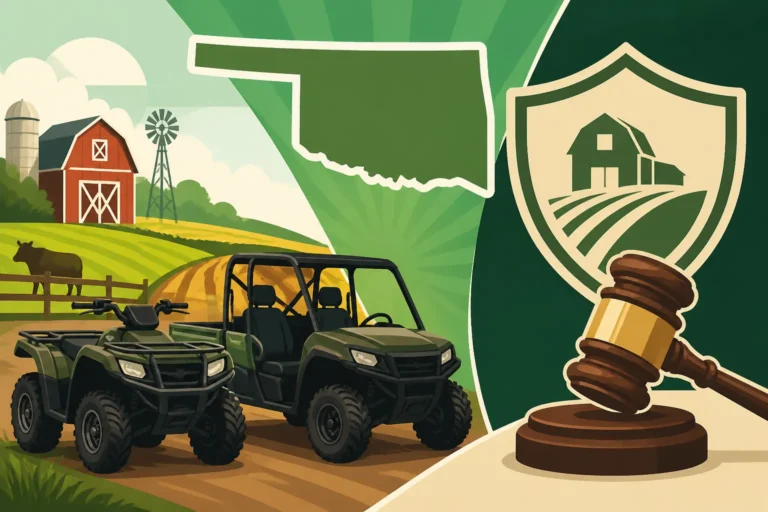
A significant shift occurred with the passage of legislation in 2021, creating a new pathway for UTVs to be registered as "street-legal" vehicles in Oklahoma. Prior to this, UTVs were generally treated as off-highway vehicles (OHVs), strictly limited to private land or designated trail systems. The new law acknowledged the growing popularity and utility of side-by-sides, especially for tasks that might involve short stints on public roads, such as traveling between fields for farm work or running errands in rural towns. This change was met with enthusiasm by many, opening up new possibilities for how and where their machines could be used.
What it ultimately did was allow UTV owners to apply for an annual street-legal plate and registration, distinct from the [Oklahoma ATV Registration You Pay Once] decal that most off-road machines display. This annual plate signifies that the UTV has met a particular set of criteria, making it eligible for specific public road use. It wasn't about making every UTV street-legal by default; rather, it created a process for those willing to equip their machines properly and adhere to a new set of rules. This meant a trip to the tag agency, filling out specific forms, and ensuring your UTV was ready for its new role on the pavement. You can learn more about this by reading [Oklahoma's Street-Legal UTV Statute].
Essential Equipment for a Road-Plated UTV
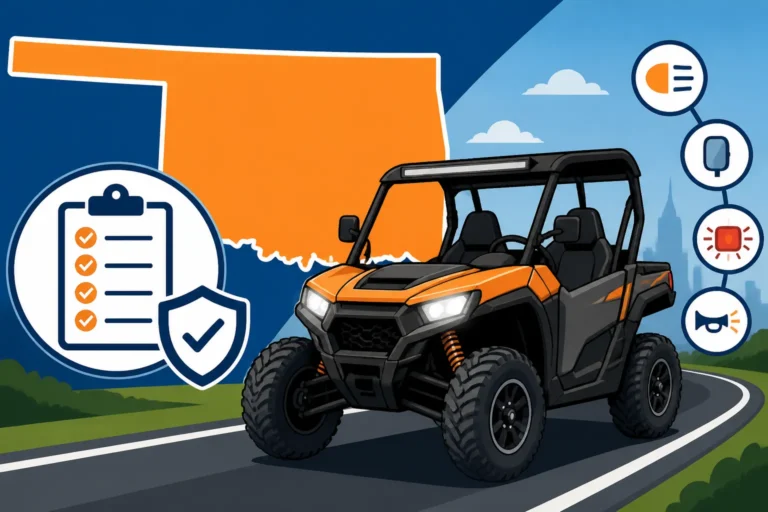
Getting a street-legal plate for your UTV isn't just a matter of paperwork; your machine needs to be physically equipped to meet specific safety standards. The state has outlined a clear list of items that must be present and fully functional on your UTV before it can be deemed roadworthy. This is critical for both your safety and the safety of others sharing the road, not to mention avoiding a citation from law enforcement. Ignoring these requirements means your UTV won't qualify for that coveted road plate, and if you're caught riding on the street without the proper equipment, you could face penalties.
The list of mandatory equipment typically includes headlights, taillights, brake lights, turn signals on both the front and rear, and at least one rearview mirror. A functional horn is also usually required, along with a windshield (or eye protection for the operator and passengers). Many riders find themselves turning to aftermarket suppliers like SuperATV for comprehensive street-legal conversion kits that bundle these necessary components, ensuring they meet all state regulations. These kits can simplify the process of upgrading your UTV, making sure you don't miss any critical piece of equipment. You'll find more details about what's needed in [Oklahoma Equipment Required for Street UTVs].
Where Street-Legal UTVs Can and Cannot Go in Oklahoma
While the new street-legal UTV laws are a welcome change for many, they come with very clear boundaries regarding where these machines can actually be operated. It's not a blanket permission slip to drive your UTV anywhere a car can go. Understanding these distinctions is crucial to avoid tickets, ensure your safety, and prevent any misunderstandings with law enforcement. The key takeaway is that certain types of roads, particularly those designed for high-speed traffic, remain strictly off-limits, no matter how many modifications your UTV has.
Prohibited Roads: Interstates and Federal Highways
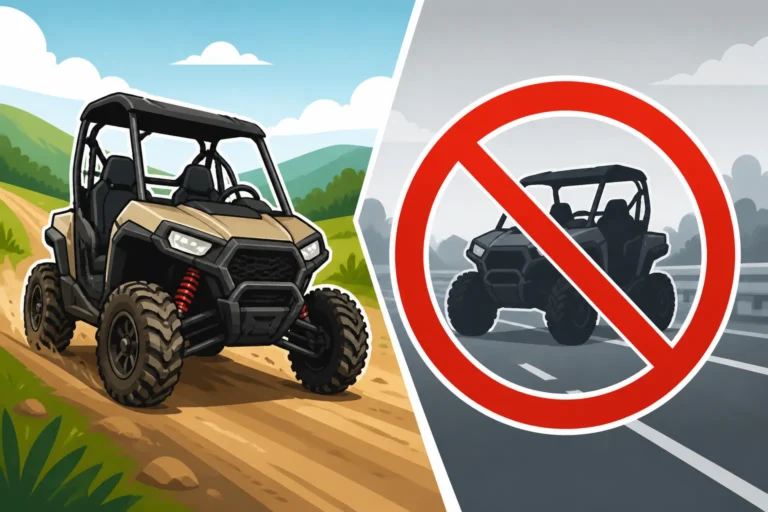
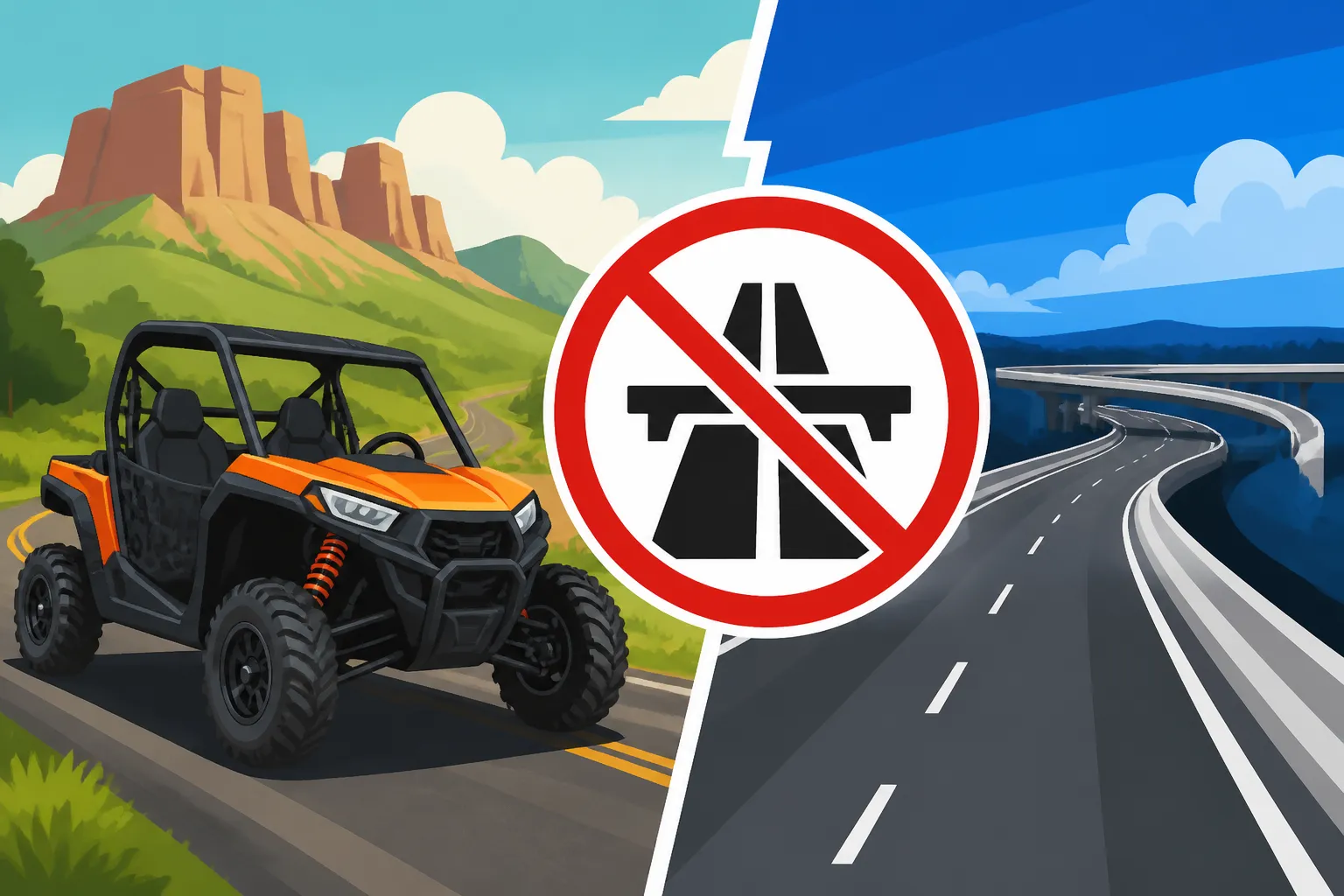
This is one of the most important rules to grasp: street-legal UTVs are not permitted on interstates or most US highways in Oklahoma. This restriction is primarily due to safety concerns. Interstates and federal highways are built for vehicles traveling at much higher speeds than UTVs are designed for. Imagine a UTV, even one capable of decent speeds, trying to merge into 70 mph traffic. The speed differential creates an extremely dangerous situation, increasing the risk of serious accidents. These types of roads also often have minimum speed limits that UTVs typically cannot meet, making them a hazard to the flow of traffic.
Even with all the required safety equipment installed, the fundamental design and speed capabilities of a UTV prevent it from safely sharing these high-speed arteries with cars and trucks. The law is explicit on this point, aiming to protect both UTV riders and other motorists. Attempting to drive your street-legal UTV on an interstate or a prohibited US highway can result in significant fines and the impoundment of your machine. This is a common point of confusion for riders, so it's vital to remember that even with a road plate, these major thoroughfares are still off-limits. You can read more about this specific restriction in [Oklahoma Street UTVs Stay Off Interstates].
Permitted Roads: City Streets and County Roads
Where street-legal UTVs can shine is on local roads. This primarily includes city streets and county roads, especially in more rural and suburban areas. The legislation allows for UTVs with valid street-legal plates to be operated on roads with speed limits generally lower than those found on interstates. However, there's an important caveat: local control. While the state law provides the framework, county commissioners and municipal governing bodies have the authority to decide which specific roads within their jurisdiction are open to street-legal UTVs. This means what's legal in one county or town might not be in another.
Many communities, recognizing the practical uses of UTVs for residents, have passed ordinances allowing their use on local streets. It’s always a good idea to check with the specific county or city where you plan to ride. Some may restrict UTVs to certain hours or impose their own speed limits. The general rule is that you can operate your street-legal UTV on roads where the posted speed limit is 35 mph or less, but local ordinances can still impose further limitations or open up specific roads. Riding on a county road for essential tasks, like heading to the local feed store or moving equipment between properties, is exactly the kind of use these laws were designed to facilitate. [Oklahoma County Commissioners and ATV Roads] further explains this local decision-making power.
Here’s a quick overview of where street-legal UTVs generally stand in Oklahoma:
| Road Type | Street-Legal UTV Access | Notes |
|---|---|---|
| Interstates | Prohibited | High speeds and safety concerns make them off-limits. |
| US Highways | Generally Prohibited | Most are off-limits, except for specific crossing scenarios. |
| State Highways | Generally Prohibited | Most are off-limits, except for specific crossing scenarios. |
| County Roads | Permitted (Conditional) | Varies by county; commissioners decide which roads are open. Speed limits apply. |
| City Streets | Permitted (Conditional) | Varies by municipality; local ordinances dictate access. Speed limits apply. |
| Private Property | Permitted | No special plate needed, standard OHV rules apply. |
Licensing, Registration, and Other Key Considerations
Beyond knowing where you can and can't ride, there are practical aspects of owning and operating a street-legal UTV in Oklahoma that you absolutely need to understand. These include who can drive, how often you need to update your paperwork, and how to handle situations like crossing major roads. Overlooking these details can lead to unnecessary hassle or even legal trouble, detracting from the enjoyment of your machine. Making sure you're squared away on these fronts ensures a smooth experience every time you take your UTV out.
Driver Requirements and Annual Renewals
For starters, not just anyone can hop behind the wheel of a street-legal UTV. In Oklahoma, the driver must be at least 16 years old and possess a valid driver's license. This is a crucial difference from typical off-road ATV or UTV riding, where age restrictions might be more about supervision than a state-issued license. Interestingly, you don't need a special "M" endorsement (like for motorcycles) on your driver's license to operate a street-legal UTV. The state recognizes it as a distinct vehicle type. This means a standard Class D driver's license is sufficient, provided you meet the age requirement. You can find more information about this in [Oklahoma Drivers Must Be 16 for a Street UTV].
Another significant difference from the standard [Oklahoma ATV Registration Never Renews] is that the registration for a street-legal UTV, which includes the road plate, must be renewed annually. This is just like registering a car or truck, and it ensures that your vehicle remains compliant with state regulations year after year. There will be an annual fee associated with this renewal, and you'll typically receive a new decal or sticker to affix to your plate. When you go to register, you will also be required to show proof of liability insurance, just as you would for any other street-legal vehicle. This annual renewal and insurance requirement are key details that set street-legal UTVs apart from their purely off-road counterparts, and it’s an ongoing cost factor to budget for, in addition to things like any custom parts or accessories you might buy from places like SuperATV.
Crossing Highways and Other Exceptions
While interstates and most major US and state highways are generally off-limits for continuous travel, there are specific, limited exceptions for crossing them. For instance, a street-legal UTV may be allowed to cross a state or US highway if the crossing is made at an intersection, during daylight hours, and by the most direct route possible. The speed limit on the highway at the point of crossing often cannot exceed 35 mph. These crossings are meant to be brief and utilitarian, designed to help you get from one permissible road to another, not to travel on the highway. It's about getting across, not riding along. Always exercise extreme caution when performing such a maneuver, as you're sharing the road with much faster vehicles. You can get more details on [Oklahoma Highway Crossings in Daylight].
It's also important not to confuse the street-legal UTV designation with the "instrument of husbandry" exception. An instrument of husbandry refers to vehicles, including some UTVs, used exclusively for agricultural purposes on a farm or ranch. These machines, while performing farm duties, might be exempt from certain registration requirements when crossing or briefly traveling on public roads. However, this exemption is very specific to agricultural use and does not grant general street-legal status for recreational or non-farm-related travel. A UTV used for hunting or recreational trail riding, even if it happens to be on a farm, would still need a street-legal plate to traverse public roads legally, unless operating strictly as a farm machine under specific conditions. Understanding these nuances is key to staying within the bounds of Oklahoma law, whether you're taking your machine to a riding park or just down the road to a neighbor's pasture.
Disclaimer
This article is for general informational purposes only and does not constitute professional advice. Laws, prices and regulations vary by location and change over time. Consult a qualified professional for guidance on your specific situation.