Oklahoma Rules Riders Get Wrong
It's easy to get lost in the ever-shifting landscape of Oklahoma's ATV and UTV laws, especially when it comes to figuring out where you can and can't ride your machine. Many riders operate under old assumptions or hear snippets of information that simply aren't the full picture, leading to frustration, confusion, and sometimes, even tickets. This guide is here to cut through the noise, validate those common confusions, and clarify the rules that Oklahoma riders often get wrong, helping you stay safe, legal, and truly enjoy your time on four wheels.
The Road Rules Riddle: Where Can You Actually Ride?
One of the biggest areas of misunderstanding for ATV and UTV owners in Oklahoma centers around road use. You see folks on side-by-sides driving down county roads, and you might think, "Hey, if they can do it, so can I!" But the reality is far more nuanced, and simply following someone else's lead can land you in hot water.
The Myth of "Any County Road"
This is probably the most pervasive myth out there: that all county roads are fair game for off-road vehicles. While it's true that some county roads are open to ATVs and UTVs, it's absolutely not a blanket rule. The authority to open county roads to off-road machines rests squarely with individual [Oklahoma County Commissioners and ATV Roads]. This means that what's legal in one county, or even on one road within a county, might be illegal just a few miles down the road in the next jurisdiction.
It's a frustrating situation because there isn't one simple map to consult. You really need to check with the specific county's commissioner's office or even look for posted signs. Imagine planning a long ride route only to find out halfway through that you've crossed into a county that hasn't approved ATV use on their roads. It's a real buzzkill, and it's why understanding this localized control is so crucial. Don't just assume; always verify. There's also the "instrument of husbandry" exception, which allows agricultural machinery, including some ATVs and UTVs used for farm work, to operate on public roads. However, this is strictly for agricultural purposes and isn't a free pass for recreational riding. [Oklahoma's Instrument of Husbandry Exception] makes it clear this is about getting work done, not trail riding.
Highway Crossings and Why Speed Matters
Another point of contention is crossing highways. Many riders mistakenly believe they can cross any highway at any point, or that simply having a street-legal UTV means they can navigate intersections like a car. The truth is, Oklahoma has specific, strict rules for crossing public highways, and they revolve heavily around safety and the flow of traffic.
First, you can only cross highways during [Oklahoma Highway Crossings in Daylight]. No nighttime crossings allowed. Second, the highway you're crossing must be posted with a speed limit of [Oklahoma Crossing Rules at 35 mph] or less. If it's a major highway with a 60 mph limit, that's a no-go for an ATV or UTV crossing, even if you’re quick about it. This rule is in place for obvious safety reasons – the speed differential between your machine and highway traffic creates a dangerous situation. Think about trying to zip across a busy four-lane highway with cars flying by; it’s just not safe. This restriction often limits crossings to more rural, less-trafficked state highways or county line roads where speed limits are naturally lower. Similarly, [Oklahoma Railway Crossings in Daylight] are allowed, but again, only during daylight hours and with extreme caution. Always treat a railway crossing like a stop sign, looking both ways multiple times before proceeding.
City Streets: Often a No-Go Unless There's an Ordinance
When it comes to city streets, the rules get even tighter. Generally, you cannot ride an ATV or UTV on city streets in Oklahoma unless that specific municipality has passed an ordinance allowing it. [Oklahoma Municipal Ordinances That Open Streets] are the key here. This isn't a statewide default. You can't just roll into your local town on your side-by-side because you saw someone else doing it in another town an hour away.
This often leads to confusion and frustration for riders who live in or near small towns. They might use their UTV for quick trips to the corner store or to visit a neighbor, thinking it's harmless. However, without a specific local ordinance, it's illegal. Always check with the city hall or local police department for the specific rules in your area. They can tell you if their streets are open to OHVs and if there are any restrictions, like specific hours or designated routes. It's a hassle, I know, but getting pulled over and ticketed for a simple misunderstanding is a worse hassle.
Street-Legal UTVs: It's More Than Just a Plate
The concept of a "street-legal UTV" is a game-changer for many riders, offering the promise of connecting trails, running errands, and generally expanding the utility of their machines. However, simply getting a road plate for your side-by-side doesn't automatically mean it's ready for any paved surface. There's a specific set of equipment and operational rules that often catch riders off guard.
Equipment That Makes a UTV "Street-Ready"
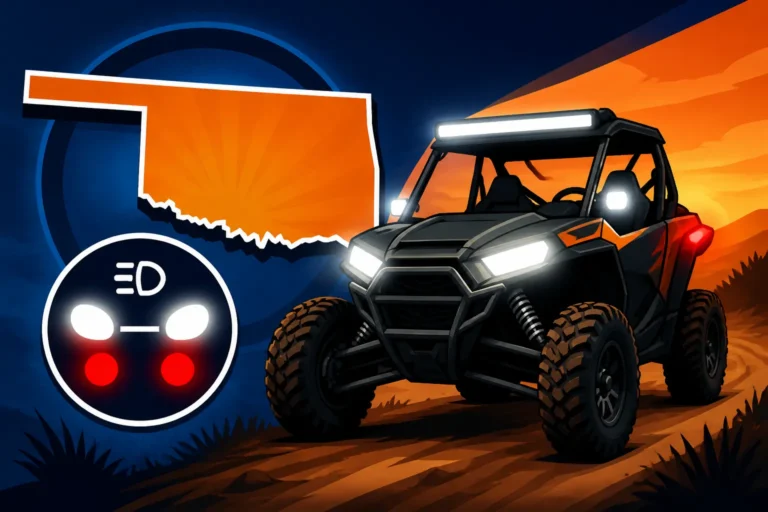
Many riders think "street legal" just means getting a tag. Not so fast! The state has clear requirements for a UTV to qualify for a road plate. These aren't suggestions; they are mandates that ensure your machine is visible and controllable on public roads. You’re looking at needing proper headlights, taillights, brake lights, and most importantly, [Oklahoma Turn Signals and Mirrors]. Yep, just like a car. This is often where riders realize their stock UTV isn't quite ready. Aftermarket companies like SuperATV offer fantastic kits that include integrated turn signals, mirrors, and even horns, making the conversion much smoother. Adding a [Oklahoma Horns on a Street UTV] is another crucial, often overlooked item.
These requirements exist for your safety and the safety of other motorists. Imagine trying to make a turn without a turn signal, or navigate traffic without proper mirrors. It's a recipe for disaster. So, before you even think about applying for that road plate, go through your machine with a checklist to ensure it meets all [Oklahoma Equipment Required for Street UTVs]. A lot of machines come pretty bare-bones from the factory, especially if they’re intended purely for off-road use, so be prepared to invest a bit in upgrades if road-worthiness is your goal.
Licensing, Age, and Insurance for Road Use
Just like driving a car, operating a street-legal UTV on public roads comes with specific driver requirements. This isn't like riding your dirt bike on private land where age and licensing might be more relaxed. For starters, [Oklahoma Drivers Must Be 16 for a Street UTV]. If you're under 16, even if you're a seasoned off-road rider, you simply can't legally drive a street-legal UTV on public roads.
And here's a big one: while you need a valid driver's license, Oklahoma is pretty unique in that you generally need [No Motorcycle Endorsement Needed] to operate a street-legal UTV. This is different from how many other states treat these vehicles, often classifying them under motorcycle or special vehicle endorsements. However, you absolutely do need [Oklahoma Insurance at Street Registration]. This isn't optional. Just like a car, your street-legal UTV must be insured to meet minimum liability requirements before you can even get that road plate. Don't skip this step; it protects you and others in case of an accident.
Where Street-Legal UTVs Still Can't Go
So, you've got your street-legal UTV, fully equipped, insured, and you've got your license. Does that mean the open road is completely yours? Not quite. Even with a road plate, there are still limitations on where you can operate these machines. The biggest and most important rules to remember are that [Oklahoma Street UTVs Stay Off Interstates] and [Oklahoma Street UTVs Stay Off US Highways].
These are high-speed, multi-lane roads designed for cars and trucks that can maintain highway speeds. Your UTV, even if it's capable of hitting 55 mph, isn't designed for that kind of sustained, high-speed travel alongside much heavier and faster vehicles. The risk is simply too great. This means while you can use your street-legal UTV on many county roads and potentially some state highways (if local ordinances allow and speed limits are low), you won't be taking it on I-35 or major US routes like Highway 69. It's important to understand these boundaries so you don't accidentally wander onto a prohibited road and face a ticket, or worse, a dangerous situation. These are safety-first restrictions, even if they sometimes feel like a limitation on your freedom to roam.
Understanding Registration, Titles, and Penalties
Beyond road rules, the administrative side of ATV and UTV ownership in Oklahoma—registration, titling, and fees—is another area ripe with misconceptions. Many riders, especially those new to the state or those who've owned older machines for years, often make incorrect assumptions about what's required and when.
The "One-Time" Registration Misconception
One of the most unique aspects of Oklahoma's ATV and UTV laws is the registration fee. Many people hear it's a "one-time" fee and immediately assume they never have to think about it again. And they're mostly right! Oklahoma charges an [Oklahoma ATV Registration You Pay Once] fee, which is often a surprisingly low amount. The best part? [Oklahoma Registration Never Renews]. You pay it once, and that's generally it for the life of your ownership of that machine in Oklahoma.
However, the "one-time" aspect often leads to confusion about transfers. If you sell your registered machine, the new owner will still need to register it in their name and pay the fee again. So, while it's "one-time" per owner, it's not "one-time" per machine indefinitely. Also, the registration comes with a decal, not a license plate. This decal is meant to be affixed to the front of your machine. [Oklahoma Decals on the Front of a Machine] is the rule, which is different from motorcycles that typically put it on the fork. For a side-by-side, it's often placed on a visible flat surface on the front, ensuring compliance with [Oklahoma Decal Placement on a Side-by-Side]. Make sure it's visible, as law enforcement will be looking for it.
The Real Story on Late Fees and Penalties
Life happens, and sometimes you miss that 30-day window to register your new-to-you ATV or UTV. The state gives you [Oklahoma's 30-Day Registration Deadline] from the date of purchase to get your machine titled and registered. If you miss it, you might be thinking, "Oh, it's just a small fee." But those [Oklahoma Late Registration Fees] can sneak up on you faster than you think.
The penalty is calculated daily, and it can really add up. [How the Daily Late Fee Adds Up] means that every single day past that 30-day mark adds to your bill. While it might start small, a few months of delay can turn that small registration fee into something much more substantial. Thankfully, there is a cap. [Oklahoma Late Penalties Capped at $100]. So, while it can get expensive if you drag your feet for a long time, at least you know there's a limit. It’s still a good idea to get it done on time to avoid unnecessary costs, but knowing the cap can alleviate some of the stress if you’re already past due.
Why Titles and VINs Matter, Even for Older Machines
Another common area of misunderstanding revolves around titles, especially for older machines. Many riders assume that if a quad is old enough, it doesn't need a title, or that the process is simply less formal. But Oklahoma does [Oklahoma Titles ATVs and UTVs], and understanding the specific cutoff dates is critical.
For ATVs, machines purchased or brought into the state after [Oklahoma ATV Cutoff of July 2005] generally require a title. For UTVs, the cutoff is slightly later, at [Oklahoma UTV Cutoff of July 2008]. This means that if you're buying a machine made before these dates, the titling process can be different, often relying on a [Oklahoma Bills of Sale for Older Machines] and a VIN verification process rather than a traditional chain of title. It can be a relief for those who inherited a grandparent's old quad without any paperwork. Always ensure you have a clear bill of sale and can locate the VIN number when dealing with any ATV or UTV, new or old. This protects you as the buyer and ensures a smooth registration process.
Safety, Passengers, and What Law Enforcement Looks For
Finally, let's talk about safety and what you can expect when interacting with law enforcement. Many of these rules are in place to prevent accidents and ensure everyone enjoys the trails and roads responsibly.
Helmet Laws Aren't Just for Dirt Bikes
When you think of helmets, you probably picture motocross riders or kids on dirt bikes. But Oklahoma's helmet law extends to ATV and UTV riders as well, specifically for younger individuals. [Oklahoma Helmet Law for Riders Under 18] states that any rider or passenger under the age of 18 must wear a DOT-approved helmet while operating or riding an ATV or UTV on public lands, public roads (where allowed), or any area where the state's off-highway vehicle rules apply.
This often surprises parents who let their teens ride on private land without helmets. While private land rules are up to the landowner, once you hit a public access point, that helmet rule kicks in. It’s not about stifling fun; it’s about protecting young heads. A serious head injury can change a life in an instant, and a helmet is the cheapest insurance you can buy. Even if you're over 18, wearing a helmet is always a smart choice, especially when riding challenging terrain or at higher speeds.
Passenger Rules: Factory Seats, Not Just Any Seat
Another common safety misconception is about carrying passengers. Many quads are designed for a single rider, but you'll often see someone riding on the back rack or squeezed into a tight space. This is a big no-no under Oklahoma law. [Oklahoma Passenger Rules on a Quad] are clear: passengers are only permitted if the machine was specifically designed by the manufacturer to carry more than one person. This usually means a dedicated passenger seat with handholds or a side-by-side with factory-installed seating.
[Oklahoma Passengers the Factory Allowed] is the key phrase here. Don't try to jury-rig a passenger seat or let someone ride on the fender. These machines handle differently with extra weight, especially if that weight isn't properly distributed or secured. It can affect steering, braking, and overall stability, turning a fun ride into a dangerous situation. Always check your owner's manual for the manufacturer's recommendations on passenger capacity.
What to Expect from a Trooper or Game Warden
It’s important to understand that law enforcement takes ATV and UTV regulations seriously. You might encounter a county sheriff, a state trooper, or even a game warden on public lands or roads. [Oklahoma Park Rangers as Enforcers] also have the authority to issue citations in state parks or OHV areas.
When an officer pulls you over, they'll likely be checking for a few key things: proof of registration (that front decal!), proof of ownership (title or bill of sale), and whether your machine and riding practices comply with safety and road-use laws. [What a State Trooper Can Ask to See] includes your driver's license, if you're operating on a public road. If you're riding with minors, they'll verify helmet use. The good news is that for most ATV/UTV violations, [Oklahoma's Fine Cap for ATV Violations] is relatively low, often capping out around $25 for many non-moving infractions. However, this doesn't include court costs or potential impoundment in more serious cases, and it certainly doesn't apply to things like DUI. Be polite, have your paperwork ready, and understand that they're generally there to ensure everyone's safety.
Here's a quick summary of some common misconceptions versus the reality:
| Common Misconception | Oklahoma Reality |
|---|---|
| "All county roads are open to ATVs/UTVs." | Only county roads where [Oklahoma County Commissioners and ATV Roads] have specifically opened them. Varies by county. |
| "I can cross any highway." | Only highways with a [Oklahoma Crossing Rules at 35 mph] or less, and only in [Oklahoma Highway Crossings in Daylight]. |
| "A street-legal UTV can go anywhere a car can." | [Oklahoma Street UTVs Stay Off Interstates] and [Oklahoma Street UTVs Stay Off US Highways]. |
| "My ATV registration renews annually." | [Oklahoma Registration Never Renews]; it's a [Oklahoma ATV Registration You Pay Once] per owner. |
| "Late registration fees are minor." | Fees accrue daily, though [Oklahoma Late Penalties Capped at $100]. Get it done within [Oklahoma's 30-Day Registration Deadline]. |
| "Old ATVs don't need titles." | [Oklahoma Titles ATVs and UTVs] generally apply to quads after [Oklahoma ATV Cutoff of July 2005] and UTVs after [Oklahoma UTV Cutoff of July 2008]. |
| "Kids don't need helmets if they're good riders." | [Oklahoma Helmet Law for Riders Under 18] is mandatory on public lands/roads. |
| "I can carry a passenger if they can hold on." | Passengers only allowed if [Oklahoma Passengers the Factory Allowed] and the machine has designated seating. |
| "Law enforcement doesn't care about off-road machines." | State Troopers, Game Wardens, and [Oklahoma Park Rangers as Enforcers] all enforce ATV/UTV laws. |
Disclaimer
This article is for general informational purposes only and does not constitute professional advice. Laws, prices and regulations vary by location and change over time. Consult a qualified professional for guidance on your specific situation.