Oklahoma Helmet Law for Riders Under 18
It’s a common sight across our great state: families loading up their ATVs and UTVs, ready for a weekend of trail riding or just getting chores done on the back forty. But when you’ve got younger riders in the mix, there’s often a nagging question that pops up, causing a bit of confusion and even some anxiety for parents: what exactly does Oklahoma's helmet law say about kids on these machines? It can feel like navigating a maze, trying to keep everyone safe while also understanding your legal obligations. This guide is here to untangle those rules, clarify the requirements for riders under 18, and help you ensure every outing is both fun and fully compliant with Oklahoma law.
Understanding Oklahoma's ATV & UTV Helmet Laws for Minors
Let’s get right to the heart of the matter. Oklahoma takes the safety of its youngest off-road enthusiasts very seriously, and that's reflected in the state's helmet laws. For anyone who's ever worried about a child taking a tumble, whether it's on a sandy dune or a rocky trail, the reasoning behind these rules is pretty clear. The law is designed to provide a layer of protection against serious injury, because even a low-speed tip-over can have devastating consequences if a rider's head isn't properly protected.
The Core Mandate: Who Must Wear a Helmet
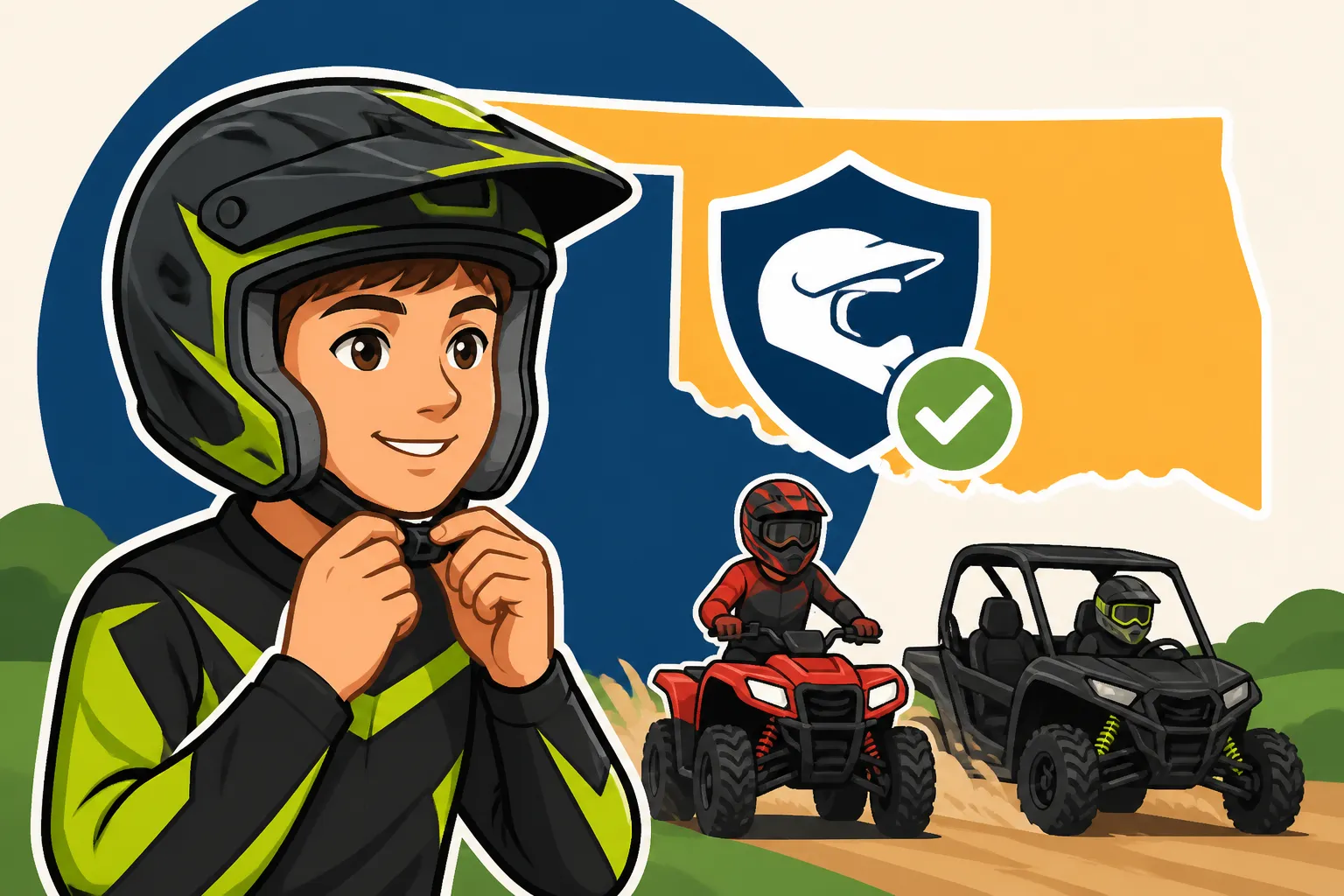
In Oklahoma, the law is quite explicit: any person under the age of eighteen (18) years operating or riding as a passenger on an all-terrain vehicle (ATV) or utility vehicle (UTV) must wear a safety helmet. This isn't a suggestion; it's a mandatory requirement. It doesn't matter if they're just zipping around the pasture or tackling the challenging trails at Little Sahara. If they're under 18 and on an ATV or UTV, that helmet needs to be securely fastened. This rule applies whether they are driving the machine or simply riding along as a passenger, so if you're taking your child for a ride on a side-by-side, they'll need a helmet just as much as if they were driving their own youth quad.
This mandate covers virtually all scenarios where a minor is on an off-road machine. There's no exception for enclosed cabs or roll cages, which is a common misconception. While a roll cage certainly adds a layer of safety, it doesn't eliminate the risk of head injury in a rollover or collision, especially when you consider potential impacts with interior components or the ground itself. The law prioritizes direct head protection for young, developing riders, acknowledging that even with modern machine design, the forces at play in an accident can be significant. So, if your teen is out exploring the trails on a [Four-Seat UTV Prices] or even a smaller machine, make sure their helmet is the first piece of gear they put on.
Defining "Minor": Age Ranges and Legal Responsibility
When the law states "under the age of eighteen (18) years," it's pretty straightforward. This means anyone from toddlers riding as passengers with a supervising adult to seventeen-year-olds who might be experienced riders. Until that 18th birthday arrives, the helmet requirement is firmly in place. As a parent or guardian, you bear the primary legal and moral responsibility for ensuring these young riders comply with the law. It’s not just about avoiding a ticket; it’s about protecting your child.
Understanding this age cutoff is crucial for parents and guardians. It means that even if your 16-year-old feels like a seasoned pro on their quad and perhaps even drives a car, the state still requires them to wear a helmet when operating an ATV or UTV. This often leads to discussions in families about responsibility and freedom, but the law is clear-cut. For parents of younger children, it means actively supervising and enforcing this rule from the very first ride. You'll want to ensure that if you're planning a family trip to an off-road park, everyone under 18 has a properly fitting helmet ready to go. Consider checking out resources like [Oklahoma Rules for a Teen Rider] for more context on young operator guidelines.
Why the Law Exists: Safety First
At its core, the Oklahoma helmet law for minors is a preventative measure, designed to mitigate the severe consequences of head injuries. Off-road riding, while incredibly fun and exhilarating, carries inherent risks. Machines can roll, riders can be ejected, and collisions with trees, rocks, or other machines can happen unexpectedly. The human skull, especially in younger individuals, is more vulnerable to impact, and traumatic brain injuries can lead to lifelong disabilities or even fatalities.
The statistics on ATV and UTV accidents involving minors are stark, and they paint a clear picture of why these laws are so vital. A properly fitted and certified helmet can absorb significant impact energy, dispersing the force and preventing direct trauma to the head. It's a proven life-saver, and for parents, that peace of mind is invaluable. The law reflects a societal commitment to safeguarding children, recognizing that while recreational activities are important, safety must always be paramount. This protective mindset extends to programs like [Oklahoma Safe Riders Program], which aims to educate riders of all ages on best safety practices.
Specific Scenarios: Where the Helmet Law Applies
One of the trickiest parts about ATV and UTV regulations is figuring out where they actually apply. It's easy to assume that if you're on private land, all bets are off, but that's not always the case, especially concerning minors. Oklahoma's helmet law for riders under 18 casts a fairly wide net, ensuring protection in most environments where these machines are operated.
Riding on Public Land and State Parks
When you're out enjoying Oklahoma's fantastic public lands, like the sand dunes of Little Sahara State Park or the trails at Robbers Cave OHV Area, the helmet law for minors is unequivocally enforced. These areas are under state jurisdiction, and park rangers, game wardens, and even state troopers are authorized to enforce these safety regulations. If a minor is observed riding without a helmet, you can expect a citation. It’s not just a matter of park rules; it’s state law.
Many of these parks, including Little Sahara, have additional safety requirements, such as flags and whips, but the helmet rule for young riders is non-negotiable. Before you even pull your machine off the trailer, make sure every rider under 18 has their helmet on and securely fastened. It's part of the routine check that any responsible rider performs. Ignoring this can not only lead to legal trouble but, more importantly, put a child at serious risk in an environment where unexpected terrain changes and other riders are common. [Little Sahara's 10-Foot Whip Rule] is another key regulation to remember in this environment.
County Roads and Municipal Streets (If Permitted)
Navigating whether you can even ride an ATV or UTV on a county road or municipal street in Oklahoma is a whole separate conversation with its own set of rules and caveats. But let's assume, for a moment, that you're in an area where local ordinances or state statutes, like [Oklahoma County Commissioners and ATV Roads], specifically permit the use of these machines on certain public roads. Even in these limited scenarios, if a rider under 18 is operating or riding on that machine, the helmet law still applies.
The intent of the helmet law isn't to differentiate based on the surface; it's about protecting the rider. A head injury can occur just as easily on a paved county road if there's a collision or loss of control as it can on a dirt trail. While the rules for [Oklahoma Street-Legal UTV Class Explained] open up new possibilities for road use, the helmet mandate for minors remains a constant. So, if your municipality has opened up some streets for UTVs, and your teenager is driving, they still need to be wearing a DOT-approved helmet. This is an important distinction, as some might mistakenly believe that road-legal status negates the need for a helmet for minors, which it absolutely does not.
Private Property: What the Law Says (or Doesn't)
This is where things can get a bit hazy for some folks. You might think, "Well, it's my land, my rules." And to a certain extent, that's true for adults. However, for riders under 18, the Oklahoma helmet law generally applies across the board, whether on public or private land. The statute doesn't contain a specific exemption for private property. This means that if a law enforcement officer witnesses a minor riding an ATV or UTV without a helmet on private property, they could still issue a citation.
While enforcement on private land might be less common than in state parks, the law's intent is to protect minors wherever they ride. This places a significant responsibility on landowners and parents. Even if you're just using a machine for farm work or fun in your own backyard, it’s crucial to ensure young riders have their helmets on. Think of it not just as compliance, but as a non-negotiable safety practice for anyone you care about. When you're teaching your child to ride on your own property, establishing good safety habits from the start, including consistent helmet use, is paramount. This includes understanding [Oklahoma Rules for Riding Farm Ground] and applying all safety rules, not just some of them.
What Kind of Helmet: Meeting Safety Standards
It’s not enough to just wear a helmet; it needs to be the right kind of helmet. Just like you wouldn't trust a toy helmet to protect a child's head during a serious fall, the law and common sense demand a helmet that meets recognized safety standards. This section dives into what makes a helmet truly protective and how to choose one that offers the best safety for your young rider.
DOT Certification: The Gold Standard
When it comes to ATV and UTV helmets in Oklahoma, particularly for riders under 18, you should always look for a helmet that is DOT-certified. DOT stands for the U.S. Department of Transportation, and this certification means the helmet has met specific federal safety standards designed to protect against impact and penetration. You'll typically find a DOT sticker on the back of the helmet, indicating its compliance.
Choosing a DOT-certified helmet is non-negotiable for serious protection. These helmets are subjected to rigorous testing, evaluating their ability to absorb impact, resist penetration, and remain secure on the rider's head. Without this certification, a helmet's protective qualities are questionable, and it may not offer adequate safety in an accident. Always verify the DOT certification before purchasing any helmet for a minor. Brands like SuperATV, while known for parts and accessories, also emphasize safety and would recommend properly certified gear. For further reading, understanding [Oklahoma Helmet Standards for Young Riders] might be helpful.
Full-Face vs. Open-Face: Practical Considerations
While any DOT-certified helmet is a good start, the type of helmet can also play a role in overall protection. Generally, full-face helmets offer the most comprehensive protection for off-road riding. They cover the entire head, including the chin and jaw, which are vulnerable areas in a frontal impact or slide. Many full-face off-road helmets also feature a visor and an extended chin bar, specifically designed to protect against roost, debris, and impacts with the ground or obstacles.
Open-face helmets, while legal if DOT-certified, leave the face and jaw exposed. While some riders might prefer them for perceived better ventilation or field of vision, the trade-off in protection, especially for younger, less experienced riders, is significant. For children, who might be more prone to tumbles and less predictable movements, the added security of a full-face helmet is often the wisest choice. Always weigh the level of protection against personal preference, especially when it concerns a minor’s safety.
Proper Fit and Maintenance for Maximum Protection
Even the most expensive, DOT-certified helmet is useless if it doesn't fit correctly or isn't properly maintained. A helmet that is too large can shift during an impact, compromising its protective ability, while one that is too small can be uncomfortable and cause headaches, tempting the rider to remove it. A helmet should fit snugly, with no excessive movement when shaken, but without causing painful pressure points. The chin strap should always be fastened securely, allowing no more than two fingers to slip underneath.
Maintenance is also key. Helmets are designed to absorb one major impact. If a helmet has been in a crash, even if there's no visible damage, its structural integrity may be compromised, and it should be replaced immediately. Also, inspect the helmet regularly for cracks, frayed straps, or degraded padding. Exposure to harsh chemicals, extreme temperatures, or prolonged UV light can also weaken materials. Keeping a helmet clean and stored properly in a cool, dry place will prolong its life and ensure it's ready to offer maximum protection when needed.
Here’s a quick overview of helmet types and their protective features:
| Helmet Type | Primary Coverage | Pros | Cons | Best For |
|---|---|---|---|---|
| Full-Face | Entire head, face, chin | Maximum protection against impacts, debris | Can feel warm, sometimes limits peripheral view | Aggressive trail riding, inexperienced riders, minors |
| Modular | Entire head (chin bar flips up) | Versatility, good protection when closed | Heavier, chin bar not always as strong as full-face | Touring, some casual trail riding, versatility |
| Open-Face | Top, back, sides of head | Lighter, better ventilation, wider view | No face/chin protection, vulnerable to debris | Casual cruising, warmer weather (with eye protection) |
| Off-Road (MX) | Entire head, chin bar, peak visor | Excellent ventilation, debris protection, goggle integration | Requires separate eye protection, chin bar can feel exposed on road | Dedicated off-road, dirt bike, ATV/UTV riding |
Consequences of Non-Compliance: What to Expect
Ignoring the Oklahoma helmet law for riders under 18 isn't just a lapse in judgment; it carries real legal consequences. While the primary goal of the law is safety, the state also has enforcement mechanisms in place to ensure compliance. Understanding these penalties can help reinforce the importance of always strapping on that helmet.
Fines and Penalties for Violations
If a law enforcement officer observes a minor riding an ATV or UTV without a helmet, a citation can be issued. In Oklahoma, the penalties for ATV/UTV violations, including those related to helmet use, are often considered minor offenses, but they still carry a financial cost. While specific fine amounts can vary, the state has set a cap on penalties for ATV violations. According to [Oklahoma Penalties Capped at $25], fines for such infractions are generally low, typically around $25, plus court costs.
While $25 might not seem like a huge sum, it's still money out of your pocket that could have been avoided. More importantly, a citation serves as a formal reminder of the law and the seriousness with which the state views the safety of young riders. It can also lead to an uncomfortable interaction with law enforcement and a potential mark on the minor's record, even if it's not a driving record. The inconvenience and the message sent are often more impactful than the dollar amount of the fine itself.
Enforcement: Who Can Issue a Citation
It's not just highway patrol officers who can enforce these laws. In Oklahoma, various law enforcement agencies have the authority to issue citations for ATV and UTV violations, including the helmet law for minors. This includes Oklahoma Highway Patrol troopers, county sheriffs and their deputies, municipal police officers (if ATVs are allowed on city streets), and importantly, Oklahoma State Park Rangers and Game Wardens.
This widespread enforcement means that whether you're riding on a county road, a state park, or even on private land where an officer happens to witness a violation, the possibility of a citation exists. State Park Rangers, in particular, are often very vigilant about safety rules within their jurisdictions, as they are regularly dealing with recreational riders and are acutely aware of potential hazards. So, when you’re venturing out to public lands, always assume that the rules, including helmet use for minors, will be enforced. [Park Rangers Can Write an ATV Ticket Too] highlights this broad enforcement authority.
Impact on Insurance and Liability
Beyond the immediate fines, non-compliance with helmet laws can have significant implications for insurance claims and legal liability in the event of an accident. If a minor is injured in an ATV or UTV accident while not wearing a helmet, and a helmet was legally required, this can complicate any insurance claims for medical expenses. Insurance companies might argue that the injuries were exacerbated by the lack of a helmet, potentially reducing payouts or even denying certain aspects of the claim.
Furthermore, parents or guardians could face increased legal liability. If a child is injured due to not wearing a helmet, and that helmet was legally mandated, the supervising adult could be held negligent. This opens the door to potential lawsuits for medical costs, pain and suffering, and other damages, especially if the accident involves another party or occurs on property that isn't solely your own. While many families have [Oklahoma ATV Insurance Costs], failing to follow basic safety laws can undermine the very protection that insurance is meant to provide. Prioritizing helmet use isn't just about avoiding a ticket; it's about safeguarding your family's financial and legal well-being in the long run.
Beyond the Helmet: Other Safety Considerations for Young Riders
While a helmet is absolutely critical, it's just one piece of the overall safety puzzle for young ATV and UTV riders. A truly comprehensive approach to safety involves several other factors, from choosing the right machine to providing proper training and ensuring additional protective gear is worn.
Age and Size Appropriateness of Machines
One of the most crucial, yet sometimes overlooked, aspects of youth ATV/UTV safety is ensuring the machine itself is appropriate for the rider's age and size. It's incredibly tempting to put a young child on a machine that's too powerful or too large, thinking they'll "grow into it," but this is a dangerous mistake. Over-sized machines are harder to control, harder to reach critical controls, and significantly increase the risk of accidents. The industry, through organizations like the ATV Safety Institute, provides clear guidelines for youth ATV sizes based on age.
These guidelines typically categorize youth ATVs by engine size (cc) and physical dimensions. For example, a young child should be on a machine with a smaller engine, lower top speed, and physical dimensions that allow them to comfortably reach handlebars, footrests, and brake levers while maintaining proper posture. For UTVs, while they offer a more stable platform, ensuring the child can safely operate the controls and is secured with appropriate restraints is vital. Always match the machine to the rider, not the other way around. This ties into [Oklahoma ATV Age Requirements] which also govern who can operate what machine.
Supervised Riding and Training Programs
Even with the right helmet and the right machine, young riders need proper supervision and training. Letting a child loose on an ATV or UTV without teaching them basic riding skills, safety maneuvers, and an understanding of terrain can quickly lead to trouble. Structured training programs, like those offered by the ATV Safety Institute (ASI), teach critical skills such as starting and stopping, turning, climbing hills, emergency braking, and hazard avoidance.
Beyond formal training, active adult supervision is essential, especially for inexperienced or very young riders. This means more than just being in the general vicinity; it means direct observation, coaching, and setting clear boundaries and rules for riding. A supervisor can quickly intervene if a child gets into difficulty, spot potential hazards, and reinforce safe riding habits. The goal is to gradually build confidence and skill in a controlled environment, making safety a natural part of the riding experience. Consider looking into [Oklahoma Online Safety Courses] for accessible training options.
Essential Riding Gear Beyond the Helmet
While the helmet protects the head, the rest of the body also needs safeguarding. Beyond the mandatory helmet for minors, other essential riding gear should include:
- Eye Protection: Goggles or a helmet visor are critical to protect against dust, debris, insects, and branches. A branch to the eye could cause permanent damage.
- Long-Sleeved Shirt and Long Pants: These provide a barrier against scrapes, cuts, sunburn, and mild impacts.
- Gloves: Protect hands from blisters, abrasions, and offer a better grip on the handlebars.
- Over-the-Ankle Boots: Sturdy boots protect ankles and feet from impacts, crushing injuries, and prevent feet from slipping off footrests.
- Chest Protectors/Body Armor: For more aggressive riding or higher speeds, a chest protector can guard against roost, impacts with handlebars, or minor falls.
Brands like SuperATV offer a range of accessories that complement safety gear, such as mirrors for increased visibility on UTVs or sturdy winches that can help recover a machine from a tricky spot, indirectly contributing to safer recovery situations. Equipping young riders with a full complement of gear significantly reduces the risk of injury in the event of an accident.
Educating Riders and Parents: Resources and Best Practices
Knowledge is power, especially when it comes to safety. For Oklahoma ATV and UTV riders and their parents, there are fantastic resources available to help everyone understand the rules, develop safe riding habits, and foster a culture of responsibility. Leveraging these tools is a crucial step in preventing accidents and ensuring enjoyable rides.
Oklahoma's Safe Riders Program
Oklahoma has its own initiative, the [Oklahoma Safe Riders Program], which aims to educate and promote safe off-road vehicle operation throughout the state. While it doesn't mandate a safety course, it strongly encourages participation, particularly for youth. This program often offers educational materials, tips, and sometimes even hands-on training opportunities designed to improve rider skill and awareness.
For parents, exploring the Safe Riders Program resources is an excellent way to get up-to-date information on state laws, recommended safety practices, and local training opportunities. It's a localized source of information that directly applies to riding conditions and regulations within Oklahoma. Keeping an eye on what the Highway Patrol offers through this program can ensure you're always aligned with the latest safety recommendations.
ATV Safety Institute (ASI) Training
The ATV Safety Institute (ASI) is a national organization that offers comprehensive, hands-on ATV RiderCourses designed for both adults and youth. These courses are taught by certified instructors and cover everything from pre-ride inspections and basic controls to more advanced riding techniques and hazard awareness. For youth, the courses are specifically tailored to their developmental stage and learning styles.
Taking an ASI RiderCourse is one of the best investments you can make in a young rider's safety. It provides structured learning in a controlled environment, helping riders develop the skills and judgment needed to operate an ATV safely and responsibly. Many courses are available across the country, and finding one near you could be a game-changer for your family's riding safety. It's about building confidence through competence, and these courses do just that.
Leading by Example: Parental Responsibility
Perhaps the most powerful teaching tool for young riders is parental example. Children are incredibly observant, and they will emulate what they see their parents or guardians doing. If adults consistently wear helmets, protective gear, and ride responsibly, children are far more likely to adopt those same habits without argument. Conversely, if adults cut corners on safety, children will quickly learn that it's okay to do the same.
Leading by example extends beyond just wearing a helmet. It means demonstrating respect for the land, adhering to posted speed limits, avoiding reckless behavior, and always being prepared for the unexpected. It means making safety checks a routine and discussing potential hazards before each ride. By consistently modeling safe and responsible riding behavior, parents instill lifelong habits that protect their children, not just from accidents, but also from potential legal issues and fines. This responsibility is also highlighted in [Oklahoma Rules for a Child Passenger].
Addressing Common Misconceptions and FAQs
It’s completely understandable that there are a lot of questions and even some myths circulating about ATV and UTV laws, especially when it comes to youth riders. Let’s clear up some of the most common misconceptions we hear out on the trails and around the campfire.
"My UTV has a roll cage, so helmets aren't needed."
This is one of the most persistent myths, particularly with the growing popularity of side-by-sides. Many people believe that because a UTV has a roll cage and seatbelts, it offers similar protection to a car, and therefore, helmets aren't necessary, especially for minors. This is absolutely false under Oklahoma law for riders under 18. The law clearly states that any person under 18 operating or riding in an ATV or UTV must wear a safety helmet.
While a roll cage and seatbelts certainly enhance safety by helping to keep occupants contained within the vehicle during a rollover, they do not eliminate the risk of head injury. In a severe rollover, occupants can still hit their heads on the roll cage, the ground, or other interior components. Ejection, while less likely with seatbelts, is still possible in extreme crashes. The helmet provides crucial impact absorption directly to the head, which the roll cage alone cannot. So, whether it's an open-air UTV or one with a full enclosure, the helmet rule for minors remains unchanged.
"The law only applies to dirt bikes, not ATVs."
Another common misunderstanding is that helmet laws are primarily for motorcycles or dirt bikes, and ATVs or UTVs are somehow exempt. This is also incorrect. Oklahoma law specifically includes "all-terrain vehicles" and "utility vehicles" in its helmet mandate for minors. The language is quite broad and inclusive, making no distinction between these different types of off-road machines when it comes to protecting young heads.
The risks of head injury are present across all types of off-road vehicles. While dirt bikes might be perceived as faster or more prone to jumps, ATVs and UTVs have their own unique risks, such as rollovers due to their wider stance or stability issues on uneven terrain. The law is designed to cover the inherent dangers of off-road vehicle operation for minors, regardless of the machine type. If it's a quad, a three-wheeler (yes, some are still around!), or a side-by-side, the helmet rule for kids applies.
"What if we're just on our farm?"
Many farmers and ranchers use ATVs and UTVs as essential tools for daily operations, and often, children are involved in these tasks. The question then arises: does the helmet law apply if a minor is operating or riding on a machine exclusively on private farm or ranch land? As discussed earlier, the Oklahoma statute mandating helmet use for minors under 18 does not explicitly include an exemption for private property or agricultural use.
This means that technically, the law still applies, even on your own farm. While direct enforcement might be less frequent than in a public park, the legal obligation remains. More importantly, the safety reason for the law doesn't change just because you're on private land. A rollover or accident on the back forty can be just as dangerous as one on a public trail. As responsible parents and landowners, establishing the habit of helmet use for minors on all rides, regardless of location, is the safest and most legally sound approach. Even if your machine is covered by an [Oklahoma Agricultural Permit Exemptions] for taxes, it doesn't exempt the minor from helmet laws.
Future Outlook: Potential Legislative Changes
Laws are rarely static, and regulations surrounding ATV and UTV use, especially those concerning safety, can evolve over time. While Oklahoma's helmet law for minors has been in place for a while, there are always discussions and proposals that could potentially alter or expand these rules. Staying informed is key to being a responsible rider and advocate.
Bills That Would Change Youth Helmet Requirements
From time to time, legislative bodies consider new bills that aim to enhance off-road vehicle safety. These discussions sometimes include proposals to expand helmet mandates, such as requiring all riders, regardless of age, to wear helmets on public lands, or to clarify existing statutes. Advocacy groups for rider safety often push for stronger regulations, citing accident statistics and injury prevention data.
Conversely, there can also be efforts to modify existing laws, perhaps to introduce exemptions under very specific, controlled circumstances, though these are typically met with significant opposition from safety advocates. While there isn't a current, widely publicized bill to drastically change the youth helmet law in Oklahoma at this moment, it's wise to stay aware of legislative sessions and any new proposals that could impact how and where young riders must wear helmets. This might include bills related to [Oklahoma Bills on Youth Helmets] or other similar initiatives.
The Push for Universal Helmet Laws
Beyond just minors, there's often a broader conversation around the concept of "universal helmet laws" for all ATV and UTV riders. This would mean that every single person, regardless of age, would be required to wear a helmet when operating or riding on these machines, similar to some motorcycle helmet laws. Proponents argue that head injuries are severe and costly for all age groups, and that a universal law would simplify enforcement and significantly reduce fatalities and serious injuries.
However, universal helmet laws also face resistance from some adult riders who value personal freedom and prefer to make their own choices regarding safety gear. While Oklahoma currently mandates helmets only for those under 18, the conversation about extending this to all riders is one that periodically resurfaces. It's a balance between individual liberty and public health concerns. For now, the focus remains firmly on protecting our youngest and most vulnerable riders.
Staying Informed About Evolving Regulations
For parents, enthusiasts, and anyone involved in the Oklahoma ATV and UTV community, staying informed about evolving regulations is crucial. This means keeping an eye on official state government websites, especially those of the Department of Public Safety or relevant legislative committees. Local ATV clubs and riding organizations can also be great sources of information, as they often track proposed changes and communicate them to their members.
Subscribing to newsletters from state parks or off-road advocacy groups can also help you receive timely updates. Being proactive in understanding the laws ensures that you and your family are always compliant, avoiding potential fines, and more importantly, always prioritizing safety. The landscape of off-road recreation is dynamic, and rules can change, so making it a habit to check for updates will serve you well.
Disclaimer
This article is for general informational purposes only and does not constitute professional advice. Laws, prices and regulations vary by location and change over time. Consult a qualified professional for guidance on your specific situation.