Which Riders a Private Park Requires to Wear Helmets
A helmet rule at a private riding park can be stricter than the rule you expect from riding at home. It may apply to every rider, only to children, or to anyone on a machine without a protective cage. The safest plan is to check the park’s written policy before you load up, then confirm what counts as an acceptable helmet.
Why a private park can set its own helmet rule
A private park’s helmet policy is a condition of riding on that property. It can require more protection than a rider expects from state law or from the rules at another riding area. A park may require helmets for all riders, including adults on machines with roll cages, even if the rider believes a helmet is optional elsewhere.
That distinction matters because “the law doesn’t require it in this situation” does not mean “the park will let me ride without one.” A private operator can set admission and safety conditions for its trails, tracks, and other riding areas. If you do not meet those conditions, staff may refuse access or ask you to stop riding.
Oklahoma has helmet requirements for riders under 18 in specified ATV contexts. The exact legal requirement depends on where and how the machine is being operated, so do not assume that a state rule applies identically to every private facility or every activity. A park may also have its own, broader policy. For background on the state rule, see Oklahoma Helmet Law for Riders Under 18 and Oklahoma Rules for Young Riders.
A useful way to think about the two requirements is:
| Requirement | Who sets it | What it controls |
|---|---|---|
| State law | The state | Where and when a helmet is legally required |
| Park policy | The private park operator | Who may ride at that facility and what safety gear they must wear |
| Event or group rule | The organizer or park | Additional conditions for a particular ride, race, or activity |
You need to follow whichever applicable requirement is stricter. A rider who satisfies a state rule but not the park policy may still be barred from riding. Likewise, a park’s helmet policy does not replace any legal requirements that apply to the rider.
Do not assume that the words “private park” mean the same thing as “private land with no rules.” The facility can have posted rules, admission terms, waivers, age limits, and required equipment. If a rule is unclear, ask the operator before arriving rather than relying on another rider’s recollection.
Which riders may have to wear helmets
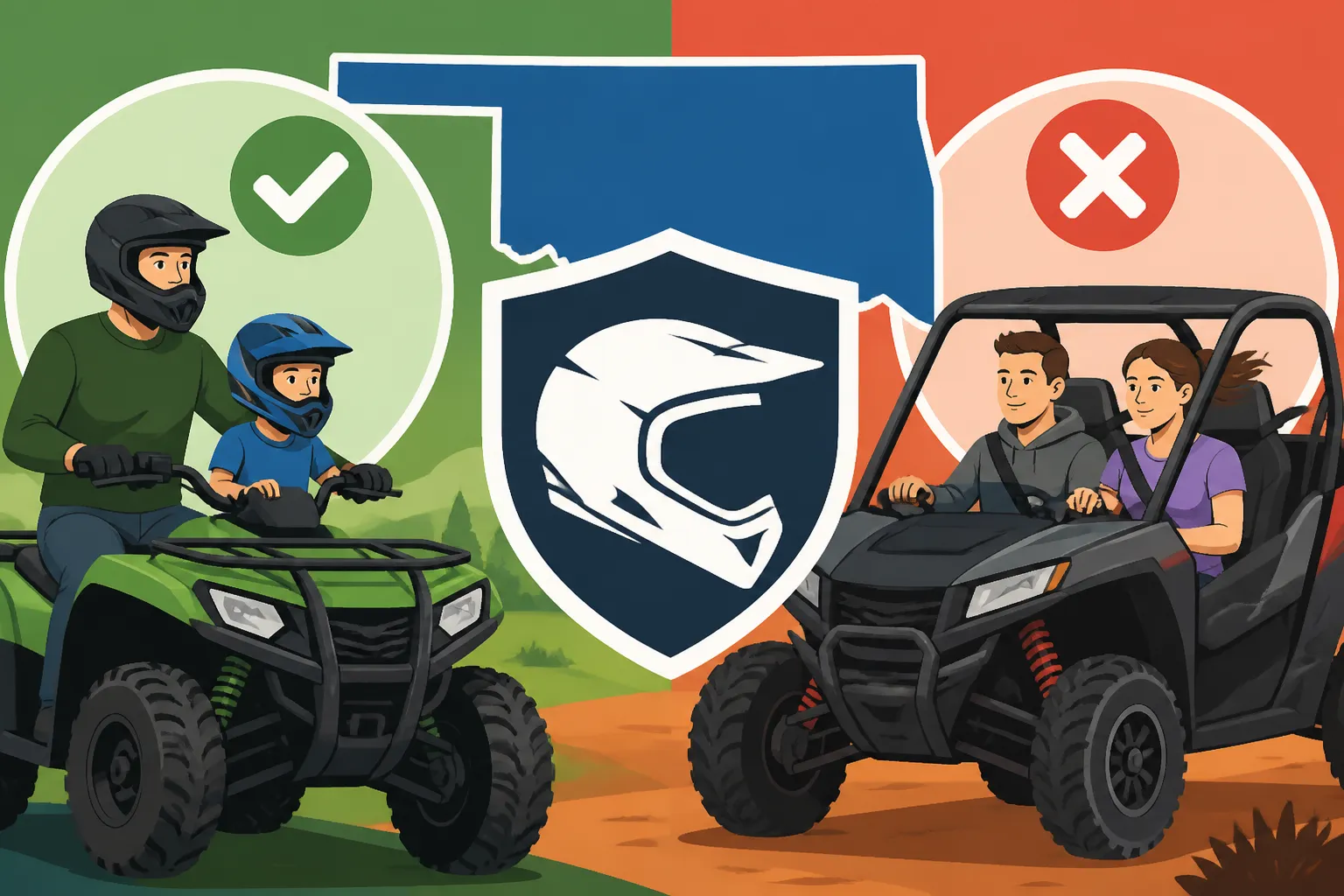
Policies differ, but there are several common approaches. Some parks require a helmet for every rider. Others focus on children, riders using machines without a protective cage, or riders taking part in particular activities. A park can also apply separate rules to passengers.
Every rider, regardless of age or machine
The clearest policy is a helmet requirement for all people operating or riding on an ATV or UTV. Under this approach, age, experience, and machine type do not create an exemption. A helmet is required whether the rider is an adult or child and whether the vehicle is an open quad or a side-by-side with a cage.
This all-rider rule is easy for staff to enforce and avoids arguments about whether a particular machine offers enough protection. It also means that a passenger cannot assume a helmet is unnecessary just because someone else is driving. Check whether the policy uses terms such as “all riders,” “all occupants,” or “operators and passengers.”
Riders under a specified age
A park may set a helmet requirement based on age, with children and teens required to wear one. The age threshold and any exceptions are park-specific. Do not treat a child’s riding age, admission age, and helmet age as interchangeable; they may be different rules.
If you are bringing a young rider, confirm the minimum age for the activity as well as the helmet requirement. Some parks may also require adult supervision or a parent or guardian to complete paperwork. The relevant policy details are covered in [Oklahoma Private Park Minimum Ages] and How Young a Rider a Private Park Will Admit.
Even when the operator’s written policy appears to focus on children, check whether a separate state rule applies to the planned ride. A park’s age-based policy is not a reliable summary of all legal requirements.
Riders on machines without a cage
A park may require helmets on open machines, such as quads, while setting different requirements for occupants of a UTV with a protective cage. But do not infer an exemption just because a vehicle has a cage, doors, nets, or a roof. Some operators require helmets in every machine; others may require additional equipment such as seat belts or restraints in a UTV.
Ask about the specific machine and activity rather than asking only whether “UTVs need helmets.” The answer might depend on whether the vehicle is being used on a trail, in a designated riding area, or during an organized event. If the machine is rented, ask whether its equipment and the park’s rules match.
Passengers as well as drivers
A policy may distinguish between operating a machine and riding as a passenger, or it may cover everyone on board. Read the exact wording. A passenger who is not controlling the machine can still be subject to the park’s helmet rule.
For UTVs, also check the passenger rules. A vehicle may only carry the number of occupants it was designed to hold, and riders may be expected to use the available restraints. Helmets do not make an unsafe passenger arrangement acceptable. See Passenger Rules Inside a Private Riding Park for the separate questions to consider.
What counts as an acceptable helmet
A park may specify a helmet standard, require a particular style, or simply require a properly secured helmet. These details matter: bringing a bicycle helmet or a loose-fitting helmet may not satisfy the facility’s policy, even if it is better than riding without one.
Ask the park what it accepts before you go. Useful questions include:
- Does the rule apply to every rider and passenger?
- Is there a minimum certification or safety standard?
- Are open-face helmets accepted, or must the helmet cover more of the head?
- Must riders use a chin strap or other retention system?
- Are helmets available to rent, borrow, or buy at the facility?
- Does the rule change for a race, youth activity, or other event?
- Does the park require helmets in a caged UTV as well as on an ATV?
If the operator names a particular standard, check the label inside the helmet and confirm that it matches the stated requirement. For example, a helmet may carry a DOT certification label, but you should not assume that every park accepts every helmet bearing that label. Parks can set their own equipment conditions, and helmets vary by intended use and fit.
A helmet should sit level, feel snug without painful pressure, and stay in place when you move your head. The retention strap should fasten securely. A helmet that shifts, is damaged, or is the wrong size may not offer dependable protection. For a child, adult sizing is not a substitute for a properly fitting youth helmet. If more than one person will ride, do not assume one helmet can be shared safely without checking fit and condition for each rider.
If the park rents helmets, ask about availability and sizing before you leave. Rental equipment can be convenient, but availability may be limited during busy periods. Bringing a known, properly fitted helmet can avoid delays and uncertainty. If you plan to buy gear, focus on fit, condition, and the park’s accepted standards rather than choosing based only on appearance.
A helmet is one part of a broader safety setup. It does not replace seat belts in a UTV, eye protection where needed, suitable clothing, or a machine that is appropriate for the rider. Nor does wearing a helmet make it safe to carry a passenger on a machine that was not designed for one.
How to confirm the rule before you arrive
Policies can differ between parks and may change for particular trails, events, or age groups. The best source is the facility you plan to visit, not a general assumption about Oklahoma parks. Check its current posted rules or contact the office directly, especially if the website leaves out details.
Use this quick process:
- Identify the activity and machine. Specify whether you are riding an ATV, UTV, dirt bike, or another vehicle, and whether you will be operating or riding as a passenger.
- Ask who must wear a helmet. Confirm whether the rule applies to adults, children, passengers, and occupants of caged UTVs.
- Ask what kind of helmet is accepted. If the policy mentions certification, style, or fit, ask how the park verifies it.
- Check for event-specific requirements. A group ride, race, or youth program may have additional conditions.
- Confirm other relevant rules. Ask about minimum ages, supervision, passenger limits, waivers, and any equipment required alongside a helmet.
- Bring what the park requires. Do not count on an exception at the gate or assume rental gear will be available.
A call or message is especially worthwhile when you are traveling with children, bringing a group, or using a machine that a park may classify differently from an ATV. Ask the operator to explain any unclear wording rather than trying to resolve it at check-in. Questions to Ask the Park Office Before You Go can help you prepare a broader list of practical questions.
Expect the park to enforce its written requirements at check-in, before a ride, or while staff are monitoring the property. A waiver does not necessarily waive a helmet rule. Signing the paperwork means you have accepted the park’s terms; it is not permission to ignore its safety conditions. For more on what the paperwork may involve, see Signing a Liability Waiver Before a Private Ranch Ride.
If a park’s answer is that helmets are required for everyone, plan around that rule even if another facility allows a different arrangement. If it says the rule depends on age or vehicle type, ask for the exact cutoff and how it applies to each person in your group. Clear answers before the trip are easier than discovering at the entrance that a rider cannot participate.
Private parks can be more restrictive than a rider expects, and their policies are not all identical. Treat helmets as required unless the facility confirms otherwise, pay attention to passengers and children, and bring equipment that meets the park’s stated standard. That approach helps avoid a denied ride and gives everyone a safer start.
Disclaimer
This article is for general informational purposes only and does not constitute professional advice. Laws, prices and regulations vary by location and change over time. Consult a qualified professional for guidance on your specific situation.