Oklahoma Fire Restrictions in Dry Months
Dry Oklahoma weather can turn a routine ride or campsite stop into a wildfire risk. Fire restrictions may differ between public riding areas, private parks and nearby counties, and conditions can change quickly. Before heading out, check the rules for the land you plan to use, understand what a restriction covers, and take practical steps to keep a hot machine or camp setup from starting a fire.
What fire restrictions can mean for Oklahoma riders
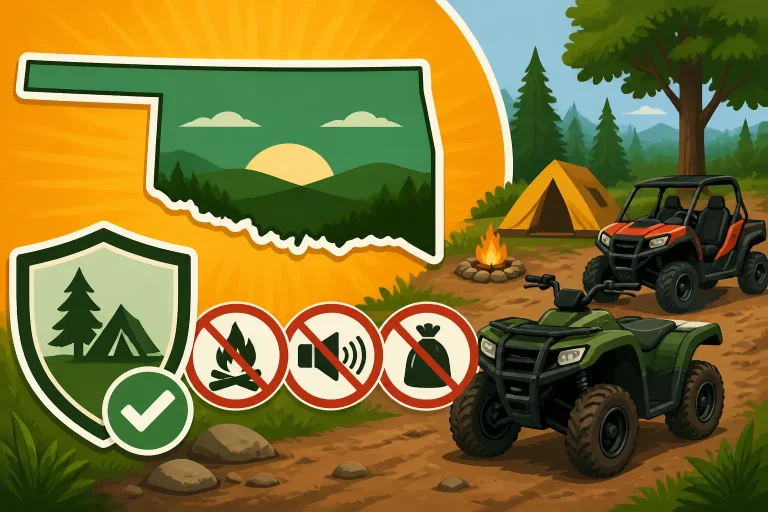
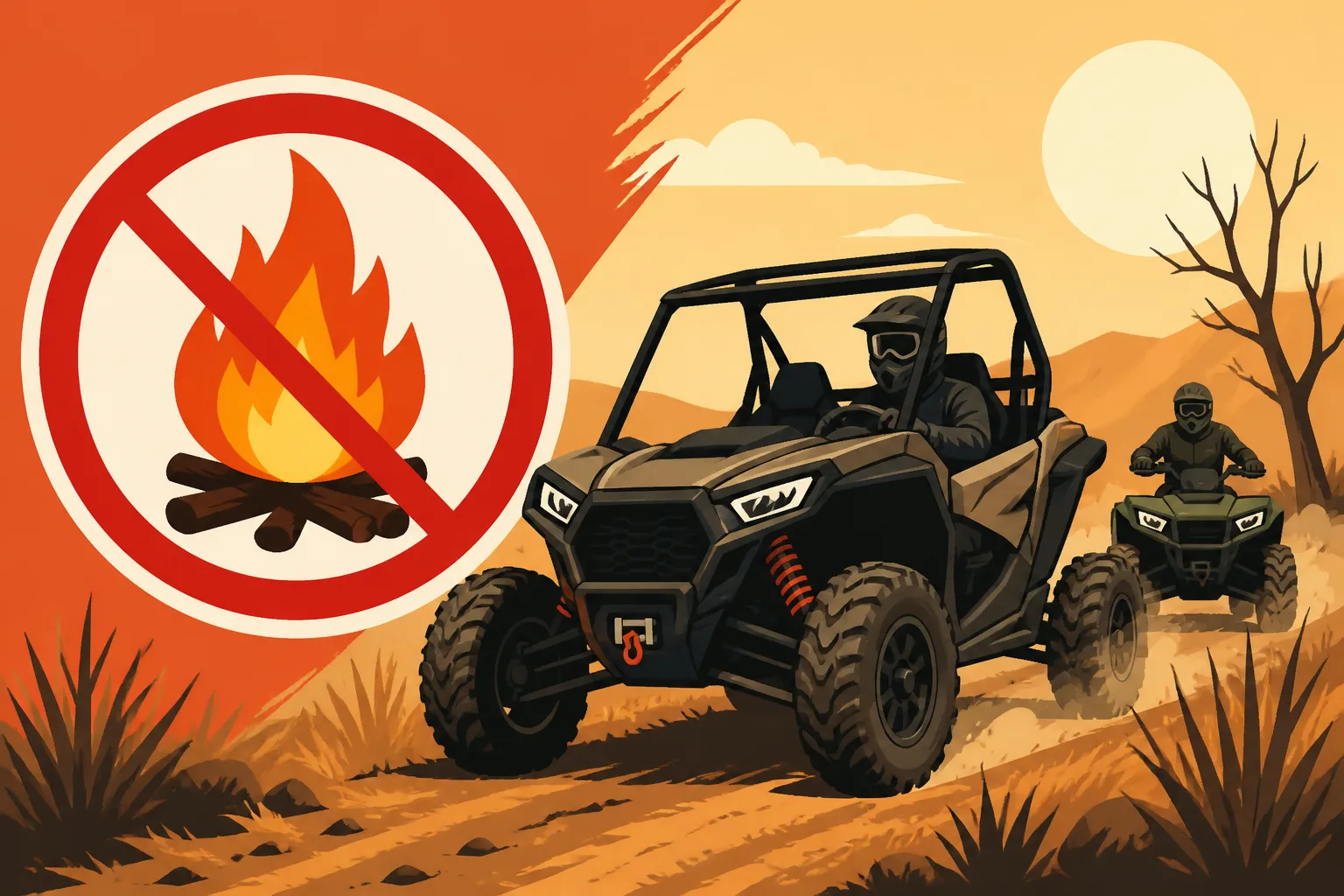
“Fire restrictions” is an umbrella term, not one statewide rule that automatically applies to every riding area. A restriction may prohibit campfires, charcoal grills, smoking, fireworks or other activities that could start a fire. During high-risk conditions, a land manager may also limit access, close an area or impose additional requirements. The exact restrictions depend on the place and the current notice.
A restriction on open flames does not necessarily mean every motor vehicle is barred from the area. But it also does not mean riding is allowed: a closure or separate access rule could apply at the same time. Check the notice for the specific area and date, rather than relying on a general statement that a county, park or forest is “open.”
| What to check | Why it matters |
|---|---|
| The land manager’s current notice | Rules and closures can differ from one property to another |
| Campfire and cooking rules | A ban may cover fires, charcoal, grills or other heat sources differently |
| Vehicle and trail access | A fire restriction may coincide with an area or trail closure |
| Spark-arrester requirements | Some places may require approved equipment; do not assume one rule covers every site |
| Weather and recent conditions | Dry vegetation and wind can make a small ignition harder to control |
| Camping instructions | A site’s rules may apply even when nearby roads or trails remain open |
A permit is not permission to ignore a fire restriction. A land-access permit, park pass or registration credential answers a different question from whether a fire or riding activity is currently allowed. Review Oklahoma Land Access Permits Explained for the access side of a trip, then check the specific land manager’s fire notices separately.
The same distinction matters for visitors. An out-of-state decal, registration or permit does not override a closure or fire rule at the riding location. Before traveling, review Oklahoma Rules for an Out-of-State Machine and the site’s current notices. Reciprocity and fire restrictions are separate issues.
Restrictions can change between the driveway and the trail
Conditions may shift after a stretch of dry, windy weather, or after rain reduces immediate fire danger. That makes old screenshots, a friend’s recent visit and last season’s campground information poor substitutes for a current check. Look for an official update close to departure, and check again if your trip spans several days.
A posted restriction is a minimum standard, not a guarantee that every activity is safe. If grass is brittle, wind is strong, or smoke is visible nearby, reconsider lighting a fire or riding through particularly dry vegetation even if you have not found a specific prohibition. If an area is closed or staff direct you to leave, follow that instruction.
Check the right authority before you go
Start with the agency, park operator, landowner or other manager responsible for the exact property you intend to use. A broad search for Oklahoma burn restrictions can be useful, but it may not answer whether a particular trail, campground or private riding area is open. Where rules overlap, check each relevant authority rather than assuming one notice covers all of them.
For example, a county burn restriction may address open burning in the county, while a park or private property may set additional conditions for visitors. Conversely, a county notice does not necessarily tell you whether a trail area has closed its gates. Treat the local notice and the site’s own rules as separate checks.
Before leaving, confirm:
- Whether the riding area is open and whether any trails or facilities are closed.
- Whether fires, grills, smoking, fireworks or other ignition sources are restricted.
- Whether the rules apply to your campsite as well as the riding area.
- Whether a spark arrester or other machine equipment is required at that location.
- Whether staff have issued special instructions for the day.
- What the site expects visitors to do if they see smoke or a fire.
If you cannot tell whether a cooking device or activity is allowed, ask the manager before using it. Do not rely on assumptions such as “it is contained,” “it is only a small flame,” or “the same setup was allowed last month.” A rule may distinguish between fuel types or devices, and the site is the right place to clarify how it applies.
Public land, private parks and timber land
Different land types can have different managers and access conditions. State-managed recreation areas, wildlife areas, national forest land, private OHV parks and timber company property do not necessarily share one set of fire instructions.
If your plan includes a wildlife management area, review Oklahoma WMA Access for a Quad along with the current notice for that property. For timber company land, check Oklahoma Timber Land Access Rules and any posted fire or access restrictions. An access permit or seasonal riding permission does not necessarily authorize camping or fires.
Private riding parks may set rules through their operating policies, posted signs or visitor instructions. Read the site’s current requirements before unloading. Oklahoma Private Park Waivers and Rules can help with the general questions to ask, but the park’s own fire notice controls for its property.
Conditions can also differ along a route. A trailhead may be open while a nearby camping area has different rules, or one property may close while another remains available. If you are combining locations, verify each one individually. Oklahoma Trail Conditions Before You Tow is useful for trip planning, but do not treat trail-condition information as a substitute for fire-restriction notices.
Reduce ignition risk from your ATV or UTV
A machine can become an ignition source if hot components contact dry grass, leaves or other burnable material. A fire can also begin when debris collects near the exhaust, when equipment is poorly maintained, or when a machine is parked over dry vegetation. These risks matter even when you have no plans to build a campfire.
On arrival, choose a parking and staging spot that is clear of dry grass and brush. Avoid stopping on vegetation when there is a safe, permitted alternative such as a bare, stable surface. Do not park a hot machine where its exhaust or other hot components can touch combustible material. If you stop for a break, look around before switching off and walking away.
Keep the machine in sound condition. Remove packed grass and debris from areas around the exhaust and engine, and deal with fuel leaks or damaged wiring before riding. Do not make field repairs that involve sparks or open flames near dry vegetation. If you notice a mechanical problem that could create heat or sparks, stop in a safe place and assess whether it is sensible to continue.
Follow any spark-arrester or equipment requirement posted by the land manager. Requirements can vary, so do not assume that a device installed for one riding area meets another site’s standard. If you are unsure whether your machine complies, ask the operator before the trip rather than discovering the issue at the gate.
A few habits help lower the risk:
- Check the machine for leaks, loose wiring and trapped vegetation before loading and after riding.
- Keep exhaust parts and other hot components away from grass, leaves and brush when stopping.
- Use only designated routes and staging areas, and obey closures and staff directions.
- Carry a charged phone or another way to contact help when service is available; do not count on coverage everywhere.
- If you see smoke or flames, move to a safe location and report the fire using the appropriate emergency contact for the area.
A portable fire extinguisher may be useful for a small, early-stage fire if it is safe to use, but it is not a reason to approach a spreading fire. Choose equipment appropriate for the likely hazard, secure it so it cannot become a projectile, and know how to access it. Amazon listings can help compare available extinguishers, but verify the product’s rating and condition rather than choosing by size or convenience alone. Leave immediately and contact emergency services if the fire is beyond your ability to control safely.
Campfires, cooking and what to do when plans change
When there is no restriction, that does not automatically mean every kind of fire or cooking setup is allowed. The riding area may limit where fires can be made, which devices can be used, or whether visitors may bring their own fuel. Use only an allowed setup in the location the manager specifies. Keep it attended, keep combustible items away, and make sure it is fully out before leaving, in line with the site’s instructions.
If a restriction prohibits open flames, do not try to work around it by changing the size or location of a fire. A charcoal grill, portable stove or other cooking device may be treated differently from a campfire, but that distinction depends on the actual rule. Ask the manager when the notice is unclear. Never assume a device is exempt just because it is sold as portable or designed for camping.
Plan a backup meal that does not depend on a flame. If the restriction changes after you arrive, use only cooking methods the current notice permits or skip cooking at the site. Avoid disposing of hot coals or ashes in vegetation, trash or a place that has not been approved for them. Follow the property’s disposal instructions.
If weather turns hotter, drier or windier, reconsider your plan even if a site remains open. A location can be legally accessible while conditions make a fire or a long ride a poor choice. Be ready to change destinations, avoid camping, or end the trip early. Oklahoma Trail Closures After Rain covers a different kind of changing trail condition, but the same planning principle applies: confirm what is open and suitable before you tow.
If you encounter an active fire, prioritize people’s safety. Do not ride toward smoke to investigate, block access roads, or attempt to move through an area where flames or smoke reduce visibility. Get clear, report what you can safely report, and follow instructions from responders or land staff. If you are at a campground, alert nearby people only when doing so does not put you at risk.
A practical pre-trip routine is straightforward:
- Check the site’s current fire and access notices.
- Confirm that your camping and cooking plans comply.
- Inspect your machine and remove dry debris.
- Choose a safe place to park and stage.
- Carry appropriate emergency equipment and know how to call for help.
- Recheck notices if you stay overnight or travel to another property.
Fire rules can differ across Oklahoma, and a rule that applies at one riding area may not apply at the next. The safest approach is to confirm the current instructions with the property manager, treat permits and fire restrictions as separate requirements, and avoid unnecessary ignition risks whenever vegetation is dry.
Disclaimer
This article is for general informational purposes only and does not constitute professional advice. Laws, prices and regulations vary by location and change over time. Consult a qualified professional for guidance on your specific situation.