Oklahoma WMA Camping Rules
Camping on an Oklahoma Wildlife Management Area can be a convenient way to stay near hunting ground or riding access, but a WMA is not automatically a campground. Rules differ by area, season and activity. Before packing a tent or towing a machine, confirm that camping is allowed at your chosen location, learn the local restrictions and make a backup plan.
Confirm that camping is allowed on the WMA
Start with the rules for the specific Wildlife Management Area, not a general assumption about public land. A WMA may have designated camping spots, limited camping availability or no camping in the area you plan to visit. Even where camping is allowed, permission may depend on the time of year, the part of the property or the activity taking place.
Check the current information from the Oklahoma Department of Wildlife Conservation for the WMA. Look for the area map, regulations and any notices about temporary closures or special conditions. If the published information does not clearly answer whether overnight camping is allowed, contact the agency before you leave. A trailhead sign or map can help once you arrive, but it is better not to drive out expecting to camp and then find that the site is closed or restricted.
Pay attention to the difference between a designated campsite and an open area that happens to look suitable. A flat clearing near a road, pond or trail is not necessarily an approved place to pitch a tent or park a camper. Follow posted boundaries, signs and instructions from area staff. If you cannot identify an approved camping location, treat that uncertainty as a reason to call or choose a nearby campground instead.
A WMA’s rules may also be different from those of a state park, private riding area or commercial campground. Each land manager sets its own conditions. Do not assume that a camping pass, hunting license, land access permit or riding-area fee automatically gives you permission to camp on a WMA.
| Before you go | What to confirm |
|---|---|
| Camping location | Whether overnight camping is allowed and where |
| Dates | Seasonal closures, hunting periods and temporary restrictions |
| Access | Which roads, trails and parking areas are open to your vehicle or machine |
| Permits | Whether a permit applies to your activity or the particular property |
| Camp setup | Rules for fires, generators, waste and pets |
| Backup plan | A nearby campground or other lawful place to stay |
This location-by-location approach matters especially when a trip includes more than one public property. A permit or access arrangement that applies to one tract may not carry over to a neighboring WMA or a privately owned property open to the public. For background on permit differences, see Oklahoma Land Access Permits Explained. For riding access specifically, Oklahoma WMA Access for a Quad can help you think through where a machine may be allowed.
Understand permits, seasons and access limits
A permit question has two parts: whether you need authorization to use the land and whether that authorization covers your particular activity. A permit that allows access for one purpose should not be treated as blanket permission to camp, ride, hunt or use every road on the property.
Check the property’s current requirements for each person in your group. Rules may differ for residents and nonresidents, or depend on age, activity or the tract’s management arrangement. Some areas have additional access arrangements that are not universal across Oklahoma WMAs. If you are visiting from out of state, confirm the applicable requirements before traveling rather than relying on a permit from home. Oklahoma WMA Nonresident Check-In covers a related issue to verify for a nonresident visit.
Seasonal access is another important part of planning. Wildlife management areas are managed for conservation and public use, and the activities allowed can change with hunting seasons, habitat work, weather and other management needs. A road or parking area that was open on a previous trip may be closed now. Closures can also affect where you may leave a vehicle, unload an ATV or walk to a campsite.
If you plan to ride, check the machine rules separately from the camping rules. A place that permits camping may still restrict off-road travel to designated routes, or may not allow recreational riding at all. Do not ride from a campsite into an unmarked field or down a closed road just because the machine can make the trip. Review Oklahoma WMA Road Rules for Riders and confirm the specific WMA’s current map and signs.
Hunting season can add another layer of practical and safety considerations. Access, traffic and permitted activities may be different during a season when hunters are using the area. Check the dates and local rules for the WMA you intend to visit, and give hunters and other users space. Oklahoma Hunting Season and Trail Access is useful context if your camping trip overlaps with a hunting period.
Where the property’s information is unclear, ask the land manager a direct question: “May I camp overnight here, and where is the approved location?” Then ask whether the answer changes during your planned dates, whether a permit is needed and whether the rules cover your vehicle or off-road machine. Getting a clear answer before setting out is better than interpreting a broad access permit as permission to camp anywhere.
Choose a low-impact campsite and follow local rules
Once you have confirmed that camping is permitted, use only the location or area the WMA allows. Avoid expanding a campsite into nearby vegetation, blocking gates or parking in a way that interferes with management vehicles. Keep tents, trailers and other equipment within the permitted footprint, and leave enough room for other visitors to use the area safely.
Do not cut branches, move signs, build structures or dig trenches unless the property’s rules explicitly allow it. These actions can damage habitat and create hazards for the next visitor. Pack in only what you can take back out. That includes food scraps, packaging, broken equipment and any other rubbish generated at camp.
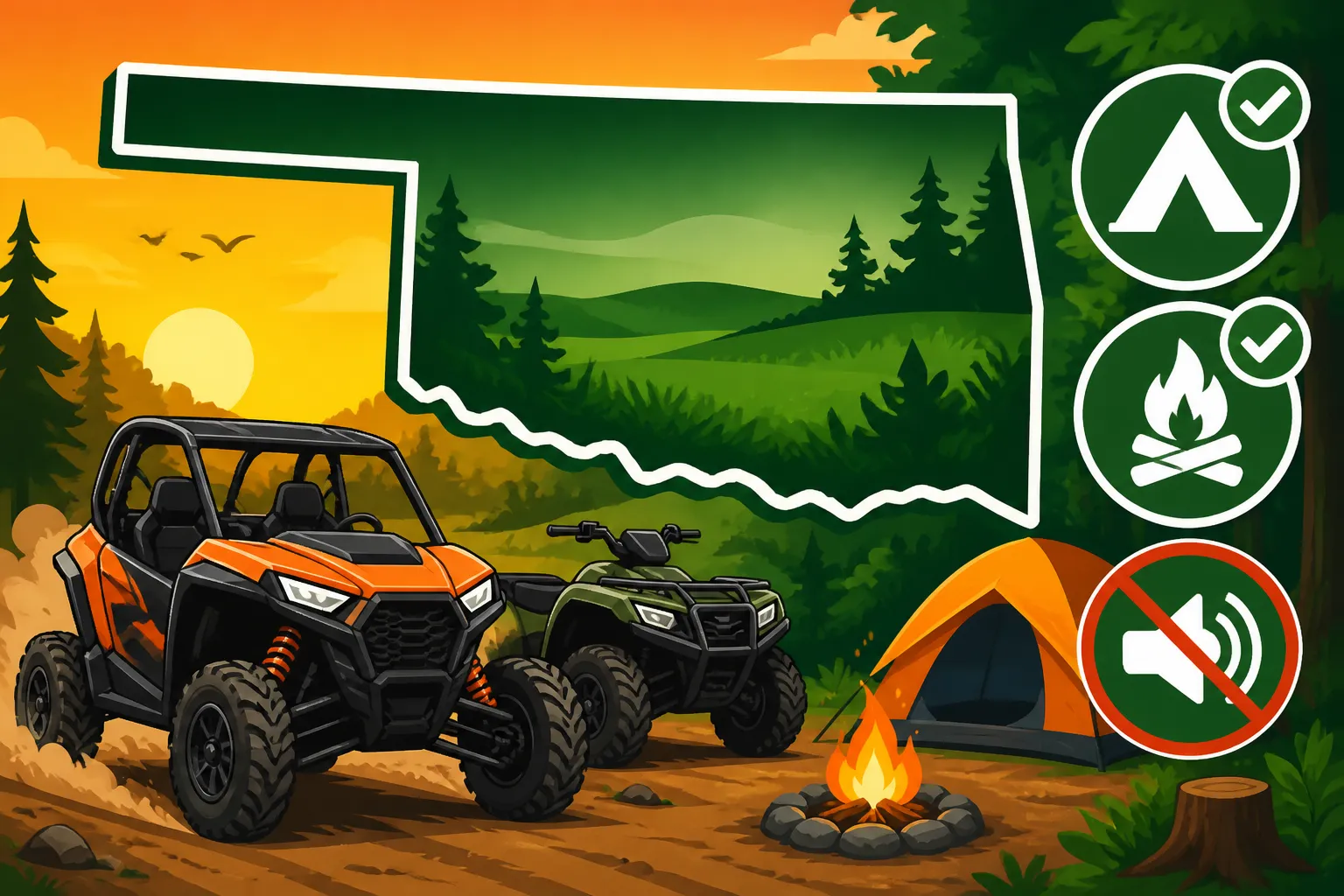
Fire rules deserve particular attention. Whether a campfire is allowed may depend on the WMA’s rules, the exact site, weather conditions or an active restriction. A fire ring at a site does not guarantee that fires are permitted on the day of your visit. Confirm current instructions and never leave a fire unattended. If fires are prohibited or conditions make one unsafe, use a lawful alternative or plan meals that do not require an open flame.
Generators, lanterns and other equipment can also affect other visitors. Follow posted restrictions and use equipment in a way that does not disturb people or wildlife. Keep noise reasonable, particularly at night and near other campsites. Do not assume that a remote location means there are no neighbors or no quiet-use expectations.
Plan how you will handle waste before you arrive. Use facilities where provided and follow posted directions. If there are no toilets or waste services, find out what the land manager requires; do not leave waste or bury it casually. Keep wash water and cleaning products away from streams, ponds and other water sources. Store food and rubbish securely so they do not attract wildlife, and do not feed animals.
Pets should remain under control and comply with the WMA’s rules. A pet that wanders through a hunting area, approaches wildlife or disrupts another visitor can create a safety problem. Confirm leash or restraint requirements in advance, and consider leaving a pet at home if the property’s conditions are not suitable.
Finally, respect the property boundary. A WMA may sit beside private land, timber company land or another public-use area with different restrictions. A trail or road that continues beyond a sign does not necessarily remain open to the public. Follow boundary markers and do not cross onto adjoining property without permission. For other kinds of public-access property, Oklahoma Timber Land Access Rules explains why access conditions can differ even when land appears connected.
Plan an overnight trip around riding and camping
If you are bringing an ATV or UTV, treat the ride and the overnight stay as separate permissions to verify. Registration, a land access permit or permission to use a particular road does not necessarily authorize camping. Likewise, permission to camp does not necessarily allow recreational riding around the site. Check both sets of rules before loading the machine.
Plan your route using the WMA’s current map and the directions from the land manager. Do not rely only on an old GPS track, an online map or a route shared by another rider. Maps can show roads that are private, closed or restricted to management use. If the road rules limit riding to designated routes, stay on those routes even when an adjacent trail looks passable. More details are available in Oklahoma WMA Road Rules for Riders.
Think about where you will park and unload. Keep trailers and vehicles out of gates, roadways and designated access points. If there is not enough space for your setup at the approved camping location, do not create a new parking area by driving into vegetation. Contact the land manager or use a campground with facilities suited to your group. Oklahoma Campgrounds Next to a Riding Area can help with planning an alternative stay near a place to ride.
Before departure, check the forecast and trail conditions. Heavy rain can make roads difficult or unsafe, while dry conditions may bring fire restrictions. A high-clearance vehicle or capable machine does not make a closed road open. If weather changes, be ready to shorten the trip or move to an authorized campground. Oklahoma Trail Conditions Before You Tow offers additional planning considerations for getting a machine to a riding area.
A simple pre-trip routine can prevent most avoidable problems:
- Identify the exact WMA and the camping location you intend to use.
- Check the current rules, map, seasonal notices and any closure information.
- Confirm that overnight camping is allowed on your planned dates.
- Ask whether permits or check-in steps apply to each person and activity.
- Verify separate rules for riding, vehicle access, fires, pets and waste.
- Save a nearby campground as a backup in case the WMA site is unavailable.
- Follow posted signs when you arrive, even if they differ from an older map or past visit.
Keep confirmation details and the property map available offline when possible. Cell coverage may be limited in some rural areas, and a saved map can make it easier to stay oriented without relying on a signal. It is still important to follow signs and current instructions on site; an offline map is a planning aid, not authorization to enter a closed area.
The safest rule is straightforward: camp only where the WMA’s current instructions allow it, and do not treat access to the property as permission to use every part of it. When camping rules are unclear, ask the land manager or stay at an established campground nearby. That small step can save a long drive, prevent an access violation and help keep the area available for everyone.
Disclaimer
This article is for general informational purposes only and does not constitute professional advice. Laws, prices and regulations vary by location and change over time. Consult a qualified professional for guidance on your specific situation.