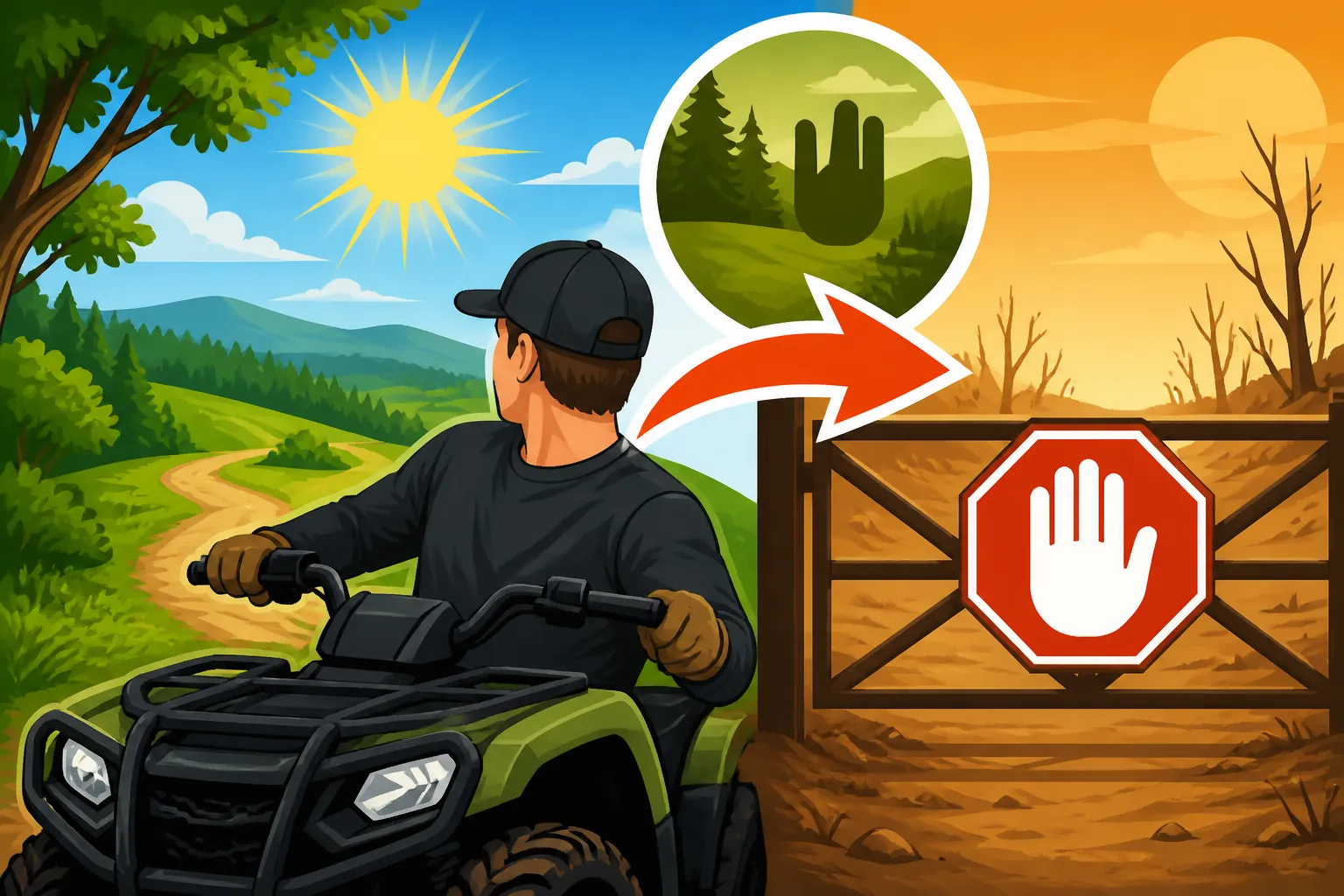
Why a WMA Turns You Away in Summer
A WMA can be open to visitors while still being closed to ATV and UTV riding. That distinction is easy to miss when you have a permit, a hunting license, or a route saved on your phone. The key is that access depends on the specific area and its current vehicle rules—not simply the season or the paperwork you carry.
Why a WMA may turn riders away in summer
“Wildlife Management Area” does not mean “open riding area.” A WMA is managed for wildlife and public use, and the activities allowed can vary from one unit to another. A road that is open to a pickup, a footpath open to hikers, and a trail open to ATVs are not interchangeable permissions.
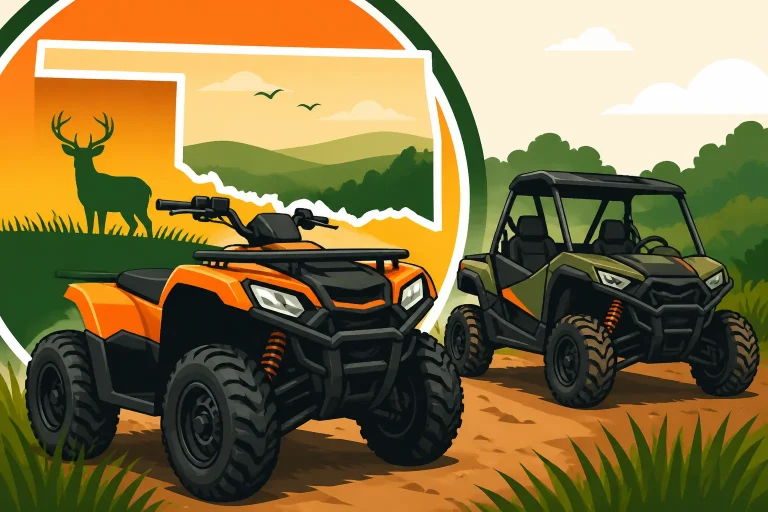
In some parts of Oklahoma, motorized access is tied to a specific season or purpose. Timber company land available to the public through access arrangements is one example: riding may be limited to a defined deer-season window, and additional rules can apply to who may ride and where. If you arrive outside that window, a valid land access permit does not necessarily let you ride. The limitations described in Oklahoma Timber Land Access Rules and Oklahoma WMA Riding Only in Deer Season are especially relevant when an area includes privately owned timber land open under specific conditions.
Other WMAs may have their own vehicle restrictions, designated routes, seasonal closures, or check-in procedures. Some areas do not allow recreational ATV riding at all. A gate, sign, access road, or public hunting permission should not be read as proof that off-highway machines are allowed.
Summer can also bring closures or restrictions for reasons that have little to do with whether a visitor has paid for access. Managers may limit vehicle use to protect wildlife habitat, prevent damage to roads or trails, manage fire risk, or keep public access compatible with the area’s designated use. The reason for a closure can vary, and it may be temporary or part of the unit’s regular rules. The important point is practical: a permit does not override a closure or create permission to ride on a road that is not open to motorized use.
| What you have | What it may allow | What it does not automatically allow |
|---|---|---|
| A land access permit | Access under the permit’s terms for eligible areas and uses | ATV riding on every WMA or every road |
| A hunting license | Hunting where and when permitted | Recreational riding or access outside the area’s rules |
| Public access to a WMA | Entry for activities allowed at that unit | Driving an ATV off-road or on a closed route |
| A route shown on a map | A way to plan a trip | Proof that the route is currently open to your machine |
| A road open to some vehicles | Use by vehicles authorized under the posted rules | Permission for all ATVs, UTVs, or off-road motorcycles |
For riders, the safest assumption is that motorized access needs to be confirmed separately from general area access. If a summer visit is turned away, it may be because the area is open to some uses but not recreational machine use at that time.
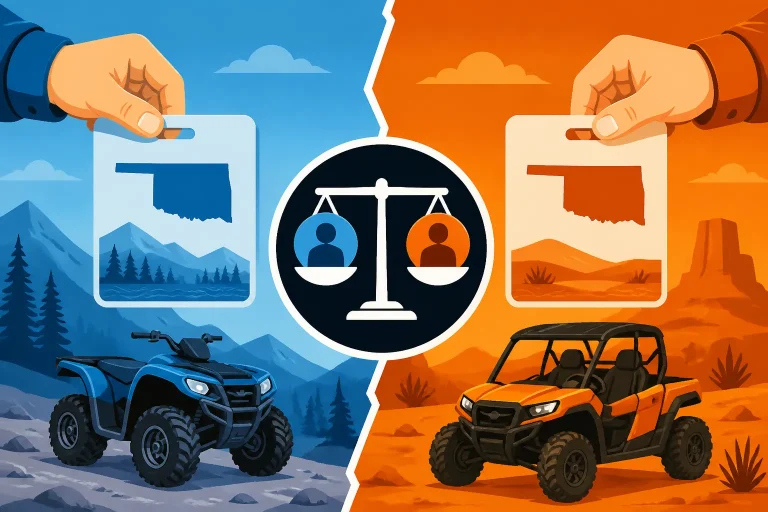
A permit is not a blanket riding pass
Oklahoma’s land access permits are tied to particular access programs and conditions. They should not be treated as a statewide ATV trail pass. Before planning a ride, check what land the permit covers, whether your intended activity is allowed, and whether the specific route is open to the type of machine you are bringing. Oklahoma Land Access Permits Explained covers the difference between a permit and general riding access.
This matters particularly on timber company land. An access permit can be required for eligible use, but the land’s rules may also limit riding to a set season, designated roads, or particular users. A permit holder who arrives in summer may still be outside the allowed riding window. Check the area-specific rules in Oklahoma Permits for Honobia Creek or Oklahoma Permits for Three Rivers if either is part of your plan; do not assume that the terms for one access area apply to another.
A hunting license is also not a substitute for permission to ride. On land with seasonal hunting access, riding may be permitted only during the stated access period and subject to requirements beyond holding a license. The rules for hunting and machine use can overlap, but they are not the same. See Oklahoma Hunting Season and Trail Access and [Oklahoma Hunting License and Land Access] before treating a hunting trip as authorization to use an ATV.
Before leaving home, confirm these details for the exact unit:
- Whether ATVs or UTVs are allowed at all. A WMA’s general public access does not settle this.
- Whether the machine is allowed in the season you plan to visit. A summer closure may be seasonal rather than a permit problem.
- Which routes are open. Rules may restrict riding to designated roads or trails and prohibit travel off them.
- Whether check-in or other conditions apply. Follow any unit-specific process and posted instructions. Oklahoma WMA Nonresident Check-In is useful if you are visiting from outside Oklahoma.
- What the permit covers. Make sure it applies to the land and activity you have in mind, not just to another nearby area.
- Whether conditions have changed. Temporary closures, fire restrictions, or maintenance work can affect access even when a route was open on an earlier visit.
If the area’s information is unclear, contact the managing office before hauling the machine. Give the staff the unit name, the intended dates, the machine type, and the route or trail you hope to use. “Is this WMA open?” is too broad; “Are ATVs allowed on this designated road in July?” is much more likely to get you a useful answer.
How to check the rules before you tow
Start with the official information for the specific WMA or access area, not a general map result or an old trip report. Maps can help you locate roads and boundaries, but they may not show seasonal conditions or explain which vehicles are authorized. A route that appears continuous on a map may cross into another property or an area with different rules.
Then compare the rules with your actual plan. Check whether your machine is classified as an ATV, UTV, or off-road motorcycle under the applicable rules, and whether the wording allows that type of vehicle. Do not assume that permission for one kind of off-road machine applies to another. The restrictions described in Oklahoma WMA Road Rules for Riders can help you understand why being on a road does not always mean every machine may use it.
Look for specific phrases such as “designated roads,” “closed to motor vehicles,” or a limited season. Treat signs and gates as instructions, not suggestions. If a road is signed closed, do not ride around a barrier or assume that a permit makes an exception. If the written guidance and signs appear to conflict, stop and ask the land manager rather than choosing the interpretation that lets you proceed.
A good pre-trip check should include:
- The official rules for the exact area, including any seasonal dates or closures.
- The current status of the specific road or trail you intend to ride.
- Permit requirements for each person or activity, if applicable.
- Any required check-in or proof of access.
- Whether your group’s machines and planned use are allowed.
- A backup destination that is a confirmed riding area if the WMA is closed to machines.
Keep the relevant permit and access information available during the trip, but remember that paperwork is only one part of compliance. A permit can help establish that you meet an access requirement; it cannot make a prohibited route legal. For broader context on machine access, Oklahoma WMA Access for a Quad is a useful companion to the area-specific rules.
If you are a visitor from another state, do not assume that your home-state decal or riding permit replaces Oklahoma’s requirements. Reciprocity questions and land-access permissions are separate from whether a particular WMA allows summer riding. Confirm both before you travel.
What to do if you are turned away
Do not try a different gate, take a side road around a closure, or follow another rider into the area. A closed route can be closed for a reason that is not obvious from the trailhead, and crossing onto adjacent property can create a separate access problem.
Instead, ask what restriction applies. Is the unit closed to all motor vehicles, closed to recreational riding only, limited to a specific season, or open only on designated roads? The answer tells you whether you need to return at another time, choose another route, or find a different riding area. If the reason is unclear, record the unit and entrance location and check with the managing office before making another attempt.
If the issue is that your permit does not cover the land, verify the correct permit or access program before returning. If the issue is a seasonal restriction, buying another permit will not solve it. If riding is not allowed on that WMA, look for a designated OHV area or a private riding park whose current rules allow your machine and planned dates. Confirm operating hours, access conditions, and any required waiver or fees directly with the site.
A little planning can save a long tow and an awkward conversation at the gate. For a summer WMA trip, confirm machine access on the exact unit and route, not just public entry or permit eligibility. If you cannot verify that ATVs or UTVs are allowed, treat the area as closed to riding until the manager confirms otherwise.
Disclaimer
This article is for general informational purposes only and does not constitute professional advice. Laws, prices and regulations vary by location and change over time. Consult a qualified professional for guidance on your specific situation.