Why a Non-Hunting Resident Needs a Different Permit
Oklahoma residents who ride ATVs but do not hunt can run into a permit question before reaching the trail: a hunting license is not a general riding pass. The key is identifying the land, the activity, and the permit that covers access there. Here’s how to tell when a resident land access permit may be needed, what it does not cover, and what to check before you go.
Why a non-hunting resident may need a different permit
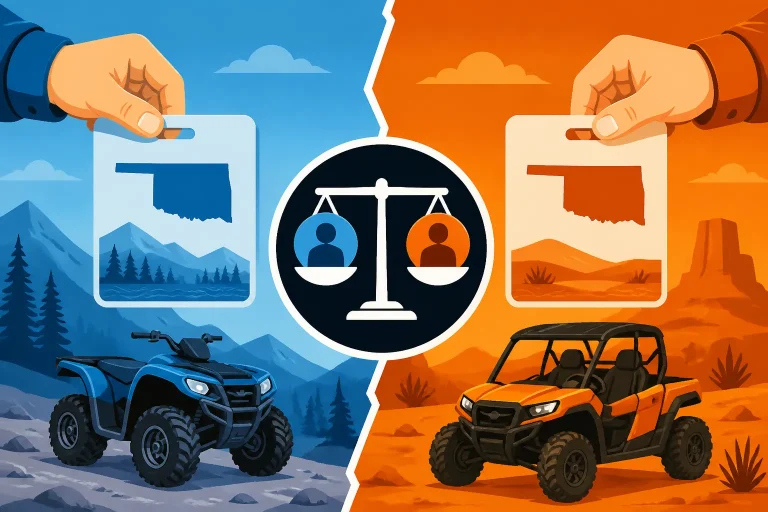
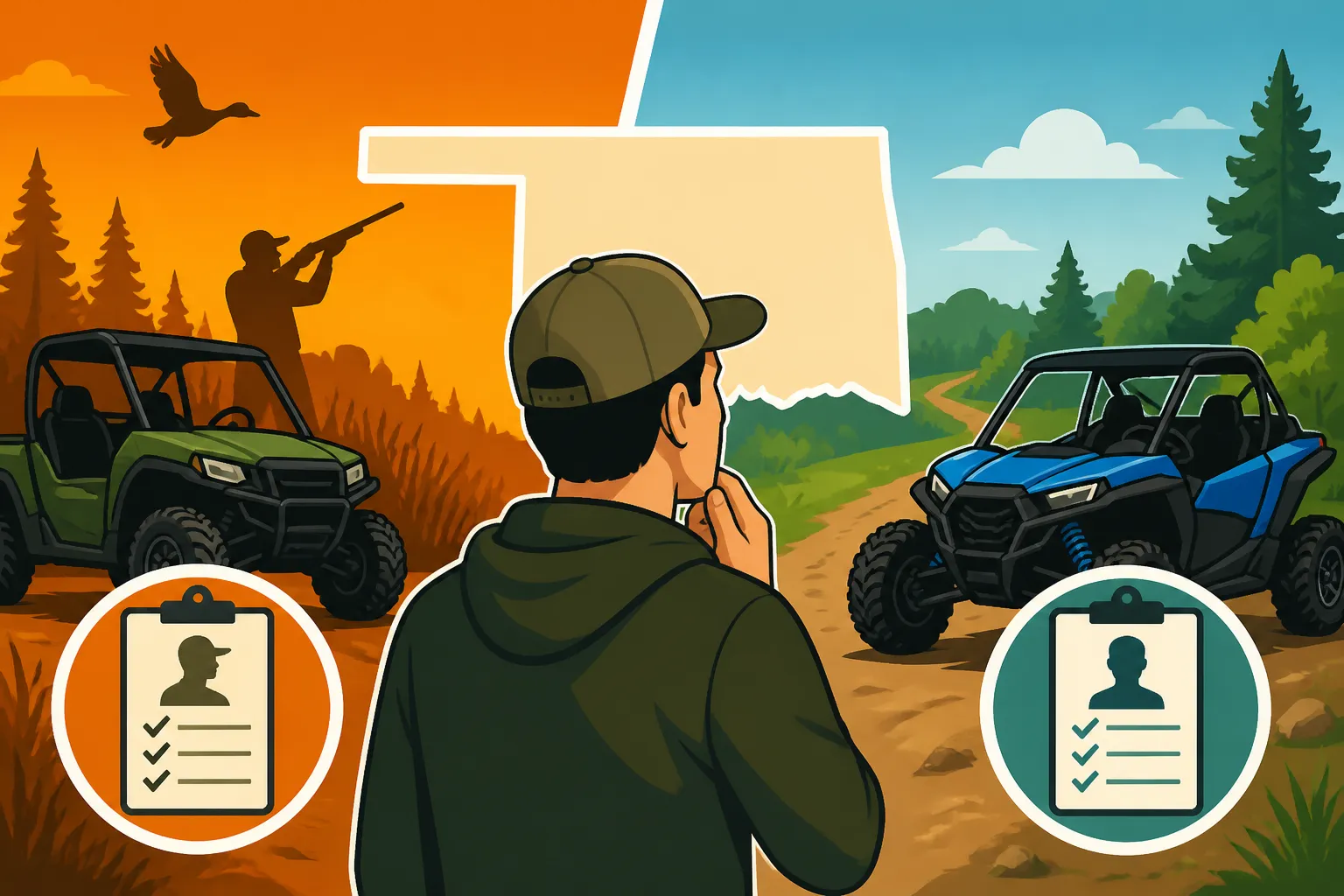
A hunting license and a land access permit serve different purposes. A hunting license authorizes hunting under the rules that apply to the license and location. A land access permit may be required for certain public wildlife areas where access is controlled, even if your purpose is recreation rather than hunting.
That distinction matters to ATV and UTV riders. You might be heading out to ride designated roads, camp, fish, or enjoy the area without carrying out a hunt. If you do not have a hunting license that satisfies the access requirement for that particular place, you may need the applicable land access permit instead.
This is not a requirement for every ride in Oklahoma. It is tied to the land and its rules. A permit issued for access to specific wildlife areas is not a general statewide ATV permit and does not grant permission to ride on private property, every wildlife management area, or any road you choose.
The permit question is also separate from machine registration. An Oklahoma ATV or UTV registration decal, title, or proof of ownership does not substitute for a land access permit. Likewise, a park entrance fee or campsite reservation does not automatically satisfy a permit requirement for another property.
Before buying anything, identify the exact riding area and confirm its current access requirements. The area’s managing agency can tell you whether a land access permit is needed for a non-hunting visit, whether another license or permit can satisfy the requirement, and which roads or trails are open to your machine. For the resident permit itself, see Oklahoma’s Resident Land Access Permit and How to Buy an Oklahoma Land Access Permit.
Which permit applies to a resident who is not hunting
The right permit depends on the land, not just your address or your machine. Oklahoma has several kinds of riding destinations, and their access rules are not interchangeable. A permit intended for access to a particular wildlife area does not automatically apply to a state park, private off-road park, national forest road, or privately owned timber property.
For a non-hunting resident, the practical question is usually: “What does this property require for someone entering to ride or recreate?” Ask that directly instead of asking only whether ATV registration is required. Registration concerns the machine; a land access permit concerns entry or use of land.
Some lands have access arrangements that differ from ordinary public access. For example, a permit may be relevant to the areas covered by One Permit Covering Honobia Creek and Three Rivers. That does not mean the same permit covers every wildlife management area or every road within those areas. Check the boundary and access terms for the specific destination before you travel.
A hunting or fishing credential may matter in some access situations, but do not assume that having one gives you unrestricted riding privileges. It may satisfy one access condition while other rules still control where you can ride, when you can ride, and what activities are allowed. Conversely, not hunting does not necessarily mean you can enter without any permit.
Use this distinction when sorting out the paperwork:
| What you are checking | What it generally relates to | What it does not automatically authorize |
|---|---|---|
| ATV or UTV registration | The machine’s registration status | Entry to restricted land or use of every trail |
| Land access permit | Access to the property or area named in its terms | Hunting, riding on closed routes, or entry to unrelated properties |
| Hunting license | Hunting privileges and any access role specified by the land rules | General ATV access across the state |
| Park admission or camping payment | Entry or services at that park or campground | Access to a separate wildlife area or private property |
| Landowner permission | Entry onto the specific private land covered by permission | Riding beyond the agreed boundaries or conditions |
If your destination is a wildlife management area, start with Oklahoma WMA Access for a Quad. If it is timber company land, read Oklahoma Timber Land Access Rules and Why Timber Company Land Needs Its Own Permit. A ride on one type of land can involve a different permit, season, route, or eligibility rule than a ride elsewhere.
The same rule applies to visitors from another state, but their eligibility and permit options may differ from a resident’s. Do not use a resident’s permit as proof that a nonresident guest is covered. For the visitor rules, see Oklahoma Resident vs Nonresident Permits.
How to confirm the requirement before you ride
Permit rules are easiest to handle before the machine is loaded. A short check with the land manager can prevent a wasted trip and help you avoid treating a permit as broader than it is.
- Name the exact property. Use the area’s official name, not just a nearby town, county, or general label such as “public land.” If you have a map pin or entrance location, have it ready.
- Explain your activity. Say that you are an Oklahoma resident and plan to ride an ATV or UTV without hunting. Mention other activities, such as camping or fishing, if they are part of the trip.
- Ask which permit covers that use. Ask whether a resident land access permit is required, whether another credential satisfies the access condition, and whether a separate permit applies to riding.
- Confirm the covered area and dates. Check that the permit applies to the specific property and the dates you plan to visit. If access is seasonal, a valid permit does not make a closed season open.
- Ask about the route and machine type. Verify whether ATVs and side-by-sides are permitted and whether riding is limited to designated roads or trails.
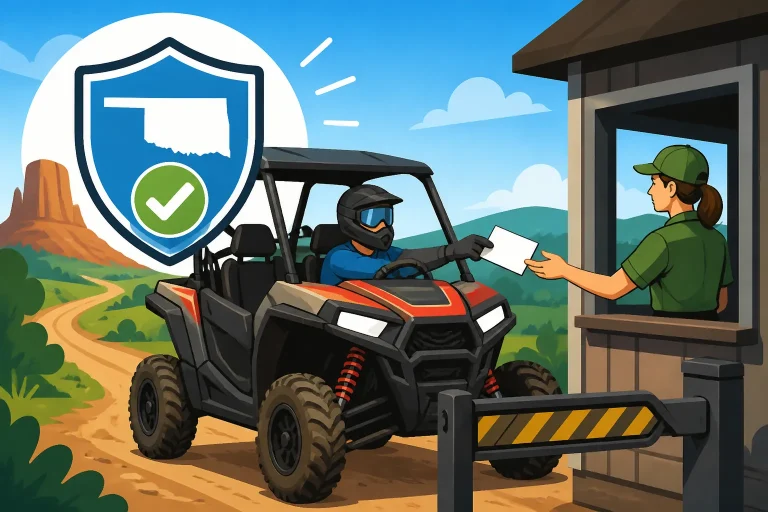
- Check how to carry proof. Ask whether a digital record is accepted or whether you should bring printed proof. Keep the permit accessible during the ride.
- Recheck close to departure. Closures, weather conditions, seasonal access, and local restrictions can affect a trip even if you already bought the permit.
When you ask about the permit, be precise. “Do I need a permit?” can lead to an answer about hunting, fishing, camping, or vehicle registration rather than your actual activity. A clearer question is: “I’m an Oklahoma resident, I’m not hunting, and I want to ride my ATV on this named area. What access authorization do I need, and which routes are open to ATVs?”
If you are planning around age-based exemptions, confirm how the rule applies to the rider and the specific permit. Do not assume that an exemption from one permit also waives every other requirement. Oklahoma Permit Exemptions by Age and Do Oklahoma Kids Need a Permit? can help you identify what to verify for younger riders or older residents.
For permit purchasing steps and current options, use How to Buy an Oklahoma Land Access Permit. Check the official provider for current prices, eligibility, and purchase methods rather than relying on an old receipt, a friend’s permit, or information for another property.
What the permit does not let you do
A land access permit is permission subject to conditions, not a blanket pass. It does not override the rules that govern the specific property, and it does not turn a closed route into an open one.
It does not replace machine registration
If your ATV or UTV must be registered, the land access permit does not satisfy that separate obligation. Keep the machine’s registration documents and decal requirements distinct from the access paperwork. See How to Register an ATV in Oklahoma for registration questions and Do You Need to Register an ATV in Oklahoma? for the broader issue.
Registration also does not grant permission to ride on land where you lack access rights. A correctly registered machine can still be on a prohibited route or property if the rider has not met the land’s entry requirements.
It does not authorize riding everywhere on the property
Wildlife areas and other managed lands may limit off-highway vehicles to designated roads, restrict certain machines, or close routes during particular periods. A permit does not let you make your own trail, cross a closed gate, or ride beyond the property boundary.
Check maps and signs at the entrance. If a map is unclear, ask the manager before riding. Do not assume that a road visible on a phone map is open to motor vehicles or that an unmarked track is an approved route.
It does not replace private land permission
A public-land permit cannot give you permission to cross a private parcel or ride on a neighbor’s land. If a route approaches private property, stop and verify the boundary and access rights. For private land, obtain permission from the owner or authorized manager and follow any conditions they set.
This can be especially important around timber properties, leases, and access roads. A road may look public while still being subject to a separate access arrangement. Learn the property rules before using it; Why Timber Company Land Needs Its Own Permit explains why a wildlife-area permit should not be treated as authorization for unrelated timber land.
It does not grant hunting privileges
A land access permit is not a hunting license. If you later decide to hunt, check the hunting license, season, and area rules that apply. Having permission to enter for recreation does not automatically authorize taking wildlife or carrying out a hunt.
It does not guarantee access at any time
A valid permit may not prevent a temporary closure or seasonal restriction. Land managers can impose conditions related to safety, weather, wildlife management, fire risk, or property operations. Check for current notices before setting out, particularly when traveling a long distance.
A practical pre-ride checklist for non-hunting residents
Use this checklist when arranging a ride on land where an access permit may be required:
- Confirm the exact property and the agency or manager responsible for it.
- State clearly that the trip is for riding or recreation, not hunting.
- Ask whether a resident land access permit is required for that particular use.
- Verify whether a hunting or fishing credential has any role in the access rule.
- Confirm whether the permit covers your chosen area, activity, and visit dates.
- Check that your ATV or UTV type is permitted and identify approved roads or trails.
- Ask about seasonal restrictions, closures, camping rules, and any separate fees.
- Carry proof of the permit in the format accepted by the land manager.
- Keep machine registration and ownership documents separate from access paperwork.
- Confirm that any guests have the credentials required for their own status.
- Recheck conditions shortly before departure.
A simple comparison can help prevent the most common mix-up:
| If your question is… | Check… |
|---|---|
| “Is my machine registered?” | Oklahoma registration requirements |
| “May I enter this specific area without hunting?” | The area’s land access permit rules |
| “Can I ride this route?” | Current route map, signs, and vehicle restrictions |
| “Can I ride on adjoining private land?” | Permission from the landowner or manager |
| “Can I hunt while I am there?” | Hunting licenses, seasons, and property-specific rules |
| “Does my permit still apply after a move or for a guest?” | Permit holder eligibility and the manager’s current terms |
When in doubt, get an answer tied to the exact land and activity before you leave. That is more useful than relying on a general statement that “Oklahoma riders need a permit” or “residents are exempt.” Both can be misleading if the rule applies only to a certain property, a certain activity, or a defined group of permit holders.
If you ride regularly, keep a note of the properties you visit and the permit each one requires. A permit may be useful for one destination and irrelevant at the next. That small bit of trip planning helps avoid buying the wrong authorization and makes it easier to show that you checked the rules.
Frequently Asked Questions
Do Oklahoma residents need a land access permit if they are not hunting?
They may need one for certain areas, depending on the land manager’s access rules. Confirm the requirement for the specific property and riding activity before you go.
Does an ATV registration decal count as a land access permit?
No. Registration concerns the machine. A land access permit concerns entry or use of a particular property, and one does not automatically replace the other.
Does a resident land access permit cover every wildlife management area?
Do not assume that it does. Check the permit’s stated coverage and the rules for the particular area. Some properties have separate access arrangements or restrictions.
Can a land access permit be used by a nonresident guest?
Not automatically. Permit eligibility and coverage can depend on the individual. Each guest should confirm the requirements that apply to them.
Disclaimer
This article is for general informational purposes only and does not constitute professional advice. Laws, prices and regulations vary by location and change over time. Consult a qualified professional for guidance on your specific situation.