The $11 Registration You Pay Once and Never Renew
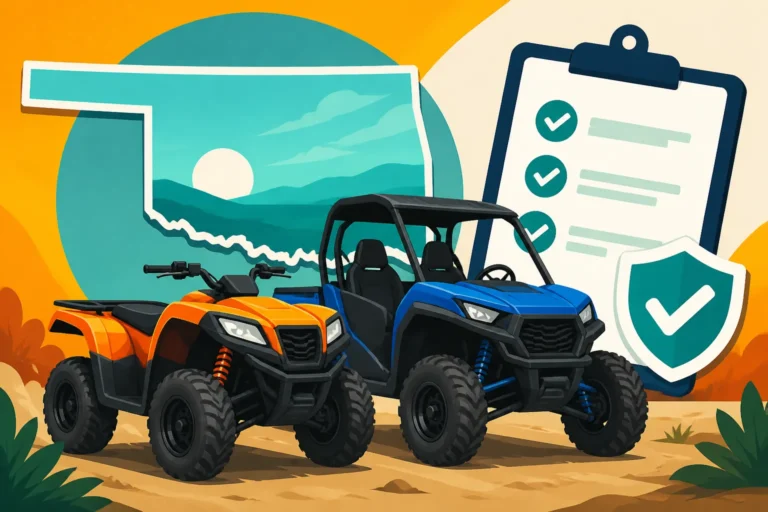
It's incredibly frustrating when you're trying to do the right thing and register your ATV or UTV, only to find the rules feel like a tangled mess of fees, deadlines, and confusing jargon. Many folks dread the yearly renewal notices for their cars and trucks, so when it comes to their off-road machines, the idea of another annual bill can be a real headache. This guide is here to untangle that confusion, explaining Oklahoma's unique $11, one-time registration fee for ATVs and UTVs, why it never renews, and what that actually means for you as a rider.
Demystifying Oklahoma's Unique ATV/UTV Registration
Oklahoma takes a refreshingly different approach to registering ATVs and UTVs compared to just about any other vehicle you own. When you first hear about it, it almost sounds too good to be true: an $11 registration fee that you pay once and never have to worry about renewing. It's not a myth, it's the reality for off-road enthusiasts in the Sooner State, and it's a huge relief for many.
The "One-and-Done" $11 Fee: What It Means
So, what exactly is this $11 fee, and what does "one-and-done" truly imply? When you go to title your ATV or UTV at an Oklahoma tag agency, you'll pay a small, one-time fee of $11 for what the state considers its "registration." This isn't like your car's annual tag fee that pops up in your mailbox every year. This is a perpetual registration. Once you pay it, that machine is registered in Oklahoma for as long as you own it, and potentially even for future owners. It's a fundamental part of establishing the machine's legal presence in the state. Think of it as a lifetime membership for your specific machine within Oklahoma's registration system. Many riders appreciate this because it means one less thing to track annually, one less bill to pay, and one less sticker to peel off each year. It’s a significant difference from other states that have recurring fees. This is a core part of [Oklahoma ATV Registration You Pay Once].
This $11 charge is often paid right alongside other initial fees, like the titling fee and any applicable excise tax, so it's easy to overlook as a separate item on your receipt. But make no mistake, it's the specific charge that gets your machine entered into the state's database as "registered" and triggers the issuance of your registration decal. This decal, which typically goes on the front of your machine, serves as your proof of registration. It's a physical reminder of that one-time payment. While the financial burden is minimal, the peace of mind knowing you don't have to budget for another annual fee for this machine is significant. It simplifies ownership and helps you avoid those dreaded late fees that can stack up for other vehicles.
Why No Annual Renewal?
The question everyone asks is, "Why? Why doesn't Oklahoma make me renew this every year like my car?" It's a valid question, especially given how common annual renewals are for most vehicles. The simple answer is that Oklahoma's legislature decided that ATVs and UTVs, primarily designed for off-road use, don't require the same recurring administrative oversight as vehicles that constantly use public roads. The initial $11 registration fee is considered sufficient to cover the state's administrative costs for processing the original paperwork and issuing the decal. This means [Oklahoma Registration Never Renews].
This policy reflects a recognition that ATVs and UTVs have a different operational footprint than cars or trucks. They aren't typically driven daily on paved highways and byways where annual inspections, emissions tests, or proof of continuous insurance (beyond what might be required for a street-legal UTV conversion) are often tied to renewal. By making it a one-time fee, the state streamlines the process for riders and reduces the administrative burden on the tag agencies. For many, this is a huge perk of riding in Oklahoma, allowing them to focus more on trail adventures and less on bureaucracy. This distinct approach highlights how the state differentiates between various types of vehicles based on their primary intended use, making life just a little bit simpler for off-road enthusiasts.
Unpacking the Distinction: Registration Decal vs. Title
One of the biggest sources of confusion for new and even experienced ATV/UTV owners in Oklahoma is understanding the difference between the $11 registration fee and the titling process. They are related, often happen at the same time, but serve distinct purposes. You truly need both for full legal ownership and operability, even though only one of them has that famous "never renews" attached to it.
The Purpose of the Registration Decal
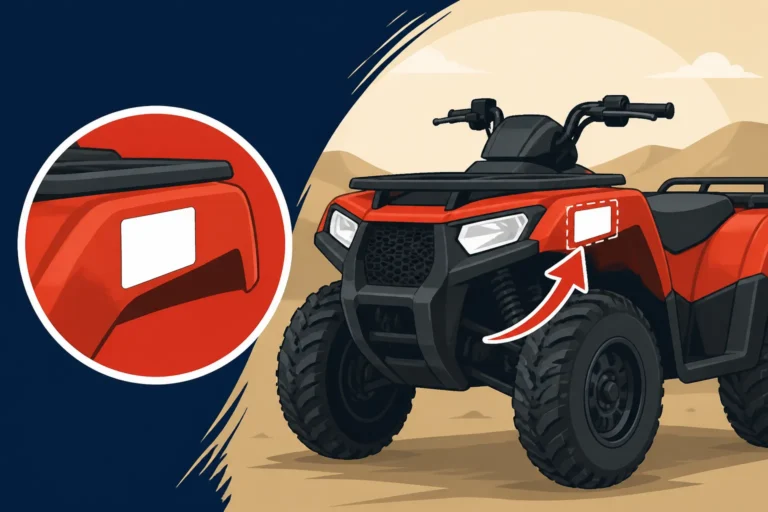
The $11 fee specifically pays for your registration and results in a physical decal, not a license plate. This decal is the official visible proof that your off-road machine has been registered with the state of Oklahoma. [Oklahoma Issues a Front Decal, Not a Plate]. It's essentially a tracking mechanism, allowing law enforcement or park rangers to quickly verify that the machine has gone through the proper initial steps. Without this decal displayed, even if you have a title, you could face questions or even a citation if encountered on public lands where registration is required. The decal is a small but mighty piece of vinyl that validates your machine's place in Oklahoma's system.
This decal typically needs to be affixed to the front of your ATV or UTV, usually in a visible spot. For ATVs, it's often on the front plastic fender or headlight assembly. For UTVs, it might be on the front hood or near the grill. The specific placement is important because it needs to be easily seen. If it's tucked away or obscured, it defeats its purpose as quick visual proof. So, while the fee is minimal, the decal itself is a crucial element of compliant ownership, signifying that your machine is recognized by the state for off-road use. It's important to remember that this decal does not authorize street use; it's purely for off-highway registration. [Where the Registration Decal Goes on an ATV] has more details.
How Titling Fits Into the Picture
While the registration decal is your proof of state recognition for off-road use, the title is your proof of ownership. This is a fundamental document, much like a car title, that legally establishes who owns the ATV or UTV. [Oklahoma Titles ATVs and UTVs]. Without a title, proving you're the rightful owner can be incredibly difficult, especially if you ever need to sell the machine, claim it from theft, or pass it on to an heir. The title also records important details about the machine, such as its Vehicle Identification Number (VIN), make, model, and year. It's the "DNA" document for your off-road vehicle.
The titling process often happens concurrently with the initial $11 registration fee payment. In fact, [Oklahoma Charges $11 at Titling], meaning the registration fee is collected as part of the broader titling transaction. You'll bring your Manufacturer's Statement of Origin (MSO) for a new machine, or a bill of sale and previous title for a used one, to the tag agency. They process all the paperwork at once, collect the titling fees (which are separate from the $11 registration fee), any applicable excise tax, and that $11 registration charge. You'll leave with a temporary registration and, usually a few weeks later, receive your official title in the mail. This two-pronged approach ensures both legal ownership and state recognition for operation.
Your First Trip to the Tag Agency: What to Expect
The initial trip to the tag agency can feel a bit daunting, especially if you're not sure what paperwork you'll need. But with a little preparation, it can be a smooth process. Remember, this is where you solidify your ownership and get that all-important, one-time registration decal. Being prepared saves you time and avoids frustrating second trips.
Paperwork You'll Need at the Tag Agency
To get your ATV or UTV titled and registered in Oklahoma, you'll need a specific set of documents, which can vary slightly depending on whether your machine is new or used, and where you bought it. For a brand-new machine purchased from a dealer, you'll generally need the Manufacturer's Statement of Origin (MSO) and the dealer's invoice. This MSO is essentially the birth certificate of your machine, proving it's never been titled before. [Oklahoma Requires an MSO for a New Machine] and [Oklahoma Dealer Invoices at Titling] are key here.
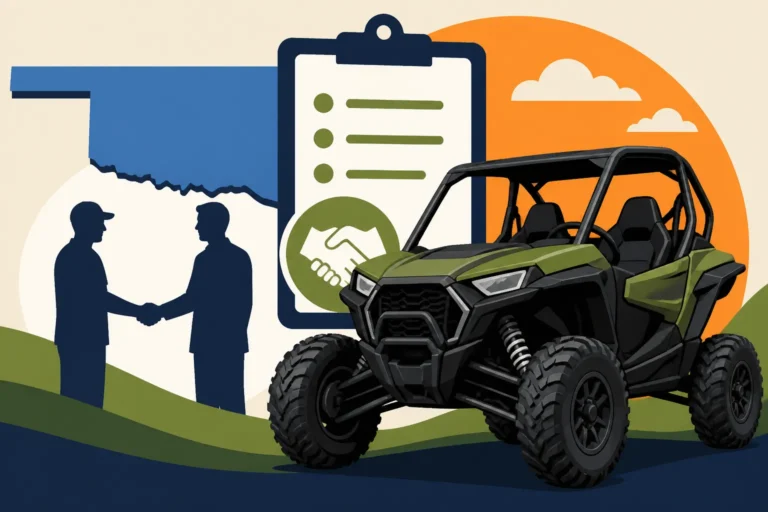
If you're buying a used machine from a private seller, things are a bit different. You'll need the original title, properly signed over to you by the previous owner, and a bill of sale. Even if the machine is old and the original title is lost or was never issued (which happens with pre-cutoff date machines), a comprehensive bill of sale is crucial. Many riders use templates from services like LawDepot to ensure all necessary details, like the VIN, purchase price, and buyer/seller information, are clearly documented. If the machine is very old and falls under specific cutoff dates (e.g., [Oklahoma ATV Cutoff of July 2005] or [Oklahoma UTV Cutoff of July 2008]), you might be able to title it with just a bill of sale and a Declaration of Vehicle Purchase Price, avoiding the need for a previous title. Regardless of the machine's age, bring your photo ID and proof of Oklahoma residency. [How to Register an ATV in Oklahoma] offers a step-by-step guide.
Where Your Registration Decal Goes
Once you've successfully navigated the paperwork and paid the fees, the tag agency will issue you your $11 registration decal. This small sticker is your visual proof of registration, and it needs to be displayed correctly. For most ATVs and UTVs, the decal is meant to be placed on the front of the machine. The idea is that it should be clearly visible to anyone checking, such as a park ranger or law enforcement officer.
Choosing the right spot is important. You want it to be on a flat, clean surface where it won't be easily damaged by branches, mud, or extreme weather, but still prominent. On an ATV, this usually means the front fender, the front rack, or even a visible part of the headlight housing. For a UTV, the front hood, grille, or a flat panel on the front fascia are common locations. While there isn't a "fine" for improper placement in the same way there might be for an expired plate, having it visible avoids unnecessary questions. The tag agency clerk can often provide guidance on recommended placement, but ultimately, it's about ensuring that critical information is readily accessible when needed. This isn't like a motorcycle where it goes on the fork; [Oklahoma Decals on the Front of a Machine] is the rule.
Common Pitfalls and Misconceptions
Despite the relatively simple "one-and-done" nature of Oklahoma's ATV/UTV registration, there are still some common misunderstandings and specific scenarios that can trip up riders. Knowing these nuances can save you time, money, and potential headaches down the line.
The Impact of Cutoff Dates
Oklahoma has specific "cutoff dates" that significantly affect the titling and registration process for older ATVs and UTVs. For ATVs, the key date is July 1, 2005. Machines manufactured before this date can often be titled and registered with just a bill of sale and a Declaration of Vehicle Purchase Price, without needing a previous title or Manufacturer's Statement of Origin. This is a huge relief for many who buy older machines from private sellers who may have lost original paperwork. For UTVs, the cutoff date is July 1, 2008. Machines manufactured before this date enjoy similar relaxed titling requirements.
These dates were established because before these times, many off-road machines were not consistently titled, or titles were not required at all. The state recognized this historical gap and implemented these cutoffs to make it easier for owners of older machines to get into compliance without impossible demands for paperwork that never existed. If you’re buying an older machine, always check its manufacture date against these cutoffs. It can drastically simplify your trip to the tag agency. Without understanding these specific dates, you might assume you need a title that simply doesn't exist, leading to unnecessary frustration. [Why Quads and Side-by-Sides Have Different Cutoff Years] explains this in more detail.
Agricultural Exemptions and Registration
Another area of confusion revolves around agricultural exemptions. Historically, machines used exclusively for agricultural purposes on private land might have been exempt from certain fees or requirements. While some exemptions still exist, it's important not to confuse them with the $11 registration fee itself. The primary exemption remaining for agricultural permit holders in Oklahoma relates to the excise tax. If you hold a valid agricultural permit and your ATV or UTV is used exclusively for farming or ranching operations, you can often avoid paying the 4.5% excise tax at the time of titling. [Oklahoma Agricultural Permit Exemptions] covers this in depth.
However, even with an agricultural exemption for excise tax, the $11 registration fee and the titling fee generally still apply. The state still wants to know the machine exists and who owns it, even if its use is confined to a farm or ranch. So, don't assume that because your machine is "farm-use only," you can skip the entire registration and titling process. It's always best to clarify with your local tag agency or check the Service Oklahoma website for the most current rules. Relying on outdated information could lead to unexpected fees or legal issues down the road. Remember, the $11 fee is about official recognition, which is separate from tax exemptions.
What Happens After You Register
Once you've got your title in hand and that $11 decal affixed to your machine, you're set for life in Oklahoma—at least for that machine's registration. But ownership is rarely static. You might sell the machine, or your decal might fade or get lost. Understanding these post-registration scenarios ensures you remain compliant and prepared for whatever comes next.
Selling a Registered Machine
So, you've enjoyed your machine, and now it's time for an upgrade or a change. What happens to that "one-time" $11 registration when you sell it? This is another point where Oklahoma's rules are unique and can catch people off guard. Unlike a vehicle tag that stays with the car, the $11 registration fee is tied to the owner at the time of titling, and implicitly, to the act of registering that specific machine. When you sell your registered ATV or UTV, the new owner will need to go through the titling process themselves.
During their titling process, the new owner will again pay the $11 registration fee to get their own new registration decal. This means the original $11 registration you paid doesn't "transfer" with the machine in the sense that the new owner won't have to pay it. They will, in essence, pay their own $11 registration fee to get the machine registered under their name and receive a new decal. So, while your payment was "one-time" for your ownership period, the machine isn't perpetually registered without further fees for every subsequent owner. It's a re-registration requirement that occurs with each change of ownership. When selling, make sure you provide the properly signed-off title to the buyer. You might even use a bill of sale template from a service like LawDepot to clearly document the transaction and protect both parties. [Selling a Registered Machine in Oklahoma] has more details.
Replacing a Lost or Damaged Decal
Life happens. That vibrant $11 registration decal, once proudly displayed on your ATV or UTV, might fade from the sun, get torn off by a rogue branch, or simply disappear. When this happens, you absolutely need to get it replaced. Operating your registered machine without a visible decal, especially if challenged by law enforcement, could still lead to questions or issues, even though you paid the fee. The decal is the visual proof.
Replacing it is relatively straightforward, but it does come with a small fee. You'll typically need to visit a tag agency with your machine's title and your photo ID. You'll fill out an application for a duplicate decal and pay a nominal replacement fee, which is usually a few dollars (significantly less than the original $11, but still a cost). This ensures you get a fresh decal that is legible and properly affixed. Don't procrastinate on replacing a damaged or lost decal; it’s a quick fix that keeps you in compliance and avoids potential hassle on the trails or in the field. [Oklahoma Decal Replacement If Lost] explains the process.
Budgeting for Your Off-Road Machine: Beyond the $11 Fee
While Oklahoma's $11, one-time registration fee is certainly appealing, it's crucial for any potential ATV or UTV owner to understand that it's just one piece of the financial puzzle. There are other costs associated with acquiring and owning an off-road machine in Oklahoma, from initial taxes and fees to ongoing maintenance. Being aware of these can help you budget properly and avoid any unwelcome surprises.
Other Costs to Consider at the Tag Agency
When you first head to the tag agency to get your new (or new-to-you) ATV or UTV titled and registered, that $11 registration fee will not be the only charge you encounter. You'll also need to pay for the title itself. The titling fee is separate from the registration fee, though they are usually paid together. The biggest cost you'll face at the tag agency, however, is likely the Oklahoma excise tax. This is a 4.5% tax on the declared purchase price of the machine. This can add up quickly, especially on a new UTV. So, if you bought a machine for $10,000, expect to pay $450 in excise tax, plus the titling fee and the $11 registration fee.
If you purchased your machine from a dealer, you might also have dealer documentary fees or setup charges that were added to your total purchase price. While these aren't paid directly at the tag agency, they are part of your "out-the-door" cost. It’s important to distinguish between the sticker price and the final cost with all fees and taxes. Make sure you get a detailed invoice from the dealer, and if you’re doing a private sale, a comprehensive bill of sale, perhaps drafted with a template from LawDepot, is essential to clearly document the purchase price for excise tax calculation. Understanding [Oklahoma ATV Registration Cost] means looking at the whole picture, not just the $11. [Oklahoma Excise Tax at Titling] is a significant consideration.
Long-Term Ownership Expenses
Beyond the initial costs at the tag agency, owning an ATV or UTV involves ongoing expenses that should be factored into your budget. Fuel is an obvious one, especially if you're hitting the dunes at Little Sahara or spending long days on the trails. Maintenance is another big area; oil changes, air filter replacements, tire wear, brake pads, and occasional repairs can add up. The harder you ride, the more frequently these expenses will crop up.
Then there's insurance. While Oklahoma doesn't mandate insurance for off-road-only ATVs or UTVs, it's highly recommended. Accidents happen, and liability insurance can protect you financially if you cause damage or injury. Comprehensive and collision coverage can protect your investment from theft, fire, or damage. If you finance your machine, your lender will almost certainly require full coverage insurance. Finally, consider accessories like helmets (required for riders under 18), riding gear, a whip and flag for dune riding, and possibly a trailer for transport. All these elements contribute to the true cost of ownership. The $11 registration is just the first step in a fulfilling, but not entirely free, off-road experience.
Here's a quick comparison of the registration and titling costs in Oklahoma:
| Item | Cost (Typical) | Renewal Frequency | Purpose | Notes |
|---|---|---|---|---|
| ATV/UTV Registration | $11 | Never renews | Off-road usage decal | One-time fee, issued at titling. |
| ATV/UTV Title | ~$10-$15 | One-time | Proof of ownership document | Required for all machines (with pre-cutoff exceptions). |
| Excise Tax | 4.5% | One-time (at transfer) | State tax on purchase price | Applies at initial titling and each subsequent change of ownership. |
| Decal Replacement | ~$5-$10 | As needed | Replace lost/damaged registration decal | Small fee to get a new physical decal. |
| Street-Legal UTV Plate | Annual fee | Annual | Road plate for street-legal UTVs | If your UTV is converted and registered for street use. |
Disclaimer
This article is for general informational purposes only and does not constitute professional advice. Laws, prices and regulations vary by location and change over time. Consult a qualified professional for guidance on your specific situation.