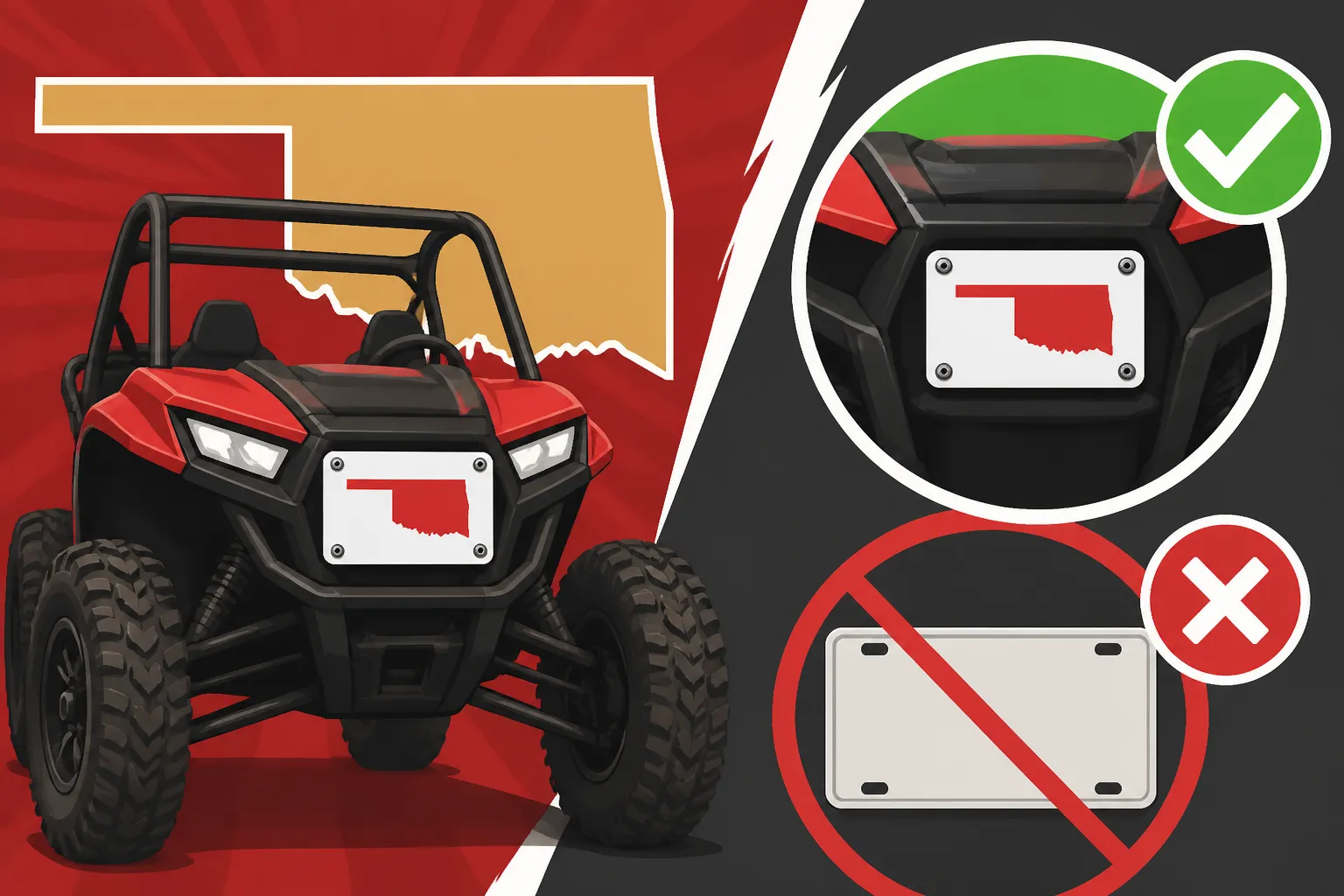
Oklahoma Issues a Front Decal, Not a Plate
There's often a bit of head-scratching when new ATV or UTV owners in Oklahoma try to figure out where their license plate goes. After all, most vehicles have a plate, right? But here in the Sooner State, things are a little different for our off-road machines. This comprehensive guide will walk you through exactly why Oklahoma issues a durable, distinctive front decal for your ATV or UTV instead of a traditional license plate, what that decal means, where it belongs, and everything you need to know about keeping your machine legally identified.
Understanding Oklahoma's Unique Identification System for ATVs and UTVs
When you first dive into the world of off-road riding in Oklahoma, you might expect the same kind of identification you see on cars and trucks. But the state has carved out a distinct path for ATVs and UTVs, recognizing their primary purpose is far different from street-legal vehicles. This isn't just a quirk; it's a deliberate system designed to acknowledge the unique nature of off-highway vehicle use.
Why No License Plate for Off-Road Machines?
The fundamental reason Oklahoma skips the license plate for ATVs and UTVs comes down to their classification and intended use. A license plate is primarily a tool for identifying vehicles that operate on public roadways, facilitating enforcement of traffic laws, and tracking vehicle ownership for road-specific taxes and fees. Your typical ATV or UTV, however, isn't built for the highway, and in most cases, isn't legally allowed on public roads. Think about it: a license plate would be pretty vulnerable out on the trails, constantly exposed to mud, brush, and impacts. The state's system reflects this reality.
Instead of a plate, Oklahoma's approach simplifies the identification process while still ensuring accountability. It's a recognition that your machine will likely spend its life traversing fields, climbing dunes, or navigating wooded trails, not cruising down I-35. This difference can initially be confusing for riders coming from other states where off-road vehicle identification might involve a small plate or different sticker system. It's important to remember that Oklahoma's system is tailored specifically to the off-road environment and its unique demands, aiming for practicality and visibility within that context.
The Function of the Front Decal
So, if there's no plate, what exactly is this front decal, and what does it do? Your Oklahoma front decal is your undeniable proof of registration for your ATV or UTV. It’s a sturdy, adhesive sticker that contains a unique registration number assigned to your specific machine. This number is linked in state records to your vehicle's VIN (Vehicle Identification Number) and your ownership details.
For law enforcement, park rangers, and game wardens, this decal is the first thing they'll look for to confirm your machine is legally registered. It signifies that you've completed the necessary paperwork, paid the one-time registration fee, and are operating within the state's regulations. Think of it as a simplified, yet highly effective, form of identification that's robust enough for off-road conditions. It's designed to be clearly visible, making it easy for officials to check your compliance quickly, whether you're out riding at Little Sahara or working on a ranch. It tells them, at a glance, that this machine is accounted for, without the need for a cumbersome metal plate that could easily be torn off or damaged during aggressive riding.
Where Your Oklahoma ATV/UTV Decal Belongs
One of the most common questions after getting your decal is, "Okay, now where exactly do I put this thing?" Proper placement isn't just about aesthetics; it's about compliance and ensuring your machine can be easily identified by authorities. Oklahoma law is quite specific on this to avoid confusion and ensure visibility.
Exact Placement on an ATV
For a traditional quad or ATV, the front decal is designed to be placed prominently on the front of the machine. This typically means affixing it to the front plastic bodywork, the front rack, or the front bumper. The key is to choose a flat, clean surface where the decal will be clearly visible and unobstructed from the front. Avoid areas that might be easily obscured by mud, branches, or aftermarket accessories like light bars if possible.
When you're applying it, make sure the surface is clean, dry, and free of any grease or old adhesive residue. Take your time to align it straight and press it firmly to avoid air bubbles. A common mistake is putting it on a curved surface where it might peel easily, or in a location that gets scraped often. You want it to last! Remember, the goal is for an officer to easily spot that decal and read its unique identifier without having to climb all over your machine. This helps them confirm your compliance with registration requirements like [Oklahoma Decals on the Front of a Machine].
Exact Placement on a Side-by-Side (UTV)
Side-by-sides often present a few more options due to their varied designs, but the rule remains the same: the decal must be visible from the front. For UTVs, suitable locations often include the front bumper, the center of the hood, or a flat section of the front grille or brush guard. Some riders choose to put it on a front panel near the windshield, provided it's clearly visible and doesn't impede vision.
Just like with ATVs, prioritize a clean, flat surface that won't be easily damaged or obscured during typical use. If your UTV has a winch or a custom bumper, make sure the decal placement doesn't get covered by those features. The idea is to make it as obvious as possible, so there's no question about your machine's registered status. For more specific guidance on placement for these larger machines, you can look into resources like [Oklahoma Decal Placement on a Side-by-Side]. Taking a few extra minutes to get it right the first time will save you potential headaches down the trail.
Special Considerations for Motorcycles and Youth Quads
While the general rule of "front and visible" applies across the board, there are some nuanced placements for other off-road machines. For dirt bikes or off-road motorcycles, for example, the decal is typically placed on the front fork. This ensures it's still facing forward and easily seen, even on a machine with minimal front bodywork. Again, find a clean, flat section of the fork where the decal can adhere securely and won't be rubbed off by suspension movement or other components.
Youth quads often have smaller body panels, but the principle remains the same. The decal needs to be on the front, in an unobstructed location. It’s crucial for youth riders to have their machines properly identified as well, especially if they are riding in state parks or organized OHV areas where compliance checks are common. Knowing these specific rules for different machine types, such as [Oklahoma Decals on a Motorcycle Fork], helps ensure that every rider, regardless of their machine, can confidently display their registration.
The Registration Process: Getting Your Front Decal
Navigating the registration process for your off-road machine in Oklahoma can feel a bit like wading through paperwork, especially if you're a first-time owner. But don't fret! The system is designed to be relatively straightforward once you understand the steps and required documents. The key is to be prepared to ensure a smooth visit to the tag agency.
Initial Registration and Required Paperwork
Whether you're bringing home a brand-new side-by-side or a well-loved quad from a private seller, you'll need specific documentation to get that all-important front decal. For a new machine purchased from a dealer, you'll typically need the Manufacturer's Statement of Origin (MSO) and the dealer's invoice. These documents prove the machine's origin and your initial purchase.
If you're buying a used machine, the paperwork changes slightly. You'll generally need a bill of sale, which clearly states the purchase price, seller's and buyer's information, and the machine's VIN. In most cases, you'll also need the previous owner's title. Be aware that [Oklahoma's 30-Day Registration Deadline] starts ticking from the date of purchase, so don't delay! Missing this window can lead to [Oklahoma Late Registration Fees]. To help with the private sale process, using a reputable online service like LawDepot for a customizable bill of sale can provide peace of mind and ensure all necessary details are included. Filling out [Oklahoma's ATV Registration Application Explained] accurately before you go can also save a lot of time at the counter.
Fees and What They Cover
Here's some good news that often surprises new owners: registering an off-road machine in Oklahoma is a one-time fee, and it's remarkably low. When you go to title your ATV or UTV, you'll pay a nominal amount for the registration decal. [Oklahoma Charges $11 at Titling] for this initial registration. This fee covers the cost of processing your application, issuing your unique registration number, and providing you with the physical decal itself.
What many riders appreciate is that this is not an annual renewal fee. Once you've paid it and received your decal, you're done! There are no recurring yearly charges to keep your off-road registration current. This differs significantly from car or truck registrations, which require annual renewal. It’s a point worth emphasizing: [Oklahoma Charges Nothing to Renew] your ATV or UTV registration after that initial payment. This makes owning and operating an off-road machine in Oklahoma quite cost-effective in the long run. The [What Oklahoma's $11 Registration Fee Actually Covers] is essentially a lifetime registration for your machine, as long as you own it.
The Role of Tag Agencies and Service Oklahoma
Your journey to getting that front decal will almost always lead you to a local tag agency. These are the authorized agents of the Oklahoma Tax Commission, tasked with handling vehicle titling and registration. They're where you'll submit your paperwork, pay your fees, and receive your new title and that all-important decal. It’s a good idea to call ahead or check their website for specific hours and any unique requirements, as processes can vary slightly between agencies.
Alternatively, some services can be handled through Service Oklahoma, which is the state's centralized hub for driver and motor vehicle services. While most people still visit a local tag agency for the hands-on process of titling and registering a new machine, Service Oklahoma provides a broader array of government services. For questions or to confirm what you need, they can be a valuable resource. Ultimately, for the physical act of getting your title and decal, a trip to your local tag agency will be necessary. For more details on where to go, you might find it helpful to consult resources on [Tag Agency or Service Oklahoma: Where to Go].
Maintaining Your Decal: Replacement and Renewals
Unlike your car's annual tag renewal, your off-road machine's registration decal in Oklahoma has a different life cycle. This can be a source of confusion for many, but once you understand the unique system, it's quite simple and, dare I say, a relief!
Why Oklahoma Decals Don't Renew Annually
This is perhaps the biggest differentiator for off-road machine registration in Oklahoma: once you've registered your ATV or UTV and received your initial front decal, you don't have to renew it annually. That's right, there are no yearly fees, no renewal notices in the mail, and no need to go back to the tag agency every 12 months for your off-road machine. This is one of the most rider-friendly aspects of Oklahoma's system. [Oklahoma Registration Never Renews], making it a true one-and-done process for the lifetime of your ownership.
The state enacted this system to simplify bureaucracy for off-road enthusiasts and to reflect the limited public road use of these vehicles. It's a significant departure from how traditional vehicles are handled, and it means less hassle and more money in your pocket for gas and trail fees. Just affix that decal properly, and you're good to go. This "never renews" policy is a key part of [Oklahoma ATV Registration Cost] being so low upfront.
Replacing a Lost, Damaged, or Faded Decal
While your decal doesn't expire, life on the trails can be tough on a sticker. Mud, sun, brush, and accidental scrapes can lead to a decal that's either gone missing, torn, or faded to the point of being unreadable. If this happens, you absolutely need to get a replacement. An unreadable or missing decal is essentially the same as riding unregistered, and that can lead to issues if you encounter law enforcement.
Fortunately, getting a duplicate decal is a straightforward process. You'll need to head back to a tag agency, provide proof of ownership (like your title or existing registration record), and pay a small fee for the replacement. They'll issue you a new decal with the same registration number. It’s a minimal cost for the peace of mind that comes with being fully compliant. Don't put off replacing a damaged decal; it's a simple fix that prevents bigger problems. Look for specific information on [Oklahoma Decal Replacement If Lost] or if you're dealing with one that's been [Replacing a Front Decal Faded by the Sun].
When a New Decal is Issued (Transfers, Changes)
While your decal doesn't renew annually, there are specific situations where a new decal might be issued, even if the machine has been previously registered. The most common scenario is when ownership of the machine changes hands. When you sell your registered ATV or UTV to another individual, the new owner will need to register the machine in their name. This process will involve paying the $11 registration fee again, and they will be issued a brand-new decal with a new registration number tied to their ownership. This is why [Why the $11 Fee Comes Back on a Transfer] is a recurring cost for the new owner, not a renewal for the machine itself.
Similarly, if there's a significant change to the machine's recorded information that necessitates a new title or a major correction, a new decal might be issued as part of that update. The core principle remains that the decal identifies the current legal owner and their registered machine. Any transfer of ownership restarts the registration process for the new owner, ensuring that the state's records are always current and tied to the person responsible for the machine.
Legal Implications of the Front Decal
The seemingly simple front decal carries a surprising amount of legal weight. It's more than just a sticker; it's a crucial piece of identification that connects your off-road machine to its legal owner and ensures compliance with state law. Understanding its implications is vital for any rider.
Proof of Ownership and Compliance
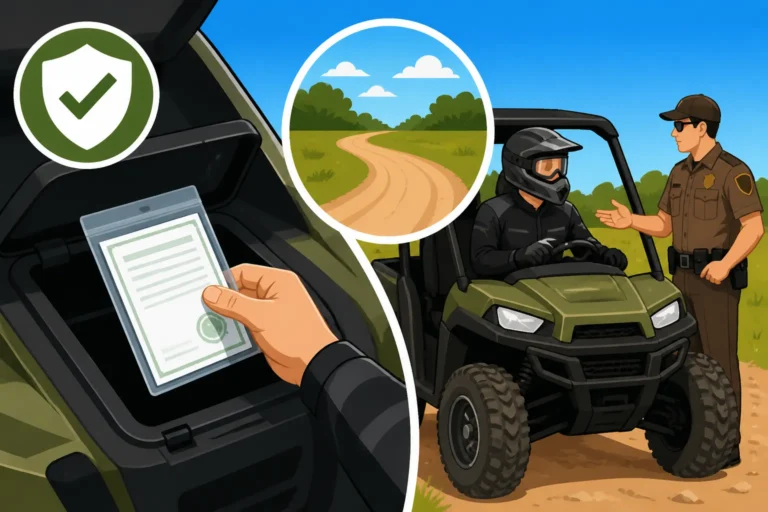
At its core, your front decal serves as readily visible proof that your ATV or UTV is legally registered with the state of Oklahoma. This registration, along with your title, is crucial for establishing clear ownership. If you're stopped by a state trooper, park ranger, or game warden while out riding, one of the first things they'll likely ask to see, besides your general conduct, is that decal. It signals that you've done your part to comply with the state's regulations for off-highway vehicles.
Operating an ATV or UTV where registration is required, but without a current or legible decal, can lead to citations and penalties. These penalties, while typically not as severe as those for on-road vehicle violations, can still be a hassle and costly. The decal is your silent guardian, indicating that your machine is properly documented. It's part of what [What a State Trooper Can Ask to See] when you're pulled over on a county road or within an OHV park. Maintaining a visible and intact decal is a simple step to avoid unnecessary legal complications and ensure smooth riding experiences.
Agricultural Permits and Exemptions
Oklahoma law provides some specific exemptions related to agricultural use, and it's important to understand how these interact with the front decal requirement. Historically, machines used exclusively for agricultural purposes on private land were often exempt from certain registration or titling requirements. However, the rules have evolved, particularly around cutoff dates.
While certain very old machines used solely for farm work might fall under different rules, generally speaking, most modern ATVs and UTVs, regardless of their use, are subject to titling and the one-time registration fee to get the front decal. There are still [Oklahoma Agricultural Permit Exemptions] that can save you from paying the excise tax when purchasing a machine for farm use, but these permits don't typically exempt you from the basic titling and decal registration requirement for the machine itself. The decal still serves as an identifier even if certain tax exemptions apply. Always double-check the current regulations or with a tag agency if you believe your machine qualifies for a full exemption. It’s important to know [What an Agricultural Permit Still Exempts You From] to avoid any misunderstandings.
Street-Legal UTVs and Road Plates (A Different System)
It's absolutely critical to distinguish between the off-road front decal system and the rules for street-legal UTVs in Oklahoma. While most ATVs and UTVs are strictly off-road machines, Oklahoma does have a specific class for UTVs that are modified and registered to be street-legal. These street-legal UTVs do not get a front decal; they get an actual, annual license plate, just like a car or truck.
This is a completely separate registration and titling process, involving different fees, annual renewals, and specific equipment requirements (like turn signals, mirrors, and horns). A street-legal UTV's license plate will be displayed on the rear of the vehicle, just like a car. The front decal we've been discussing is only for off-road use machines. Do not confuse the two systems. If you have a street-legal UTV, you'll be dealing with [Oklahoma Street Legal UTV Requirements] and an annual plate, not the one-time front decal. It's a common point of confusion, but understanding that the road plate does not replace your ATV registration is key to compliance. For clarity, remember that [Whether a Road Plate Replaces Your ATV Registration] is a firm 'no' – it's a different class of vehicle entirely.
Common Decal-Related Questions and Scenarios
Even with a clear understanding of the front decal system, specific situations can arise that prompt further questions. Whether you're new to the state, buying or selling, or encounter a paperwork hiccup, knowing how to navigate these common scenarios can save you a lot of grief.
Moving to Oklahoma with an Out-of-State Machine
Welcome to Oklahoma! If you're relocating to the Sooner State and bringing your ATV or UTV with you, you'll need to register it here. Even if it was registered in your previous state, Oklahoma requires you to go through its titling and registration process to get that distinctive front decal. The process is similar to registering a used machine bought within the state. You'll need your out-of-state title (or equivalent proof of ownership), and you'll head to a tag agency.
They'll process your title transfer to an Oklahoma title and then issue you the one-time front decal. Just like with any other registration, you'll pay the nominal fee for the decal. Make sure you have all your original paperwork handy. It's important to remember that [Oklahoma Registration for a New Resident] means integrating your machine into the state's system, and this typically means getting an Oklahoma title and the appropriate decal. While your out-of-state decal might have been valid where you came from, [Oklahoma Rules for an Out-of-State Decal] generally dictate that you need to switch over to the local system once you're a resident.
Buying and Selling Used Machines: Decal Transfer
When you're involved in a private sale of an ATV or UTV in Oklahoma, understanding the decal's role is crucial for both buyer and seller. As the seller, once you've sold your machine, the registration (and thus the decal) associated with your ownership is effectively concluded. The decal itself should not be transferred to the new owner, as it's tied to your registration. The new owner is responsible for registering the machine in their name.
As the buyer, your immediate priority after taking possession of the machine is to head to the tag agency to get it titled and registered under your name. You'll need a properly executed bill of sale and the signed-over title from the seller. Remember, the $11 registration fee will apply to you as the new owner, and you'll receive a fresh front decal with your unique registration number. This ensures a clean break in ownership records. Using a robust bill of sale, perhaps generated through a service like LawDepot, can ensure all parties are protected and the transaction is legally sound. This process is critical for [Selling a Registered Machine in Oklahoma] and [Buying From a Private Seller in Oklahoma] to ensure clear ownership.
What to Do If Your VIN Doesn't Match the Decal
This is a rare but potentially significant issue that can cause real headaches. If you somehow discover that the VIN on your physical machine doesn't match the VIN printed on your registration decal or listed on your title, you have a problem that needs immediate attention. This could be due to a clerical error at the tag agency, a mistake by a previous owner, or even an indicator of a stolen machine or illegal activity.
Do not attempt to correct this yourself or ignore it. Your first step should be to gather all your documentation – title, bill of sale, and the decal itself – and contact the tag agency where you registered the machine. Explain the discrepancy clearly. They will guide you through the process of verifying the correct VIN and rectifying the state's records. This might involve physically inspecting the machine's VIN. Resolving this promptly is crucial, as a VIN discrepancy can lead to legal complications, make it impossible to sell your machine, or even lead to its impoundment if discovered by law enforcement. Always ensure your VINs match across all documentation to avoid any future complications.
Beyond the Decal: Other Key Registration & Titling Facts
While the front decal is a central part of Oklahoma's off-road vehicle identification, it's just one piece of a larger regulatory puzzle. Understanding the broader context of titling, cut-off dates, and the consequences of non-compliance is essential for every responsible rider.
Titles vs. Registration
It’s important to understand the fundamental difference between a vehicle title and its registration (which in Oklahoma's off-road context, is represented by the front decal). The title is a legal document that establishes ownership of your ATV or UTV. It's like the deed to your house – it proves you own it. In Oklahoma, [Oklahoma Titles ATVs and UTVs] are generally required for most machines, especially newer ones.
Registration, on the other hand, is the act of recording that ownership with the state and obtaining permission to operate the machine within state guidelines. For off-road machines in Oklahoma, this means getting your unique front decal. You need both. You typically can't register a machine without first having a title in your name (or at least the MSO for a new machine that will be titled simultaneously). The title confirms ownership, and the registration (decal) confirms it's legally identified for use. They are two distinct but interconnected parts of the legal framework for your machine. Familiarize yourself with [Oklahoma ATV Title Requirements] to ensure you have all your ducks in a row.
Cutoff Dates and Their Impact
Oklahoma has specific "cutoff dates" that profoundly impact how older ATVs and UTVs are titled and registered. For ATVs (quads), the key date is July 1, 2005. For UTVs (side-by-sides), the cutoff is July 1, 2008. Machines manufactured before these respective dates are often exempt from the strict titling requirements that apply to newer machines. This means if you buy an old quad manufactured in, say, 2003, it might not have ever had a title, and you might not be able to get one. In such cases, a simple bill of sale (often created using resources like LawDepot) might suffice as proof of ownership for registration.
However, machines manufactured on or after these dates generally must be titled. These cutoff dates were established to modernize the state's approach to off-road vehicle ownership. Understanding [Oklahoma's 2005 and 2008 Cutoff Dates] is crucial when buying a used machine, especially from a private seller, as it dictates the type of paperwork you'll need. This also explains [Why Quads and Side-by-Sides Have Different Cutoff Years], aligning with when different types of machines became more prevalent. Always verify the manufacture date of a used machine to understand its titling status.
What Happens If You Ride Unregistered
Riding an unregistered ATV or UTV where registration is required, or riding with a damaged/unreadable decal, can lead to consequences. While specific fines can vary, you could face a citation and be required to pay a penalty. These penalties are often tied to the daily rate of late registration fees, which can add up quickly. While Oklahoma is generally lenient on off-road fees, the intent is still for compliance.
It's far better to ensure your machine is properly registered and your decal is prominently displayed than to risk a fine or other legal issues. Enforcement isn't just about traffic stops; game wardens and park rangers in state OHV areas or wildlife management areas will also be checking for valid registration. Furthermore, in the event of an accident or incident, having an unregistered machine can complicate insurance claims or legal proceedings. While [Oklahoma Late Penalties Capped at $100] is a welcome relief for those who might miss the 30-day window, it's always best to be compliant from day one.
Comparing Off-Road Decal vs. Road Plate Systems
To help solidify the distinction between Oklahoma's unique off-road decal system and a traditional road plate system, let's look at some key differences side-by-side. This table highlights why the state opted for a different approach for off-highway vehicles.
| Feature | Oklahoma Off-Road ATV/UTV Decal System | Typical Road Vehicle License Plate System (e.g., street-legal UTVs, cars) |
|---|---|---|
| Purpose | Proof of off-road registration | Proof of on-road registration, tax collection, law enforcement |
| Item Issued | Adhesive Decal | Metal Plate |
| Placement | Front of machine (visible) | Rear of vehicle (sometimes front also, depending on state) |
| Renewal Frequency | One-time (never renews) | Annual |
| Primary Use Focus | Off-highway recreation, agriculture | Public roadways, daily transport |
| Fees | Low, one-time registration fee ($11) | Annual registration fees, potentially higher taxes |
| Display | Simple sticker | Bolted to vehicle |
| Equipment Req. | Minimal (e.g., spark arrestor in parks) | Extensive (lights, signals, mirrors, horn, etc.) |
| Applicable Law | Off-road specific statutes | Traffic laws, highway patrol jurisdiction |
This table clearly illustrates why Oklahoma's system works well for off-road machines. It's tailored for their specific environment and use case, providing a cost-effective, durable, and simple method of identification without the burdens associated with road-legal vehicles. This explains [Why You Get a Front Decal, Not a Plate] here in Oklahoma.
Disclaimer
This article is for general informational purposes only and does not constitute professional advice. Laws, prices and regulations vary by location and change over time. Consult a qualified professional for guidance on your specific situation.