Oklahoma Decal Placement on a Side-by-Side
You just got that shiny new side-by-side or picked up a fantastic used one, and you're ready to hit the trails or get some work done on the ranch. But then you remember: Oklahoma has its own rules for off-road machines, and one of the first things you need to tackle is getting that registration decal correctly placed. It might seem like a small detail, but getting it wrong can lead to unnecessary headaches when you're out enjoying your machine. This guide will walk you through exactly where your Oklahoma registration decal needs to go on your side-by-side, why it matters, and how to make sure it stays put and visible for years to come.
Understanding Oklahoma's Decal System for Side-by-Sides
Oklahoma has a unique approach to registering off-road vehicles like ATVs and UTVs (side-by-sides). Unlike cars or even some motorcycles, these machines don't get a traditional metal license plate that you bolt onto the rear. Instead, the state issues a specific decal that serves as your proof of registration.
Why Decals, Not Plates?
It's a common question, especially for folks moving from states that might use small plates or even no registration at all for off-road machines. The core reason Oklahoma opts for a decal is quite practical: off-road vehicles operate in environments where a traditional license plate would likely be damaged, lost, or obscured by mud and debris very quickly. Imagine trying to keep a metal plate legible on the back of a side-by-side that's constantly kicking up dirt, splashing through creeks, or navigating tight trails where it could get snagged on brush. It just wouldn't be very effective for identification or enforcement. The decal, by its nature, is designed to be a bit more robust and flexible in its placement. It's a system designed with the realities of off-road riding in mind. If you're curious about the state's reasoning, we've gone into more detail about [Why You Get a Front Decal, Not a Plate].
The Single Decal Rule
When you register your side-by-side in Oklahoma, you'll receive a single, adhesive decal. This isn't like a car where you might have one plate for the front and one for the back. For your off-road machine, it's just one. This decal typically features the state seal, the word "Oklahoma," and a unique registration number, all printed in a contrasting color to ensure visibility. It's a robust, weather-resistant sticker designed to stand up to the elements, from scorching summer sun to muddy winter trails. The fact that you only get one emphasizes the importance of placing it correctly the first time and ensuring it remains visible.
Official Placement Guidelines for Side-by-Sides
The key to proper decal placement on your side-by-side isn't just sticking it anywhere. Oklahoma law specifies where this crucial identifier must be displayed to ensure it's easily seen by law enforcement, park rangers, or anyone needing to verify your machine's registration.
The Front and Center Mandate
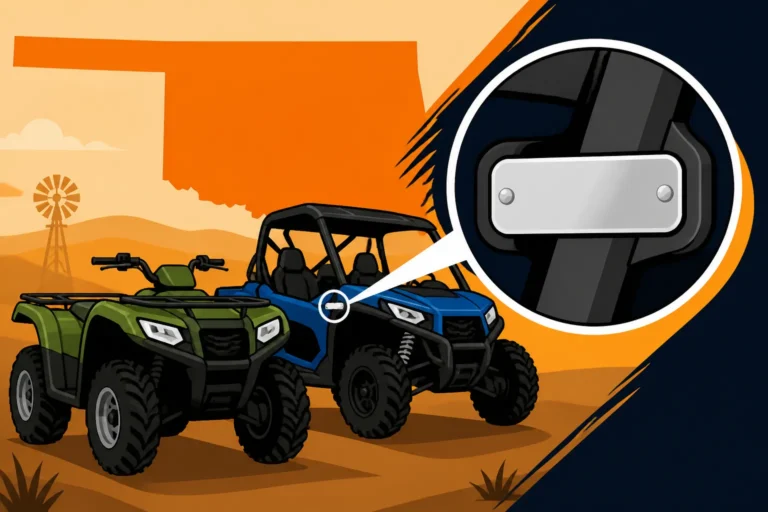
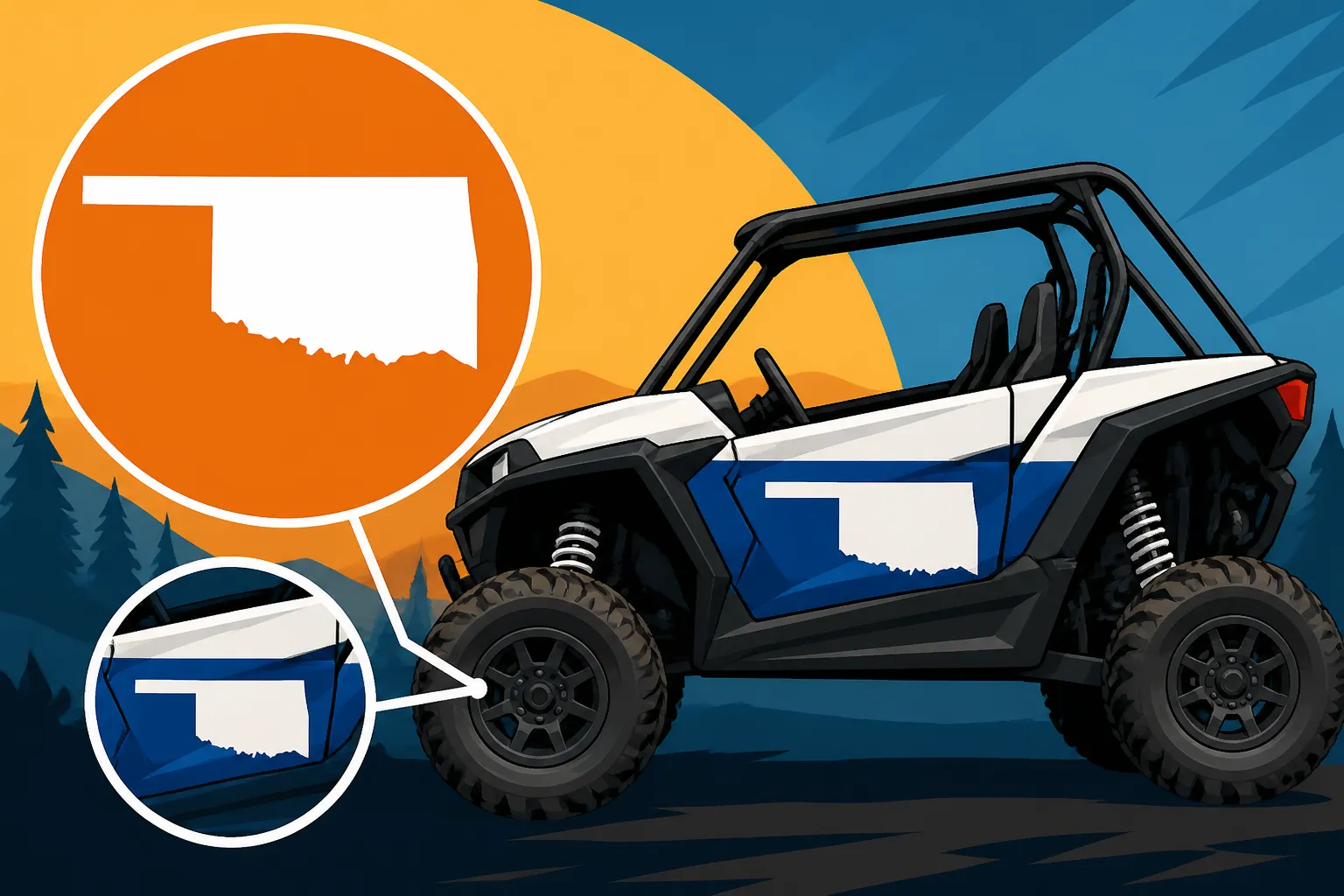
Oklahoma law is pretty clear: your registration decal must be displayed on the front of your machine, and it needs to be "clearly visible." This isn't a suggestion; it's a requirement. For a side-by-side, this typically means finding a flat, prominent surface on the front fascia, bumper, or even the front portion of the roll cage, provided it's unobstructed. Think about where someone standing directly in front of your UTV would look first.
Ideal spots often include:
- The front bumper: Many UTVs have a flat, solid surface on the front bumper that is perfect for decal placement. It's generally out of the way of the most extreme impacts but still highly visible.
- The front cowl/grill area: If there's a smooth, flat section of the plastic bodywork near the grill, this can also work well.
- A dedicated plate area: Some aftermarket bumpers or accessories might even include a small, flat panel specifically designed for a decal or plate, though this is less common for non-street-legal off-road machines.
What you want to avoid is tucking it away in a spot that requires someone to bend down, climb over, or search to find it. Placing it on the underside of a fender, inside a storage compartment, or on a suspension component simply won't cut it. The goal is immediate identification. For a deeper dive into this, check out [Oklahoma Decals on the Front of a Machine].
Avoiding Obstructions and Damage
"Clearly visible" also means free from obstruction. This isn't just about initial placement, but also about the realities of riding. If you stick your decal right where a tow strap often gets hooked, or in a spot that's prone to accumulating thick layers of mud, you're going to run into problems.
Consider these practical aspects:
- Mud and Debris: Off-road riding is inherently dirty. Choose a spot that, even after a long day on the trails, is relatively easy to clean and keep visible. A decal caked in dried mud is effectively invisible.
- Brush and Branches: If your decal is on a side panel that frequently scrapes against trees or thick brush, it's going to get scratched, torn, or peeled off. Look for a protected, yet still visible, area.
- Impact Zones: Avoid placing the decal directly on a part of the bumper or frame that is likely to take a direct hit in a minor fender bender or during aggressive riding.
Before applying, give the area a good once-over. Is it usually muddy? Does your winch cable run across it? Are there any accessories that might block it? Taking a few extra moments to plan the perfect spot can save you the hassle of a replacement down the road. Should your decal ever get lost or damaged beyond recognition, knowing how to get a new one is important. We cover that in [Oklahoma Decal Replacement If Lost].
Visibility and Enforcement
The reason for these strict placement guidelines boils down to quick identification and efficient enforcement. When a state trooper, game warden, or park ranger sees your side-by-side, they need to be able to spot that registration decal quickly to confirm it's legally registered for use on public lands or while crossing roads. If your decal isn't readily apparent, it can raise questions and potentially lead to you being stopped for verification.
Imagine this scenario: you're riding a county road (where permitted) and an officer observes you. Their first glance at your machine should immediately confirm its registration status. If they have to dismount, walk around your vehicle, or ask you to point it out, that's extra time and effort. This isn't about giving officers a hard time; it's about minimizing delays and proving your compliance with the law. While specific fines aren't discussed here, improper decal placement can certainly draw unwanted attention. Understanding what an officer might look for is key, and you can learn more about [What a State Trooper Can Ask to See] in other resources. Proper placement helps you avoid being pulled over unnecessarily and demonstrates that you're a responsible rider.
Practical Tips for Decal Application and Maintenance
Once you've zeroed in on the perfect spot for your side-by-side's registration decal, the next step is applying it correctly and taking measures to ensure its longevity. A well-applied decal is less likely to peel, crack, or fade prematurely.
Prepping the Surface
This is arguably the most crucial step for a decal that will truly stick. You wouldn't put a sticker on a dirty, greasy refrigerator, right? The same principle applies here, but with more extreme environmental factors.
Here's how to properly prepare the surface:
- Clean Thoroughly: Use a mild soap and water solution to wash the entire area where you plan to place the decal. Pay special attention to removing all dirt, mud, dust, and grime.
- Degrease: After cleaning, use rubbing alcohol or a specialized automotive degreaser on a clean cloth to wipe down the surface. This removes any residual oils, waxes, or silicones that could prevent the adhesive from bonding properly. It's often surprising how much invisible residue can be present, even on a seemingly clean surface.
- Dry Completely: This is non-negotiable. The surface must be absolutely bone dry before you attempt to apply the decal. Any moisture trapped underneath can prevent adhesion or lead to bubbling and peeling later on. You can use a clean, lint-free cloth or even a hairdryer on a low, cool setting to ensure it's fully dry.
- Optimal Temperature: While not strictly mandatory, applying decals in moderate temperatures (ideally between 60-80°F or 15-27°C) can help the adhesive cure properly. Applying in extreme cold or heat can make the decal brittle or the adhesive less effective.
Taking the time to prep the surface correctly means your registration will stay put, representing [What an $11 Oklahoma Decal Buys You for Life] – a one-time fee for a lifetime of legal off-road riding in Oklahoma, provided the decal stays on and legible.
Applying the Decal Smoothly
Applying the decal seems simple, but getting it on without bubbles or wrinkles can be tricky. Here’s a method that works well:
- Peel Slowly: Start by peeling back just a small section of the backing paper from one edge of the decal. Don't peel it all off at once!
- Align and Press: Carefully align the exposed adhesive edge of the decal with your chosen spot. Once it's perfectly positioned, press that initial edge firmly onto the surface.
- Squeegee It On: Slowly continue peeling the backing paper away with one hand, while simultaneously using a squeegee, a credit card, or even the edge of a sturdy plastic scraper with your other hand. Work from the center of the decal outwards, applying firm, even pressure. This pushes out any air bubbles as you go and ensures strong contact between the adhesive and the machine's surface.
- Address Bubbles: If you do end up with a small air bubble, you can often push it to the nearest edge with your squeegee. For stubborn bubbles, a tiny pinprick (and then smoothing it out) can release the trapped air, but be gentle so you don't damage the decal itself.
Don't rush this process. Patience here ensures a professional, lasting application. When you go to register your machine, remember the tag agency will provide you with the necessary decal and process the [Oklahoma Registration Application Explained].
Protecting Your Decal for Longevity
Once your decal is properly applied, there are a few things you can do to protect it and extend its life:
- Avoid Harsh Chemicals: When cleaning your side-by-side, be mindful of harsh degreasers or pressure washer nozzles directed straight at the decal. These can degrade the adhesive or even strip the printing over time. A gentle soap and water wash is usually sufficient.
- Clear Protective Film: Some riders choose to apply a thin, clear protective film (like clear bra material) over their decal for an extra layer of defense against scratches, UV rays, and abrasion. This is an optional step but can be very effective, especially if your decal is in a high-exposure area.
- Wax/Sealant: A non-abrasive automotive wax or sealant can be carefully applied around (but not directly on) the decal to protect the surrounding paint or plastic, which in turn helps protect the decal's edges from lifting.
- Regular Inspections: Periodically check your decal for any signs of lifting edges, cracking, or fading. Catching a small lift early can allow you to press it back down before it becomes a major problem. If it's starting to show its age, it might be time for a replacement. We have a helpful guide on [Replacing a Front Decal Faded by the Sun] to walk you through that process.
By taking these proactive steps, you can help ensure your Oklahoma registration decal remains clearly visible and intact for many years of adventurous riding.
Special Considerations for Different Side-by-Side Types and Uses
Side-by-sides come in a vast array of shapes and sizes, from compact two-seaters designed for tight trails to large, multi-passenger utility vehicles built for heavy farm work. While the "front and visible" rule remains constant, the exact best spot for your decal can vary depending on your machine's design and how you primarily use it.
Sport vs. Utility Side-by-Sides
The differences between a sport UTV, like a Polaris RZR or Can-Am Maverick, and a utility UTV, such as a Kawasaki Mule or John Deere Gator, can definitely influence decal placement.
-
Sport Side-by-Sides: These machines often feature aggressive styling, minimal flat surfaces on the front bodywork, and prominent, often tubular, front bumpers and roll cages.
- Placement Strategy: You might find the best spot on a small, flat section of the front plastic fairing, on a cross-member of the front bumper, or even on a flat part of the roll cage near the front headlights. The key is to find a place that's not easily covered by aftermarket light bars, winches, or other accessories that sport riders often add. You also want to avoid highly flexible plastic panels that might bend and cause the decal to wrinkle or peel.
- Example Scenario: A rider with a highly customized sport UTV featuring an aggressive aftermarket bumper might find the only suitable, flat, and visible spot is a small plate welded onto the top of the bumper. Or, they might opt for the smooth plastic area directly below the grill.
-
Utility Side-by-Sides: These are typically more boxy, with larger, flatter body panels and heavy-duty front bumpers, sometimes even equipped with brush guards or cargo racks.
- Placement Strategy: You'll likely have more options here. The large, flat areas on the front cowl, below the windshield, or on the face of the robust front bumper are often ideal. These machines are designed for functionality, so the decal should be placed where it won't interfere with attachments or regular use.
- Example Scenario: A farmer using a utility side-by-side with a front-mounted sprayer might place their decal on the flat, upper portion of the front grille, well above where any spray nozzles or hoses would typically operate. They might also choose the flat section of the front hood if it's not a hinged access panel.
Regardless of your machine's type, remember the underlying principle: clearly visible, front-facing, and secure. If you're going through the process of [Registering a Side-by-Side in Oklahoma], this decal placement is part of the final step to ensure full compliance.
Street-Legal UTVs and Decals
It's absolutely critical to understand that the standard Oklahoma off-road registration decal for your side-by-side is not the same as a street-legal license plate. This is a common point of confusion, and getting it wrong can lead to serious legal issues if you try to drive your off-road registered UTV on public roads where it's not allowed.
- Distinct Systems: Oklahoma has a specific pathway for certain UTVs to become "street-legal," which involves meeting a host of equipment requirements (like turn signals, mirrors, horn, etc.) and obtaining a separate annual license plate and yearly decal. This annual plate will have its own placement rules, typically on the rear, similar to a car.
- The Decal's Purpose: The off-road decal we're discussing here is strictly for identification when riding on private land, designated OHV areas, or when legally crossing roads under specific conditions (e.g., [Oklahoma Crossing Rules at 35 mph]). It does not grant you permission to drive your machine on public streets or highways.
- No Dual Role: Your single, front-mounted off-road decal does not replace the need for a separate, annually renewed street-legal plate and decal if your UTV meets the criteria for and is registered for road use. Be sure to understand the differences between your off-road registration and what's required for [Oklahoma Road Plates for a Street-Legal UTV].
When You Buy or Sell a Used Machine
This is a crucial point many riders overlook when it comes to decals and ownership changes. In Oklahoma, the off-road registration stays with the owner, not the machine. This means when you sell your side-by-side, your old registration decal becomes invalid for the new owner.
- For the Seller: When you sell your registered side-by-side, you should remove the old decal. It's tied to your ownership, not the machine itself. This is a key distinction covered in [Registration Stays With the Owner, Not the Machine].
- For the Buyer: If you purchase a used side-by-side, even if it had a decal from the previous owner, you must register it in your name and obtain a brand new decal. You cannot simply leave the old decal on and assume you're covered.
- Paperwork is Key: To register a used machine, you'll need proper documentation, typically a bill of sale. Tools like those offered by LawDepot can be incredibly helpful for drafting clear and legally sound bills of sale for private party transactions. This ensures you have all the necessary proof of ownership to get your new decal without a hitch. Having a solid bill of sale, especially for older machines, can smooth the process significantly, as discussed in [Oklahoma Bills of Sale for Older Machines].
Understanding this transfer rule is vital to avoid any issues. The goal is always to have a current, valid decal, issued in the name of the machine's current owner, displayed correctly.
Understanding the Broader Registration Context
While proper decal placement is the focus, it's part of a larger, rider-friendly registration system in Oklahoma. Knowing these broader details helps you understand the value and longevity of your decal.
The Lifelong Registration
One of the most unique and appealing aspects of Oklahoma's off-road vehicle registration system is that it's a one-time fee. You pay it, you get your title and your decal, and you're essentially done. There are no annual renewal notices that show up in your mailbox, no yearly trips to the tag agency just to pay a renewal fee. This contrasts sharply with vehicle registrations in most other states, and even with Oklahoma's own system for cars and street-legal UTVs.
This "pay once and ride" philosophy makes it incredibly cost-effective in the long run. Once you have your decal properly placed, you simply maintain it. This means less administrative hassle and more time for actual riding. It's why we emphasize how [Oklahoma Registration Never Renews] and how the initial [Oklahoma ATV Registration Cost] is truly a long-term investment. Just be sure to keep your decal visible and intact!
Navigating Private Sales and Paperwork
When you're buying a side-by-side from a private seller, the decal process ties directly into ensuring you have clear proof of ownership. As mentioned, the decal needs to be in your name. For a smooth transaction and to secure your new decal, the correct paperwork is paramount.
- Bill of Sale: A detailed bill of sale is your best friend here. It should clearly identify the machine (make, model, VIN), the seller, the buyer, the purchase price, and the date of sale. Don't rely on a simple handwritten note on a napkin; a professional document protects both parties. Services like LawDepot offer templates for bills of sale and other legal documents, which can be invaluable for ensuring all the necessary information is included. This not only helps with registration but also protects you should any disputes arise later.
- Original Title: Always insist on the original title, properly signed over by the seller. This is your ultimate proof of ownership. Without a clear title, registering (and getting a new decal) can become significantly more complicated.
- Declaration of Purchase Price: You'll typically need to declare the purchase price at the tag agency, as this is used to calculate the excise tax.
Having all your ducks in a row with the right paperwork simplifies the process of transferring ownership and obtaining your new registration decal. It avoids those frustrating moments at the tag agency when you realize you're missing a critical piece of information.
Where to Go for Help
If you have questions about your decal, need a replacement, or are going through the initial registration process, knowing where to turn for accurate information is essential.
- Oklahoma Tag Agencies: These are your primary points of contact for anything related to vehicle registration and titling in Oklahoma. They are equipped to handle new registrations, title transfers, and decal replacements. Most towns of any size will have at least one tag agency.
- Service Oklahoma: This state agency oversees the tag agencies and is responsible for vehicle services. While you typically go to a local tag agency for direct service, Service Oklahoma is the overarching authority and can sometimes assist with more complex issues or provide general information online.
- What to Bring: When visiting a tag agency for decal-related matters, always bring your proof of ownership (title, bill of sale), your driver's license, and any existing registration documents. If you're replacing a lost or damaged decal, having the old registration number or a photo of the original decal can be helpful. Don't hesitate to ask specific questions when you're there, as we've noted in [Questions Worth Asking a Tag Agency]. They deal with these inquiries daily and are your best resource for on-the-spot assistance.
By understanding the full scope of Oklahoma's registration rules, from the one-time fee to the correct paperwork for sales, you can ensure your side-by-side is not only legally registered but that its decal is always correctly displayed and ready for inspection.
| Feature / Consideration | Ideal Decal Placement Zone | Less Ideal Decal Placement Zone | Why It Matters |
|---|---|---|---|
| Visibility | Flat, open area on front bumper or cowl | Underneath fenders, behind accessories, side panels | Crucial for law enforcement and park rangers to quickly identify registration. |
| Durability | Protected by bumper structure, away from high impact zones | Directly on flexible plastic, areas prone to heavy abrasion | Prevents tearing, peeling, or fading from impacts, brush, or flexing. |
| Cleanliness | Area that can be easily wiped clean, not a mud trap | Spots that accumulate thick mud, oil, or debris quickly | Obscured decals are not "clearly visible" and can lead to issues. |
| Adhesion | Smooth, non-textured, fully prepped surface | Textured plastics, areas with wax/silicone residue, dirty surfaces | Poor adhesion leads to bubbles, peeling, and premature decal failure. |
| Accessory Interference | Clear of winch cables, light bars, plow mounts, cargo racks | Where aftermarket parts might cover or rub against the decal | Ensures decal remains visible and undamaged even with added accessories. |
| Legal Compliance | Meets "front and clearly visible" mandate | Hidden, obscured, or on non-front parts of the machine | Avoids potential stops, warnings, or citations for improper registration display. |
Disclaimer
This article is for general informational purposes only and does not constitute professional advice. Laws, prices and regulations vary by location and change over time. Consult a qualified professional for guidance on your specific situation.